Modern Pharmacology,Experimental Evidence For The Kidney-Tonifying Effects Of Cistanche Tubulosa
Sep 29, 2026
Abstract
Cistanche tubulosa (Schenk) Wight, a perennial parasitic herb of the Orobanchaceae family, was first documented in Shennong's Classic of Materia Medica and classified as a superior-grade herb, earning the reputation of "desert ginseng." This article systematically reviews modern pharmacological experimental evidence supporting the kidney-yang tonifying and essence-blood nourishing effects of C. tubulosa, with a focus on its signature active constituents-phenylethanoid glycosides (PhGs), particularly echinacoside and acteoside. Evidence is presented across six dimensions: promotion of reproductive function, anti-fatigue, immune regulation, antioxidant and anti-aging effects, kidney protection, and signaling pathway mechanisms. Comparisons between processed and raw products, network pharmacology predictions, and safety evaluations are also integrated to provide a scientific basis for the "kidney-tonifying" efficacy of C. tubulosa.
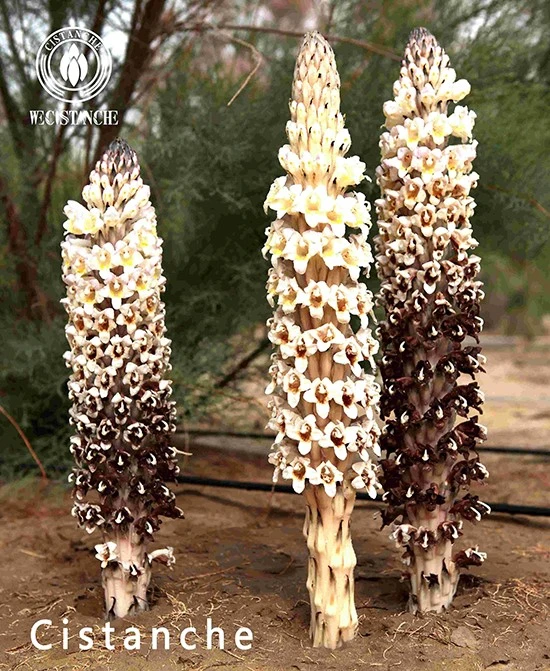
Desert-living cistanche
Keywords: Cistanche tubulosa; kidney-yang tonification; phenylethanoid glycosides; echinacoside; acteoside; testosterone; CYP450-3β-HSD
1. Introduction
Cistanche tubulosa (Schenk) Wight is the dried fleshy stem with scale-like leaves of the plant Cistanche tubulosa. It is warm in nature, sweet and salty in taste, and enters the kidney and large intestine meridians. Its traditional functions include tonifying kidney-yang, nourishing essence and blood, and moistening the intestines to relieve constipation. Among traditional kidney-tonifying formulas, Cistanche species have consistently ranked first in usage frequency, establishing it as a core herb in the TCM theory of "tonifying kidney and replenishing marrow." In 2020, Cistanche was approved as both a food and herbal material by China's National Health Commission, further expanding its application scope.
Modern pharmacognosy recognizes both C. tubulosa and C. deserticola as official botanical sources. The Chinese Pharmacopoeia (2020 edition) stipulates that the total content of echinacoside and acteoside in C. tubulosa must not be less than 1.5%, significantly higher than the 0.3% standard for C. deserticola, indicating a more robust active constituent profile. A research team led by Prof. Pengfei Tu at Peking University Health Science Center established a comprehensive chemical profiling strategy, identifying 513 chemical constituents from Cistanche species and systematically comparing compositional, quality, and efficacy differences between desert and tubular varieties, providing a scientific foundation for precision clinical use.

Echinoside the main chemical component of Cistanche tubulosa

Acteoside is the main chemical component of Cistanche tubulosa
This review focuses on the core efficacy of "kidney tonification," systematically collating key experimental evidence from animal models, cellular experiments, network pharmacology, and clinical translation, aiming to construct a complete evidence chain from "constituent–target–pathway–pharmacological effect."
2. Chemical Basis: Phenylethanoid Glycosides as the Core
C. tubulosa contains a rich diversity of chemical compounds. Comprehensive profiling identified 513 constituents, among which phenylethanoid glycosides (PhGs) are widely recognized as the core active substances responsible for kidney-yang tonifying and aphrodisiac effects. The pharmacopoeial quality control markers-echinacoside (ECH) and acteoside/verbascoside (AS)-both belong to this class.
Comparative studies show that C. tubulosa contains significantly higher levels of PhGs than C. deserticola, while the latter is richer in polysaccharides. Quantitative analysis by reversed-phase high-performance liquid chromatography further confirmed that the chemical composition of C. tubulosa is highly similar to that of authentic Cistanche but at higher concentrations, with similar pharmacological effects on kidney yang and intestinal moistening, supporting its scientific basis as a substitute for the authentic species.
Notably, PhGs possess phenolic hydroxyl groups and glycosidic bonds in their structure, making them prone to oxidation and hydrolysis. This characteristic is a central concern in processing technology and a key focus in pharmacokinetic studies after oral administration. Existing research using UPLC-Orbitrap-MS/MS identified 72 common compounds in the aqueous extract of C. tubulosa, confirming that constituents such as betaine and pinoresinol exert significant protective effects on renal cells.
3. Core Experimental Evidence for Kidney-Yang Tonifying Efficacy

Effects of Cistanche-Improve kidney function
3.1 Promoting Reproductive Function: From Behavioral to Molecular Enzymology
3.1.1 Aphrodisiac Effect of Acteoside (Cistanoside A)
Ma Jingjing et al. from Yangzhou University established a hydrocortisone-induced kidney-yang deficiency mouse model and administered cistanoside A (a chemical constituent of C. tubulosa) by gavage at 40 mg·kg⁻¹·d⁻¹ and 20 mg·kg⁻¹·d⁻¹ for 14 consecutive days. Results showed that the 40 mg·kg⁻¹ group significantly shortened penile erection latency (P<0.01), increased sperm count (P<0.01), significantly elevated reproductive organ coefficients, and improved testicular morphology; the low-dose group also shortened erection latency (P<0.01), increased sperm count (P<0.05), and elevated reproductive organ coefficients (P<0.05). This experiment directly demonstrated the clear kidney-yang tonifying and aphrodisiac effect of cistanoside A in kidney-yang deficient mice.
3.1.2 Dose-Dependent Effects of Total Phenylethanoid Glycosides (CPhGs)
Wang et al. further elucidated the mechanism of C. tubulosa phenylethanoid glycosides (CPhGs). Using HPLC quantification, they induced reproductive injury in mice via hydrocortisone (HCT) injection and set three dose groups (72, 145, 289 mg·kg⁻¹) along with a positive control (testosterone propionate, TP), with continuous gavage for 14 days.

Phenylethanol glycoside is the main active component of Cistanche tubulosa
Results showed that the high-dose CPhGs (289 mg·kg⁻¹) had the most pronounced effects: it ameliorated HCT-induced body weight loss (P<0.01), significantly shortened erection latency (P<0.001), capture latency (P<0.05), and ejaculation latency (P<0.01), and increased capture and ejaculation frequencies (P<0.01 and P<0.05, respectively). It also significantly improved the wet weights of testis, epididymis, seminal vesicle, and penis (P<0.001, P<0.01, P<0.01, P<0.001, respectively) and significantly upregulated testosterone (T) and its upstream luteinizing hormone (LH) levels (P<0.001).
At the mechanistic level, Western blot confirmed that CPhGs significantly increased protein expression of CYP11A1 and 3β-HSD (3β-hydroxysteroid dehydrogenase) in testicular tissue (P<0.001), indicating that CPhGs protect reproductive function by enhancing testosterone biosynthesis via the CYP450-3β-HSD pathway. This finding was the first to systematically reveal the molecular enzymological basis of the "kidney-yang tonifying and aphrodisiac" effect of C. tubulosa.
3.1.3 Efficacy Screening of Different Extraction Fractions
To identify the most active fraction, researchers divided Cistanche extracts into total oligosaccharides, total polysaccharides, and total phenylethanoid glycosides, intervening in hydrocortisone-induced kidney-yang deficient rats at a crude drug equivalent dose of 2.3 g·kg⁻¹ for 14 days. Results showed that the total phenylethanoid glycoside extract significantly shortened erection latency (P<0.05) and capture latency (P<0.01), increased capture frequency (P<0.01), elevated wet weights of testis (P<0.05) and seminal vesicle (P<0.01), increased seminal plasma fructose content (P<0.05), significantly raised plasma cAMP/cGMP ratio (P<0.01), and elevated serum T (P<0.01), FSH (P<0.01), and GnRH (P<0.05) levels, while reducing E2 (P<0.05) and LH (P<0.05) levels, and significantly improving testicular pathological morphology. Overall, total phenylethanoid glycosides demonstrated the best efficacy in improving reproductive capacity.
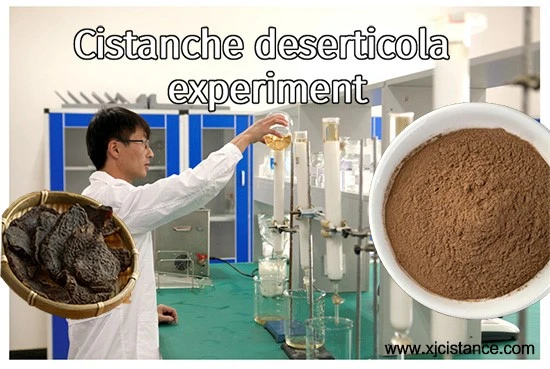
Cistanche tubulosa experiment
3.1.4 AR-Mediated Mechanism of Echinacoside and Brain Distribution
A research team led by Prof. Zhang Xiaoying at Northwest A&F University provided breakthrough evidence for reproductive protection by Cistanche over six years of study. They confirmed that echinacoside is the primary active substance against reproductive injury, effectively restoring sperm count and motility and elevating LH and T levels.
Mechanism studies revealed that echinacoside can distribute into the brain, and immunological methods first demonstrated its target as the androgen receptor (AR), with binding sites at Met-894 and Val-713. Inhibitory binding of echinacoside to AR prevents AR from entering the nucleus to initiate gene transcription, thereby suppressing the hormone negative feedback regulatory pathway; simultaneously, it stimulates the expression of key enzymes in androgen synthesis, promoting the expression of steroidogenic enzymes including StAR, CYP11A1, CYP17A1, 3β-HSD, and 17β-HSD, ultimately facilitating testosterone biosynthesis. Pharmacokinetic analysis showed that echinacoside can cross the blood-brain barrier into the hypothalamus, providing direct evidence for regulation of the hypothalamic-pituitary-gonadal axis.
3.1.5 Castrated Rat and Seminal Vesicle-Prostate Weight Experiments
Early classical pharmacological experiments also provided solid corroboration. Zong Guizhen et al. compared pharmacological effects of different Cistanche species and found that C. tubulosa significantly increased the weight of seminal vesicles and prostate in castrated rats. Additionally, C. tubulosa significantly increased mating frequency and ejaculation rate in mice with stress-induced sexual dysfunction and prolonged cold tolerance in yang-deficient animals, behaviorally validating the traditional "kidney-yang tonifying and aphrodisiac" efficacy.
3.2 Anti-Fatigue and Physical Enhancement
Anti-fatigue represents a direct manifestation of "kidney-yang tonification" at the physical performance level. Ethanol extracts of C. tubulosa significantly increased body weight in normal mice, prolonged hypoxia tolerance and loaded swimming time, and significantly extended survival under harsh conditions in yang-deficient and free radical-damaged mice.
In a standardized experiment on relieving physical fatigue, mice administered different doses of C. tubulosa extract showed significantly prolonged exhaustive swimming time in the medium- and high-dose groups (P<0.05), increased post-exercise liver glycogen reserves (P<0.05), and reduced blood lactate concentration 20 minutes after exercise (P<0.05). Increased glycogen reserves and reduced lactate accumulation serve as modern physiological correlates of "abundant kidney yang and vigorous energy."
Another study administered C. tubulosa decoction (10 g·kg⁻¹·d⁻¹) by gavage for 15 days, which significantly increased body weight, spontaneous activity counts, and exercise duration in yang-deficiency model mice, while reducing post-exercise blood lactate (LAC) and blood urea nitrogen (BUN) levels. This further confirmed that C. tubulosa ameliorates kidney-yang deficiency symptoms by regulating metabolism, with mechanisms closely related to modulation of the hypothalamic-pituitary-gonadal axis and promotion of testosterone secretion.
3.3 Immune Regulation: cAMP/cGMP Ratio and Macrophage Activation
Desert ginseng-Improve immunity
In TCM, "the kidney is the congenital foundation," and its close relationship with modern immune function has attracted increasing attention. Experimental evidence for immune regulation by C. tubulosa centers on two lines:
First, regulation of cAMP/cGMP ratio. Zhang Hongquan et al. found that aqueous extract of Cistanche elevated cAMP and decreased cGMP in macrophages, thereby enhancing phagocytic function of peritoneal macrophages and promoting specific cellular immunity. Zeng Qunli et al. further confirmed that Cistanche polysaccharides promote lymphocyte proliferation in mouse spleen and thymus and significantly enhance IL-1 secretion by splenic lymphocytes.
Second, direct activation of macrophages by PhGs. Experiments showed that C. tubulosa PhG extracts at 75, 100, and 125 g·L⁻¹ all enhanced phagocytic activity of RAW264.7 cells and increased levels of NO, iNOS, TNF-α, and IL-6, with 100 g·L⁻¹ being optimal (P<0.01). The mechanism involves PhG-induced iNOS expression and NO synthesis stimulation, along with promotion of TNF-α and IL-6 release, thereby activating macrophage immune regulation. Notably, extracts of Angelica sinensis and Astragalus membranaceus showed significant synergistic promotion of PhG-mediated macrophage activation (P<0.01), providing experimental support for compound formulation.
3.4 Antioxidant and Anti-Aging Effects
Japanese scholar Kadota Shigeyoshi confirmed that PhGs in C. tubulosa extract are effective constituents for scavenging free radicals and exerting antioxidant effects. In aging model mice, C. tubulosa extract significantly improved hepatocyte ultramicrotubule volume and cerebral cortex ultramicrosomes.
C. tubulosa significantly inhibits lipid peroxidation in rabbit blood and mouse liver, with anti-aging effects similar to those of authentic Cistanche. In bone metabolism studies, Cistanche PhGs significantly reduced expression of pro-resorptive inflammatory factors IL-1β and TNF-α, prevented fusion and differentiation of osteoclast precursors, and upregulated the OPG/RANKL ratio, slowing bone resorption. Concurrently, PhGs act on the BMP/Smads signaling pathway, promoting BMP-2 expression in osteoblasts, upregulating mRNA expression of osteogenic differentiation factors including bFGF, IGF-1, OSX, and Runx-2, and facilitating differentiation of bone marrow mesenchymal stem cells into osteoblasts.
3.5 Kidney Protection: From PI3K/Akt to p38 MAPK/NF-κB
"Kidney tonification" concerns not only reproduction and immunity but also directly relates to the structure and function of the kidneys themselves. Multiple experiments confirm renal protective effects of C. tubulosa from different angles:
In diabetic nephropathy (DN) models, aqueous extract of C. tubulosa (AECT) inhibited the PI3K-Akt signaling pathway, reducing phosphorylation of PI3K and Akt, thereby alleviating oxidative stress and inflammatory responses and inhibiting apoptosis. Detection indicators showed increased activities of antioxidant factors SOD and GSH-Px, decreased levels of inflammatory factors IL-1β, TNF-α, and TGF-β, and a reduced apoptosis rate. Network pharmacology analysis identified key targets as NFKB1, EGFR, AKT1, and TP53, mainly enriched in PI3K-Akt signaling and cancer pathways.

Effects of cistanche-Improve Kidney Function
Click here to view Cistanche for Kidney disease products
【Ask for more】 Email:cindy.xue@wecistanche.com / WhatsApp: 0086 18599088692 / WeChat: 18599088692
In uremia-related renal injury (URE) models, echinacoside reduced serum IL-1β and IL-18 levels and improved renal function. Its mechanism involves inhibition of p38 MAPK/NF-κB signaling pathway activation, reducing downstream inflammatory factor production, thereby alleviating inflammatory responses and renal injury in 5/6 nephrectomized rats.
In hyperuricemia (HUA) models, Luo Fuxiang et al. showed that acteoside (AS) and echinacoside (ECH) improved renal function in HUA model rats, lowered serum uric acid, promoted uric acid excretion, downregulated serum ADA and XOD levels, and regulated protein and mRNA expression of renal urate transporters URAT1, GLUT9, OAT1, and OAT3. This provides new experimental evidence for "kidney tonification and uric acid reduction."
4. Key Signaling Pathways and Network Pharmacology Panorama
4.1 AR-Mediated PI3K/Akt/eNOS Pathway
A team led by Gu Li at Sun Yat-sen University, supported by a National Natural Science Foundation Young Scientist grant, systematically studied the mechanism by which echinacoside (ECH), the active constituent of Cistanche, activates the PI3K/Akt/eNOS pathway in endothelial cells to generate nitric oxide (NO). The team confirmed that ECH phosphorylates eNOS to induce NO release, specifically mediated by the androgen receptor (AR) to activate the PI3K/Akt pathway, thereby promoting smooth muscle relaxation and enhancing erectile function. This study provides a molecular biological explanation for Cistanche-mediated improvement of erectile dysfunction along the complete chain of "phytoandrogen–AR–PI3K/Akt/eNOS–NO."
4.2 Network Pharmacology Prediction and Validation
A team at Shihezi University employed spectrum-effect technology combined with network pharmacology to systematically investigate the kidney-yang tonifying mechanism of processed C. tubulosa. The study predicted that Cistanche's improvement of kidney-yang deficiency involves potential targets including TNF, GSK3B, and MAPK1, possibly acting through signaling pathways such as lipid and atherosclerosis and galactose metabolism. Molecular docking results showed high binding energy between active constituents and the target MAPK1, indicating good targeting.
Another study based on UPLC-QE-Orbitrap-MS/MS and network pharmacology identified high proportions of terpenes, PhGs, iridoids, and lignans in AECT, speculating that acteoside, geniposidic acid, 8-epideoxyloganic acid, and pinoresinol are likely the main pharmacodynamic material bases. PPI network construction further confirmed AKT1 as a key convergence point of multiple pathways, whose absence would attenuate renal fibrosis and tubular dedifferentiation.
4.3 "Phytoestrogen" Effect of Phenylethanoid Glycosides
Notably, after treatment of HeLa cells with acteoside and echinacoside, luciferase activity containing estrogen response elements was upregulated, demonstrating a phytoestrogenic effect. This indicates that the "kidney-tonifying" efficacy of C. tubulosa is not merely an androgen-like effect but achieves more refined endocrine regulation through dual pathways of phytoestrogen and androgen receptor, aligning with its traditional recognition as "suitable for both men and women."
5. Effects of Processing on Kidney-Tonifying Efficacy
Processing is an important means of enhancing herbal efficacy in TCM. Multiple studies consistently show that wine processing enhances the kidney-yang tonifying effect of C. tubulosa.
At the chemical level, after wine processing of Cistanche, the content of cistanoside A increases within 12 hours of steaming, while echinacoside, acteoside, isoacteoside, cistanoside C, and 2′-acetylacteoside gradually decrease, accompanied by conversion of other constituents into cistanoside A. Betaine content significantly increases after wine processing and is an important material basis for the enhanced gonadotropin-like effect of wine-processed Cistanche. The "enzyme-inactivating" effect of wine steaming also prevents hydrolysis of PhGs.
At the efficacy validation level, in vivo metabolism studies based on UPLC-Q/TOF-MS showed that wine-processed C. tubulosa elevated serum ACTH, T, and T4 levels, with processed products outperforming raw ones. Metabolomics analysis identified 47 differential metabolites, with processed products regulating more metabolic pathways. Research from Shihezi University directly confirmed that all processed product administration groups significantly elevated T levels, with the wine-processed group achieving optimal results, significantly superior to the raw product group; it also significantly reduced E2 levels and alleviated pathological damage to kidneys and testes. An LC-MS study further identified echinacoside, acteoside, isoacteoside, and tubuloside B as the key constituents with the greatest differences before and after processing.

Effects of Cistanche: Improve Kidney Function
6. Comparison with C. deserticola and Clinical Translation
Wu Bo et al. directly compared the effects of decoctions of Cistanche and C. tubulosa on defecation, body weight, and cold tolerance in kidney-yang deficient mouse models, confirming that both possess certain moistening and laxative effects as well as warm kidney-yang tonifying actions. Against the backdrop of declining authentic Cistanche resources, C. tubulosa can serve as a substitute.
In industrialization and clinical translation, based on the above pharmacological research, Prof. Pengfei Tu's team created the new drug "Total Glycosides of Cistanche and Capsules" (marketed in 2005), providing a much-needed drug for vascular dementia. "Echinacoside Tablets" and "Total Sugar Alcohol of Cistanche Oral Liquid" have completed Phase I and II clinical trials. Additionally, 25 Chinese patent medicines and health foods have been developed, including Shenbao series and Jingjiu, creating a tens-of-billions-scale health product cluster. This marks the transition of C. tubulosa from a traditional herb to evidence-based medicine and precision medicine.
7. Safety Evaluation
As a food-and-herb dual-purpose substance, safety is a prerequisite for the application of C. tubulosa. Animal experiments showed that a 90-day feeding study of C. tubulosa extract in rats revealed no toxic signs, no obvious target organ toxicopathological changes, and no significant effects on body weight, food utilization rate, organ weights, or hematological indicators. Systematic testing through in vitro assays, in vivo somatic cells, and germ cells detected no genotoxicological alterations. Standardized wine-processing procedures establish multi-dimensional pollutant control barriers in raw material cultivation, processing, and finished product testing, ensuring that safety indicators of decoction pieces fully comply with relevant national standards.
8. Summary and Prospects
Integrating the above experimental evidence, the scientific connotation of the "kidney-tonifying" efficacy of C. tubulosa can be understood at six levels:
First, in promoting reproductive function, PhGs (especially echinacoside and acteoside) promote testosterone synthesis via the CYP450-3β-HSD pathway, upregulate LH levels, and improve behavioral and testicular pathological indicators. Second, in anti-fatigue effects, they enhance physical strength by increasing liver glycogen reserves and reducing blood lactate and urea nitrogen. Third, in immune regulation, they enhance immunity by modulating the cAMP/cGMP ratio and activating the macrophage iNOS/NO pathway. Fourth, in antioxidant and anti-aging effects, they scavenge free radicals and regulate bone metabolism. Fifth, in kidney protection, they alleviate renal injury through multiple pathways, including PI3K/Akt and p38 MAPK/NF-κB. Sixth, at the signaling pathway level, AR-mediated PI3K/Akt/eNOS and phytoestrogen effects provide a dual endocrine regulation mechanism.
Future research could deepen in the following directions: (1) Conduct more high-quality randomized controlled clinical trials (RCTs) to confirm the efficacy of C. tubulosa in populations with male hypogonadism and postmenopausal osteoporosis; (2) Systematically resolve the complete biosynthetic pathway of PhGs and construct heterologous synthesis systems to support elite breeding; (3) Investigate in depth the fine positive and negative feedback regulation of the hypothalamic-pituitary-gonadal axis after echinacoside enters the brain; (4) Combine multi-omics technologies to map the complete molecular network of the "kidney-tonifying" efficacy of C. tubulosa.
References
[1] Kadota S. Study on free radical scavenging and antioxidant effects of Cistanche tubulosa extract [J]. (Japanese original).
[2] Gu L. Mechanism of androgen receptor-mediated activation of PI3K/Akt/eNOS pathway by active constituents of Cistanche to generate NO [R]. Sun Yat-sen University, National Natural Science Foundation Young Scientist Project.
[3] Zhang X Y, et al. Echinacoside inhibits sex hormone negative feedback and promotes testosterone synthesis via androgen receptor [J]. Scientific Reports.
[4] Wang Y, et al. Cistanche tubulosa phenylethanoid glycosides improve reproductive function via CYP450-3β-HSD pathway [J]. Journal of Ethnopharmacology, 2020, 258: 112873.
[5] Ma J J, et al. Study on kidney-yang tonifying and aphrodisiac effects of cistanoside A in kidney-yang deficient mice [J]. China Journal of Chinese Materia Medica, 2019.
[6] Zhang H Q, Zhang A X, Du N S, et al. Effect of Cistanche on immune function in mice [J]. Chinese Journal of Integrated Traditional and Western Medicine, 1988, 8(12): 736.
[7] Luo F X, Li J M, Gao L, et al. Uric acid-lowering effect and mechanism of acteoside and echinacoside from Cistanche tubulosa [J]. Chinese Pharmacological Bulletin, 2025, 41(9): 1736-1743.
[8] Wu B, Gu S J, Fu Y M, et al. Study on laxative and kidney-yang tonifying pharmacological effects of Cistanche and Cistanche tubulosa [J]. Journal of Traditional Chinese Medicine, 2003, 21(4): 539-540.
[9] Zong G Z, He W, Wu G L, et al. Comparison of some pharmacological effects of different Cistanche varieties [J]. China Journal of Chinese Materia Medica, 1996, 21(7): 436-437.
[10] He W, Shu X F, Zong G Z, et al. Study on kidney-yang tonifying effect of Cistanche before and after processing [J]. Chinese Literature of Chinese Materia Medica, 1996, 21(9): 534-537.
[11] Zeng Q L, Mao J H, Lü Z L. Purification of Cistanche polysaccharides and their regulatory effect on T cell function [J]. Journal of Zhejiang Medical University, 1998, 27(3): 108.
[12] Tu P F, Li S C, Li Z X, et al. Comparison of laxative effects of Cistanche species [J]. Natural Product Research and Development, 1997, 11(1): 48-51.
[13] Tu P F. Cistanche: From endangered plant to large-scale TCM variety [EB/OL]. Peking University Health Science Center, State Key Laboratory of Natural and Biomimetic Drugs.
[14] Shihezi University. Study on kidney-yang tonifying mechanism of processed Cistanche tubulosa based on spectrum-effect technology [D]. Xinjiang: Shihezi University.
[15] National Medical Products Administration. Clinical Identification and Application of Raw and Processed Herbal Decoction Pieces [M]. Jia T Z, editor.
[16] Macrophage activation by phenylethanoid glycosides of Cistanche tubulosa and synergistic effects with Angelica sinensis and Astragalus membranaceus in immune regulation [J]. China Journal of Chinese Materia Medica.
[17] Experimental study on anti-fatigue effect of Cistanche tubulosa extract [J]. Journal Network, 2023.
[18] Exploration of the mechanism of Cistanche aqueous extract in treating diabetic nephropathy based on UPLC-QE-Orbitrap-MS/MS and network pharmacology [J]. Natural Product Research and Development, 2024.
[19] Research progress and industrialization status of Cistanche [EB/OL]. Western Cistanche.
[20] Processing method and safety evaluation of wine-processed sliced Cistanche tubulosa from Hotan [EB/OL]. Li Hai Hotan Cistanche Research Institute.
[21] Screening of kidney-yang tonifying activities and preliminary mechanism of anti-fatigue and pro-reproductive effects of Cistanche [D]. Yangzhou University.
[22] Pan Y R, Min F Y. Protective effect of ethanol extract of Cistanche on adrenal cortex in kidney-yang deficient mice [J]. (Internal document).