New Glycosides From Cistanche Salsa
Mar 11, 2022
Contact: joanna.jia@wecistanche.com / WhatsApp: 008618081934791
Li Leia, Yong Jianga et al
Six new glycosides, salsa sides A – F (1–6, resp.), were isolated from the stems of Cistanche salsa, together with seven known glycosidic compounds. Their structures were elucidated by means of ester hydrolysis and chemical derivatization, in-depth NMR spectroscopic and mass spectrometric analyses, and by comparison with literature data of related compounds. The new glycosides are based on b-D-glucose (Glc) and a-L-rhamnose (Rha), carrying acetyl (Ac), benzyl (Bn), phenethyl, coumaroyl (Cou), and caffeoyl (Caf) substituents.

Cistanche salsa has many effects
Introduction
– Cistanche salsa (C. A. MEY.) G. BECK, one of the species of Herba Cistanche, is a short parasitic Orobanchaceae plant native to Northwest China. As an important tonic in traditional Chinese medicine (TCM), the stems of Herba Cistanche have long been used by the Chinese and Japanese against kidney deficiency, female infertility, morbid leucorrhea, neurasthenia, and senile constipation due to colonic inertia, etc. [1]. Just as in other Cistanche plants, phenethyl-based glycosides are the main active constituents of C. salsa. These compounds were reported to have neuroprotective activity against 1-methyl-4-phenyl-1,2,3,6-tetrahydropyridine (MPTP)-induced dopaminergic toxicity in C57 mice [2-4]. There are only a few phytochemical studies concerning C. salsa, the first ones dating back ca. 20 years [5-8]. In 1995, Moriya et al. [9] [10] reported that the plant material of Cistanche salsa had been identified falsely when he investigated the sources of Herba Cistanche from a Japanese medical market [9] [10]. Therefore, it is necessary to re-investigate the chemical constituents of C. salsa.
In the present work on Cistanche salsa, we report the isolation and structure elucidation of six new glycosides, salsa sides A-F (1-6), with different substituents, including acetyl (Ac), benzyl (Bn), caffeoyl (Caf), and coumaroyl (Cou) residues. Also isolated from the same extract were the following seven known glycosides: tubuloside B [11], acteoside [6], isoacteoside [11], 2' -acetylacteoside [7], echinacoside [6], cistanoside C [7], and cistanoside D [7].
Results and Discussion
– Compound 1 was isolated as an amorphous powder, and its molecular formula was deduced as C28H34O13 by HR-ESI-MS (m/z 596.2348 ([M+NH4]+; calc. 596.2343). The 1 H-NMR data of 1 (Table 1) exhibited characteristic signals of an (E)-configured caffeoyl (Caf) group, with ABX-type aromatic signals at d(H) 7.07 (br. s), 6.76 (br. d, J=8.5 Hz), and 7.03 (d, J=8.5 Hz), two olefinic H-atoms at d(H) 7.51 (d, J=16.0) and 6.34 (d, J=16.0 Hz), and a Bn moiety with five aromatic resonances and two nonequivalent H-atoms at d(H) 4.59, 4.77 (2d, J=12.0 Hz each), which suggested that 1 was a Bn-substituted compound [12].

Total acid hydrolysis of 1 afforded rhamnose (Rha) and glucose (Glc). The NMR data of 1 were similar to those of tubuloside B [11], except that the signals of a 3,4-dihydroxy phenyl ethanol unit were replaced by those of a Bn group. In the HMBCspectrum of 1, correlations between the two nonequivalent H-atoms at d(H) 4.59, 4.77 (a-CH2 of aglycone) and d(C) 101.7 (C(1') of Glc), of both d(H) 4.40 (br. d, J=11.5 Hz, 1 H of CH2(6’)) and 4.23 (m, 1 H of C H2(6’)) with d(C) 166.6 (C(a') of ester), and of d(H) 5.04 (br. s, H C(1'')) and d(C) 80.8 (C(3' )) established the linkages between the aglycone, ester, and sugar moieties.

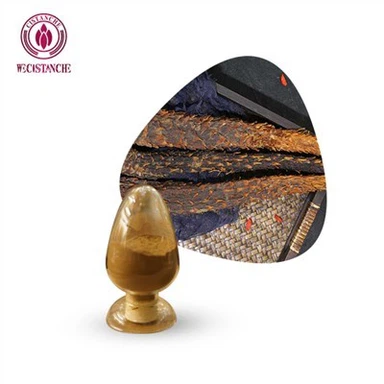
Cistanche salsa
On the basis of the above spectroscopic evidence, in combination with 2D-NMR data, the structure of 1 was elucidated as benzyl 6-O-[(E)-3-(3,4-dihydroxy phenyl)-prop-2-enoyl]-3-O-a-L-rhamnopyranosyl-b-D-glucopyranoside1), and named salsa side A.
Compound 2 was isolated as an amorphous powder, and its molecular formula was determined as C28H34O13 by HR-ESI-MS (m/z 596.2345 ([M+NH4]+)). The only difference between 1 and 2 was that the Caf moiety was attached at 4' -position in 2 instead of at 6' -position. This was evident in the HMBCspectrum of 2, where the signal at d(H) 4.96 (t, J=9.0 Hz, H C(4' )) was correlated with d(C) 167.3 (C=O of Caf), and further corroborated by comparison with the NMR data of 2’-acetylacteoside [4]. Thus,compound2 was identified as benzyl 4-O-[(E)-3-(3,4-dihydroxy phenyl)prop-2-enoyl]-3-O-a-Lrhamnopyranosyl-b-D-glucopyranoside, and named salsa side B.
Salsaside C(3) was isolated as an amorphous powder, and its molecular formula was elucidated as C28H34O12 by HR-ESI-MS (m/z 561.1958 ([M H]; calc.561.1972)). The NMR data of 3 were similar to those of 2, except that the signals of the Caf group were replaced by those of an (E/Z)-coumaroyl (Cou) moiety (see table 1). The presence of an (E/Z)-the mixture as indicated by split (2.38: 1) NMR resonances as well as by peak doubling in the HPLC chromatogram, a phenomenon reported before in some phenethyl glycosides [13] [14]. In the HMBCspectrum of 3, correlations between the two nonequivalent aglycone a-CH2 resonances at d(H)4.62, 4.87 (2d, J=11.5 Hz each) and d(C) 103.2 (C(1’)), between d(H) 4.75/4.71 (t, J=7.5 Hz, H C(4' )) and d(C) 168.3/166.0 (C=O of Cou), and between d(H) 5.02 (br. s, H C(1'')) and d(C) 80.8 (C(3' )) established the linkages between the aglycone, the ester, and the sugar moieties. Thus, the structure of compound 3 was elucidated as benzyl 4-O-[(E/Z)-3-(4-hydroxyphenyl)prop-2-enoyl]-3-O-a-L-rhamnopyranosyl-b-Dglucopyranoside, and named salsa side C.


Salsaside D (4) was obtained as an amorphous powder, and its molecular formula was determined as C31H38O15 by HR-ESI-MS (m/z 668.2563 ([M+NH4]+; calc.668.2554). The 1H-NMR spectrum of 4 (Table 2) exhibited signals characteristic of an (E)-Caf group and of a (4-hydroxyphenyl)ethoxy group [d(H) 2.65 (m, 2 H), 3.55 (m,1 H), 3.90 (m, 1 H), 6.64 (d, J=8.0 Hz, 2 H), 6.97 (d, J=8.0 Hz, 2 H)]. Total acid hydrolysis of 4 afforded Rha and Glc. The fragment ion peak observed in the negative FAB mass spectrum at m/z 43, and the NMR signals at d(H) 1.95 (s, 3 H), and at d(C) 169.3 and 20.7, indicated the presence of an Ac group. The 1H- and 13C-NMR data were very similar to those of syringalide A 3’-a-L-rhamnopyranoside, except for an additional Ac signal [15]. In the HMBCspectrum of 4, the signal at d(H) 4.68 (t, J=9.0 Hz, H C(2’)) was correlated with d(C) 169.3 (C=O of Ac), which indicated that the Ac moiety was linked to C(2) of Glc. Thus, the structure of compound 4 was elucidated as 2-(4-hydroxyphenyl)ethyl 2-O-acetyl-4-O-[(E)-3-(3,4-dihydroxy phenyl)prop-2- enoyl]-3-O-a-rhamnopyranosyl-b-D-glucopyranoside, and named salsa side D.

Content of Cistanche salsa
Compound 5 was isolated as an amorphous powder, and its molecular formula was determined as C32H40O16 by HR-ESI-MS (m/z 679.2228 ([M H]; calc. 679.2238). The 1H- and 13C-NMR data of 5 (Table 2) were very similar to those of 4, except for the signals of the phenethyl moiety. In the 1H-NMR spectrum of 5, there was an AMX system [d(H) 6.63 (d, J=8.0 Hz, 1 H), 6.69 (d, J=8.0 Hz, 1 H), 6.77 (br. s, 1 H)] and a MeO signal at d(H) 3.85 (s, 3 H). In the HMBCspectrum, the MeO signal was correlated with d(C) 148.7 (C(3)), which, in turn, correlated with d(H) 6.69 (d, J=8.0 Hz, HC(5)) and 6.77 (br. s, H C(2)). Therefore, the MeO substituent was at C(3) of the phenethyl moiety, as corroborated by comparison with literature data [7]. Hence, the structure of compound 5 was elucidated as 2-(4-hydroxy-3-methoxyphenyl)ethyl2-O-acetyl-4-O-[(E)-3-(3,4-dihydroxy phenyl)prop-2-enoyl]-3-O-a-L-rhamnopyranosyl-b-D-glucopyranoside, and named salsa side E.

Compound 6 was isolated as an amorphous powder, and its molecular formula was determined as C31H38O15 by HR-ESI-MS (m/z 668.2543 ([M+NH4]+; calc. 668.2554)).The 1H-NMR spectrum of 6 exhibited signals characteristic of an (E)-Cou group [d(H)6.35 and 7.46 (2d, J=16.0 Hz each, 1 H each), 6.69 (d, J=7.5 Hz, 2 H), 7.45 (d, J=7.5Hz, 2 H)], of a (3,4-dihydroxy phenyl)ethoxy moiety [d(H) 6.31 (br. d, J=8.0 Hz, 1 H),6.46 (br. s, 1 H), 6.49 (br. d, J=8.0 Hz, 1 H), 2.49 (m,CH2), 3.41 and 3.72 (2m, 1H each)], and of two anomeric resonances [d(H) 4.45 (d, J=8.5 Hz, H C(1’)), 4.55 (be. s, H C(1’’))]. Like in 4 and 5, there was also an AcO group present in 6 [d(H) 1.88 (s, 3 H); d(C) 169.2, 20.6], which was at C(2’) of the Glc moiety, as determined by HMBCexperiments. In the HMBCspectrum, correlations were observed between the signals of CH2(6’) and d(C) 166.6 (C=O of Cou), between d(H) 3.41, 3.72 (2m, a-CH2 of aglycone), and d(C) 99.5 (C(1’)), and between d(H) 4.55 (br. s, H C(1’’)) and d(C) 68.8 (C(3’)), from which all linkages were established. Thus, the structure of compound 6 was settled as 2-(3,4-dihydroxy phenyl)ethyl 2-O-acetyl-6-O-[(E)-3-(4-hydroxyphenyl)prop-2-enoyl]-3-O-a-L-rhamnopyranosyl-b-D-glucopyranoside, and named salsa side F.
In compounds 1– 6, the configuration at the anomeric center of the Glc residue was deduced to be b from J values of 7.5 – 8.5 Hz. In the case of the Rha residues, the anomeric configuration was derived by comparison of the pertinent 13C-NMR data with those given in the literature [6]. The absolute configurations of the sugars, DGlc and L-Rha, were determined by GC analysis of chiral derivatives (see Exper. Part) in comparison with standard monosaccharides [16].
This study was financially supported by the National Natural Science Funds of China (No. 30070887). We kindly acknowledge Dr. Haiming Shi for help during manuscript preparation.

Cistanche salsa products
Experimental Part
General. Silica gel (200–300 mesh; Qing Dao Hai Yang Chemical Group, Co.), Sephadex LH-20(Pharmacia), D101 resin (Tianjin Chemical, Co.), and ODS (100 – 200 mesh; Fuji Sylisia Chemical, Ltd.) were used for column chromatography (CC). Prep. HPLC was performed on a Waters-600 instrument, using an RP-C18 column (10 M 250 mm i.d.; Alltech) at a flow rate of 2.5 ml/min (UV detection at330 nm). GC analysis was carried out on an Agilent-6890N gas chromatograph, using an HP-5 capillary column (28 m M 0.32 mm i.d.), an FID detector at 260°, and a column temp. of 180°, with an N2 carrier gas and flow rate of 40 ml/min. UV spectra were recorded on a Shimadzu spectrometer; λmax (log e) in nm. Optical rotations were determined on a Perkin-Elmer 243B digital polarimeter. IR Spectra were recorded on a Nicolet Avatar-360 FT-IR spectrometer; in cm-1. NMR Spectra were recorded in CD3OD or (D6)DMSO on a Bruker AM-500 spectrometer; d in ppm rel. to Me4Si, J in Hz. FAB- and HR-ESI mass spectra were recorded on KYKY-ZHP-5 and Bruker APEX mass spectrometers, resp.
Plant Material. The stems of Cistanche salsa were collected from Yanchi, Ningxia Hui Autonomous Region, China, in April. The plant was identified by Prof. Peng-Fei Tu, School of Pharmaceutical Sciences, Peking University. A voucher specimen was deposited at the Herbarium of the Peking University Modern Research Center for Traditional Chinese Medicine.
Extraction and Isolation. The dried stems of Cistanche salsa (8.0 kg) were extracted with 75% aq. EtOH (80l) at r.t. by percolation. The solvent was removed, the residue was suspended in H2O (4 l), and extracted with petroleum ether (PE; 12 l), AcOEt (12 l), and BuOH (12 l) to afford, after solvent removal, 100 g of PE-, 99 g of AcOEt-, and 100 g of BuOH-soluble extract, resp. Part of the AcOEt-soluble extract (90 g) was subjected to CC (SiO2; CHCl3/MeOH 0: 1→1: 2) to afford 75 fractions (Fr.). Fr. 51 – 53 (6.0 g) were combined (=Fr. A) and rechromatographed (Sephadex LH-20; MeOH/H2O 1: 1) to afford eleven subfractions (Fr. A1 –A11). Fr. A6 and Fr. A7 were combined (2.5 g; Fr. B) and resubjected to CC (ODS; MeOH/H2O 1: 9 – 5: 5) to provide 35 further fractions (Fr. B1 – B35). Fr. B16 – B25 were combined (0.5 g; Fr. C) and rechromatographed (Sephadex LH-20; then prep. HPLC, MeCN/MeOH/H2O 10 : 18 : 75) to provide tubuloside B [11] (55 mg). Fr. B26 – B32 (0.35 g) were combined (0.35 g, Fr. D) and rechromatographed (Sephadex LH-20; 20% aq. MeOH) to yield seven fractions (Fr. D1 –D7). Fr. D1 (70 mg) was purified by prep. HPLC(MeCN/MeOH/H2O 10 : 26 : 72) to afford 2 (23 mg), 3 (8 mg), and cistanoside C [7] (12 mg). Fr. D3 (45 mg) was purified by prep. HPLC(MeCN/MeOH/H2O 10 : 20 : 70) to provide 6 (22mg). Fr. D4 (36 mg) was purified by prep. HPLC(MeCN/MeOH/H2O 9 : 18 : 73) to provide 5 (20 mg). Fr.D5 (55 mg) was purified by prep. HPLC(MeCN/MeOH/H2O 10 : 24 : 66) to afford 1 (28 mg). Fr. D7 (40mg) was purified by prep. HPLC(MeCN/MeOH/H2O 10 : 16 : 74) to provide 4 (18 mg). The original Fr.54 and Fr. 55 were combined and purified by repeated CC (Sephadex LH-20) to afford acteoside [6] (0.1g) and 2’-acetylacteoside (8.9 mg) [10]. Fr. 56 – 58 were combined and purified by repeated CC (Sephadex LH-20 and ODS) to furnish isoacteoside (25 mg) [11] and cistanoside D (32 mg) [7]. Fr. 59 – 64 were combined and purified by repeated CC (Sephadex LH-20) and prep. HPLC(MeCN/MeOH/H2O 10 : 15 : 84) to afford echinacoside (33 mg) [6].
SalsasideA(=Benzyl6-O-[(E)-3-(3,4-Dihydroxyphenyl)prop-2-enoyl]-3-O-a-L-rhamnopyranosylb-D-glucopyranoside; 1). Amorphous powder. UV (MeOH): 328 (3.50). [a]20D = 35.6 (c=0.1, MeOH).IR (KBr): 3421, 1690, 1628, 1605, 1520. 1H- and 13C-NMR: see Table 1. FAB-MS: 577 ([M-H]-). HRESI-MS: 596.2348 ([M+NH4]+, C28H38NO+13 ; calc. 596.2343).
SalsasideB(=Benzyl4-O-[(E)-3-(3,4-Dihydroxyphenyl)prop-2-enoyl]-3-O-a-L-rhamnopyranosylb-D-glucopyranoside; 2). Amorphous powder. UV (MeOH): 332 (3.20). [a] 20D = 35.6 (c=0.1, MeOH).IR (KBr): 3411, 1692, 1630, 1600, 1514. 1H- and 13C-NMR: see Table 1. HR-ESI-MS: 596.2345([M+NH4]+, C28H38NO+13 ; calc. 596.2343).
SalsasideC(=4-O-[(E/Z)-3-(4-Hydroxyphenyl)prop-2-enoyl]-3-O-a-L-rhamnopyranosyl-b-D-glucopyranoside; 3). Amorphous powder. UV (MeOH): 315 (3.23), 225 (1.80). IR (KBr): 3432, 1689, 1628,1609, 1519. 1H- and 13C-NMR: see Table 1. HR-ESI-MS: 561.1958 (([M-H]-), C28H33O-12 ; calc. 561.1972).
SalsasideD(=2-(4-Hydroxyphenyl)ethyl2-O-Acetyl-4-O-[(E)-3-(3,4-dihydroxyphenyl)prop-2-enoyl]-3-O-a-L-rhamnopyranosyl-b-D-glucopyranoside;4). Amorphous powder. UV (MeOH): 328(3.40). [a]20D = 58.3 (c=0.1, MeOH). IR (KBr): 3397, 1720, 1692, 1630, 1596, 1512. 1 H- and 13C-NMR:see Table 2. FAB-MS: 649 ([M-H]-), 443 ([M-H-Ac-Caf]-). HR-ESI-MS: 668.2563 ([M+NH4]+, C31H42NOþ 15 ; calc. 668.2554).
SalsasideE(=2-(4-Hydroxy-3-methoxyphenyl)ethyl2-O-Acetyl-4-O-[(E)-3-(3,4-dihydroxyphenyl)-prop-2-enoyl]-3-O-a-L-rhamnopyranosyl-b-D-glucopyranoside;5).Amorphous powder. UV (MeOH):330 (3.21). [a]20D = 33.3 (c=0.1, MeOH). IR (KBr): 3370, 1721, 1690, 1630, 1600, 1514. 1H- and 13CNMR: see Table 2. FAB-MS: 679 ([M-H]-), 533 [M-H-Rha]-). HR-ESI-MS: 679.2228 ([M-H]- , C32H39O-16; calc. 679.2238).
SalsasideF(=2-(3,4-Dihydroxyphenyl)ethyl2-O-Acetyl-6-O-[(E)-3-(4-hydroxyphenyl)prop-2-enoyl]-3-O-a-L-rhamnopyranosyl-b-D-glucopyranoside; 6). Amorphous powder. UV (MeOH): 315(3.28). [a]20D = 38.5 (c=0.1, MeOH). IR (KBr): 3416, 1725, 1690, 1630, 1600, 1510. 1H- and 13C-NMR:see Table 2. FAB-MS: 649 ([M-H]-). HR-ESI-MS: 668.2543 ([M+NH4]+, C31H42NO+15 ; calc. 668.2554).
Acid Hydrolysis and Determination of Absolute Sugar Configuration. The compound (3 mg) was placed in a sealed tube and hydrolyzed with 2N aq. CF3COOH (5 ml) by heating on a water bath for 3 h [16]. After cooling down, the mixture was diluted with H2O (15 ml) and extracted with CHCl2 (3 M 5ml). The aq. layer was repeatedly evaporated to dryness with MeOH, until neutral. The sugars were identified by co-TLCwith authentic samples, eluting with BuOH/AcOH/H2O 4 : 2: 1, and detected by spraying with anisaldehyde/H2SO4, followed by heating. The Rf values of glucose (Glc) and rhamnose (Rha)were 0.54 and 0.69, resp.
The abs. sugar configurations were determined as follows. To a soln. of the sugar residue in pyridine(60 ml), obtained from the hydrolysis, were added L-cysteine methyl ester hydrochloride and hexamethyldisilazane/Me3SiCl 3: 1. The mixture was stirred at 608 for 30 min. The resulting precipitate was removed by centrifugation, and the supernatant was concentrated and partitioned between hexane and H2O. The org. layer was then analyzed by GC. By comparison with standard monosaccharides, D-Glc (tR 12.45 min) and L-Rha (5.32 min) were identified for 1–6.

Cistanche salsa extract
From: ' New Glycosides from Cistanche salsa' by Li Leia, Yong Jianga et al --- 2007 Verlag Helvetica Chimica Acta AG, ZIrich
--- Helvetica Chimica Acta – Vol. 90 (2007)
REFERENCES
[1] Pharmacopoeia Editing Committee, 'Chinese Pharmacopoeia', Chemical Industry Publisher, Beijing, 2000, Vol. 1, p. 103.
[2] X-C. Geng, L-W. Song, X-P. Pu, P-F. Tu, Biol. Pharm. Bull. 2004, 27, 797.
[3] X-P. Pu, Z-H. Song, Y-Y. Li, P-F. Tu, H-N. Li, Planta Med. 2003, 69, 65.
[4] G-Q. Sheng, X-P. Pu, L. Lei, P-F. Tu, C-L. Li, Planta Med. 2002, 68, 966.
[5] H. Kobayashi, H. Karasawa, T. Miyase, S. Fukushima, Chem. Pharm. Bull. 1984, 32, 1729.
[6] H. Kobayashi, H. Karasawa, T. Miyase, S. Fukushima, Chem. Pharm. Bull. 1984, 32, 3009.
[7] H. Kobayashi, H. Karasawa, T. Miyase, S. Fukushima, Chem. Pharm. Bull. 1984, 32, 3880.
[8] H. Karasawa, H. Kobayashi, N. Takizawa, T. Miyase, S. Fukushima, Yakugaku Zasshi 1986, 106, 721.
[9] A. Moriya, P-F. Tu, D. Karasawa, H. Arima, T. Deyama, K. Kegasawa, Nat. Med. 1995, 49, 383.
[10] A. Moriya, P-F. Tu, D. Karasawa, H. Arima, T. Deyama, K. Hayashi, Nat. Med. 1995, 49, 394.
[11] H. Kobayashi, H. Oguchi, N. Takizawa, T. Miyase, A. Ueno, K. Usmanghani, M. Ahmad, Chem.
Pharm. Bull. 1987, 35, 3309.
[12] N.-D. Tommasi, L. Rastrelli, J. Cumanda, G. Speranza, C. Pizza, Phytochemistry 1996, 42, 163.
[13] T. Miyase, R. Yamamoto, A. Ueno, Phytochemistry 1996, 43, 475.
[14] Z-J. Jia, J-J. Gao, Z-M. Liu, Indian J. Chem., Sect. B 1994, 33, 460.
[15] F. Yoshizawa, T. Deyama, N. Takizawa, Chem. Pharm. Bull. 1990, 38, 1927.
[16] M. Haddad, T. Miyamoto, V. Laurens, M.-A. Lacaille-Dubois, J. Nat. Prod. 2003, 66, 372.