Part 2: Proteinuric Chronic Kidney Disease Is Associated With Altered Red Blood Cell Lifespan, Deformability And Metabolism
Mar 05, 2022
For Part 1, Please click HERE.
Contact: emily.li@wecistanche.com
Doxorubicin-induced kidney injury alters murine RBC lifespan, morphology, and biophysical properties
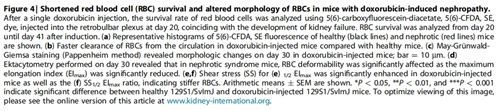
Twenty days after induction of DIN, coinciding with the development of reduced kidney function (Figure 1b), the fluorescent dye 5(6)-CFDA, SE,24 which is rapidly taken up into RBCs, was i.v. injected to examine the RBC clearance rate at the indicated time points in vivo. Representative histograms, shown in Figure 4a, indicate the removal of labeled RBCs from the circulation and replacement by unlabeled RBCs. Increased RBC loss was already apparent 3 days after administration of the dye, and clearance of RBCs was significantly faster in 129S1/SvImJ mice with DIN up to day 37. On day 41, z17% more RBCs were removed from the circulation in these mice compared with healthy mice (Figure 4b).

Cistanche improve kidney function and benefits kidneys
Images taken from a blood smear revealed morphologic changes in RBCs drawn from 129S1/SvImJ mice with DIN (Figure 4c) and Nphs2Dipod mice (Supplementary Figure S4A). In healthy mice, RBCs display a biconcave disc shape. In 129S1/SvImJ mice with DIN, we observed an increased number of stomatocytes (red stars), teardrop cells (black triangle), schistocytes (black points), and microcytic cells (black arrow) (Figure 4c). Nphs2Dipod mice showed an increased proportion of schistocytes (black points, Supplementary Figure S4A, lower image, left side), and cells were polychromatic (Supplementary Figure S4A, lower image, right side).
To further investigate RBC functional changes, deformability measurements on day 30 were performed using ektacytometry.32 RBC deformability was significantly reduced in 129S1/SvImJ mice with DIN as well as in Nphs2Dipod mice, as indicated by a reduced maximum elongation index (EImax) (Figure 4d and Supplementary Figure S4B). Shear stress for 50% (SS1/2) of EImax (Figure 4e) and, thus, SS1/2 EImax ratio (Figure 4f) were significantly increased in 129S1/SvImJ mice with DIN, indicating stiffer RBCs. SS1/2 of EImax was similar in Nphs2Dipod mice (Supplementary Figure S4C). SS1/2 EImax ratio tended to be augmented in Nphs2Dipod mice compared with healthy C57BL/6 mice; the difference did, however, not reach statistical significance (P ¼ 0.06) (Supplementary Figure S4D).


As exposure of RBCs to hypertonic extracellular conditions in vitro mimics the osmotic environment encountered in the kidney medulla, a cosmos can be performed on day 30 and several osmosensitive parameters were determined, as described previously.33 Omin represents the osmolality at minimum RBC deformability, beyond which RBCs would lyse with a further decrease in osmolarity. Omin values were higher in 129S1/SvImJ mice with DIN and shifted to the right (Figure 5a and d). A similar tendency toward a higher Omin was observed in Nphs2Dipod mice (Supplementary Figure S4E). Values of Ohyper, reflecting the hydration state of the cells, were significantly higher in 129S1/SvImJ mice with DIN (Figure 5b) but were similar in Nphs2Dipod mice and their respective control mice (Supplementary Figure S4F). The maximum deformability (EImax) at isotonicity is the point at which cells have attained maximum ellipticity. EImax at isotonicity was significantly reduced in 129S1/SvImJ mice with DIN (Figure 5c) but showed no differences in Nphs2Dipod mice compared with healthy C57BL/6 mice (Supplementary Figure S4G). Overall, these results indicate reduced membrane integrity and elasticity but also shape changes in 129S1/ SvImJ and Nphs2Dipod mice as well as a higher osmotic fragility of the RBCs from 129S1/SvImJ mice with DIN.


RBCs are metabolically reprogrammed during proteinuric kidney disease in mice
To better understand the molecular adaptations associated with changes in RBC abundance and morphology as a function of kidney injury, RBCs from 129S1/SvImJ mice with DIN and Nphs2Dipod mice were analyzed by mass spectrometry-based metabolomics (Figure 6a and Supplementary Figure S5A). Using this approach, the relative levels of 256 metabolites were determined for 129S1/SvImJ mice and Nphs2Dipod mice. To analyze these data in a systematic manner, multivariateanalyses, including partial-least squares discriminant analysis and hierarchical clustering analysis, were performed. Interestingly, partial-least squares discriminant analysis of RBC metabolomes from both models revealed similar clustering patterns.
Specifically, although the samples at the time of model induction clustered together with healthy samples from all time points, samples from nephrotic mice clustered independently from healthy control samples along with component 1 (Figure 6b and Supplementary Figure S5B). In line with clustering patterns evident in the 2 models, hierarchical clustering analysis of the metabolomics data for each model highlighted similar trends for metabolites involved in oxidative stress management, as well as nucleo- tides, amino acids, acylcarnitines, and fatty acids (Figure 6c and Supplementary Figures S5C, S6, and S7). For example, the levels of allantoin, a purine catabolite and marker of oxidative stress in RBCs,34 and reduced glutathione both significantly accumulated over time in both nephrotic mouse models, indicating ongoing reactive oxygen species generation and activation of the antioxidant glutathione system (Figure 6d and Supplementary Figure S5D). Likewise, the levels of the coenzyme A (CoA) precursor pantothenate accumulated over time (Figure 6e and Supplementary Figure S5E).


Similar patterns were evident in the levels of the free fatty acids hexadecenoic acid (C16:1), octadecenoic acid (C18:1), and docosapentaenoic acid (C22:5), although each model had unique temporal patterns (Figure 6f and Supplementary Figure S5F).
On top of fatty acids, acylcarnitines, including hydroxyoctanoyl-carnitine (AC C8-OH), hydroxydecanoyl- carnitine (AC C10-OH), and dodecanoyl-carnitine (AC C12:1), also responded to induction of proteinuric nephropathy in both models (Figure 6g and Supplementary Figure S5G).
Taken together, these findings suggest that on induction of proteinuric kidney disease in 2 similar mouse models, increased levels of oxidative stress may impart damage to acyl chains on membrane lipids. Because RBCs are devoid of the capacity to synthesize new lipids, they make use of a system that depends on phospholipase-mediated removal of damaged acyl chains and replacement with undamaged fatty acids. Referred to as the Lands cycle,35 this system depends on acyl-chain activation by conjugation to CoA, which establishes an equilibrium with acylcarnitine for membrane replacement36 (Figure 6h and Supplementary Figure S5H).
Proteinuric CKD patients with anemia display enhanced RBC death
To confirm that PS-exposing RBCs occur also in human CKD, as described earlier,37 we analyzed blood samples from 25 patients treated by our outpatient clinic. To match the mouse models that represent nephrotic syndrome with preserved GFR during the first 10 days, and then advanced CKD with reduced GFR from day 20 onwards (Figure 1 and Supplementary Figure S2), we analyzed 10 patients with primary nephrotic syndrome representing proteinuric CKD with preserved GFR (>60 ml/min per 1.73 m2) and 15 patients with CKD with nephrotic-range proteinuria and GFR <60 ml/min per 1.73 m2. The patient characteristics are shown in Table 1. Kidney disease–associated anemia, as defined by a hemoglobin concentration <13.5 g/dl in men and <12 g/dl in women, was observed in 4 of the 10 primary nephrotic patients (red triangles in Figure 7), whereas 14 of 15 CKD patients with nephrotic-range proteinuria and reduced GFR were anemic (Figure 7a). In the latter group, plasma EPO concentrations and reticulocyte production index were not increased (Figure 7b and c), consistent with reduced erythropoiesis. In fluorescence-activated cell sorting analysis, primary nephrotic patients and patients with advanced CKD had a higher rate of PS-exposing cells (mean, 1.0% 0.3% and 1.4% 0.7%, respectively) compared with healthy subjects (mean, 0.6% 0.1%; Figure 7d). RBC cell death in patients with primary nephrotic syndrome and advanced CKD was triggered by higher levels of reactive oxygen species (Figure 7e) and increased ceramide levels (Figure 7f). Augmented intracellular calcium concentration was found in patients with advanced CKD (Figure 7g).
Human RBCs from patients with primary nephrotic syndrome and advanced CKD showed morphologic alterations, as observed in the mouse models (Figures 4c and 7j–l and Supplementary Figure S4A). Although RBC morphology was normal in controls, anemic patients with primary nephrotic syndrome and advanced CKD patients had an increased number of teardrop cells (black triangles) and echinocytes (black crosses) (Figure 7k and l). In addition, target cells occurred in primary nephrotic patients with anemia and in patients with advanced CKD (red crosses; Figure 7k and l). All patient groups, including primary nephrotic patients without anemia, had an increased proportion of spherocytes (blue arrows; Figure 7j–l). To analyze the deformability of human RBCs, ektacytometry was performed. In comparison to healthy controls, maximum deformability (EImax) was reduced in patients with advanced CKD (Figure 7h); EImax tended to be lower in patients with a primary nephrotic syndrome without reaching statistical significance (Figure 7h). The parameters SS1/2, Omin, Ohyper, and EImax at isotonicity were not significantly different be- tween healthy controls, primary nephrotic patients, and patients with advanced CKD (Supplementary Figure S8A–D).

Cistanche benefits kidneys and help with CKD.
DISCUSSION
The present study reveals novel pathophysiological mechanisms leading to kidney disease–associated anemia in 2 murine models of proteinuric kidney disease with severely impaired kidney function. Our study demonstrates that in these models, anemia is the result of a reduced RBC lifespan triggered by exposure to PS and accelerated phagocytic clearance. Intriguingly, anemia in these mice developed despite stimulated erythropoiesis, suggesting that reduced RBC lifespan, through increased RBC cell death, might be an alternative explanation for these findings. Contrary to CKD patients with anemia (Figure 77), both mouse models were characterized by increased plasma EPO concentration. This can be surmised by the preservation of EPO-secreting ability in these models that probably spare the EPO-secreting cells located in the interstitium of the kidney. The increased EPO secretion in these models, however, does not invalidate the conclusion that RBC cell death is a major player in the pathogenesis of kidney disease–associated anemia. On the contrary, stimulation of erythropoiesis by increased EPO secretion can be considered as a compensatory mechanism to increased RBC death induced by kidney failure in these models. Along these lines, increased extramedullary erythropoiesis with increased spleen volume was recently observed in another proteinuric mouse model with anemia.38
In patients with proteinuric CKD and concomitant anemia, we also observed an increased percentage of PS-exposing RBCs along with higher levels of reactive oxygen species and ceramide. This suggests that accelerated RBC death might be involved in the pathogenesis of kidney disease–associated anemia in human CKD. Plasma EPO concentrations and reticulocyte production index were not increased in anemic CKD patients, pointing to reduced erythropoiesis, which in concert with RBC death is expected to aggravate kidney disease–associated anemia. The reasons for the loss of EPO secretion of the kidney in human CKD remain unclear. Remarkably, although not all patients with normal GFR had anemia, those with reduced GFR were all anemic, pointing to an effect of long-standing and advanced CKD. Notably, the relative EPO deficit in CKD can be overcome by using the new class of prolyl hydroxylase inhibitors,39 suggesting perturbed oxygen sensing as a possible cause for EPO hyposecretion.

Cistanche improve kidney functions and help with CKD.
Our data demonstrate diminished RBC deformability in both mouse models of proteinuric nephropathy, which may be directly related to elevated cytoplasmic Ca2þ levels.40 Together, these mechanisms could act in concert to facilitate the induction of RBC cell death and removal of senescent and injured RBCs from the blood circulation.15 Furthermore, we observed metabolic reprogramming in these cells, indicative of oxidative stress and membrane lipid remodeling. Although CoA and acyl-CoA were not directly measured in these samples, they are actively converted in RBCs to acylcarnitines by carnitine palmitoyl transferase.36 Accumulating levels of the latter compound class indicate activation of these mechanisms in nephropathy, as these metabolites are not readily transported across RBC membranes.41 In further support, we observed accumulation in both models of CoA precursors, including pantothenate, which is taken up42 and metabolized43 by RBCs, in parallel to increasing free fatty acids and decreasing free carnitine. Interestingly, we previously found that these alterations occur in association with supraphysiologic levels of intracellular Ca2þ.16 Although those results were generated ex vivo, we report herein similar responses in vivo. Furthermore, acylcarnitines are capable of directly modulating membrane properties44 and correlate with RBC deformability,45, as well as osmotic and oxidative hemolysis.46 Unconjugated free carnitine, promotes membrane deformability through the mediation of interactions between membrane proteins.47 Our observations of significantly decreased levels of carnitine in RBCs from mice with nephropathy, presumably due to increased consumption for the generation of acylcarnitines, may contribute to the impaired rheological parameters we observed in parallel.
Our findings suggest common mechanisms leading to RBC death in mice with both DIN and podocin deficiency, which may be related to both nephrotic-range proteinuria and, more important, the development of severe kidney failure in the mouse models observed from day 20 on. In humans, advanced CKD with reduced GFR is a strong predictor of anemia,48 and stimulation of RBC death could be related to the uremic milieu. One has to acknowledge that in advanced CKD, many factors and derangements might come into play and promote kidney disease–associated anemia. The contribution of heavy proteinuria to the stimulation of RBC death remains unclear, but, although not proven, might involve factors that are lost in the urine, such as transferrin or others regulating RBC metabolism.49 So far, the current treatment of kidney disease–associated anemia focuses on increasing erythropoiesis by iron or EPO substitution,50 by application of oral hypoxia-inducible factor protein stabilizers,51 or by oral or i.v. iron administration.52 However, these treatments do not consider increased RBC death. In a previous cross-sectional study in hemodialysis and peritoneal dialysis patients, we found that patients with a higher percentage of PS-exposing RBCs were treated with higher EPO doses.14 Therefore, amelioration of RBC cell death promises to be a possible therapeutic approach in treating kidney disease–associated anemia. In this context, the inhibitory effect of various pharmacologic agents on RBC cell death53 requires further human and animal studies.
In conclusion, altered cellular metabolism contributes to RBC dysfunction, enhanced RBC death, and hence anemia in mouse models of proteinuric CKD, despite increased serum EPO levels. The findings of this study may partly explain the mechanisms of anemia associated with CKD in humans.

Cistanche benefits kidney functions and help with CKD.
DISCLOSURE
Although unrelated to the contents of the articles, ADA and TN are founders of Omix Technologies, Inc. All the other authors declared no competing interests.
DATA STATEMENT
Data will be made available on reasonable request.
ACKNOWLEDGMENTS
The authors acknowledge the expert technical assistance of Andrea Janessa. These studies were supported by a grant from the German Research Foundation to RB (BI 2149/2-1) and FA (AR 1092/2-2). LS was supported by an Interdisziplinäres Zentrum für Klinische Forschung (IZKF) grant by the medical faculty of Tübingen University. SMQ was supported by resources from Canadian Blood Services. As a condition of Canadian government funding, this report must contain the statement “The views expressed herein do not necessarily represent the view of the federal government of Canada.”
AUTHOR CONTRIBUTIONS
RB and FA designed the study. Data collection was performed by RB, TN, MG, TD, DE, MW, LS, MX, JMB, MZK, KO, LK, IG-M, and BF.
Statistical analyses were conducted by RB, TN, MG, TD, LS, JMB, LK, IG-M, and ADh; and figures were generated by RB, TN, MZK, IG-M, LQ- M, BF, and ADh. RB, TN, ADA, MG, BNB, LS, AS, TB, MS, ALB, FG, SMQ,
and FA interpreted the data. The manuscript was written, reviewed, and edited by RB, TN, ADA, MG, BNB, TB, ALB, FG, SMQ, and FA.
SUPPLEMENTARY MATERIAL
Supplementary File (PDF)
Supplementary Materials and Methods.
Figure S1. Experimental design of the studies in 129S1/SvImJ and Nphs2Dipod mice.
Figure S2. Deletion of podocin expression and hallmarks of nephrotic syndrome in Nphs2Dipod mice.
Figure S3. Reduced red blood cell survival rate in experimental nephrotic syndrome in Nphs2Dipod mice.
Figure S4. Altered morphology and reduced deformability of red blood cells in Nphs2Dipod mice.
Figure S5. Metabolomics indicates the accumulation of oxidative stress and activation of membrane lipid remodeling within red blood cells in Nphs2Dipod mice.
Figure S6. Metabolomics indicates altered metabolism within red blood cells obtained from 129S1/SvImJ mice.
Figure S7. Metabolomics indicates altered metabolism within red blood cells received from Nphs2Dipod mice.
Figure S8. Shear stress at one-half of maximum red blood cell (RBC) deformability and RBC osmotic sensitivity are not significantly different in primary nephrotic syndrome and advanced patients with chronic kidney disease (CKD).
REFERENCES
1. Finkelstein FO, Story K, Firanek C, et al. Health-related quality of life and hemoglobin levels in chronic kidney disease patients. Clin J Am Soc Nephrol. 2009;4:33–38.
2. Efstratiadis G, Konstantinou D, Chytas I, et al. Cardio-renal anemia syndrome. Hippokratia. 2008;12:11–16.
3. Staples AO, Wong CS, Smith JM, et al. Anemia and risk of hospitalization in pediatric chronic kidney disease. Clin J Am Soc Nephrol. 2009;4: 48–56.
4. Kurella Tamura M, Vittinghoff E, Yang J, et al. Anemia and risk for cognitive decline in chronic kidney disease. BMC Nephrol. 2016;17:13.
5. Toft G, Heide-Jørgensen U, van Haalen H, et al. Anemia and clinical outcomes in patients with non-dialysis dependent or dialysis dependent severe chronic kidney disease: a Danish population-based study. J Nephrol. 2020;33:147–156.
6. Geddes CC. Pathophysiology of renal anaemia. Nephrol Dial Transplant. 2018;34:921–922.
7. Artunc F, Risler T. Serum erythropoietin concentrations and responses to anaemia in patients with or without chronic kidney disease. Nephrol Dial Transplant. 2007;22:2900–2908.
8. Erslev AJ, Besarab A. Erythropoietin in the pathogenesis and treatment of the anemia of chronic renal failure. Kidney Int. 1997;51:622–630.
9. Wish JB, Aronoff GR, Bacon BR, et al. Positive iron balance in chronic kidney disease: how much is too much and how to tell? Am J Nephrol. 2018;47:72–83.
Howard RL, Buddington B, Alfrey AC. Urinary albumin, transferrin and iron excretion in diabetic patients. Kidney Int. 1991;40:923–926.
AND etc.