PART Ⅰ: Anti-ageing Active Ingredients From Herbs And Nutraceuticals Used in Traditional Chinese Medicine: Pharmacological Mechanisms And Implications For Drug Discovery
Mar 04, 2022
Contact: Audrey Hu Whatsapp/hp: 0086 13880143964 Email: audrey.hu@wecistanche.com
Chun-Yan Shen1, Jian-Guo Jiang1, Li Yang1, Da-Wei Wang2 and Wei Zhu2
1College of Food and Bioengineering, South China University of Technology, Guangzhou, China, and 2The second Affiliated Hospital, Guangzhou University of Chinese Medicine, Guangzhou, China
Ageing, an unanswered question in the medical field, is a multifactorial process that results in a progressive functional decline in cells, tissues and organisms. Although it is impossible to prevent ageing, slowing down the rate of ageing is entirely possible to achieve. Traditional Chinese medicine (TCM) is characterized by the nourishing of life and its role in anti-ageing is getting more and more attention. This article summarizes the work done on the natural products from TCM that are reported to have anti-ageing effects, in the past two decades. The effective anti-ageing ingredients identified can be generally divided into flavonoids, saponins, polysaccharides, alkaloids and others. Astragaloside, Cistanche tubulosa acteoside, icariin, tetrahydrocurcumin, quer- cetin, butein, berberine, catechin, curcumin, epigallocatechin gallate, gastrodin, 6-Gingerol, glaucarubinone, ginsenoside Rg1, luteolin, icarisid II, naringenin, resveratrol, theaflavin, carnosic acid, catalpol, chrysophanol, cycloastragenol, emodin, galangin, echinacoside, ferulic acid, huperzine, honokiol, isoliensinine, phycocyanin, proanthocyanidins, rosmarinic acid, oxymatrine, piceid, puerarin and salvianolic acid B are specified in this review. Simultaneously, chemical structures of the monomers with anti-ageing activities are listed, and their source, model, efficacy and mechanism are also described. The TCMs with anti-ageing function are classified according to their action pathways, including the telomere and telomerase, the sirtuins, the mammalian target of rapamycin, AMP-activated kinase and insulin/insulin-like growth factor-1 signalling pathway, free radicals scavenging and the resistance to DNA damage. Finally, Chinese compound prescriptions and extracts related to anti-ageing are introduced, which provides the basis and the direction for the further development of novel and potential drugs.
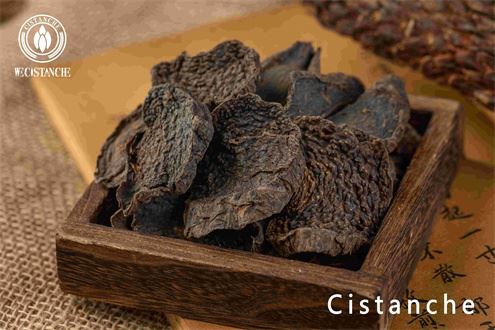
Traditional Chinese medicine (TCM) herb: Cistanche
LINKED ARTICLES
This article is part of a themed section on Principles of Pharmacological Research of Nutraceuticals. To view the other articles in this section visit http://onlinelibrary.wiley.com/doi/10.1111/bph.v174.11/issuetoc
Abbreviations
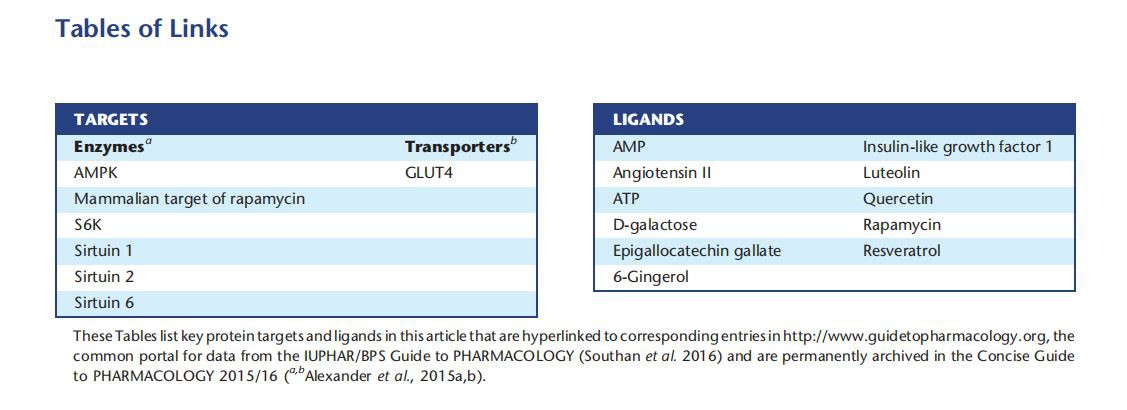
AMPK, AMP-activated kinase; AST, astragaloside; CAG, cycloastragenol; CCP, Chinese compound prescription; CR, caloric restriction; GSH-Px, GSH peroxidase; INS/IGF-1, insulin/insulin-like growth factor-1; JKSQ, Jinkui Shenqi; LWDH, Liuwei Dihuang; MDA, methane dicarboxylic aldehyde; mTOR, mammalian target of rapamycin; NRF2, nuclear factor erythroid 2- related factor 2; P. ginseng, Panax ginseng; R. puerariae, Radix puerariae; Sal B, salvia acid B; SIRTs, sirtuins; SIRT1, sirtuin1; SIRT6, sirtuin6; sMaf, small muscle aponeurotic fibrosarcoma; S6 K, ribosomal protein S6 kinase; TCM, traditional Chinese medicine; TFE, total flavones from Epimedium brevican; TOR, the target of rapamycin; VSMC, vascular smooth muscle cells。
Introduction
Ageing is the major risk factor for several life-threatening diseases. Ageing, a complex molecular process is driven by diverse molecular pathways and biochemical events that are influenced by the interplay of multiple genetic and environmental factors, could lead to progressive and deleterious changes in the whole organism (Ideker et al. 2001; Argyropoulou et al. 2013; Wong et al. 2003). A myriad of theories including mitochondrial mutation, oxidative damage, carbonyl toxification and free radical theory, which is currently the most widely accepted one, have been used to explain the mechanisms underlying the phenomenon of senescence (Yin and Chen 2005).
Excessive amounts of free radicals can attack cell membrane, nucleic acids, proteins, enzymes and other biological macromolecules through peroxidation, causing lipid peroxidation of unsaturated fatty acids on the cell membrane, cross-linking of nucleic acid and protein molecules, abnormality of DNA mutation or replication, together with the decline of enzyme activity, which consequently leads to serious damage on cell function and eventually results in senility and even death (Huang 2007). There are a number of papers and reviews supporting or questioning this theory (Alexeyev 2009; Lapointe and Hekimi 2010; Ristow and Schmeisser 2011). Moreover, a variety of molecular pathways have been identified as the main molecular causes of ageing, such as cellular senescence, mitochondrial dysfunction and telomere attrition, which is considered one of the best known molecular mechanisms of ageing both in humans and mice (Harley et al. 1990; Flores et al. 2008; Lopez-Otin et al. 2013). Telomere attrition could lead to age-related pathologies by resulting in the exhaustion of tissue- and self-renewal capacity of the stem cell compartments (Flores et al. 2005; Sharpless and Depinho 2007).
Mitochondrial DNA damage theory is also a research hotspot in recent years. Mitochondrial DNA is exposed to external environments thereby lacking protection from histones and DNA binding proteins and it is also vulnerable to oxygen free radical damage. What is worse, it is not easy to repair because of the lack of repair systems, after the injury (D’Aquila et al. 2012). Furthermore, the study found that the senescence of organisms is closely related to the regulation of genes including Toronto genes, longevity genes and apoptosis genes. In support, Tom Johnson succeeded in positioning the first ‘longevity gene’, age-1 (Friedman and Johnson 1988). Micro RNAs (miRNAs), post-transcriptional regulators of gene expression, could lead to inhibition of protein translation by binding inexactly to the 3′-untranslated regions of target mRNAs (Pan et al. 2015). In fact, ageing involves not only a myriad of genes and proteins but also changes in endogenous metabolites (Ryazanov and Nefsky 2002; Warner 2005; Panza et al. 2007; Yan et al. 2009). Metabolomics, the best analysis to fit the holistic concept of traditional Chinese medicine (TCM), has been widely used recently for the discovery of novel biologically active compounds and targets, and a series of age-related metabolites were proposed according to exploratory works on aged rats, dogs and humans (Williams et al. 2005; Williams et al. 2006; Berger et al. 2007; Schnackenberg et al. 2007; Wang et al. 2007; Law- ton et al. 2008; Cao et al. 2015;) including metabolic syndromes, cardiovascular disease, neurodegeneration and diabetes (Li et al. 2013a). Therefore, tackling ageing and its vicious spiral would be an effective approach to combating age-related diseases. In fact, research on age-related diseases has become a hot topic recently in the field (Martin 2011).
Reportedly, the most effective intervention in extending longevity in model organisms is caloric restriction (CR), which can not only increases longevity but also reduce the risk for most (if not all) age-related diseases. However, CR requires a permanent diet, which makes it difficult for many people to accept, thus limiting its popularity. Although Western medicine with anti-ageing effects has made some progress, side effects, specific targets and multiple drug resistance are worrying. For example, researchers in America found that rapamycin can prolong the lifespan of mice by about 14%; however, its immunosuppressive effect could lead to the invasion of infectious diseases. On the contrary, TCM can exert anti-ageing functions with unique dialectical treatment systems, multi-target mechanisms and few adverse reactions.
For example, it was shown that the extracts obtained from Rhodiola Rosea could increase the longevity of worms and flies without negative effects on reproduction or metabolic rate (Jafari et al. 2008; Wiegant et al. 2009). Moreover, integration of TCM, as well as Chinese materia medica, into the national healthcare delivery system has become an essential national policy in China, indicating that considerable emphasis has been given to the TCM research and development (Dang et al. 2016; Gao et al. 2015). Additionally, the popular use of metabolomics in ageing indicated the possibility for reconciliation and integration of Chinese and Western medicine.
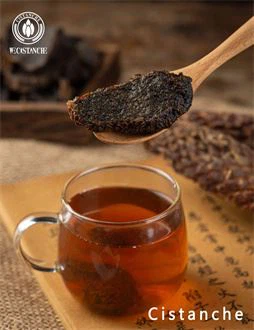
Chinese medicine that has the anti-ageing effects: cistanche
Mechanism of anti-ageing by TCM
Although a number of theories on ageing mechanisms have been put forward (Linda and David 2002), people know little about ageing compared with that of other areas in biology. Consequently, it is important as well as urgent to explore the mechanism of ageing and strategies of anti-ageing. TCM represents an extraordinary inventory of high diversity structural scaffolds that can offer promising candidate chemical entities in the major healthcare challenge of increasing healthspan and/or delaying ageing. Referring to the relevant literature published in the past two decades, the mechanisms of anti-ageing/age-related diseases of active ingredients from TCM are summarized below.
Regulation of telomeres and telomerase
Telomeres, composed of tandem repeats of the TTAGGG bound to an array of proteins, are specialized nucleotide sequences at the ends of chromosomes (Blackburn 2001; Chan and Blackburn 2004; Finkel et al. 2007). Telomere length is demonstrated to be related to the replicative lifespan of normal somatic cells. Indeed, the replication of normal somatic cells is limited by telomere shortening, which proceeds incrementally with each round of cell division, resulting in the loss of 50–200 terminal base pairs of the telomere in humans both in vitro and in vivo; thus, the telomeres become shorter (Watson 1972; Olovnikov 1973; Allsopp et al. 1992; Allsopp and Harley 1995). Telomere length mainly depends on telomerase, a ribonucleoprotein enzyme that can elongate telomeric repeats in the 5′-to-3′ direction, thus mitigating the end-replication problem (Blackburn 1991; Chan and Blackburn 2004).
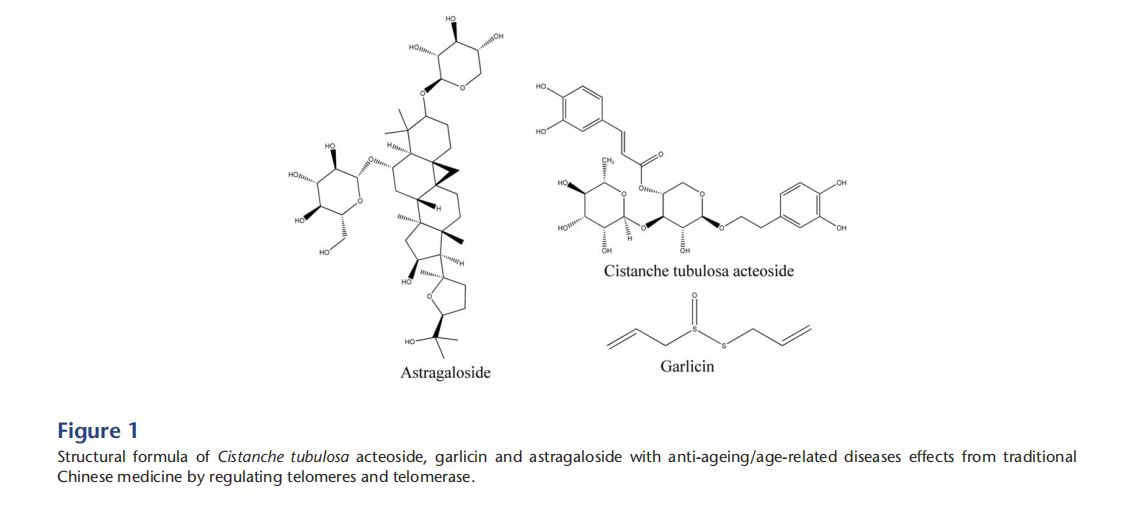
Recently, a growing number of results have demonstrated that some active ingredients and prescriptions of TCM could play distinct roles in anti-ageing via improving telomerase activity or suppressing telomere shortening (Table 1). For example, astragaloside (AST) cycloastragenol (CAG) (Figure 1) could exert anti-ageing effects in human embryonic lung fibroblasts by affecting the activity of telomerase and expression of the klotho gene (Guo et al. 2010), a novel gene closely related to human ageing. AST, a macromolecular saponin, has poor bioavailability when taken orally. Specifically, Liu et al. studied the physicochemical property of AST and CAG and their metabolism in vivo and in vitro. The experimental data showed that AST was easily transformed by the intestinal flora into metabolites with strong pharmacological activity, especially CAG which was the potent component of AST, exerting most of its efficacy (Liu 2013). Moreover, telomerase activity in testicular tissues of mice, which were gavaged with Cynomorium solarium (C. solarium) polysaccharide at 40 or 80 mg·kg—1·d—1, was clearly higher than that of mice treated with D-galactose, indicating that C. solarium poly- saccharide could exert anti-ageing effect by improving telomerase activity (Ma et al. 2009). In addition, flavonoids of Epimedium brevican (E. brevican) could significantly extend the population doublings of human diploid fibroblast cells from 53 to 64 generations, decrease the expression of p16 mRNA, increase the content of phosphorated Rb protein and protect the telomere length without activating telomerase (Hu et al. 2004). Meanwhile, metabonomic studies using liquid chromatography coupled with MS-investigated the anti-ageing effects of total flavones from E. brevican (TFE) on 4, 10, 18 and 24-month-old rats. Clearly, the TFE-treated group had smoother fur, more locomotor activities and better appetite compared with the untreated 24-month-old rats. The results indicated that the anti-ageing effects exerted by TFE might be related to the intervention on lipid metabolism and its anti-oxidation activity, as most of the age-related metabolites, such as saturated fatty acids, unsaturated fatty acids, ergothioneine, carnosine and deoxycholic acid, were reset to a younger level (Yan et al. 2009).
Great attention has been paid to telomere and telomerase by the medical community in recent years. With the rapid development of molecular biology, more and more drugs with anti-ageing features through controlling telomere length and telomerase activity will continue to be found and fully explored.
Regulation of sirtuins
Sirtuins (SIRTs), a group of NAD+-dependent deacetylases belonging to a class of highly conserved proteins, are widely distributed across the range of organisms from bacteria to humans and play distinct roles in regulating some cellular functions, such as gene repair, cell cycle, metabolism and oxidative stress, via deacetylation of histones and non-histone (Oberdoerffer and Sinclair 2007; Westphal et al. 2007). Notably, overexpression of SIRTs could extend lifespan in yeast, Drosophila and Caenorhabditis Elegans (C. Elegans) (Rogina and Helfand 2004; Viswanathan et al. 2005). Sirtuin1 (SIRT1) has been investigated most thoroughly and deeply among the SIRTs in mammals (Pillarisetti 2008). The possible mechanism involves two aspects. On one hand, SIRTs could increase stress resistance by activating negative regulation of proapoptotic factors such as p53 and forkhead box-O (FOXO) (Luo et al. 2001; Brunet et al. 2004). In fact, SIRT1 induced the deacetylation of p53 and subsequently reduced its binding capacity with cis-DNA components, thereby preventing it from inducing DNA damage and apoptosis and suppressing cell proliferation. Meanwhile, SIRT1 could deacetylate FOXO1 and enhance nuclear ectopic transcriptional activity, thus increasing the expression of antioxidant enzymes such as SOD (Marfe et al. 2011). On the other hand, SIRTs might regulate the body’s energy metabolism to suppress fat accumulation and increase insulin secretion from islet beta cells via stimulating metabolism-related genes such as PPARγ coactivator-1α (Schilling et al. 2006), thus leading to an increase in stress resistance and extension in lifespan.
Various studies have demonstrated that TCM can exert anti-ageing effects through the regulation of SIRTs (Table 2). One such example is resveratrol, which is a polyphenol particularly found in red wine, red grapes and tea and is the most potent regulatory factor of SIRT1 (Howitz et al. 2003; Li et al. 2016). Resveratrol can mimic the anti-ageing effect of CR, thus being able to regulate the average lifespan of the organism (Baur et al. 2006; Mouchiroud et al. 2010). Accumulating data published have confirmed that resveratrol can prolong the lifespan of yeast, nematodes, fruit flies and fishes (Bass et al. 2007; Mouchiroud et al. 2010; Wood et al. 2004a). Moreover, icariin (Figure 2), a principal active ingredient of Epimedium in Berberidaceae is another active compound that exerts anti-ageing effects (Lee et al. 1995). Icariin could im- prove the expression of SIRT6 and reduce the expression of NF-κB protein and the inflammatory response of old mice, indicating that the anti-ageing mechanism of icariin was likely to be closely related to NF-κB signalling pathway and SIRT6 histone deacetylase (Chen et al. 2012). It is likely that SIRT6 was up-regulated after treatment with icariin, specifically combined with the RELA subunit of NF-κB dimer, then attached to the downstream gene promoter of NF-κB, leading to H3K9 histone deacetylation. As a result, the chromosome configuration was changed and coiled tightly, thereby silencing the downstream target genes of NF-κB. Therefore, target gene transcription was reduced, and the cell senescence was diminished (Chen et al. 2012; Li et al. 2015). Additionally, Li et al. found that Cornus officinalis (C. officinalis) polysaccharide could slow the progression of age-related cataracts by sig- nificantly increasing the activity of SOD, the expression of SIRT1 mRNA and FOXO1 mRNA and reducing the expression of p53 mRNA, indicating that C. officinalis polysaccharides probably regulated the expression of downstream genes p53 and FOXO1 through regulating SIRT1, eventually inhibiting or delaying apoptosis of epithelial cells in the lens (Li et al. 2014).
Overall, many active ingredients of TCM can slow down ageing via the activation of SIRTs. So far, much attention has been paid to SIRT1, which is of great importance to anti-ageing. With the in-depth study on SIRT1 and molecular mechanisms of ageing, gene therapies targeted at SIRT1 will surely play a distinct role in extending human lifespan (Ling and Hu 2013).
Regulation of nutrient and energy-sensing pathways
The lifespan of many species is controlled by the nutrient and energy-sensing signal transduction pathways, including the target of rapamycin (TOR)/ribosomal protein S6 kinase (S6 K), the AMP-activated kinase (AMPK) and the insulin/insulin-like growth factor-1 (INS/IGF-1) signalling pathways (Kenyon 2010; Alic and Partridge 2011).
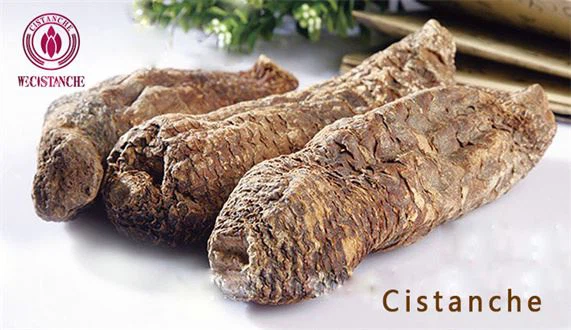
cistanche herb
Regulation of mTOR
The mammalian target of rapamycin (mTOR) is a serine/threonine-protein kinase that is evolutionarily highly conserved and can mediate the stress response. mTOR signalling is emerging as a critical regulator of ageing (Rajapakse et al. 2011) and partial inhibition of its downstream targets, such as S6 Kor protein synthesis, extends lifespan in yeast, worms, flies and mice (Kapahi et al. 2004; Kaeberlein et al. 2005; Hansen et al. 2007; Syntichaki et al. 2007).
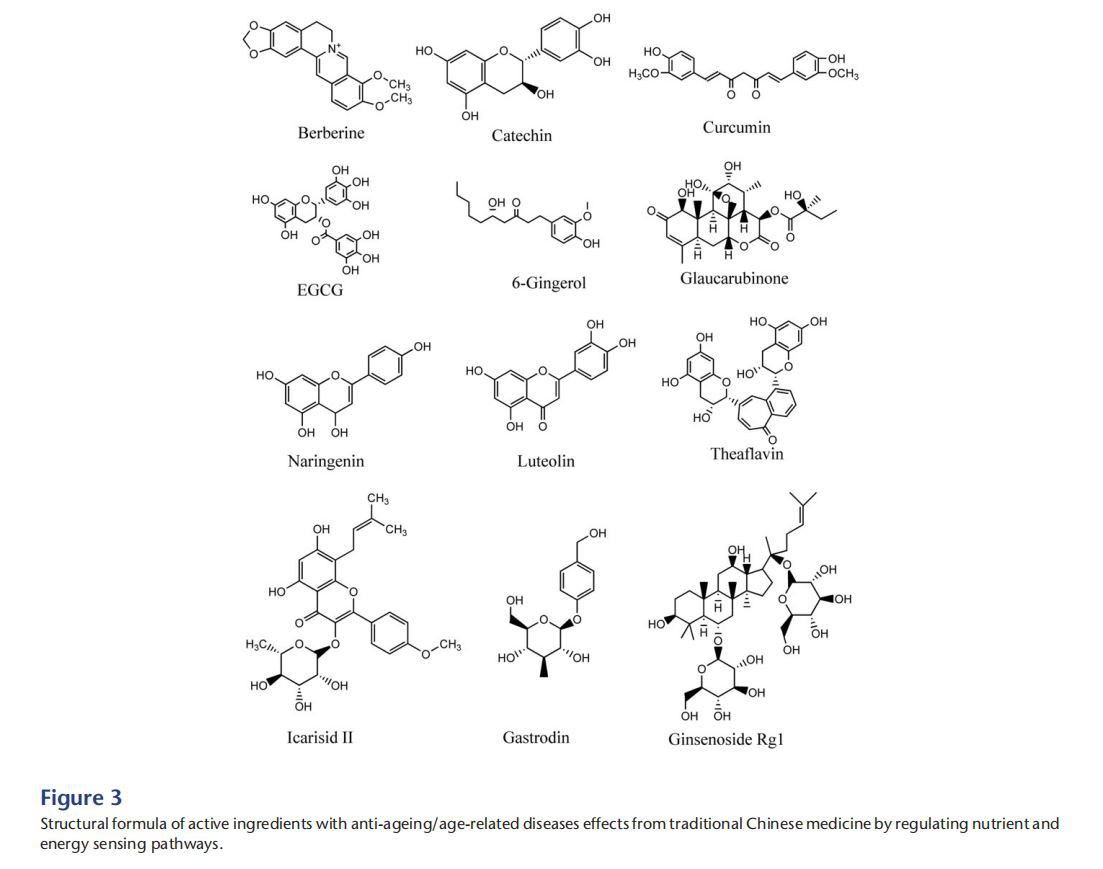
It is clearly possible to cure age-related diseases by rapamycin but the side effects (e.g. suppressing the immune system) are inevitable (Wu et al. 2015). Fortunately, TCM can function as rapamycin analogues, which are much safer, more effective with fewer side effects. Ginsenoside Rb1, a protopanaxdiol extracted from the roots of Panax ginseng (P. ginseng), which has been long used as a ‘precious tonic’ to support vitality and maintain homeostasis in China, was found to have preferable anti-ageing activities (Helliwell et al. 2015). Specifically, the natural senile mouse models of 20 months old were prepared and injected with ginsenoside Rb1 (Figure 3) at first. During the experimental period, there was a remarkable reduction of MAO activity in Rb1 group, a decline of PAI-1 protein expression in the high-dose Rb1 group and a decrease of mTOR protein phosphorylation levels in the low-dose Rb1 group as well as in the high-dose group, implying that the anti-ageing effects of ginsenoside Rb1 on mice may be partially or completely related to the mTOR/p70s6k pathway (Peng et al., 2014) Similarly, 6-gingerol (Figure 3) extracted from ginger could markedly decrease senescence in vascular smooth muscle cells (VSMCs) induced by angiotensin II, with cell cycle arrest in the G0/G1 phase and decreased protein levels of mTOR and phosphorylated p70-S6 K, suggesting that 6-gingerol may attenuate VSMCs senescence through inhibition of the mTOR/P70-S6 K pathway (Zhou et al. 2014).
Regulation of AMPK
AMPK has been defined as the ‘cellular energy regulator’, as it can sense the change in the AMP/ATP ratio and keep the balance between cellular carbon use efficiency and ATP yields (Geng et al. 2014; Zhang et al. 2014a). AMPK activity declines in the ageing skeletal muscle of mammals, while overexpression of AMPK directly activates DAF-16/FOXO by phosphorylation (Greer et al. 2007) and extends C. elegans lifespan even when CR starts in middle age animals (Apfeld et al. 2004).
In recent years, studies have found that TCM can fight against ageing and prevent age-related diseases by modulating the activity of AMPK. For example, the total saponins of Panax notoginseng inhibited H9c2 apoptosis induced by serum, glucose and oxygen deprivation and prevented the reduction of mitochondrial membrane potential, as well as reducing the positive rate of TdT-mediated dUTP nick end labelling cells in myocardial tissue and increased levels of p-AMPK protein, in a dose-dependent manner, indicating that its anti-ageing function may be related to AMPK activation (Yang et al. 2012). Reportedly, curcumin (Figure 3) activates signalling pathways downstream of the anti-ageing modulators AMPK and the transcription factor Nrf2 and suppresses inflammatory processes mediated by NF-kB signalling (Salminen et al. 2012; Surh et al. 2008). Because of these promising findings, curcumin was tested in humans as a possible treatment for Alzheimer’s disease (Baum et al. 2008; Ringman et al. 2005).

Regulation of INS/IGF-1
INS/IGF-1 can affect the lifespan of a variety of organisms including yeast, worms, flies, mammals and humans, characterized by the weakening of insulin signalling, the enhancement of insulin sensitivity and the reduction of the plasma levels of insulin-like growth factor-1 (Bonafe et al.. 2003; Longo and Finch 2003; Cheng et al. 2004; Richardson et al. 2004). Roth et al. have reported that people with low insulin levels usually have longer survival (Roth et al. 2002).
The INS/IGF-1 signalling pathway can be used as a new target for developing drugs to prevent and treat age-related diseases, thus delaying ageing and prolonging life. As a result, much attention has been paid to the correlation between INS/IGF1-signalling pathway and senescence (Cheng et al. 2004). Cai et al. found that acaricide II could increase thermo- and oxidative stress tolerance, decrease the rate of locomotion decline in late adulthood and extend lifespan by 20% in worms, and it was postulated that the lifespan extension caused by acaricide II was dependent on the INS/IGF-1 and DAF-2/FOXO (and likely HSF1) signalling pathways (Cai et al. 2011). There is much work on TCM regulating nutrient and energy-sensing pathways to delay ageing and prevent age-related diseases and some specific examples are shown in Table 3.
From the data shown above, we draw the conclusion that the nutrient-sensing signalling pathway could control lifespan in many species, and this possibility has received much support from a large number of experiments. What is more, INS/IGF, TOR and AMPK signalling pathways can systematically coordinate to modulate each other, thereby controlling cellular/organism homeostasis and function in response to adverse environmental conditions.

cistanche
Free radicals scavenging
Generated from the mitochondria electron transport chain, ROS are closely related to ageing (Lee and Wei 2001). Although ROS are much needed (at low concentration) for the body to perform normal physiological functions, including transferring energy to maintain the vitality, killing cells, eliminating inflammation and decomposing poisons; abnormally high levels of ROS will lead to ageing and even death, as they can trigger free radical chain reactions because of its unpaired electrons and high reactive activities (Chen 2004; Jia et al. 2007).
TCM exerts free radical scavenging mainly through three ways. Firstly, TCM can achieve the purpose by enhancing the function of the antioxidant system in the body by increasing the activity and content of various antioxidant enzymes such as SOD and GSH peroxidase (GSH-Px). The stress-induced synthesis of some of these enzymes is mainly triggered by Nrf2, which plays a central role in the protection of cells against oxidative and xenobiotic damage (Kensler and Wakabayashi 2010; Sykiotis and Bohmann 2010). Briefly, Nrf2 could activate transcription in response to oxidative stress mainly by translocating into the nucleus and recruiting the small muscle aponeurotic fibrosarcoma (sMaf) protein when stimulated (Espinosa et al. 2014). Then, the Nrf2-sMaf heterodimer binds to the antioxidant response element, which is a cis-acting DNA regulatory element that activates the promoter region of many genes encoding phase II detox- ification enzymes and antioxidants, thereby contributing to the maintenance of cellular redox homeostasis (Lee et al. 2015). Reportedly, honokiol (Figure 4) could achieve desirable anti-ageing effects by decreasing the content of methane dicarboxylic aldehyde (MDA) and increasing the activity of antioxidant enzymes, such as SOD and GSH-Px in serums and tissues of mice injected with D-galactose for six consecutive weeks to simulate natural-aged mice (Hao et al. 2009).
Secondly, TCM can scavenge free radicals directly. For example, C. solarium extracts (20 mg·mL—1) enhanced cognitive behaviour, increased resistance to stress and extended female mean lifespan of flies, indicating that C. solarium flavonoids acted as free radicals scavengers (Yu et al. 2010; Liu et al. 2012).
Thirdly, TCM can inhibit lipid peroxidation. Lipid peroxidation is a common way of damaging tissues by oxygen free radicals through the following ways: oxygen free radicals + cell membrane lipid → peroxidation reaction→ lipid peroxidation → MDA + cell components → lipofuscin (Xu et al. 2006). In support, oxymatrine extracted from Sophora flavescens could improve the learning and memory ability of ageing mice induced by intraperitoneal injection of D (+)-galactose, and the anti-ageing effect was possibly related to its resistance to oxygen free radicals, as well as lipid peroxidation. Furthermore, a recent study demonstrated that oxymatrine could be in vivo converted to matrine which might be a novel drug used for curing type 2 diabetes and hepatic steatosis (Wang et al. 2005; Zeng et al. 2015). The majority of published studies are listed in Table 4.
To sum up, a number of experiments have proved that ageing is closely related to free radicals, the theory of which has been widely accepted and becoming an active area. As stated above, TCM can exert anti-ageing activities by free radicals scavenging, anti-lipid peroxidation and up-regulation of the antioxidative defence system.
NEXT PART Ⅱ TO BE CONTINUED