Ecological Benefit Analysis Of Restoration Of Degraded Environment By Artificial Tamarix-Cistanche
Mar 04, 2022
Contact: Audrey Hu Whatsapp/hp: 0086 13880143964 Email: audrey.hu@wecistanche.com
Lei Jiang china university of geosciences
Abstract
The Hotan Region in Xinjiang, China is a typical arid area. Natural factors determine that the ecological stability of the area is poor, easy to be damaged, and difficult to recover. In order to improve the local ecological environment, this study explored an ecology restoration model with the artificial Tamarix-Cistanche. After the long-term monitoring and comparison at four test sites, it was found that this model also increased the per capita income, reduced the poverty in local farmers, and solved the problem of no direct economic benefit from foresting, as well as the following ecological benefits (1) improving the soil properties, and increasing its powder content and fertility, (2) improving the regional microclimate, reducing the daily temperature and relative humidity ranges, and reducing the regional wind speed, (3) restoring the biodiversity, increasing the vegetation coverage and the number of animals and plants, and enhancing the water and fertility retention of the soil.
Introduction
The Hotan Region in Xinjiang, China is a typical arid area. It is the natural factors that result in its reduced amount of living beings, simple ecological structure, poor stability, vulnerability, difficulty in restoration, and other fragile characteristics (Fang et al. 2001; Zhang et al. 2011). Growing along the edge of the desert, Tamarix Chinensis is able to resist the desert invasion (Li et al. 2010; Liu et al. 2008). Cistanche is also a valuable herb in traditional Chinese medicine. It is widely used in Chinese medicine and health care non-prescriptively due to its benefits of enhancing immunity and promoting metabolism. It is concluded that, as a promising business, the Artificial Tamarix-Cistanche model will both improve the living conditions of local farmers and restore the desert ecological environment. On the basis of fully understanding the importance of ecological restoration, this paper explored the ecology restoration model with the Artificial Tamarix-Cistanche, scientifically analyzed and assessed the ecological benefits for Hotan after its implementation, provided an important theoretical basis for the promotion and application of ecology restoration project, and played a practical role in promoting the sustainable development of the local agriculture and forestry.

Materials And Methods
Four representative and monitorable objects (Moyu County, Yutian County, Cele County, and Pishan County) in Hotan were selected for the Restoration Project with the Artificial Tamarix-Cistanche,. The ecological benefits (including the local soil improvement, regional microclimate conditioning, and biodiversity restoration) after the implementation of the ecological restoration project with the Artificial Tamarix-Cistanche, were analyzed by way of comparing the long-term monitoring results and data at the test sites. Wherein, the monitored sites were 4-year-old Artificial Tamarix Chinensis forests, and the control sites were bare desert nearby.

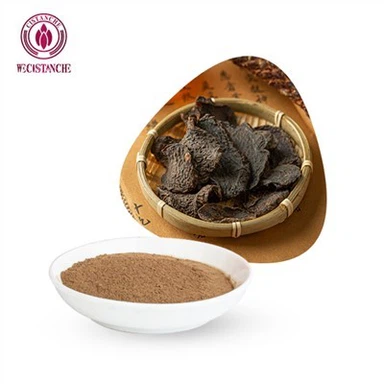
Tamarix-Cistanche
Results
Soil improvement
Changes in soil properties
The mechanical composition of all soil samples was determined. It can be found from the results (Table 1) that the powder contents at different depths of the topsoil taken from the four test sites were significantly higher than those from the control sites. The average values of these contents are as follows: Moyu 7.34%, Yutian 6.32%, Cele 7.57% and Pishan 6.88%, about 22.21%, 77.85%, 21.27%, and 44.62% higher than the control sites respectively. The overall performance of the restoration is as follows: Yutian > Pishan > Moyu > Cele.
Changes in soil chemical properties
The soil organic matter, organic carbon, total N, total P, total K and other chemical components were determined. It can be found from the results (Table 2) that these parameters of the soil layers of the four test sites were higher than those of the control sites. The average soil organic matter content in the order from large to small is as follows: Pishan 57.21 g/kg, Cele 54.43 g/kg, Moyu 45.10 g/kg and Yutian
40.79 g/kg, about 30.29%, 16.97%, 14.35% and 11.19% higher than the control sites respectively, of which the 0–20 cm layer taken from Pishan County showed a highest value of 65.34 g/kg, about 1.28 times of the same layer taken from the corresponding control site. The average soil organic carbon in the order from large to small is as follows: Cele 0.78 g/kg, Pishan 0.77 g/kg, Yutian 0.64 g/kg, Moyu
0.56 g/kg, about 14.15%, 29.78%, 19.88% and 5.69% higher than the control sites respectively, of which the 0–20 cm layer taken from Pishan County showed a highest value of 0.89 g/kg, about 1.24 times of the same layer taken from the corresponding control site. For the total N, total P and total K, the average total N in the soil layers taken from Pishan County was highest of 0.093 g/kg, the average total P in the soil layers taken from Moyu County and Cele County was highest of 0.57 g/kg, and the average total K in the soil layers taken from Yutian County was highest of 19.31 g/kg.

chemical properties of cistanche
Regional microclimate improvement
Temperature changes
In this study, the temperature was observed in each artificial Tamarix Chinensis forest at each test site during the daytime, and their daily average temperature ranges were calculated and compared with the respective control sites. It can be seen from Table 3 that significant reduction of the day-time daily temperature ranges in April (0.5–1.5 °C) and August (4.4–4.9 °C) in the artificial Tamarix Chinensis forests at the four test sites were observed.

Humidity changes
Also in this study, the humidity was observed in each artificial Tamarix Chinensis forest at each test site during the daytime, and their daily average humidity ranges were calculated and compared with the respective control sites. It can be seen from Table 4 that significant reduction of the day-time daily humidity ranges in April (1.4–2.2 °C) and August (5.9–8.9 °C) in the artificial Tamarix Chinensis forests at the four test sites were observed.


Wind speed changes
The wind speed was measured in the artificial Tamarix Chinensis forests at each test site. It can be seen from Tables 5 and 6 that the Artificial Tamarix Chinensis forests at the four test sites could effectively attenuate the wind speed. In April, the measured average wind speed at each test sites was 5.13 m/s on the windward side, about 90.97% of that at the control sites. The significant relative wind speed reduction was observed in the forest belt, about 80.64% of that at the control sites. The best relative wind speed reduction was observed on the leeward side, about 74.65% of that at the control sites. In August, the average wind speed on the windward side for all test sites was of
2.59 m/s, equal to 92.10% of the average for all control sites. The relative wind speed in the forest belt was significantly decreased from the speed on the windward side, equal to 42.31% of the average for all control sites. The largest wind speed decrease was observed on the leeward side, equal to 29.08% of the average for all control sites.
Biodiversity Restoration
The plant samples taken from the Artificial Tamarix Chinensis forests at the test sites were surveyed. It can be seen from Table 7 that the Artificial Tamarix Chinensis forests at the four test sites significantly improved the vegetation coverage. In the Tamarix Chinensis forest in Moyu County, the average tree height was of 135.5 cm with high coverage, but low plant diversity. There were only a few herbaceous plants in this Tamarix Chinensis forest, such as salsola collina and agriophyllum squarrosum. In the Tamarix Chinensis forest in Yutian County, the average tree height was of 113 cm, with low coverage. There were many areas covered by the reed. In the Tamarix Chinensis forest in Cele County, the average tree height was of 164 cm, with low coverage and few plant species. There was some salsola collina in addition to reed. In the Tamarix Chinensis forest in Pishan County, the average tree height was of 157 cm with high coverage and increased number of species. There were many herbaceous plants such as reed, apocynum venetum and salsola collina.

Discussion
Soil improvement bene¦t analysis
The soil texture is one of the important physical properties of soil, which is also an important index. The survival and growth of the Artificial Tamarix Chinensis forests greatly depend on the powder content(Deng et al. 2016; Dexter et al. 2004). As seen from the vertical distribution of the soil grain size (Fig. 1), the grain size composition was changed as follows: the mass percentage of sand decreased with the increase of the soil depth, and the mass percentage of powder and clay increased with the increase of the soil depth. The proportion of the powder in the soil texture at each test site was slightly higher than that of each control site. It indicates that the growth of the Artificial Tamarix Chinensis forests could improve the soil texture and contribute, to a certain extent, to the growth of the herbaceous plants within the forest, which is further beneficial to improve the soil texture. However, it takes a long time before significant change can be observed other than the short period of this project. The soil fertility generally depends on the soil organic matter as a key material basis.
Figure 1 Vertical distribution of soil particle size in different experimental areas
The soil organic matter content is an important indicator of soil fertility(Six et al. 2000; Yin et al. 2010). In this project, the content of the organic matter in each soil layer at each test site was higher than that at each control site respectively (Fig. 2). For the distribution in soil, the organic matter in the layer between 0–20 cm was of highest and gradually decreased in layers from 20 to 60 cm, but not significant. It is speculated that Tamaxix Chinensis was inoculated with the Cistanche and greatly affected by human activities, such as annual ploughing, inoculation and Cistanche harvesting, causing a large amount of organic matter buried in the lower layers. Therefore, little difference in organic matter content was observed among different soil layers.
Figure 2 Vertical distribution of soil organic matter in different experimental areas
The soil organic carbon is a key component of the arable soil, and plays a very important role in soil fertility, environmental protection and sustainable development of farmlands(Sartori et al. 2007; Su et al. 2018; Wang et al. 2010; Zhang et al. 2018). In this project, higher content of organic carbon in each layer at each test site (except Moyu County) was observed than that at the corresponding control site (Fig. 3).
Since the organic carbon comes from the soil organic matter, the same trend can be observed in terms of organic carbon and organic matter,
i.e. decreasing from top to bottom.
Figure 3 Vertical distribution of soil organic carbon in different experimental areas
Same as the organic matter, the three necessary nutrients for plant growth, N, P, and K, are mainly derived from the accumulation of biological organisms (Zuo et al. 2010). In this project, the distribution of soil total N, total P and total K at each test site were basically the same as that of the organic matter, and their contents were higher than those at the control sites (Fig. 4). Therefore, it can be seen that the growth of the Artificial Tamarix Chinensis forests could enhance the supply of soil N, P and K. And the individual difference may depend on the different soil parent material and soil organic matter. In addition, the annual harvesting of Cistanche could also take away certain amount of N, P and K, an unignorable reason accounting for such difference.
Figure 4 Vertical distribution of soil total N, P and K in different experimental areas
To clarify the correlation among the physical and chemical properties of the soil at the ecology restoration sites, the correlation analysis of the average values for the different indicators of each soil layer was conducted. Let X1: organic matter (g/kg), X2: organic carbon (g/kg), X3: total N (g/kg), X4: total P (g/kg), X5: total K (mg/kg), and X6: grain size < powder (%), and the relevant analysis results are shown in Table 8.

It can be seen from the above table that there is close correlation among the soil physical and chemical factors. Significant positive correlation among soil organic matter, organic carbon, total N, total P and total K was observed to be consistent with the theory. Secondly, significant positive correlation was also observed between the soil organic matter content and soil grain size < powder content, indicating that with the increase of the organic matter content in soil, there were more frequent microbial activities, faster decomposition rate of the sand and better optimization and improvement in soil texture.At the same time, there is close correlation between the composition of soil particles and the content of N and P in soil. In general, higher proportion of fine particles generates finer texture, and it is more favorable for the absorption and storage of the nutrients. The increased nutrient contents could be, in turn, conducive to the formation of the soil aggregate structure and to the improvement of the soil stability(Yang et al. 2016; Yi et al. 2007).
Regional microclimate improvement bene¦t analysis
The regional microclimate refers to that, within the limited range of the Artificial Tamarix Chinensis forests in the ecology restoration area, the local meteorological factors, such as light, temperature and humidity, are significantly different from those outside of the range. Its formation is due to the radiation characteristics of the underlying surface and the different exchange process with the atmosphere(Dale et al. 1999).
In this project, there was consistency in the daily temperature ranges of the artificial Tamarix Chinensis forests at all test sites (Fig. 5). The daily trend was to increase and then gradually decrease, with a parabolic shape. The highest temperature was observed at about 14:00 in local time. In general, the regulation of the air temperature with the windbreak forest in August is more obvious than that in April. This is due to the hot temperature in summer, the lush canopy, the reduced net radiation, the lowered solar radiation and long-wave radiation at the arrival zone, and absorption of much heat by the transpiration of the trees. In general, the regional microclimate improvement of temperature by the Artificial Tamarix Chinensis forest is mainly reflected in the stabilization of the temperature on both low and high ends of the temperature range.
Figure 5 Diurnal temperature variation during April and August in different experimental areas
There was consistency in the daily relative humidity ranges of the artificial Tamarix Chinensis forests at all test sites. The relative humidity at the test sites was higher than that at the control sites both in April and August (Fig. 6). The effectively increased relative humidity within the forests was mainly due to the occlusion of the canopy, reduced wind speed, weakened turbulent exchange, hindered diffusion of water vapor, and prolonged detention of the water vapor from the canopy transpiration and soil evaporation. The daily trend was exactly opposite to the temperature. It was decreased and then increased with an inverted parabolic shape. The lowest relative humidity was observed at about the time of the highest temperature (14:00–16:00) when there were calm wind and fastest transpiration of the leaves and crops. In addition, the regulation of the air relative humidity with the windbreak forest in August is more obvious than that in April. This is due to the lush canopy blocking the exchange between inside and outside of the forest and to the powerful root system absorbing enough soil moisture for the consumption of the transpiration and supplying the moisture in the air(Freedman et al. 2014; Yin et al. 2007).
Figure 6 Diurnal relative humidity variation during April and August in different experimental areas
Reduced wind speed is the most basic benefit of Artificial Tamarix Chinensis forests. In this project, significantly reduced wind speed by the Artificial Tamarix Chinensis forests was observed (Fig. 7). The wind speed reduction in August was significantly better than that in April, due to the lush canopy in summer. The leaves were less in April and the wind blocking was largely achieved by the branches of the trees. The windproof performance was elevated in August due to the growth of branches and leaves, the friction of which, together with the trunks, consumed more kinetic energy of the wind (Liu et al. 1996; Ma et al. 2009; Okin et al. 2006).
Figure 7 Change of relative wind speed during April and August in different experimental areas
Biodiversity Restoration Benefit Analysis
After the implementation of the ecology restoration project with the Artificial Tamarix-Cistanche, the forest vegetation coverage was enlarged to provide habitat for the growth and development of other living creatures, and therefore the biodiversity was improved especially at the test sites with significantly enlarged coverage (Fig. 8). The increased plant roots in the soil due to the increased plant mass played a great role in soil agglomeration, conducive to maintaining water and soil. The improved biodiversity also increased the water and fertility retention of the soil (Bestelmeyer et al. 2006; Han et al. 2008; Su et al. 2007).
Figure 8 taken by Lei Jiang,obtained the permission of Jiang Lei

cistanche deserticola extract
Conclusions
The Artificial Tamarix Chinensis forest could decompose and reduce the content of sand in the soil, and thereby increase the content of clay and powder. The sand content was decreased and the clay and powder contents were increased with the increase of the soil depth. From the determination of a series of chemical substances, such as the organic matter, organic carbon, N, P and K, the Artificial Tamarix Chinensis forest could increase their contents and therefore the soil fertility. There is a trend of content decreasing with the increase of the soil depth. As to the monitoring of the regional microclimate, the artificial Tamarix Chinensis forests at different test sites could significantly reduce the daily temperature and relative humidity ranges and effectively reduce the wind speed in April and August. The protection and regulation performance of the Artificial Tamarix Chinensis forests was significantly better in August than in April. The ecology restoration project with the Artificial Tamarix-Cistanche increased the local biodiversity, especially at the test sites with significantly enlarged coverage.
References
1.Bestelmeyer BT, Trujillo DA, Tugel AJ. A multi-scale classification of vegetation dynamics in arid lands: What is the right scale for models, monitoring, and restoration? J Arid Environ. 2006;65:296–318. ().
2.Dale MRT. Spatial Pattern Analysis in Plant Ecology. Cambridge: Cambridge University Press; 1999. pp. 31–49. ().
3.Deng L, Yan WM, Zhang YW, Shangguan ZP. Severe depletion of soil moisture following land-use changes for ecological restoration: evidence from northern China. For Ecol Manag. 2016b;366:1–10. ().
4.Dexter AR. Soil physical quality: part I. theory, effects of soil texture, density, and organic matter, and effects on root growth. Geoderma. 2004;120(3):201–14. ().
5.Fang CL, Zhang XL. Advances in ecological reconstruction and economic sustainable development in arid zone. Ecology. 2001;21:1163–70. ().
6.Freedman A, Gross A, Shelef O, Rachmilevitch S, Arnon S. Salt uptake and evapotranspiration under arid conditions in horizontal subsurface flow constructed wetland planted with halophytes. Ecol Eng. 2014;70:282–6. ().
7.Han L, Wang HZ, Zhou ZL, LI ZJ. Spatial distribution pattern and dynamics of the primary population in a natural Populus euphratica forest in Tarim Basin, Xinjiang, China. Front. For in China. 2008;3(4):456–61. ().
8.Li Z, Wu S, Chen S. Bio-geomorphologic features and growth process of Tamarix nabkhas in Hotan River Basin, Xinjiang. J Geog Sci. 2010;20(2):205–18. ().
9.Liu B, Zhao WZ, Yang R. Characteristics and spatial heterogeneity of Tamarix ramosissim of Nebkhas at desert–oasis ecotone. Aata Ecologica Sinica. 2008;28:1446–55. () (in Chinese).
10.Liu MT. Tamarix L. and its extending in the desert region of Xinjiang. Journal of Desert Research. 1996;04:101–2. :(in Chinese) ().
11.Ma Q, Wang J, Li X, Zhu S, Liu H, Zhan K. Long-term changes of Tamarix-vegetation in the oasis-desert ecotone and its driving factors: implication for dryland management. Environ Earth Sci. 2009;59:765–74. ().
12.Okin GS, Gillette DA, Herrick JE. Multi-scale controls on and consequences of aeolian processes in landscape change in arid and semi- arid environments. J Arid Environ. 2006;65:253–75. ().
13.Sartori F, Lal R, Ebinger MH, Eaton JA. (2007) Changes in soil carbon and nutrient pools along a chronosequence of poplar plantations in the Columbia Plateau, Oregon, USA. Agric Ecosyst Environ 122:325–339.
14.Six J, Paustian K, Elliott E, Combrink C. Soil structure and organic matter I. Distribution of aggregate-size classes and aggregate- associated carbon. Soil Sci Soc Am J. 2000b;64:681–9. ().
15.Su CC, Ma JF, Chen YP. Biochar can improve the soil quality of new creation farmland on the Loess Plateau. Environ Sci Pollut Res. 2018;26(3):2662–70. ().
16.Su YZ, Zhao WZ, Su PX, Zhang ZH, Wang T. Ecological effects of desertification control and desertified land reclamation in an oasis– desert ecotone in an arid region: a case study in Hexi Corridor, northwest China. Ecol Eng. 2007;29:117–24. ().
17.Wang YG, Li Y, Ye XH, Chu Y, Wang XP. Profile storage of organic/inorganic carbon in soil: from forest to desert. Sci Total Environ. 2010a;408:1925–31. ().
18.Yang HC, Wang JY, Zhang FH. Soil aggregation and aggregate-associated carbon under four typical halophyte communities in an arid area. Environ Sci Pollut Res. 2016;23(23):23920–9. ().
19.Yi L, Ma J, Li Y. Soil salt and nutrient concentration in the rhizosphere of desert halophytes. Acta Ecol Sin. 2007;27:3565–71. ().
20.Yin CH, Feng G, Tian CY, Bai DS, Zhang FS. Influence of tamarisk shrub on the distribution of soil salinity and moisture on the edge of Taklamakan desert. China Environmental Science. 2007;27(5):670–5. () (in Chinese).
21.Yin CH, Feng G, Zhang F, Tian CY, Tang C. Enrichment of soil fertility and salinity by tamarisk in saline soils on the northern edge of the Taklamakan Desert. Agric Water Manag. 2010;97:1978–86. () (in Chinese).
22.Zhang J, Chen GY, Yang WF. Drought researches Progress Review. Yangtze River. 2011;42(10):65–9. () (in Chinese).
23.Zhang L, Zhao W, Zhang R, Cao H, Tan WF. Profile distribution of soil organic and inorganic carbon following revegetation on the Loess Plateau, China. Environ Sci Pollut Res. 2018;25(30):30301–14. ().
Zuo XA, Zhao XY, Zhao HL. Spatial pattern and heterogeneity of soil organic carbon and nitrogen in sand dunes related to vegetation change and geomorphic position in Horqin Sandy Land, northern China. Environ Monit Assess. 2010;164:29–42.
Figures