Comparison Of The Current Situation Of The Cistanche Tubulosa Industry: Xinjiang's Production Areas Lead The High-quality Development Of The Industry
May 20, 2026
Cistanche tubulosa, known as the "desert ginseng" and "soft gold", is listed as a top-grade crop in the "Shennong Bencao Jing". It has triple values of medicinal, health, and ecological, and is the core pillar crop of the characteristic sand industry in the northwest desert areas of China. At present, the core production areas of Cistanche tubulosa in China are concentrated in Xinjiang and Inner Mongolia, which rely on unique desert resources to form distinctive industrial patterns. However, in terms of quality, scale, industrial potential, and development prospects, the Xinjiang production area, with its inherent advantages and acquired layout, is comprehensively superior to the Inner Mongolia production area, becoming the core engine for the high-quality development of China's Cistanche tubulosa industry, leading the industry towards a new stage of standardization, scale, and high added value.
Comparison of growth environment: Xinjiang has superior innate endowments, laying a foundation for quality
Cistanche tubulosa is a typical parasitic plant in the desert, and its growth strictly depends on the host plants (such as Haloxylon ammodendron and Salix matsudana) and the ecological environment of drought, sufficient light, and loose soil. The natural conditions of the production area directly determine the quality level of Cistanche tubulosa. The growth environment in the two major production areas differs significantly, with Xinjiang's innate advantages being particularly prominent.

Desert living cistanche
The main production areas of Inner Mongolia's Cistanche tubulosa are concentrated in Alxa League, Kubuqi Desert, and other areas. The annual precipitation here is less than 200 millimeters, and the temperature difference between day and night can reach 15-20 ℃. The sandy soil is loose and breathable, and it was once known as the "hometown of Chinese Cistanche tubulosa" for producing "authentic top-quality" Cistanche tubulosa. However, due to geographical limitations, the water sources in Inner Mongolia's production areas are relatively scarce and rely heavily on natural precipitation. In addition, the fertility of desert soil is low, and some areas suffer from intensified desertification and unstable growth of host plants, which, to some extent, restricts the quality stability of Cistanche tubulosa.
Cistanche tubulosa in Xinjiang has more favorable growth conditions, relying on three major basins (Tarim Basin, Turpan Basin, and the Junggar Basin). Here, the illumination lasts for more than 3000 hours throughout the year, and the heat resources are abundant. The temperature difference between day and night is generally between 18 and 25 ℃, far exceeding that of Inner Mongolia production areas. This temperature difference can maximize the accumulation of core active ingredients in Cistanche tubulosa, making the quality more outstanding. At the same time, the Xinjiang production area is nourished by the melting water of the Kunlun Mountains' ice and snow, with stable and pure water sources, avoiding the constraints of insufficient natural precipitation. Combined with loose and fertile sandy soil, it provides sufficient water and nutrients for the growth of Cistanche tubulosa. In addition, the environment in the desert areas of Xinjiang is pure and less polluted, without industrial pollution or excessive human intervention. The cultivated Cistanche tubulosa is more natural and has a more stable content of effective ingredients, laying a quality foundation superior to that of Inner Mongolia production areas from the source. Among them, the Cistanche tubulosa from Hetian, Moyu, Kashgar, and other places has become the core representative of Xinjiang Cistanche tubulosa due to its parasitic red willow and superior growth environment, and its quality is renowned throughout the country.

Planting of Cistanche tubulosa
Comparison of planting scale: Xinjiang leads in scale and has a higher degree of industrialization
The scale of cultivation and standardization level are the core indicators for measuring the industrial strength of a production area. In recent years, both major production areas have been expanding the planting area of Cistanche tubulosa. However, the Xinjiang production area has achieved dual leadership in scale and quality with its broader sand resources and more complete planting system, far surpassing the Inner Mongolia production area.
The Inner Mongolia production area, with Alxa League as the core and relying on the shuttle forest resources in the Kubuqi Desert, has formed a certain scale of artificial planting base. By 2024, the planting area will be about 50000 mu, with an annual output of about 6000 tons of dried Cistanche tubulosa. The main mode used is "enterprise+cooperative", but the overall planting layout is relatively scattered, and the degree of scale and standardization is low. Some areas still have extensive planting phenomena, and the updating of planting technology is lagging behind, making it difficult to achieve unified quality control. At the same time, the Inner Mongolia production area is affected by the progress of desertification control, and the expansion speed of planting area has slowed down, with limited space for capacity improvement.
At present, the Xinjiang production area has formed a planting scale of one million acres, with an annual output of over 10000 tons of dried Cistanche tubulosa, accounting for more than 80% of the national annual output. The planting area and output far exceed those of the Inner Mongolia production area. Relying on contiguous sandy areas such as the Tarim Basin, Xinjiang has achieved centralized and standardized planting, and formed a standardized planting system of "host cultivation+Cistanche tubulosa inoculation+field management". Some bases use drip irrigation technology to achieve precise water and fertilizer management, further improving productivity and quality. More noteworthy is that Xinjiang has launched a project to improve the quality and efficiency of the Cistanche tubulosa industry. The plan is to increase the average yield per mu of fresh products from 80 kilograms to 200 kilograms in the next three years, and the mechanization rate from around 20% to 70%. This will solve the problem of high labor costs and low efficiency, and further expand the scale advantage. In addition, Xinjiang's production areas cover more than 10 prefectures in the whole region, with a more reasonable planting layout and stronger risk resistance. The cost advantage brought by large-scale planting also gives Xinjiang Cistanche a stronger voice in market competition.

Planting of Cistanche tubulosa
Comparison of quality characteristics: Xinjiang Cistanche tubulosa is superior, with prominent core advantages
The core value of Cistanche tubulosa lies in its medicinal and health benefits, and the strength of these benefits directly depends on the content of core active ingredients (such as echinacoside and verbascoside), as well as quality indicators such as meat quality and taste. Compared to the Inner Mongolia production area, Xinjiang Cistanche tubulosa has superior quality characteristics and is more in line with the high-end market demand.
Although Inner Mongolia Alxa Cistanche tubulosa is known as the "authentic delicacy" with a long growth cycle (5 years+), thick stems, compact texture, and abundant oil content, its core component content far exceeds the national standard. However, due to the influence of planting scale and stable growth environment, its quality fluctuates greatly, and it is mostly harvested in spring. Its texture is relatively hard, and its moisturizing and laxative effects are relatively weak. Its price is high, mainly targeting high-end niche markets with a limited audience. At the same time, there is a risk of low effective ingredient content and excessive pesticide residues in some extensive planting areas of Cistanche tubulosa, which further affects its overall quality reputation.
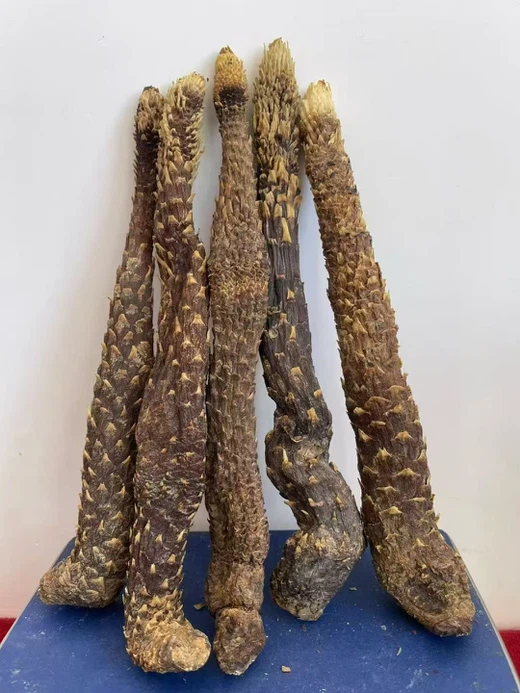
Xinjiang Cistanche is mainly composed of Cistanche tubulosa, which has a robust body and a soft texture. Its core components (such as echinacoside and verbascoside) are high and stable, far exceeding the standards stipulated in the Chinese Pharmacopoeia. The core component content of Cistanche in Hetian production area is even higher than that in the ancient Alxa production area of Inner Mongolia. Xinjiang Cistanche tubulosa is mostly harvested in autumn. Compared to spring harvesting, it has a softer texture, richer active ingredients, outstanding moisturizing and laxative effects, and a warmer taste. It is suitable for various scenarios such as daily water soaking, medicinal use, and soup making, and has a wider audience. In addition, Xinjiang Cistanche tubulosa has low water content, is resistant to storage, and its quality is not easily lost after processing into dry goods. Due to large-scale cultivation, it has a higher cost-effectiveness, which not only meets the daily health needs of ordinary consumers, but also adapts to the large-scale raw material needs of pharmaceutical and health product enterprises. More importantly, the Xinjiang production area has established a comprehensive quality inspection system, screened excellent germplasm resources through technological breakthroughs, and achieved full process quality control, effectively avoiding problems of pesticide residues and heavy metal exceeding standards. The quality stability far exceeds that of the Inner Mongolia production area.

Main Chemical Constituents of Cistanche tubulosa
Comparison of industrial development: Xinjiang's full chain layout has greater development potential
The sustainable development of the Cistanche tubulosa industry relies on the coordinated efforts of the entire chain of cultivation, processing, research and development, and sales. At present, the Xinjiang production area has established a more complete industrial system, and its advantages in processing, research and development, and brand building are increasingly prominent. However, the Inner Mongolia production area still faces problems of an incomplete industrial chain and low added value.
At present, the industry of Cistanche tubulosa in Inner Mongolia is still mainly based on primary processing, with about 70% of the products being dried slices and cut sections. The proportion of deep processing products (extracts, health products) is only 30%. The scale of processing enterprises is small, the technical equipment is backward, the extraction rate of core components is lower than the international advanced level, and the added value of products is low. At the same time, the R&D investment in Inner Mongolia's production areas is insufficient, and there is a lack of exploration in deep processing technology and new product development. Brand building lags, mainly focusing on raw material sales, and there is a lack of nationally influential brands, resulting in weak market competitiveness. In addition, the industrial chain in Inner Mongolia's production areas is relatively short, with disjointed links in planting, processing, and sales, making it difficult to achieve maximum value.
The Xinjiang production area is making every effort to promote the full chain upgrading of the Cistanche tubulosa industry, forming an integrated development pattern of "planting, processing, research and development sales". In terms of processing, Xinjiang has not only achieved standardization of primary processing but also focused on deep processing. It plans to develop more than 10 types of health food, cosmetics, and ordinary food, extend the industrial chain, and increase the added value of products by more than 10 times compared to primary raw materials. In terms of research and development, Xinjiang has established a 41-person R&D team led by the Xinjiang Academy of Forestry, collaborating with multiple research institutions to carry out scientific and technological breakthroughs, focusing on core areas such as germplasm innovation, mechanized planting, and deep processing technology, and building an "excellent variety+good method+good opportunity+multi product" industrial development system. In terms of brand building, Xinjiang relies on the public brand of "Taklamakan Sand Specialty" and has cultivated multiple regional leading enterprises. Through various channels such as online live broadcasts and offline exhibitions, Xinjiang Cistanche has enhanced its market awareness and influence. More importantly, the Cistanche tubulosa industry in Xinjiang has achieved coordinated development of ecology and economy, not only driving employment for tens of thousands of farmers and herdsmen, but also becoming an important carrier for desertification prevention and control, forming a three in one development model of "desertification control, people enrichment, and industry", receiving key support from national policies, and its development potential is far greater than that of Inner Mongolia production areas.

cistanche supplement near me
Click here to view Cistanche Enhance Immunity products
【Ask for more】 Email:cindy.xue@wecistanche.com / WhatsApp: 0086 18599088692 / Wechat: 18599088692
Market potential comparison: Xinjiang adapts to diverse demands and has stronger market competitiveness
With the improvement of people's health awareness, the market demand for Cistanche tubulosa continues to grow. The demand for Cistanche tubulosa in the national market will reach 8000 tons in 2024, and it is expected to exceed 12000 tons in 2028, with the market gap continuing to widen. There is a significant difference in market adaptability and competitiveness between the two major production areas, and Xinjiang Cistanche tubulosa can better meet the diverse needs of the market and has a broader development prospect.
Due to its high price, significant quality fluctuations, and single product form, Inner Mongolia Cistanche tubulosa mainly targets the high-end pharmaceutical market and niche health groups, with limited market coverage. At the same time, Inner Mongolia's Cistanche tubulosa is mainly sold as raw materials, lacking deep-processed products that are difficult to adapt to emerging market demands, such as health products and cosmetics, and its market competitiveness is gradually weakening. In addition, the production areas in Inner Mongolia are limited by production capacity, making it difficult to meet the demand for market scale, further restricting their market expansion.
Xinjiang Cistanche tubulosa, with its stable quality, high cost-effectiveness, and diverse product forms, fully adapts to the diverse market demands of medicine, health products, cosmetics, daily health care, and more. In the medical field, the core ingredients of Cistanche tubulosa in Xinjiang are stable. It is a high-quality raw material for the production of traditional Chinese patent medicines and simple preparations such as Cistanche Kidney Tonifying Pill and Suoyang Gujing Pill, and is favored by pharmaceutical enterprises; In the field of health products, Xinjiang Cistanche can be processed into oral liquids, capsules, tea drinks, and other products that cater to the health habits of modern consumers; In the field of cosmetics, its extract can be used to develop anti-aging and moisturizing skincare products, with huge market potential. At the same time, Xinjiang has sufficient production of Cistanche tubulosa, which can meet the demand for the market scale. With a sound sales channel, it not only covers the domestic market but also gradually expands the international market. With stable quality, it has gained recognition in Europe, North America, and other regions. In addition, after the inclusion of Cistanche tubulosa in the national medicinal and edible homology catalog in 2023, Xinjiang's production areas have rapidly expanded into the functional food field, developing characteristic products such as Cistanche tubulosa camel milk powder and coffee, further expanding their market space, and their market competitiveness far exceeds that of Inner Mongolia's production areas.

Cistanche Oral Liquid
Xinjiang Production Area Leads High Quality Development of Cistanche Industry
Overall, although the two major production areas of Cistanche tubulosa in Xinjiang and Inner Mongolia rely on desert resources for industrial development, there are significant differences in growth environment, planting scale, quality characteristics, industrial development, and market potential. As a traditional authentic production area, Inner Mongolia has a certain reputation for quality, but due to factors such as natural conditions and industrial layout, its development momentum is insufficient; With superior innate growth environment, larger planting scale, more stable high-quality output, more complete full chain industrial layout, and broader market potential, Xinjiang production areas have comprehensively surpassed Inner Mongolia production areas and become the core leader of China's Cistanche tubulosa industry.
In the future, with the promotion of quality and efficiency improvement projects in the Xinjiang Cistanche tubulosa industry, continuous breakthroughs in germplasm innovation, mechanized planting, deep processing and other technologies, Xinjiang Cistanche tubulosa will further consolidate its advantages, promote the transformation of China's Cistanche tubulosa industry from "low-end raw material supply" to "high-end product export", achieve the unity of ecological, economic and social benefits, and continue to widen the gap with Inner Mongolia production areas, leading China's Cistanche tubulosa industry towards broader development prospects.