PartⅡ:Dereplication-Guided Isolation Of New Phenylpropanoid-Substituted Diglycosides From Cistanche Salsa And Their Inhibitory Activity On NO Production in Macrophage
Mar 04, 2022
Contact: Audrey Hu Whatsapp/hp: 0086 13880143964 Email: audrey.hu@wecistanche.com
A 3-methylbutenyl group, an aglycone substructure, was suggested by the COSY correlations of H-2 with H-1a and H-1b and the HMBC correlations between H-4 and H-5 and the olefinic carbons, at kC 120.7 (C-2) and 136.4 (C-3). Two sugar moieties were established by the NMR spectra analysis and HPLC spectra analysis of the acid hydrolysate, with MS fragment pattern. The absolute configuration of them were determined to be D-glucose and L-rhamnose using HPLC analysis of the acid hydrolysate [17]. These sugar moieties were defined as a β-glucose and an a-rhamnose by coupling constants of the anomeric protons. The 1H-1H COSY spectrum showed sequential correlations from H-13 to H-63 and from H-133 to H-633 (Figure 4).
A downshifted glucose proton at kH 4.70 (H-43) suggested an acyl-substituent on glucose. From the HMBC spectrum, the correlation between H-43 and C-9333 confirmed the position of the caffeoyl substituent. The HMBC correlations between H-13 and C-1 (kC 64.5) and between H-33 (kH 3.68) and C-133 (kC 101.2) suggested the positions of each substituent. Accordingly, the structure of 6 was determined as 3-methylbutenyl-O-α-L-rhamnopyranosyl-(1→3)-4-O-(E)-caffeoyl-β-D-glucose-pyranoside and named cistansalside B.
Cistansalside C (12), a brown amorphous powder, was determined to have a molecular formula of C26H38O13 by (+)-HR-ESI-QTOF-MS, which showed a peak at m/z 581.2213 [M + Na]+ (calcd. for C26H38O13Na, 581.2205). A characteristic ion at m/z 163 suggested that a caffeoyl substituent existed in the structure. The fragment ions at m/z 325 and m/z 471 suggested the existence of a rhamnose unit and a glucose unit.
Comparison of the NMR spectra of 12 with those of 6 showed that they were similar except for the aglycone structure. In the NMR spectra of 12, two paraffinic carbons at kC 38.0 (C-2) and 24.4 (C-3) were observed instead of two olefinic carbons at kC 120.7 (C-2) and 136.4 (C-3) in the aglycone of 6. The germinal methyl groups (kH 0.88) in the aglycone of 12 were shifted upfield relative to H-4 and H-5 (kH 1.71 and 1.63) in the aglycone of 6 (Table 2). The aglycone of 12 was suggested to be a 3-methyl butyl group, which was confirmed by the 1H and COSY NMR spectra. Peaks of the 3-methyl butyl group were observed at a 3.81 (1H, m, H-1a), 3.48 (1H, m, H-1b), 1.71 (1H, m, H-3), 1.44 (2H, m, H-2), and 0.88 (H-4, 5).
Two sugar moieties were reaffirmed by the HPLC analysis of the acid hydrolysate and the NMR spectra analysis as well as MS fragment pattern. The absolute configurations of the sugars were identified as D-glucose and L-rhamnose using HPLC analysis of the acid hydrolysate [17]. A β-glucose moiety and an a-rhamnose moiety were confirmed by coupling constants of the anomeric protons. The 1H-1H COSY spectrum showed sequential correlations from H-13 to H-53, from H-133 to H-333, and from H-633 to H-433 (Figure 4).
The position of substituents was confirmed by means of the HMBC analysis. In the HMBC spectrum, the correlations between H-13 and C-1 (kC 67.2), between H-33 (kH 3.68) and C-133 (kC 101.2) and between H-43 (kH 4.70) and C-9333 (kC 165.7) were detected. Consequently, the structure of 12 was established to be 3-methyl butyl-O-a-L-rhamnopyranosyl-(1→3)-4-O-(E)-caffeoyl-β-D-glucose-pyranoside and named cistansalside C.
Cistansalside D (17), an amorphous brown powder, was determined to have a molecular formula of C31H38O14 by the positive mode high-resolution ESI-QTOF-MS, which showed an adduct ion peak at m/z 657.2147 [M + Na]+ (calcd. for C31H38O14Na, 657.2154). Fragment ions including a [M + H x Aglycone x Rha x Acetyl Glc]+ ion at m/z 147, a [M + H x Aglycone x Rha]+ ion at m/z 351 and a [M+ H x Aglycone]+ ion at m/z 497 were also detected. A characteristic ion at m/z 147 suggested that a coumaroyl substituent was present in its structure. The fragment ions at m/z 351 and m/z 497 suggested the existence of a rhamnose unit and an acetyl-substituted glucose unit.
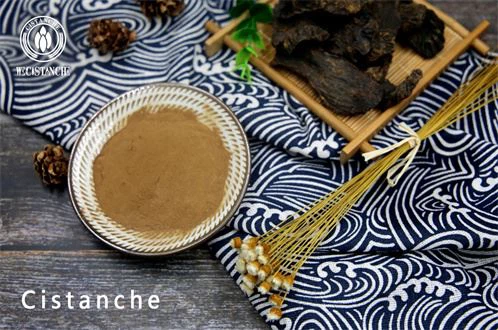
Cistansalside from cistanche herb
The 13C-NMR spectrum revealed the presence of 31 carbon atoms. Two anomeric protons at kH 4.61 (1H, m, H-13) and 4.60 (1H, s, H-133) were observed in the 1H and HSQC spectra. The 1H-NMR spectrum indicated the presence of a methyl group at a 1.97 (3H, s, acetyl-CH3), a trans-olefin at kH 7.55 (1H, d, J = 15.9 Hz, H-7333) and 6.34 (1H, d, J = 15.9 Hz, H-8333) and two para-substituted benzene rings at kH 7.53 (2H, d, J = 6.9 Hz, H-3333, 5333) and 6.79 (2H, d, J = 6.9 Hz, H-2333, 6333)/ kH 6.98 (2H, d, J = 8.0 Hz, H-2, 6) and 6.65 (2H, d, J = 8.0 Hz, H-3, 5) (Table 2). From the HMBC NMR spectrum, the correlations between a carbonyl carbon at kc 165.5 (C-9333) and H-8333 and between H-2333, 6333, and C-7333 (kc 145.4) suggested an (E)-coumaroyl group. The HMBC correlation between a methyl proton peak and a carbonyl carbon at kc 169.0 confirmed the presence of an acetyl group.
A 4-hydroxyphenyl group was suggested based on the HMBC correlations between H-3, 5, and quaternary aromatic carbons at kC 155.6 (C-4) and 128.6 (C-1). A hydroxylated ethyl group was confirmed by the COSY NMR signals at kH 2.66 (2H, t, J = 6.1 Hz, H-7), 3.90 (1H, m, H-8a) and 3.54 (1H, m, H-8b). The HMBC correlations between H-7 and C-1 (kC 128.6) and C-2, 6 (kC 129.7) suggested a 4-hydroxyphenylethyl group, as an aglycone substructure.
Two sugar moieties, suggested from MS fragment pattern, were reconfirmed by the HPLC analysis of the acid hydrolysate and NMR spectra. D-glucose and L-rhamnose were elucidated using HPLC analysis of the acid hydrolysate [17]. A β-glucose moiety and an a-rhamnose moiety were established by coupling constants of the anomeric protons. The 1H-1H COSY spectrum showed sequential correlations from H-13 to H-53 and from H-133 to H-633 (Figure 4).
From the 1H-NMR spectrum, the downfield shift of H-23 (kH 4.69) and H-43 (kH 4.80) suggested the acyl-substituted position on glucose. The connections between glucose and two acyl groups were confirmed by the HMBC correlations between H-43 (kH 4.80) and C-9333 and between H-23 and carbonyl carbon of an acetyl group (kC 169.0). The positions of an aglycone and rhamnose were given by the HMBC correlations between H-33 (kH 3.95) and C-1333 and between H-8 and C-13. Accordingly, the structure of 17 was assigned as 4-hydroxyphenylethyl-2-O-acetyl-O-α-L-rhamnopyranosyl-(1→3)-4-O-(E)-coumaroyl-β-D-glucopyranoside and named cistansalside D.
Cistansalside E (18) was isolated as an amorphous brown powder. Its molecular formula was determined to be C31H38O14 by 13C-NMR data and the positive mode high-resolution ESI-QTOF-MS peak at m/z 657.2166 [M + Na]+ (calcd. for C31H38O14Na, 657.2154). Additionally, fragment ions including a caffeoyl ion at m/z 163, an [M + H x Aglycone x Rha]+ ion at m/z 367 and an [M + H x Aglycone]ion at m/z 513 were also detected.The fragment ions suggested the existence of a rhamnose unit and an acetyl-substituted glucose unit.
The 1H-NMR spectrum suggested the presence of two anomeric protons at kH 4.63 (1H, d, J = 8.2 Hz, H-13) and 4.60 (1H, s, H-133) and two acyl-substituted glucose protons at kH 4.71 (1H, dd, J = 8.9, 8.2 Hz, H-23) and 4.81 (1H, dd, J = 9.7, 9.5 Hz, H-43). The 1H and HMBC spectra suggested the existence of an acetyl group at kH 1.94 (3H, s, acetyl-CH3), an (E)-caffeoyl moiety at kH 7.48 (1H, d, J = 15.9 Hz, H-7333), 7.02 (1H, d, J = 1.6 Hz, H-2333), 6.98 (1H, dd, J = 8.1, 1.6 Hz, H-6333), 6.76 (1H,d, J = 8.1 Hz, H-5333) and 6.21 (1H, d, J = 15.9 Hz, H-8333) and a mono-substituted benzene ring at kH 7.29 (2H, m, H-3, 5), 7.21 (2H, m, H-2, 6) and 7.20 (1H, m, H-4) (Table 2). A phenylmethyl group, an aglycone substructure, was suggested by the HMBC correlations between H-7 (2H, kH 2.80, m) and C-1 (kC 138.8) and between H-7 and C-2, 6 (kC 128.9) and the COSY NMR signals of H-7 with H-8a (1H, kH 3.99, m) and H-8b (1H, kH 3.63, m).
Two sugar moieties were reaffirmed by the HPLC analysis of the acid hydrolysate and NMR spectra analysis. The absolute configurations of the sugars were elucidated using HPLC analysis of the acid hydrolysate, which were confirmed to be D-glucose and L-rhamnose [17]. A β-glucose moiety and an α-rhamnose moiety were established by coupling constants of the anomeric protons. The 1H-1H COSY spectrum showed sequential correlations from H-13 to H-53, from H-133 to H-233, and from H-633 to H-333 (Figure 4).
From the HMBC spectrum, the correlations between H-13 and C-8 (kC 69.4), between H-23 and carbonyl carbon of an acetyl group (kC 169.1), between H-33 (kH 3.95) and C-133 (kC 102.0) and between H-43 (kH 4.81) and C-9333 (kC 165.6) confirmed the position of substituents in the structure. Therefore, the structure of 18 was determined to be phenylethyl-2-O-acetyl-O-a-L-rhamnopyranosyl-(1→3)-4-O-(E)-caffeoyl-β-D-glucopyranoside and named cistansalside E.
Most of the trans-cinnamoyl substituents were isomerized to the cis-isoform in vitro. Light has been reported to convert trans-cinnamic acid derivatives into cis-isoforms [18,19]. The equilibrium of the trans-cis conversion of the cinnamoyl substituents was observed to maintain approximately 70% of the isolates in the trans-isoform. For the olefin protons of the cis form, peaks at approximately 6.90 ppm(d, J = 12~13 Hz, H-7333) and 5.80 ppm (d, J = 12~13 Hz, H-8333) were assignable in the 1H-NMR spectra, whereas peaks at approximately 7.55 ppm (d, J = 15.8 Hz, H-7333) and 6.40 ppm (d, J = 15.8 Hz, H-8333)were observed for transform [20]. In the 1H-NMR spectrum of trans-cis mixtures, peaks for two olefinic protons (H-7333 and H-8333) were observed in the ratio of 7:3 (trans:cis). 13C-NMR peaks of the cis form were similar to those of the transform.

Effective ingredients from cistanche: acteosides
All the isolates were tested for their inhibitory effects on LPS-induced NO production in RAW
All the isolates were tested for their inhibitory effects on LPS-induced NO production in RAW 264.7 cells. Dexamethasone was used as a positive control and its IC50 was 7.0 uM. Of the tested compounds, compounds 5 (IC50 42.7 o 6.6 uM), 11 (IC50 37.3 o 2.2 uM), 13 (IC50 40.0 o 4.0 uM) and 18(IC50 27.9 o 0.8 uM) showed moderate inhibitory activities on inducible NO synthase, while the other compounds were inactive in this assay (IC50 values > 100 uM). To verify whether these compounds had cytotoxicity, cell viability was measured employing MTT assay. As a result, none of them displayed significant cytotoxicity (Supplemental Figure S6-1). These four compounds were selected to evaluate for their inhibitory activity against the NF-λB pathway in LPS-stimulated RAW 264.7 cells. Stimulation of RAW 264.7 cells with LPS induced the phosphorylation of I入Bα and NF-入B (p65) after 0.5 h of incubation. The phosphorylation of NF- 入 B (p65) was significantly reduced by pretreatment with compounds 11, 13 and 18 as shown by western blot analysis (Figure 5). Therefore, compounds 11, 13 and 18 might exert anti-inflammatory effects via the inhibition of NF-入B in macrophages.

Figure 5. Effect of four compounds on phosphorylation of I入Bα and NF-入B (p65) in LPS-stimulated RAW 264.7 cells. (A) The western blots were conducted in LPS and sample-treated RAW 264.7 cells; (B, C) The immunoblot signals were quantified using Molecular Analyst/PC densitometry software (Bio-Rad, Richmond, CA, USA). Densitometric analysis of phosphorylated isoforms is reported. NF- 入 B in RAW 264.7 cell was normalized to the content of β-actin.
3. Materials and Methods
3.1. General Experiment Procedure
Optical rotations were measured with a Jasco P-2000 digital polarimeter (Jasco, Tokyo, Japan). UV spectra were recorded on a Chirascan plus Circular Dichroism spectrometer (Chirascan, APL, UK). IR spectra were recorded using Jasco FT/IR-4200 spectrophotometer. High-resolution electrospray ionization quadrupole-time-of-flight mass spectrometry (HR-ESI-qTOF-MS) was performed on an Agilent 6530 Accurate-Mass Q-TOF LC/MS equipped with Agilent 1260 Infinity series (Agilent Technologies, Inc., Palo Alto, CA, USA), and the column used was a Jasco SFCpak Crest C18T-5 column (i.d. 150 4.6 mm, 5 um). MassHunter Workstation Software was used for data acquisition.
1D (1H and 13C) and 2D (1H-1H COSY, HSQC, HMBC, NOESY) NMR spectra were obtained with a Jeol LA 300 (Jeol, Tokyo, Japan), Bruker AVANCE-400, Bruker AVANCE-500, Bruker AVANCE-600 and Bruker AVANCE 800 HD spectrometers coupled with a cryoprobe (Bruker, Ettlingen, Germany). DMSO-d6 (Cambridge Isotope Laboratories, In Cistanche Andover, MA, USA) was used as NMR solvent and reference peaks (kH 2.50 and kC 39.5). Column chromatography (CC) was performed using Sephadex LH-20 (25–100 um; Pharmacia, Uppsala, Sweden) or Kieselgel 60 silica gel (40–63 um, 230–400 mesh, Art. 9385; Merck, Darmstadt, Germany). Thin-layer chromatography (TLC) was conducted on pre-coated Kieselgel 60 silica gel F254 plates (Art. 5715; Merck). Spots on TLC were detected using a UV lamp at 254 nm and 365 nm (VL-4.LC, 365/254; Vilber Lourmat, Torcy, France). Medium pressure liquid chromatography (MPLC) was performed on a RediSep 120 g silica flash column (Isco, Lincoln, NE, USA) and Kiesegel 60 silica gel (40–63 um, 230–400 mesh, Art. 9385; Merck) using a Combiflash companion (Isco). The high-pressure liquid chromatography (HPLC) system was a Gilson HPLC equipped with a Gilson 321 pump and UV.VIS 151 detector (Gilson, Middleton, WI, USA), using semi-preparative ODS columns (Luna 5 um C18 (2) 100 Å, i.d. 250: 10 mm, 5 um, Phenomenex Inc., Torrance, CA, USA; Hypersil GOLD™ aQ 175 Å, i.d. 250: 10 mm, 5 um, Thermo Scientific™, Hennigsdorf, Germany; Inno C18 column 120 Å, i.d. 250: 10 mm, 5 um, Young Jin Biochrom Co., Ltd., Seongnam, Korea). The analytical RP-HPLC system was a Waters 2695 alliance system with a996 Photodiode Array (PDA) detector (Waters Corp, Milford, MA, USA), and the column used was a Hypersil™ BDS C18 column (130 Å, i.d. 150: 4.6 mm, 5 um, Thermo Scientific™). Formic acid was purchased from Daejung Chemicals & Metals Co., Ltd. (Seoul, Korea). HPLC grade solvents were purchased from Fisher Scientific Korea Ltd. (Seoul, Korea). H2SO4, Na2CO3, and first grade solvents for extraction, fractionation, and isolation were purchased from Daejung Chemical & Metals Co. Ltd. (Seoul, Korea). L- and D-cysteine methyl ester hydrochloride and o-tolylisothiocyanate were purchased from Tokyo Chemical Industry (Tokyo, Japan).
3.2. Plant Material
The whole plants of Cistanche salsa, which were collected from the Shinjang Uyghur, were imported through Daerim Pharmaceutical Wholesale Company (Cheongju, Korea). They were identified by Prof. Dr. Jehyun Lee (Dongguk University, Seoul, Korea). The voucher specimen (SNUPH2016-03) was deposited in the Herbarium of Medicinal Plant Garden, College of Pharmacy, Seoul National University.
3.3. Extraction and Isolation
The dried whole plants of Cistanche salsa (5.7 kg) were chopped and extracted three times with MeOH (20 L) at room temperature with sonication for 99 min. After removal of the solvent in vacuo, The crude extract (1.35 kg) was suspended in H2O (5 L), then partitioned with EtOAc (5 L). The EtOAc residue (55.3 g) was separated into 16 fractions (E01-16) on silica gel chromatography eluting with CHCl3/MeOH (50:1–0:1, step-gradient system).
E08 (611.7 mg) was subjected to silica gel medium-pressure liquid chromatography (25 g) and eluted with CHCl3/MeOH (18:1–0:1, step-gradient system) and gave 11 fractions (E08a-k). From E08g, compounds 13 (0.7 mg) and 18 (0.6 mg) were purified using a Luna 5 um HPLC column and isocratic elution with 28% aq. MeCN. HPLC purification (Hypersil GOLD, 25% aq. MeCN) of E08h (138.5 mg) furnished compounds 7 (10.6 mg), 8 (17.2 mg), 14 (13.4 mg) and 17 (4.9 mg).
E09 (1.15 g) was further purified on a silica-MPLC column (20 g) eluting with CHCl3/MeOH (10:1–0:1, step-gradient system) to give 11 subfractions (E09a-k). E09e (398.7 mg) was subjected to Sephadex LH-20 (MeOH) and yielded eight subfractions (E09e1-8). E09e6 was subsequently purified using a Hypersil GOLD HPLC column (22% aq. MeCN) to afford compound 11 (0.4 mg). From E09e7,compound 5 (0.6 mg) was purified by isocratic eluction from a Luna 5 um HPLC column with 40% aq. MeOH.
E10 (1.20 g) was separated into nine fractions (E10a-i) on Sephadex LH-20 column eluting with MeOH. From E10g (147.5 mg), compounds 4 (13.4 mg), 9 (8.0 mg) and 15 (5.0 mg) were isolated by HPLC separation (Inno, 23% aq. MeCN). Fraction E10h (470.0 mg) was purified on a Hypersil GOLD column by isocratic elution (40% aq. MeOH) to yield compounds 1 (3.8 mg), 10 (42.1 mg) and 16(3.0 mg).
E11 (2.96 g) was subjected to Sephadex LH-20 eluting with MeOH to give nine fractions (E11a-i). E11e was separated by Sep-Pak C18 cartridge eluting stepwise with 10%, 20%, 30%, 50% and 100% aq. MeOH to yield seven fractions (E11e1-7), followed by Luna 5 um HPLC (28% aq. MeCN) to give compounds 3 (3.4 mg), 6 (1.4 mg) and 12 (1.2 mg).
E12 (19.0 g) was subjected to silica MPLC (120 g) using a CHCl3/MeOH step-gradient system to give six fractions (18:1–0:1, E12a-f). E12f was chromatographed on a Sephadex LH-20 column (MeOH), yielding seven fractions (E12f1-7). HPLC purification (Hypersil GOLD, 25% aq. MeCN) of E12f7 furnished compound 2 (3.3 mg). All solvents used for HPLC were 0.05% formic acid buffer. The common flow rate for HPLC and MPLC chromatography was 3 and 40 mL/min, respectively.
3.4.Characterization
Cistansalside A (5): brown amorphous powder; [α|20 x33.7 (c 0.1, MeOH); UV(MeOH) Amax nm (log e) 332 (3.18); IR (neat) vmax 3359, 1748, 1705, 1602, 1516 cmx1; 1H-NMR (800 MHz) and 13C-NMR(200 MHz) data, see Table 2; HRMS (ESI-TOF) m/z [M + Na]+ 645.2146 (calcd. for C30H38O14Na, 645.2154).
Cistansalside B (6): brown amorphous powder; [α|20 x72.9 (c 0.1, MeOH); UV(MeOH) Amax nm (log e) 333 (3.32); IR (neat) vmax 3400, 1705, 1603, 1516 cmx1; 1H-NMR (500 MHz) and 13C-NMR (125 MHz)data, see Table 2; HRMS (ESI-TOF) m/z [M + Na]+ 579.2054 (calcd. for C26H36O13Na, 579.2048).
Cistansalside C (12): brown amorphous powder; [α|20 x61.6 (c 0.1, MeOH); UV(MeOH) Amax nm (log e) 337 (3.25); IR (neat) vmax 3359, 1704, 1602, 1508 cmx1; 1H-NMR (800 MHz) and 13C-NMR (200 MHz)data, see Table 2; HRMS (ESI-TOF) m/z [M + Na]+ 581.2213 (calcd. for C26H38O13Na, 581.2205).
Cistansalside D (17): brown amorphous powder; [α|20 x51.1 (c 0.1, MeOH); UV(MeOH) Amax nm (log e) 221 (3.53), 315 (3.52); IR (neat) vmax 3358, 1746, 1722, 1603, 1516, 1232, 1157, 1039 cmx1; 1H-NMR(400 MHz) and 13C-NMR (75 MHz) data, see Table 2; HRMS (ESI-TOF) m/z [M + Na]+ 657.2147 (calcd. for C31H38O14Na, 657.2154).
Cistansalside E (18): brown amorphous powder; [α|20 x59.2 (c 0.1, MeOH); UV(MeOH) Amax nm (log e) 336 (3.22); IR (neat) vmax 3370, 1741, 1712, 1602, 1231, 1157 cmx1; 1H-NMR (800 MHz) and 13C-NMR(200 MHz) data, see Table 2; HRMS (ESI-TOF) m/z [M + Na]+ 657.2166 (calcd. for C31H38O14Na, 657.2154)
3.5.HPLC-QTOF-MS Analysis
Chromatographic-mass spectrometry analysis was performed on an Agilent 1260 Infinity series LC system (Agilent Technologies, Inc., USA). The analytical column was an SFCpak Crest C18T-5 column (i.d. 150 : 4.6 mm, 5 um, Jasco, Japan). The mobile phase consisted of 0.1% (v/v) formic acid in MeCN (A) and water (B) using a gradient elution of 0–35 min (23% A), 35–45 min (23–28% A),45–75 min (28% A) and 75–80 min (90% A). The flow rate was kept at 0.3 mL/min. The absorbance was measured at 320 nm. The conditions of the ESI source were as follows: drying gas (N2) flow rate, 10 L/min; drying gas temperature, 350℃; nebulizer, 30 psig; sheath gas flow rate, 12.0 L/min; sheath gas temperature, 350℃; capillary, 4000 V; skimmer, 60 V; octapole RF, 750 V; fragmentor voltage, 180 V; positive mode. The system was operated under Masshunter workstation software. The mass range was set at m/z 50–1000.
3.6.Acid Hydrolysis
Compounds were hydrolyzed using 1 N H2SO4 (100 uL) heated with a water bath at 90℃for2 h, then neutralized with saturated aqueous Na2CO3 solution. After the solutions were dried under a stream of N2, the products and standard sugars (D-Glc, L-Glc, L-Rha) were dissolved in pyridine (100 uL) containing L-cysteine methyl ester hydrochloride (0.5 mg). An L-rhamnose sample was dissolved in pyridine (100 uL) containing D-cysteine methyl ester hydrochloride (0.5 mg). After that, they were heated at 60℃ for 1 h. The solutions were treated with 1 uL (1.11 mg) of o-tolylisothiocyanate, which were heated again at 60℃for 1 h. Each final mixture was directly analyzed by analytical RP-HPLC (Hypersil™ BDS C18 column, 17% aq. MeCN, 0.8 mL/min, 40 min, 35℃). The tR of the peak at 21.9 and 40.4 min coincided with that of the thiocarbamoyl thiazolidine derivative of D-glucose and L-rhamnose, respectively.
3.7. Cell Culture
Murine macrophages, RAW 264.7, were obtained from the Korean Research Institute of Bioscience and Biotechnology (Daejeon, Korea), and grown in RPMI medium containing 10% fetal bovine serum and 100 U/mL penicillin/streptomycin sulfate. Cells were incubated in a humidified 5% CO2 atmosphere at 37 ℃.
3.8.Drugs and Chemicals
RPMI, penicillin and streptomycin were purchased from HyClone (Logan, UT, USA). Bovine serum albumin and LPS were purchased from Sigma (St. Louis, MO, USA).
3.9.Measurement of NO Production
The nitrite concentration in the culture medium was measured as an indicator of NO production according to the Griess reaction. The cells were seeded at 2: 105 cells/well in 96-well culture plates. After pre-incubation of the RAW 264.7 cells for 18 h, the cells were pretreated with compounds(50 uM, 10 uM, 5 uM, or 1 uM) and stimulated with LPS (500 ng/mL) for 24 h. Test compounds dissolved in DMSO. Cells were also treated with 0.05% DMSO as vehicle control. RAW 264.7 cells(2: 105 cells/well) were cultured in 96-well plates using RPMI without phenol red and pretreated with samples for 0.5 h. Cellular NO production was induced by the addition of 500 ng/mL final concentration LPS and a 24 h incubation. Following incubation, 100 uL of conditioned media was mixed with the same volume of Griess reagent and incubated for 15 min. The absorbance of the mixture at 540 nm was measured with an ELISA microplate reader (Benchmark, Bio-Rad Laboratories, Richmond, CA, USA). The values obtained were compared with those of standard concentrations of sodium nitrite dissolved in RPMI, and the concentrations of nitrite in the conditioned media of sample-treated cells were calculated.
3.10.3-(4,5-Dimethylthiazol-2-yl)-2,5-diphenyltetrazolium Bromide (MTT) Assay for Cell Viability
Cells were seeded into 96-well plates at a density of 5: 104 cells/well and incubated with serum-free media in the presence of samples. Test compounds dissolved in DMSO. Cells were also treated with 0.05% DMSO as vehicle control. Following incubation for 24 h, 10 uL MTT (5 mg/mL in saline) was added and incubation was continued for a further 4 h. Mitochondrial succinate dehydrogenase in live cells converts MTT into visible formazan crystals during incubation. The formazan crystals were then solubilized in dimethyl sulfoxide and the absorbance was measured at 540 nm using an enzyme-linked immunosorbent assay (ELISA) microplate reader (Benchmark, Bio-Rad Laboratories). Relative cell viability was calculated compared with the absorbance of the untreated control group. All experiments were performed in triplicate.
3.11.Immunoblot Analysis
Protein expression was assessed by western blotting according to standard procedures. Briefly, RAW264.7 cells were cultured in 60 mm culture dishes (2: 106/mL), followed by pretreatment of 50 uM of compounds. Cells were washed twice in ice-cold PBS (pH 7.4), the cell pellets were resuspended in lysis buffer on ice for 15 min, and the cell debris was then removed by centrifugation. Protein concentration was determined using Bio-Rad protein assay reagent according to the manufacturer’s instructions.Protein (20–30 ug) was mixed 1:1 with 2: sample buffer (20% glycerol, 4% SDS, 10% 2-ME, 0.05% bromophenol blue, and 1.25 M Tris [pH 6.8]), loaded onto 8 or 15% SDS-PAGE gels, and run at 150 V for 90 min. Cellular proteins were transferred onto Immunoblot polyvinylidene difluoride membranes (Bio-Rad) using a Bio-Rad semi-dry transfer system according to the manufacturer’s instructions. The membranes were then incubated overnight with the respective p-NF-入B, NF-入B, p-I入Bα and β-actin primary antibodies (Abcam, Cambridge, UK) in Tris-buffered saline containing 5% skimmed milk and 0.1% Tween 20. The following day, the blots were washed three times with Tris-buffered saline (0.1% Tween 20) and incubated for 1 h with an HRP-conjugated secondary anti-IgG antibody (diluted 1:2000–1:20,000). The blots were washed again three times with Tris-buffered saline (0.1% Tween 20), and immunoreactive bands were developed using the chemiluminescent substrate ECL Plus (Amersham Biosciences, Piscataway, NJ, USA).
3.12.Statistical Analysis
Experimental data are presented as the mean o SEM. The level of statistical significance was determined by analysis of variance (ANOVA) followed by Dunnett’s t-test for multiple comparisons.p Values less than 0.05 were considered significant.

Cistanche salsa extract
4. Conclusions
In this study, we isolated and elucidated the structures of five new phenylpropanoid-substituted glycosides, named cistansalside A-E (5, 6, 12, 17, and 18), in addition to isolating and identifying 13 known compounds, using a dereplication strategy. The known compounds were determined to be lipedoside A-I (1) [21], 23-acetylacteoside (2) [22], isocistanoside C (3) [15], osmanthuside B (4) [21], epimeridinoside A (7) [15], cistanoside D (8) [23], salsaside B (9) [6], tubuloside E (10) [16], cistanoside M (11) [15], isomartynoside (13) [24], salsaside C (14) [6], jionoside C (15) [25] and salsaside F (16) [6]. Their structures were established through the analysis of extensive spectroscopic data and by comparison to reported data in the literature. It was confirmed that tentatively predicted structures of phenylpropanoid-substituted glycosides were correctly matched to their real structures.

Benefit of Cistanche salsa extract
References
1. Shimamura, H.; Miyazawa, M.; Enomoto, K.; Nakamura, S.-I.; Kameoka, H. Suppression of SOS-Inducing Activity of Trp-P-1 by Fatty Acids from Cistanche salsa in the Salmonella Typhimurium TA1535/pSK1002 umu Test. Nat. Prod. Lett. 1997, 10, 261–265. [CrossRef]
2. Jeon, E.; Chung, K.-S.; An, H.-J. Anti-Proliferation Effects of Cistanches salsa on the Progression of Benign Prostatic Hyperplasia. Can. J. Physiol. Pharmacol. 2016, 94, 104–111. [CrossRef] [PubMed]
3.Xu, C.; Jia, X.; Xu, R.; Wang, Y.; Zhou, Q.; Sun, S. Rapid Discrimination of Herba Cistanches by multi-step infrared macro-fingerprinting combined with soft independent modeling of class analogy (SIMCA). Spectrochim. Acta Part A Mol. Biomol. SpectrosCistanche2013, 114, 421–431. [CrossRef] [PubMed]
4. Jiang, Y.; Li, S.P.; Wang, Y.T.; Chen, X.J.; Tu, P.F. Differentiation of Herba Cistanches by fingerprint with high-performance liquid chromatography-diode array detection-mass spectrometry. J. Chromatogr. 2009, 1216, 2156–2162. [CrossRef] [PubMed]
5. Kobayashi, H.; Karasawa, H.; Miyase, T.; Fukushima, S. Studies on the Constituents of Cistanchis Herba. V. Isolation and Structures of Two New Phenylpropanoid Glycosides, Cistanosides E and F. Chem. Pharm. Bull. 1985, 33, 1452–1457. [CrossRef]
6.Lei, L.; Jiang, Y.; Liu, X.-M.; Tu, P.-F.; Wu, L.-J.; Chen, F.-K. New Glycosides from Cistanche salsa. Helv. Chim. Acta 2007, 90, 79–85. [CrossRef]
7. Kartbaeva, E.B.; Sakipova, Z.B.; Ibragimova, L.N.; Kapsalyamova, E.N.; Ternynko, I.I. Compositional study of phenolic compounds of Cistanche salsa (C.A. Mey) G. Beck, growing in the Republic of Kazakhstan. J. Chem. Pharm. Res. 2015, 7, 120–122.
8. Liu, J.-Y.; Guo, Z.-G.; Zeng, Z.-L. Improved accumulation of phenylethanoid glycosides by precursor feeding to suspension culture of Cistanche salsa. Biochem. Eng. J. 2007, 33, 88–93. [CrossRef]
9. Maruyama, S.; Akasaka, T.; Yamada, K.; Tachibana, H. Cistanche salsa extract acts similarly to protein-bound
polysaccharide-K (PSK) on various types of cell lines. J. Tradit. Med. 2008, 25, 166–169.
10. Tian, X.-F.; Pu, X.-P. Phenylethanoid glycosides from Cistanches salsa inhibit apoptosis induced by 1-methyl-4-phenylpyridinium ion in neurons. J. Ethnopharmacol. 2005, 97, 59–63. [CrossRef] [PubMed]
11.Michel, T.; Halabalaki, M.; Skaltsounis, A.L. New Concepts, Experimental Approaches, and Dereplication Strategies for the Discovery of Novel Phytoestrogens from Natural Sources. Planta Med. 2013, 79, 514–532. [CrossRef] [PubMed]
12.De Medeiros, L.S.; Abreu, L.M.; Nielsen, A.; Ingmar, H.; Larsen, T.O.; Nielsen, K.F.; Rodrigues-Filho, E. Dereplication-guided isolation of depsides theaflavins S-T and lecanora D-F from the endophytic fungus Setophoma sp. Phytochemistry 2015, 111, 154–162. [CrossRef] [PubMed]
13.Rakotondraibe, L.H.; Rasolomampianina, R.; Park, H.-Y.; Li, J.; Slebodnik, C.; Brodie, P.J.; Blasiak, L.C.; Hill, R.; TenDyke, K.; Shen, Y.; et al. Antiproliferative and antiplasmodial compounds from selected Streptomyces species. Bioorg. Med. Chem. Lett. 2015, 25, 5646–5649. [CrossRef] [PubMed]
14.Jiang, Y.; Liu, F.-J.; Wang, Y.-M.; Li, H.-J. Dereplication-guided isolation of novel hepatoprotective triterpenoid saponins from Celosiae Semen by high-performance liquid chromatography coupled with electrospray ionization tandem quadrupole–time-of-flight mass spectrometry. J. Pharm. Biomed. Anal. 2017, 132, 148–155. [CrossRef] [PubMed]
15.Zhang, J.; Li, C.; Che, Y.; Wu, J.; Wang, Z.; Cai, W.; Li, Y.; Ma, Z.; Tu, P. LTQ-Orbitrap-based strategy for traditional Chinese medicine targeted class discovery, identification and her omics research: A case study on phenylethanoid glycosides in three different species of Herba Cistanches. RSC Adv. 2015, 5, 80816–80828. [CrossRef]
16. Yoshizawa, F.; Deyama, T.; Takizawa, N.; Usmanghani, K.; Ahmad, M. The Constituents of Cistanche tubulosa (Schrenk) Hook. f. II. Isolation and Structures of a New Phenylethanoid Glycoside and a New Neolignan Glycoside. Chem. Pharm. Bull. 1990, 38, 1927–1930. [CrossRef]
17. Tanaka, T.; Nakashima, T.; Ueda, T.; Tomii, K.; Kouno, I. Facile Discrimination of Aldose Enantiomers by Reversed-Phase HPLCistancheChem. Pharm. Bull. 2007, 55, 899–901. [CrossRef] [PubMed]
18. Wong, W.S.; Guo, D.; Wang, X.L.; Yin, Z.Q.; Xia, B.; Li, N. Study of cis-cinnamic acid in Arabidopsis thaliana. Plant Physiol. Biochem. 2005, 43, 929–937. [CrossRef] [PubMed]
19.Kahnt, G. Trans-Cis-Equilibrium of Hydroxycinnamic Acids during Irradiation of Aqueous Solutions at Different pH. Phytochemistry 1967, 6, 755–758. [CrossRef]