PARTⅡ:Novel Protective Effects Of Cistanche Tubulosa Extract Against Low-Luminance Blue Light-Induced Degenerative Retinopathy
Mar 04, 2022
Contact: Audrey Hu Whatsapp/hp: 0086 13880143964 Email: audrey.hu@wecistanche.com
Man-Ru Wu Cheng-Hui Lin Jau-Der Hob George Hsiao, Yu-Wen Cheng
Abstract
Background/Aims: Blue light-emitting diode light (BLL)-induced phototoxicity plays an important role in ocular diseases and causes retinal degeneration and apoptosis in human retinal pigment epithelial (RPE) cells. Cistanche tubulosa extract (CTE) is a traditional Chinese medicine with many beneficial protective properties; however, few studies have examined the ocular protective roles of CTE. In this study, we investigated the mechanisms underlying the effects of CTE on BLL-induced apoptosis in vitro and in vivo. Methods: RPE cells were applied in the current in vitro study and cell viability was determined by a 3-(4,5-dimethylthiazol- 2-yl)-2,5-diphenyltetrazolium bromide assay. Apoptosis-related protein expression was determined by western blot analysis and immunofluorescence staining. Brown Norway rats were used to examine exposure to commercially available BLL in vivo. Hematoxylin and eosin staining, terminal deoxynucleotidyl transferase dUTP nick end labeling (TUNEL), and western blot assays were used to examine retinal morphological deformation. Results: CTE significantly inhibited hydrogen peroxide-, tertbutyl hydroperoxide-, sodium azide-, and BLL-induced RPE damage. Further, CTE reduced the expression of apoptotic markers such as cleaved caspase-3 and TUNEL staining after BLL exposure by inactivating apoptotic pathways, as shown via immunofluorescent staining. In addition, CTE inhibited the BLL-induced phosphorylation of c-Jun N-terminal kinase, extra signal-related kinases 1/2, and p38 in RPE cells. In vivo, the oral administration of CTE rescued 60-day periodic BLL exposure-induced decrements in retinal thickness and reduced the number of TUNEL-positive cells in the brown Norway rat model. Conclusion: CTE is a potential prophylactic agent against BLL-induced phototoxicity.
Treating Blue light-emitting diode light (BLL)-induced phototoxicity: cistanche tubulosa extract (CTE)
Discussion
Retinal degeneration is a genetic and multifactorial ocular disease that causes blindness. AMD is the most common cause of blindness among the elderly in developed countries and is representative of multifactorial retinopathy [23]. Improvements in technology, such as those observed for digital devices, have resulted in an increase in the amount of time people spend using their handsets, which has led to the development of smartphone dependency and even addiction. The increasing distribution rate of these “all-in-one” digital devices worldwide has dramatically affected our mental and physical health since 2010. A clinical case study reported that retinal degeneration occurred when long-term smartphone use was simulated [24]. Exposure to excessive BL increases oxygen consumption and ROS generation, causing the accumulation of large amounts of toxic retinoid adducts and retinal damage [25]. Clinical trials have indicated that daily supplementation with an antioxidant cocktail slows down the progression of retinal cell atrophy [26]. As a result, the discovery of therapeutic natural compounds for use as anti-oxidant supplements can be extremely beneficial for the prevention of oxidative stress-induced retinal degeneration.
Few data exist regarding the role of CTE in oxidative stress-induced retinopathy. In this study, we examined the pharmacological effects of CTE on low-intensity long-term BLL exposure-induced retinal degeneration, as well as cell damage and apoptosis resulting from exposure to various oxidants such as H2O2, t-BHP, and NaN3. We found that treating RPE cells that have been exposed to different oxidants with CTE (50 and 100 µg/mL) significantly increased viability (Fig. 1B to 1D), suggesting that CTE is a strong anti-oxidant.
Current studies have shown that among the phenylethanoid glycosides, echinacoside, acteoside, and isoacteoside are the most active compounds in CTE, which is used in traditional Chinese medicine and has been reported to have neuroprotective, antibacterial, anti-oxidative, anti-apoptotic, and anti-allergic effects [27, 28]. Echinacoside is potentially a powerful protective compound; studies have shown that echinacoside significantly reduces 6-hydroxydopamine-induced ROS production and attenuates mitochondria-related apoptosis by inhibiting interleukin (IL)-1β and IL-6 in PC-12 cells [29]. In addition to echinacoside, acteoside is a member of the hexose family and is another principal constituent found in the stems of C. tubulosa. Studies have shown that acteoside inhibits MPP+-induced neuronal death and protects SH-SY5Y neuronal cells against β-amyloid [30]. Many therapeutic properties are associated with acteoside, including anti-allergic, anti-neurotoxic, anti-inflammatory, anti-apoptosis, and anti-proliferative properties [31-33]. Isoacteoside, an isoform of acteoside, inhibits the IL-1β-induced expression of intercellular adhesion molecule-1 and vascular cell adhesion molecule-1 in human umbilical vein endothelial cells, providing evidence of ROS reduction [34].

Effects of acteoside from cistanche tubulosa: anti-allergic, anti-neurotoxic, anti-inflammatory, anti-apoptosis, and anti-radiation
In this study, a significant loss in cell viability, as well as increases in the Bax/Bcl-2 ratio and FasL and FADD protein levels after BLL exposure were observed. However, co-treatment with CTE significantly attenuated the BLL-induced activation of the intrinsic Bax/Bcl-2 and extrinsic Fas/FasL signaling pathways (Fig. 3). Though BL treatment yielded numerous TUNEL-positive RPE cells, CTE administration significantly reduced the number of apoptotic cells and provided protective effects (Fig. 4). Kuang et al. further confirmed that CTE reduces Bax protein expression and upregulates Bcl-2 protein expression in H2O2-injured PC-12 cells [35]. Moreover, CTE possesses neuroprotective effects against tumor necrosis factor-alpha-induced increases in caspase-3 activity in SH-SY5Y cells, demonstrating the anti-apoptotic effects of CTE [27]. BLL-induced phototoxicity has been reported to correlate with increased oxidative stress in RPE cells via nuclear factor-kappa B, p38 MAP, and ERK inactivation [36]. We found that CTE decreased the phosphorylation of JNK and p38 during BLL exposure, providing evidence for CTE-mediated cellular protective effects against BLL.
Previously, we found that low-intensity long-term BLL exposure induces retinopathy in a rat model [19]; as a continuation of that study, we orally administered CTE to BN rats. BL-induced retinal degeneration and damage have been studied in other models [37, 38]. Excessive light exposure reduces ONL thickness, owing to the stress response [39, 40]. In a Sprague-Dawley rat model, free radical production increased and ONL thickness decreased after exposure to 750 lux BLL, demonstrating the phototoxicity of BLL [41]. In this study, we found that the oral administration of CTE prevented the effects of long-term periodic BLL exposure in both the peripheral and central retina of BN rats (Fig. 8). These results suggest that CTE protects the retina from periodic low-luminance long-term BLL exposure-induced retinal degeneration. In addition, a phase III clinical trial at the University of Wisconsin investigated the effects and safety of CTE therapy on the duration and severity of illness (ClinicalTrials.gov identifier: NCT00065715, University of Wisconsin-Madison Department of Family Medicine Madison, Wisconsin, United States, 2014).
Conclusion
The information above suggests that CTE is a powerful protective compound against oxidative stress. Further, to the best of our knowledge, this is the first study to investigate the effects of CTE in retinal cells. This study provides further information regarding the effects and potential use of CTE in patients with retinopathy.
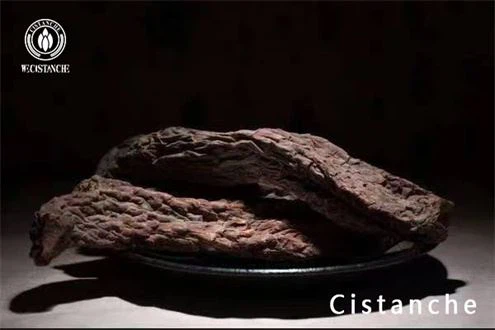
cistanche tubulosa
References
1Wong WL, Su X, Li X, Cheung CM, Klein R, Cheng CY, Wong TY: Global prevalence of age-related macular degeneration and disease burden projection for 2020 and 2040: a systematic review and meta-analysis. Lancet Glob Health 2014;2:e106-e116.
2Kauppinen A, Paterno JJ, Blasiak J, Salminen A, Kaarniranta K: Inflammation and its role in age-related macular degeneration. Cell Mol Life Sci 2016;73:1765-1786.
3Ding X, Patel M, Chan CC: Molecular pathology of age-related macular degeneration. Prog Retin Eye Res 2009;28:1-18.
4Wielgus AR, Collier RJ, Martin E, Lih FB, Tomer KB, Chignell CF, Roberts JE: Blue light-induced A2E oxidation in rat eyes--an experimental animal model of dry AMD. Photochem Photobiol Sci 2010;9:1505-1512.
5Chiras D, Kitsos G, Petersen MB, Skalidakis I, Kroupis C: Oxidative stress in dry age-related macular degeneration and exfoliation syndrome. Crit Rev Clin Lab Sci 2015;52:12-27.
6Kernt M, Neubauer AS, Liegl R, Eibl KH, Alge CS, Lackerbauer CA, Ulbig MW, Kampik A: Cytoprotective effects of a blue light-filtering intraocular lens on human retinal pigment epithelium by reducing phototoxic effects on vascular endothelial growth factor-alpha, Bax, and Bcl-2 expression. J Cataract Refract Surg 2009;35:354-362.
7Roehlecke C, Schumann U, Ader M, Brunssen C, Brake S, Morawietz H, Funk RH: Stress reaction in outer segments of photoreceptors after blue light irradiation. PLoS One 2013;8:e71570.
8Huang C1, Zhang P, Wang W, Xu Y, Wang M, Chen X, Dong X: Long-term blue light exposure induces RGC-5 cell death in vitro: involvement of mitochondria-dependent apoptosis, oxidative stress, and MAPK signaling pathways. Apoptosis 2014;19:922-932.
9Liverence BM, Scholl BJ: Object Persistence Enhances Spatial Navigation: A Case Study in Smartphone Vision Science. Psychol Sci 2015;26:955-963.
10Klettner A: Oxidative stress-induced cellular signaling in RPE cells. Front Biosci (Schol Ed) 2012;4:392-411.
11Wang L, Chen Y, Sternberg P, Cai J: Essential roles of the PI3 kinase/Akt pathway in regulating Nrf2- dependent antioxidant functions in the RPE. Invest Ophthalmol Vis Sci 2008;49:1671-1678.
12Godley BF, Shamsi FA, Liang FQ, Jarrett SG, Davies S, Boulton M: Blue light induces mitochondrial DNA damage and free radical production in epithelial cells. J Biol Chem 2005;280:21061-21066.
13Guo Q, Zhou Y, Wang CJ, Huang YM, Lee YT, Su MH, Lu J: An open-label, non-placebo-controlled study on Cistanche tubulosa glycoside capsules (Memoregain(®)) for treating moderate Alzheimer’s Disease. Am J Alzheimers Dis Other Demen 2013;28:363-370.
14You SP, Ma L, Zhao J, Zhang SL, Liu T: Phenylethanol Glycosides from Cistanche tubulosa Suppress Hepatic Stellate Cell Activation and Block the Conduction of Signaling Pathways in TGF-beta1/smad as Potential Anti-Hepatic Fibrosis Agents. Molecules 2016;21:102.
15Zhao Q, Yang X, Cai D, Ye L, Hou Y, Zhang L, Cheng J, Shen Y, Wang K, Bai Y: Echinacoside Protects Against MPP(+)-Induced Neuronal Apoptosis via ROS/ATF3/CHOP Pathway Regulation. Neurosci Bull 2016;32:349-362.
16Zhao Q, Gao J, Li W, Cai D: Neurotrophic and neurorescue effects of Echinacoside in the subacute MPTP mouse model of Parkinson’s disease. Brain Res 2010;1346:224-236.
17Chakravarthy U, Williams M; AMD Guidelines Group: The Royal College of Ophthalmologists Guidelines on AMD: Executive Summary. Eye (Lond) 2013;27:1429-1431.
18Haller JA: Current anti-vascular endothelial growth factor dosing regimens: benefits and burden. Ophthalmology 2013;120:S3-S7.
19Lin CH, Wu MR, Li CH, Cheng HW, Huang SH, Tsai CH, Lin FL, Ho JD, Kang JJ, Hsiao G, Cheng YW: Editor’s Highlight: Periodic Exposure to Smartphone-Mimic Low-Luminance Blue Light Induces Retina Damage Through Bcl-2/BAX-Dependent Apoptosis. Toxicol Sci 2017;157:196-210.
20Du L, Chen J, Xing YQ: Eupatilin prevents H2O2-induced oxidative stress and apoptosis in human retinal pigment epithelial cells. Biomed Pharmacother 2017;85:136-140.
21Roduit R, Schorderet DF: MAP kinase pathways in UV-induced apoptosis of retinal pigment epithelium ARPE19 cells. Apoptosis 2008;13:343-353.
22Chan CM, Huang JH, Lin HH, Chiang HS, Chen BH, Hong JY, Hung CF: Protective effects of (-)-epigallocatechin gallate on UVA-induced damage in ARPE19 cells. Mol Vis 2008;14:2528-2534.
23Fletcher AE: Free radicals, antioxidants, and eye diseases: evidence from epidemiological studies on cataract and age-related macular degeneration. Ophthalmic Res 2010;44:191-198.
24Alim-Marvasti A, Bi W, Mahroo OA, Barbur JL, Plant GT: Transient Smartphone “Blindness”. N Engl J Med 2016;374:2502-2504.
25Moon J, Yun J, Yoon YD, Park SI, Seo YJ, Park WS, Chu HY, Park KH, Lee MY, Lee CW, Oh SJ, Kwak YS, Jang YP, Kang JS: Blue light effect on retinal pigment epithelial cells by display devices. Integr Biol (Camb) 2017;9:436-443.
26Desmettre T, Lecerf JM, Souied EH: Nutrition and age-related macular degeneration. J Fr Ophtalmol 2004;27:3S38-3S56.
27Deng M, Zhao JY, Tu PF, Jiang Y, Li ZB, Wang YH: Echinacoside rescues the SHSY5Y neuronal cells from TNF alpha-induced apoptosis. Eur J Pharmacol 2004;505:11-18.
28Shiao YJ, Su MH, Lin HC, Wu CR: Echinacoside ameliorates the memory impairment and cholinergic deficit induced by amyloid-beta peptides via the inhibition of amyloid deposition and toxicology. Food Funct 2017;8:2283-2294.
29Wang YH, Xuan ZH, Tian S, Du GH: Echinacoside Protects against 6-Hydroxydopamine-Induced Mitochondrial Dysfunction and Inflammatory Responses in PC12 Cells via Reducing ROS Production. Evid Based Complement Alternat Med 2015;2015:189-239.
30Wang H, Xu Y, Yan J, Zhao X, Sun X, Zhang Y, Guo J, Zhu C: Acteoside protects human neuroblastoma SH-SY5Y cells against beta-amyloid-induced cell injury. Brain Res 2009;1283:139-147.
31Wang HQ, Xu YX, Zhu CQ: Upregulation of heme oxygenase-1 by acteoside through ERK and PI3 K/Akt pathway confer neuroprotection against beta-amyloid-induced neurotoxicity. Neurotox Res 2012;21:368- 378.
32Xiong L, Mao S, Lu B, Yang J, Zhou F, Hu Y, Jiang Y, Shen C, Zhao Y: Osmanthus fragrans Flower Extract and Acteoside Protect Against d-Galactose-Induced Aging in an ICR Mouse Model. J Med Food 2016;19:54-61.
33Villari C, Herms DA, Whitehill JG, Cipollini D, Bonello P: Progress and gaps in understanding mechanisms of ash tree resistance to emerald ash borer, a model for wood-boring insects that kill angiosperms. New Phytol 2016;209:63-79.
34Chen CH, Song TY, Liang YC, Hu ML: Acteoside and 6-O-acetylacteoside downregulate cell adhesion molecules induced by IL-1beta through inhibition of ERK and JNK in human vascular endothelial cells. J Agric Food Chem 2009;57:8852-8859.
35Kuang R, Sun Y, Yuan W, Lei L, Zheng X: Protective effects of echinacoside, one of the phenylethanoid glycosides, on H2O2-induced cytotoxicity in PC12 cells. Planta Med 2009;75:1499-1504.
36Kuse Y, Ogawa K, Tsuruma K, Shimazawa M, Hara H: Damage of photoreceptor-derived cells in culture induced by light emitting diode-derived blue light. Sci Rep 2014;4:5223.
37Jaadane I, Boulenguez P, Chahory S, Carré S, Savoldelli M, Jonet L, Behar-Cohen F4, Martinsons C, Torriglia A: Retinal damage induced by commercial light-emitting diodes (LEDs). Free Radic Biol Med 2015;84:373- 384.
38Geiger P, Barben M, Grimm C, Samardzija M: Blue light-induced retinal lesions, intraretinal vascular leakage and edema formation in the all-cone mouse retina. Cell Death Dis 2015;6:e1985.
39Kitaoka Y, Munemasa Y, Kojima K, Hirano A, Ueno S, Takagi H: Axonal protection by Nmnat3 overexpression with involvement of autophagy in optic nerve degeneration. Cell Death Dis 2013;4:e860.
40Giansanti V, Rodriguez GE, Savoldelli M, Gioia R, Forlino A, Mazzini G, Pennati M, Zaffaroni N, Scovassi AI, Torriglia A: Characterization of stress response in human retinal epithelial cells. J Cell Mol Med 2013;17:103-115.
41Shang YM, Wang GS, Sliney D, Yang CH, Lee LL: White light-emitting diodes (LEDs) at domestic lighting levels and retinal injury in a rat model. Environ Health Perspect 2014;122:269-276.