Part1: Homoarginine Ameliorates Diabetic Nephropathy Independent Of Nitric Oxide Synthase-3
May 07, 2022
Contact tina.xiang@wecistanche.com
Abstract
Recently we showed that homoarginine supplementation confers kidney protection in diabetic mouse models. In this study, we tested whether the protective effect of homoarginine is nitric oxide synthase-3 (NOS3)-independent in diabetic nephropathy (DN). Experiments were conducted in NOS3 deficient(NOS3-7)mice and their wild type littermate using multiple low doses of vehicle or streptozotocin and treated with homoarginine via drinking water for 24 weeks. Homoarginine supplementation for 24 weeks in diabetic NOS3-/ mice significantly attenuated albuminuria, increased blood urea nitrogen, histopathological changes and kidney fibrosis, kidney fibrotic markers, and kidney macrophage recruitment compared with vehicle-treated diabetic NOS3-/ mice. Furthermore, homoarginine supplementation restored kidney mitochondrial function following diabetes. Importantly, there were no significant changes in kidney NOS1 or NOS2 mRNA expression between all groups. In addition, homoarginine supplementation improved cardiac function and reduced cardiac fibrosis following diabetes. These data demonstrate that the protective effect of homoarginine is independent of NOS3, which will ultimately change our understanding of the mechanism(s)by which homoarginine induces renal and cardiac protection in DN. Homoarginine protective effect in DN could be mediated via improving mitochondrial function.
Keywords: cardiac function,diabetic nephropathy, homoarginine,NOS3
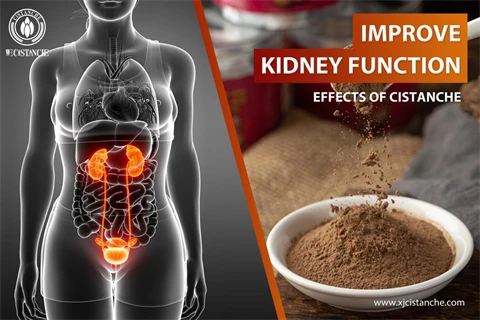
Click to learn what is cistanche used for
1 INTRODUCTION
Diabetes is a serious and increasingly prevalent cause of morbidity and mortality in the United States, with an estimated 12-14% of adults being diabetic, with even higher rates among ethnic minorities(Gao et al, 2016; Menke et al, 2015). Economic and productivity losses due to diabetic complications are over $245 billion and lead to physiological and psychological effects including systemic inflammation, renal and cardiac dysfunction, depression, and social anxiety (Jha et al.,2018; Menke et al, 2015; Moreno et al.,2018; Tao et al.2015; Vanstone et al., 2015). Diabetic nephropathy (DN)is a chronic progressive disorder leading to a rapid decline and end-stage kidney failure. Over the last decade, the incidence of kidney failure due to diabetes has doubled. Traditional therapies, including blood pressure and glucose control and other lifestyle changes, have only been modestly successful in delaying the progression of renal failure. Thus, it is important to identify the mechanisms involved in the development and progression of diabetic kidney disease. Cistanche deserticola belongs to traditional Chinese medicine and is a kidney-tonifying drug. It is mainly used for kidney-yang deficiency, such as backache, back pain, impotence, etc. However, most diabetic patients have yin deficiency, and if they do have yang deficiency, they can take it appropriately. However, it should be used with caution in the manifestations of negative heat such as fear of heat and night sweats, and dry mouth. Consult a doctor first, anyway.
Homoarginine, an endogenous arginine analog, not involved in protein synthesis, has emerged as a new player in health and disease(Pilz et al., 2015). Homoarginine is synthesized by mitochondrial arginine: glycine amidinotransferase(AGAT) in kidneys using L-arginine and L-lysine as substrates(Choe et al., 2013; Ryan & Wells,1964), and catabolized using alanine: glyoxylate aminotransferase 2(AGXT2)(Rodionov et al.2016). Plasma concentrations of homoarginine are inversely correlated with the risk of cardiovascular disease and overall mortality (Jud et al.,2018; Marz et al, 2010), increased risk for fatal strokes(Haghikia et al.,2017), congestive heart failure, and left ventricular hypertrophy(Atzler et al.,2013,2017; Bahls et al., 2018; Pilz, Edelmann, et al.,2014), aging(Atzler, Schwedhelm, et al.,2014; Marz et al., 2010), smoking (Atzler, Gore, et al, 2014; Sobczaket al.,2014; Vogler al,2015; Zwan et al.,2013), body mass index(Atzler, Gore, et al.,2014; Marz et al.2010; Pilz, Teerlink, et al., 2014), and pregnancy(Valtonen et al, 2008). Low homoarginine levels act as an indicator of cardiac dysfunction, with associated high levels of asymmetric dimethylarginine(ADMA)(Atzler, Schwedhelm, et al.,2014; Jud et al.,2018; Kayacelebiet al.,2014; Pilzet al.,2015; Vogler al, 2015). The effects of low homoarginine on nitric oxide (NO)production/action have been linked with an increased risk of stroke and atherosclerosis (Haghikia et al, 2017). Endothelial nitric oxide synthase (NOS3)is constitutively expressed in endothelial cells, and it functions to adjust intracellular NO levels in response to calcium levels (Zanchi et al., 2000). Homoarginine may contribute to NO synthesis by serving as a substrate for NOS because homoarginine, even with its weaker affinity to NOS as compared to arginine, can be metabolized to NO and homocitrulline (Drechsler et al., 2011).In the kidney, low homoarginine is a strong risk factor for sudden cardiac death and death due to heart failure in hemodialysis patients (Drechsler et al.,2011). Furthermore, low homoarginine levels are asso-ciated with increased cardiovascular risk in renal transplant patients(Kayacelebi et al.,2017).In both animals (Banchaabouchi et al.,2001; Tofuku et al., 1985)and humans (Drechsler et al 2013) with chronic kidney injuries, homoarginine levels are reduced and low plasma homoarginine levels were significantly related to reduced glomerular filtration rate(GFR)and proteinuria (Ravani et al., 2013). Although epidemiological data showed that decreased homoarginine levels were asso-ciated with increased mortality in kidney and cardiovascular disease (Drechsler et al.,2015; Jud et al.,2018; Marz et al, 2010; Ravani et al.,2013), the direct physiologic mechanism(s)of homoarginine remain unclear. We previously showed that homoarginine is an effective treatment for DN(Wetzel et al., 2019). However, the mechanism of homoarginine action in kid-ney and cardiac dysfunction is not known.
In the current study, we tested the hypothesis that the protective effect of homoarginine in renal and cardiac functions in diabetes is independent of NOS3. Our results indicate that homoarginine mediates renal and cardiac protection in diabetic NOS3-一mice which will ultimately change our understanding of the mechanism(s)by which homoarginine ameliorates diabetic kidney injury. The protective effect of homoarginine in DN could be mediated via improving mitochondrial function.
2. MATERIALS AND METHODS
2.1Diabetic mouse model
All animal experiments were performed in male6-week-old mice (The Jackson Laboratory, Bar C57BL/6J or NOS3-1-Harbor, ME). Mice were kept at 23℃C and a 12:12 light-dark cycle with free access to standard chow and water. Diabetes was induced by intraperitoneal injection of 50 mg/kg streptozotocin (STZ) or saline control following a 6-h fast for 5 consecutive days. All procedures were done in the morning throughout the study. Blood glucose levels were measured from non-fasting mice using a Contour Next EZ glucometer with Contour Next strips from mice's tail vein, with diabetic mice being defined as having a blood glucose level over 350 mg/dl.L-Homoarginine(Sigma, St. Louis MO, Cat #: H1007) was supplemented in drinking water at a concentration of 50mg/L as previously described (Wetzel et al., 2019) and replaced every 4 days. At the end of the study (24 weeks),24-h urine samples were collected, mice were euthanized using an intraperitoneal injection of ketamine/xylazine cocktail; plasma was obtained by cardiac puncture, and kidneys and hearts were removed for further studies. For urine collection, mice were placed individually in metabolic cages for 16h with free access to drinking water, and urine was collected in collecting tubes containing 200 μl of mineral oil that prevents urine evaporation. Blood was collected by cardiac puncture and centrifuged at 3000 g for 3 min at 4°C to separate plasma. Following collection all samples were stored at -80℃C until analysis. The number of mice per group is given in Table 1. Samples derived from Ins2Aita mice were obtained as previously described (You et al., 2015). All the animal experiments were approved by the University of Texas Health Science Center at San Antonio Institutional Animal Care and Use Committee.

2.2 Immunohistochemistry
Mouse kidney tissues were fixed in 10% formalin and embedded in paraffin, and 3-μm sections were cut. Immunohistochemistry was performed on paraffin-embedded sections with anti-mouse Mac-2 antibody (clone M3/38; Cedarlane, Burlington, NC)as previously described(Youet al.,2013,2014). Images were taken with an Olympus BX60 microscope and Olympus Q-Color3 digital camera using Q-capture Pro 7 image software. The number of glomerular macrophages was counted in 20 glomeruli/section (no. of macrophages in glomeruli di-vided by the no. of glomeruli)in a blinded fashion under 40× magnification and averaged as described previously (Morris et al.,2011; Wetzel et al.,2019; You et al.,2013, 2014).
2.3 Renal and cardiac histopathology
Kidneys and hearts were fixed in 4% paraformaldehyde, embedded in paraffin, and 5-μum sections were cut. Sections were stained with Masson's trichrome or periodic acid-Schiff (PAS)stain, examined in a blinded manner, and scores were averaged. To determine the percent area of fibrosis, Masson's trichrome pictures were obtained at 10x and analyzed in ImageJ to measure the percent area of fibrosis. Representative images were taken with an Olympus BX60 microscope and Olympus Q-Color3 digital camera using Q-capture Pro 7 image software. Glomerular characteristics were measured using Bioquant Osteo software (Bioquant Image Analysis Corporation, Nashville, TN), and the percent injury index was calculated as described previously (Mohan et al.,2008). For each kidney, we obtained 12 images and analyzed a glomerulus for each field to be averaged for each animal for statistical analysis.

2.4 Analytical methodology
Urine albumin concentration was measured by ELISA using an Albuwell M kit (Excell, Philadelphia, PA)as described previously(Awad, You, Gao, Gvritishvili, et al.,2015). Urine creatinine was measured using Diazyme Creatinine Assay (Diazyme Laboratories, Poway, CA)(Awad et al, 2011; Awad, You, Gao, Cooper, et al., 2015). Blood urea nitrogen (BUN)was determined using a QuantiChrom urea assay kit (BioAssay Systems, Hayward, CA)as previously described(You et al.,2017). Mouse systolic pressures were measured using the CODA Non-invasive Blood Pressure system (Kent Scientific Corporation, Torrington CT) as previously described(Awad, You, Gao, Gvritishvili, et al.,2015). Mice were acclimated for 10 min at 26°C before readings began. Readings were taken at the same time of day for all groups to prevent any diurnal variations.
2.5 Cardiac function measurements
Serial B-Mode and M-Mode echocardiography was performed using a Vevo 2100 Imaging Platform(VisualSonics, Toronto, Canada) using a 30-MHz linear transducer to accurately monitor cardiac hemodynamic parameters and assess the heart structure of mice after 22 weeks of homoarginine treatment. The left ventricular ejection fraction (EF)and left ventricle fractional shrinkage (FS) were quantified using M-mode as previously described(lorga et al., 2016,2018).
2.6 RNA isolation and real-time PCR
RNA was isolated by Trizol extraction from whole kidney sections and reverse-transcribed to cDNA using the Bio-Rad (Hercules, CA)script DNA synthesis kit. Real-time PCR was performed on a CFX384real-time system(Bio-Rad,Hercules, CA)using Tagman primers for mouse MCU (Mm0116873_m1), fibronectin (Mm01256744_m1), tumor growth factor β(TGFβ, Mm01178820_m1), NOS1(Mm00435175_m1), NOS2(Mm00440502_m1),and Rn18S (Mm03928990_gl)(Thermo Fisher, Waltham, MA). Ct values were normalized to 18S and compared with NOS3samples.Primers for smooth muscle actin(FW:5'-CTGCCGTTTTCCCCCTTCCTG-3', RV:5'-TTGCTTCCTCCTCCTTTG-3'),E-cadherin (FW:5'-TGAGTGTGTGGGTGCTGA-3',RV:5'-CGGTTTC AATGGCTTACCTTTTCC-3'), and β-actin (FW:5'-GC TGGTTGTGTAAGGTAAGGTGTGC-3',RV: 5'-GAGG GGGTTGAGGTGTTGAGG-3) were obtained from Integrated DNA Technologies(Coralville, IA).cDNA samples were analyzed using SYBR Green Master Mix(Thermo Scientific, Rockford IL), as previously described (Morris et al.,2011), and normalized to β-actin for comparison to NOS3-/- samples.
2.7 Western blotting
Kidney tissue was homogenized in RIPA buffer containing 0.1% Triton X-100 supplemented with protease inhibitors (Roche Diagnostics, Indianapolis, IN)and cleared by centrifugation at 10,000 g for 10 min at 4°C, and the supernatant was collected. Protein concentration was determined by Bicinchonic Acid(BCA)assay(Thermo Scientific, Waltham, MA). A sample of 50 ugs of kidney lysate was separated on 4-12% Bis-Tris gel(Life Technologies, Carlsbad, CA)and transferred onto PVDF membranes before blocking with 5%dry milk. Western blots were performed using the following antibodies: MiCU1(0.4 ug/ml; Sigma-Aldrich, St Louis, MO) and β-actin(1:1000; Cell Signaling, Danvers, MA)antibodies. Western blots were quantitated using ImageJ software (NIH, Bethesda, MD)and normalized to β-actin protein expression.
2.8 Statistical analysis
Comparisons between all groups were conducted using GraphPad Prism software(version 7.04, San Diego, CA). Results are expressed as mean ± SEM. One-way ANOVA followed by Fisher's least significance difference test was used to compare significance between groups. A value of p <0.05 represented a significant difference.