Part1: Research Progress Of Traditional Chinese Medicine For Anti-oxidation And Anti-aging
Apr 29, 2022
For more info. contact tina.xiang@wecistanche.com
The free radical theory of aging was first proposed by British Harman in 1956 and gradually developed into the free radical-oxidative stress theory. This theory holds that the free radicals generated in the process of life activities cause cumulative oxidative damage to biological macromolecules, organelles, cells, etc., resulting in tissue damage and organ function decline, and inducing and accelerating the aging of the body. Under pathological conditions or with the increase of age, various internal and external factors lead to the large and excessive production of free radicals, which exceeds the body's antioxidant capacity, resulting in oxidative stress. Excessive free radicals damage the nucleus and mitochondrial DNA, biological Membrane lipid peroxidation, protein cross-linking denaturation and other ways cause cell damage, oxidative damage gradually accumulates, and finally leads to the occurrence and development of various senile diseases. Antioxidants (AOA) are a class of compounds that can inhibit or block the free radical chain reaction process, reduce the concentration of free radicals, and delay the aging process. The experimental research and clinical application of anti-aging traditional Chinese medicine in scavenging free radicals and anti-oxidative damage have made great progress, which is summarized as follows.
click to learn herba cistanches benefits
1 Antioxidant Chinese medicine ingredients
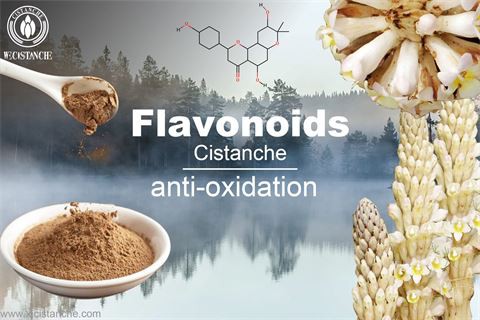
1.1 Flavonoids
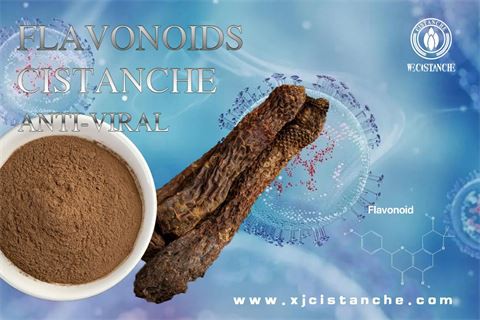
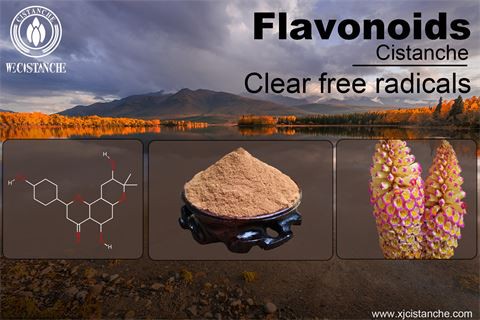
Flavonoids are a general term for a class of compounds composed of two benzene rings through a three-carbon chain. Studies have shown that flavonoids can directly scavenge active oxygen free radicals and can resist the oxidation of oil in vitro. It can increase the activity of antioxidant enzymes in the body and reduce the generation of peroxides. In the antioxidant reaction, flavonoids can not only scavenge the free radicals in the initiation stage of the chain reaction, but also directly capture the free radicals in the free radical reaction chain, blocking the free radical chain reaction through the phenolic hydroxyl group, and playing a bilayer effect. Flavonoids react with phenolic hydroxyl groups to generate stable semi-quinone free radicals, thereby terminating the free radical chain reaction, which is the main mechanism for flavonoids to scavenge free radicals [1]. Herba epimedium sagittatum flavonoids can significantly restore the proliferation of lymphocytes and B lymphocytes in D-galactose (D-gal) aging model mice. Increase the activity of total superoxide dismutase (SOD) in the liver and reduce the formation of lipid peroxide (LPO) in the heart, liver, and other tissues. Pueraria flavonoids can significantly reduce serum malondialdehyde (MDA) levels in aging mice, and at the same time increase SOD and glutathione peroxidase (GSH-Px) activity levels (3). The activity of SOD in the blood of aging mice reduces the levels of MDA and NO. 4. Most plant Chinese medicines contain different amounts of flavonoids, which have antioxidant effects and can delay aging.
1.2 Phenolic acid compounds
Phenolic acid compounds refer to a class of compounds with several phenolic hydroxyl groups on the same benzene ring. Some phenolic compounds and their derivatives have a good free radical scavenging effect. Such tea polyphenols and olive oil have a good antioxidant effect. The ferulic acid in Angelica and Chuanxiong can inhibit the generation of oxygen free radicals, and there is a dose-effect relationship; Schisandra Chinensis contains lignans, which belong to the same phenols as ferulic acid, and have significant antioxidant activity. Salvianolate can significantly increase the activity of serum SOD, reduce the content of MDA, and improve the clinical symptoms and electrocardiographic manifestations of patients with unstable angina pectoris. Paeonol can scavenge superoxide anions (O, ) and hydroxyl radicals ( OH) and improve antioxidant capacity.
1.3 Plant polysaccharides
Traditional Chinese medicine polysaccharides have various pharmacological effects such as immune regulation, anti-inflammatory, anti-viral, anti-tumor, anti-aging, etc., and anti-oxidation is the basis of the above pharmacological effects. At present, it has been found that more than 100 kinds of polysaccharides in traditional Chinese medicines, such as Lycium barbarum polysaccharide, Ganoderma lucidum polysaccharide, garlic polysaccharide, astragalus polysaccharide, lentinan, cordyceps polysaccharide, ginkgo polysaccharide, and Panax notoginseng polysaccharide, have antioxidant effects. One of the important directions [7]. For example, astragalus polysaccharide can reduce the content of MDA in serum and liver tissue of D-gal-induced aging mice, increase the activity of SOD, and reduce the content of lipofuscin in the brain tissue. In addition, astragalus polysaccharides significantly increased the GSH-Px activity in the kidney tissue of D-gal-induced aging mice, suggesting that astragalus polysaccharides can scavenge OH and hydrogen peroxide ( HO ). Nansha ginseng polysaccharide can reduce the content of liver and cerebral lipofuscin in aged mice, significantly inhibit the production of MDA in serum of aged mice, increase the activity of erythrocyte SOD and whole blood GSH-Px in aged mice, and increase the level of testosterone in serum of aged mice. The increase in the content of Drosophila can also prolong the average lifespan and maximum lifespan of Drosophila, and improve its sexual activity. Increase mating frequency. Recent studies on Rehmannia polysaccharide, a polysaccharide from Polygonum multiflorum, Schisandra polysaccharide, jujube polysaccharide, aloe vera polysaccharide, and asparagus root polysaccharide have all shown good antioxidant effects.
1.4 Saponins
Saponins are composed of steroids or triterpenoids linked to sugar groups. The molecules contain more hydroxyl groups and have greater polarity. Antioxidant saponins include Araliaceae saponins (ginseng, American ginseng, Codonopsis, Bamboo ginseng, Panax notoginseng, Acanthopanax senticosus, Shorthaired Wujia), legumes (astragalus, soybean, licorice), Gynostemma, Huai yam, red The total saponins contained in sedum, jujube, Dengzhanhua, white peony, Bupleurum, bitter gourd, Polygonum cuspidatum, etc. also have strong scavenging free radicals, anti-oxidation, and cardiovascular and cerebrovascular protection. Saponins have little effect on oxygen free radicals themselves, but most of them can improve the activities of antioxidant enzymes such as SOD and catalase (CAT) in the body, thereby enhancing the function of the body's antioxidant system. For example, ginsenosides can increase the activity of SOD and CAT, scavenge free radicals in the body, protect the biological membrane from damage by free radicals, thereby reducing the content of LPO and MDA, and can also reduce the deposition of lipofuscin in the brain and myocardium to achieve anti-oxidative effects. In the effect of aging, ginsenosides Rb1 and Rg1 have the best effect. Panax notoginseng soap head (PNS) and notoginseng glycol glycosides (PDS) can prolong the average lifespan of Drosophila, improve the flying ability, reduce the content of lipofuscin, and can significantly increase the SOD activity in serum and brain tissue. Reduces MDA production in heart, liver, and brain tissue.

1.5 Vitamins
A variety of vitamins have antioxidant effects, such as beta-carotene, vitamins A, C, E, etc. B-carotene is the precursor of vitamin A and has good antioxidant properties. It can scavenge free radicals by providing electrons to inhibit the generation of reactive oxygen species. It can scavenge singlet oxygen and reduce photosensitivity. It is also singlet oxygen. quencher. Vitamin C (Vit C) is an important water-soluble free radical scavenger that can scavenge hydroxyl radicals, superoxide anions and singlet oxygen. Vitamin E (Vit E) includes 8 isomers, all of which have the physiological activity of Vit E. One tocopherol is the one with the highest physiological activity. VitE is oxidized to quinone by a free radical intermediate, which converts the peroxidative free radical (ROO·) into chemically inactive ROOH, which interrupts the chain reaction of lipid peroxidation and effectively inhibits lipid peroxidation.
1.6 Trace elements
Traditional Chinese medicine is rich in trace elements necessary for the human body and has a very high clinical value for the treatment of trace element deficiency. Trace elements can be used as a component of antioxidant enzymes to ensure the activity of enzymes. For example, selenium is a component of CSH-Px, which can prevent the chain reaction of free radicals. The content of selenium in the body is positively correlated with the activity of GSH-Px. The selenium-enriched Lycium barbarum can strengthen the original anti-aging effect of Lycium barbarum from the two aspects of increasing the antioxidant content and improving the activity of antioxidant enzymes. Traditional Chinese medicines such as sesame seed, garlic, Shayuanzi, astragalus, and Dilong are rich in selenium, which are good medicines for anti-aging. Zinc is a constituent and activator of many enzymes and is involved in reproductive, sexual, and immune functions. The zinc content of Polygonum multiflorum is as high as 421 μg/g, which is dozens of times higher than that of ordinary traditional Chinese medicine. In addition, various trace elements such as iron, manganese, copper, and magnesium are related to the antioxidant capacity. Taking an appropriate amount of traditional Chinese medicine and supplementing an appropriate amount of trace elements can improve the activity of antioxidant enzymes in the body, reduce free radical damage, and delay the aging process.