Pharmacological Action And Clinical Application Of Cistanche Deserticola
Mar 03, 2022
For more information:ali.ma@wecistanche.com
Pharmacological action and clinical application of Cistanche deserticola
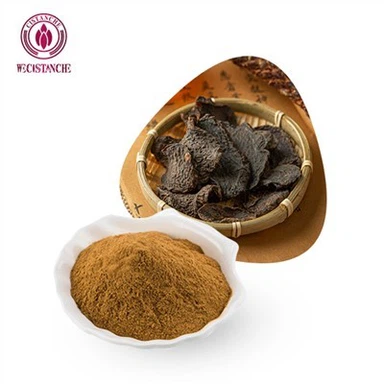
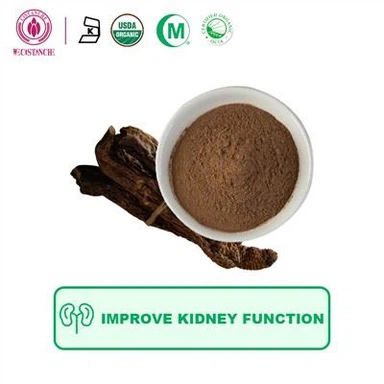
Cistanche belongs to CistancheHoffmg.Et Link is listed as Orobanchaceae perennial herbactic parasitic plant. There are more than 22 species of Cistanche in the global convention, distributed all over the world. Now it is generally believed that there are four species of Cistanche in China, namely Cictanche desericola, C.salsa, C.tubulosa, and C.sinensis. At present, cistanche tubulosa is the main base plant of cistanche deserticola, followed by cistanche tubulosa. Cictanche deserticola and deserticola tubulosa were included in the 2005 edition of Chinese Pharmacopoeia as authentic medicinal materials. Mainly produced in China's Inner Mongolia, Xinjiang, and other regions. Known as the "desert ginseng" reputation. It has high medicinal value and is a tonic.

Click to cistanche tubulosa dosage
Main chemical components of Cistanche:
Phenyl ethanol glycosides: phenylethanoid glycosides are the main active components in Cistanche deserticola, which can resist adverse stimuli, enhance learning and memory ability, fight oxidation and help Yang and other functions. Ergosterol, cistanche A or C, and other phenylethanoid glycosides have been well studied.
Iridoids: Hiromi Kobayashi et al. from Japan conducted a systematic study on C.salsa produced in China and isolated it. Taking 8 - table nux vomica acid, Beijing's flaccid, 8 - table deoxidization nux vomica acid, from 10 compounds such as the wrong element. And there are 8 a poor base yak alcohol - BD glucose dismissed indican nan, d-h alcohol, p - sitosterol, succinic acid, B - sitosterol - BD glucose butyl no glycosides, rosin alcohol, and nine compounds
Lignans and their glycosides: In the separation and extraction of phenylethanoid components from Cistanches, a small number of lignans and phenylethanoid glycosides can be separated using macroporous resin section chromatography, silica gel chromatography, dextran coagulation chromatography, or HPLC preparation, currently Syringaresinolo-B-Dglucopuranoside, Liriodendron, +Pinsoresinal O-B-Dglucopyranoside and Rosin alcohol.

Pharmacological effects of Cistanche deserticola:
Diuresis and defecation effect:
After investigation, cistanche could significantly increase the excreted urine volume and reduce the residual urine volume of rats, and had no significant effect on the total urine volume and bladder pressure value during urination. The results showed that cistanche was beneficial to bladder urine empty and improve urination function. In addition, the study found that cistanche could significantly promote intestinal peristalsis, inhibit intestinal water absorption, and shorten defecation time in mice. According to the research, galactitol in cistanche plays a major role in the whole defecation system.
Anti-fatigue effect:
Cistanche deserticola can reduce LDH5 activity, promote liver glycogen synthesis, protect the liver and promote physical recovery.
Antioxidant and anti-aging effects: The total glycosides of Cistanche deserticola can effectively clear various reactive oxygen free radicals, protect DNA oxidative damage caused by 0H, and have an inherent anti-aging effect.
Androgenic effects:
Cistanche deserticola has an adjustment effect on the aging of the inferior colliculus, the regulation center of the human neuroendocrine system, and improves the nutrition, weight, endurance, and cold resistance of animals with Yang deficiency, which has an obvious strengthening and therapeutic effect on Yang Xu patients.
Memory enhancement:
Total glycosides of C. deserticola have protective effects on a1C1-induced learning and memory disorders, and its mechanism may be related to its antioxidant effect. The extract of Cistanche deserticola also had an obvious neuroprotective effect on Parkinson's disease.

Clinical application of Cistanche deserticola
Clinical application of Cistanche:
Clinical application of Cistanche: Cistanche is a tonic medicine with high medicinal value, that is, it can be used as a medicine or compound for the treatment of male Yang deficiency, impotence, female infertility, waist and knee soreness, Alzheimer's disease, Parkinson's disease, constipation, and other diseases. It can also be used as a functional food to improve immune function, anti-fatigue, anti-oxidation, improve memory, prevent senile dementia, anti-aging, and so on. Professor Tu Pengfei's research group is committed to the development of Cistanche. Based on the discovery that phenyl ethanol glycosides of cistanche have anti-Alzheimer's disease, cistanche tubulosa was successfully developed into a second-class new drug for the treatment of vascular dementia using it as raw material, and it was approved to be marketed in 2005. After further in-depth research invented a high content echinacoside tubular cistanche decoction piece processing technology and developed a new class of effective ingredients for the treatment of vascular dementia using cistanche as raw material, which was applied for clinical application in 2006. At the same time, enterprises led by Hetian Dichen Pharmaceutical Biotechnology Co., Ltd. have also developed health care products including Cistanche capsules, tea bags, and cistanche wine.