Pinocembrin Ameliorates Post-infarct Heart Failure Through Activation Of Nrf2/HO-1 Signaling Pathway Part 2
Mar 21, 2022
Please contact oscar.xiao@wecistanche.com for more information
Statistical analysis
variables were represented as mean±standard error while the proportional variables were shown as a percentage. Comparisons in all groups were performed by using one-way analysis of variance (ANOVA)corrected by a Tukey post hoc test except those in echocardiography data which was analyzed by two-way ANOVA corrected by the Fisher least significant difference test. A p value<0.5 was defined as statistical significance.
Results Pino ameliorated HF-induced deterioration of cardiac functions We firstly implemented echocardiography to determine the HF phenotype establishment induced by LAD ligation and the effects exerted by Pino on cardiac functions. Representative two-dimension M-mode echocardiograms in all groups were illustrated in Fig. 2A.6-week disposal-free feeding after LAD ligation produced significant HF manifestations, evidenced by a reduction in LVEF and FS, and augmentation in LVIDs, LVIDd, LVESV, LVEDV at 6th and 8th week versus sham group, respectively, in addition to increased serum BNP concentration and heart weight/tibia length at 8th week that demonstrated cardiac dysfunction and hypertrophy (Fig.2B, C), with the specific parameters, were illustrated in Table 1). However, all the manifestations were partially reversed by application of Pino versus HF group at 8th week, suggesting the salutary role for Pino on cardiac functions
after PIHF. Furthermore, it was noticeable that although Pino altered the baseline cardiac functions at the 6th week towards a direction of improvement, the alterations did not reach significance. Therefore, an assumption was put forward that whether long-term application of Pino was able to lead to prominent ameliorations, needing further research.

Please click here to know more
Pino attenuated the remodeling of PIHF Given that the regenerative capacity of cardiomyocytes was sparse or absent, the improvements of cardiac functions were attributed more to amelioration of the alive cardiomyocytes and tissues by Pino rather than cardio-myocytes regeneration. Thus, we further evaluated 3 key factors in PIHF remodeling: fibrosis, neovascularization, and apoptosis, as previously suggested (Wang et al 2010). Pino dramatically decreased the deposition of collagen fibers in the MI border zone by approximately 2 folds(Fig.3A).In addition, to avoid the artificial bias in the infarct border zone judgment, we established an identical model as a positive control, in which Pino was replaced by enalapril, an angiotensin-converting enzyme inhibitor (ACEI) known for the reversal on HF remodeling. We observed the fibrosis extent in HF and ACEI groups.


reached approximate percentage versus pre-established models. We also marked the infarct region where vast deposited collagen substituted for myocardium(Additional file 1: Figure S1). Moreover, Pino offset chronic HF-induced rarefaction of VEGFR2 distribution and expression(Fig.3B). Previous studies have revealed that the p53 protein, which could activate diversity of pro-apoptotic genes, played a key role in anti-angiogenesis via inhibition of hypoxia-inducible factor-lα(HIF-la)(Gogirajuet al.2019; Guo et al.2015). We then observed overexpression of p53 protein in the HF group, which was counteracted by Pino(Fig.3C), partly accounting for the alteration of VEGFR2. We also performed a western blot experiment where administration of Pino upregulated the expression of antiapoptotic protein BCL-2 and, in contrast, downregulated the pro-apoptotic proteins including p53, Bax, and cleaved caspase-3, along with an increased bcl-2/bax ratio versus HF group, indicating activation of apoptosis procedure, which was also confirmed by the TUNEL assay where Pino demonstrated a reversed effect on apoptotic rate(Fig.3D).In a conclusion, Pino ameliorated the remodeling post-MI by its well-known effects including anti-fibrosis, angiogenesis, and anti-apoptosis.
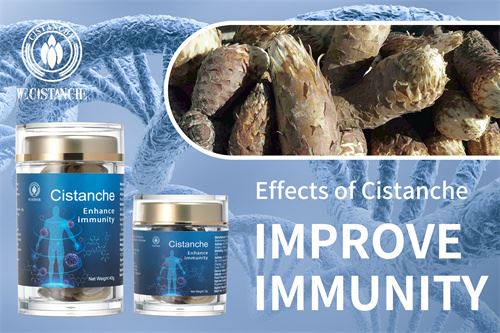
Cistanche can improve immunity
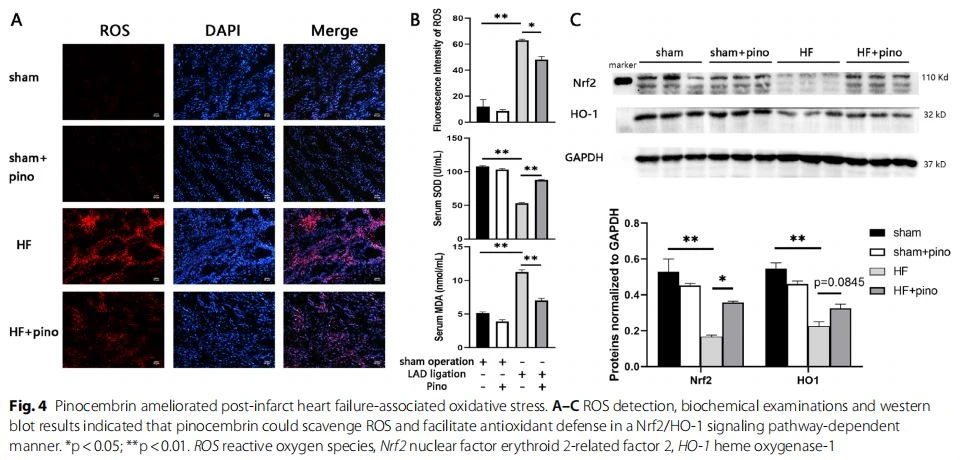
Pino alleviated OS by modulation of Nrf2/HO-1 pathways Nevertheless, the mechanisms by which Pino resulted in such alterations remained undefined. Accumulating studies have demonstrated that OS which modified a wide variety of molecules and triggered adverse remodeling signaling pathways was able to lead to apoptosis and fibrosis in HF models (Dubois-Deruy et al.2020; Bubb et al.2017; Wang et al.2010; Chen et al.2020b), we thus hypothesized that Pino ameliorated PIHF via mitigation of OS. We firstly investigated the ROS generation in heart tissues as well as SOD and MDA in serum by fluorescence and biochemical tests, respectively, to determine the antioxidant roles for Pino in HF. In expectation, Pino partially scavenged ROS generated by chronic
HF, manifested by a reduction of fluorescence intensity of DHE(Fig.4A, B). Moreover, the antioxidant enzyme, SOD was upregulated by application of Pino whereas the MDA, suggestive of lipid peroxidation, was decreased (Fig.4B). The above data testified the antioxidant role for Pino in a rodent model of PIHF.

Albeit the ROS scavenging effect of Pino was certain, the mechanisms underlying the enhancement of antioxidant defense still necessitated elucidation. Nrf2 is a dominant component of endogenous antioxidant defense which dissociates with its inhibitor Kelch-lick ECH-associated protein 1(Keapl) upon stresses/stimuli and translocates to the nucleus to bind to the promoter region of the antioxidant response element(ARE), facilitating the expression of a plethora of antioxidant genes and enzymes, among which the HO-1 was the representative enzyme and has a vital role(Ma et al. 2019; Bubb et al. 2017; Habtemariam 2019; Velusamy et al. 2020; Tian et al.2019). HO-1, encoded by HMOX1, catalyzes heme to breakdown to 3 antioxidant molecules including biliverdin, bilirubin, and carbon monoxide(CO)(Wang et al.2010; Kishimoto et al.2019). Previous studies have demonstrated that specific activation or overexpression of Nrf2 or HO-1 ameliorated PIHF(Ma et al.2019; Bubb et al.2017; Wang et al.2010), and on the other hand, Pino could focus on the Nrf2/ARE pathway to exert protective effects on depression (Wang et al.2020), neurotoxicity(Jin et al. 2015), etc., with the interaction undefined in a PIHF model. We further investigated this interaction by western blot. PIHF contributed to the reduction of expression of overall Nrf2 and HO-1 versus sham group. And Pino significantly reversed this pernicious effect by upregulation of Nrf2 in addition to a capacity to increase HO-1 expression in a strong predisposition although the difference did not reach a significance (p=0.0845; Fig.4C). The results indicated a role for Pino in activating the Nrf2/HO-1 pathway responsible for the amelioration of cardiac functions and remodeling in PIHF.

In vitro blockade of Nrf2eliminated the effects of Pino in H9c2 cardiomyocytes
To further testify that the effects of Pino were Nrf2/HO-1 pathway-dependent rather than integral amelioration of HF pathological status, we cultured H9c2 cardiomyocytes as the methods reported previously, and utilized a specific Nrf2 inhibitor, ML385 in vitro. Pino attenuated ISO-induced ROS accumulation along with an increase of SOD and a decrease of MDA in the medium in a similar response pattern as those in vivo (Fig. 5). However, all effects were nearly abrogated by the administration of ML385, suggesting that the antioxidant effect of Pino was predominantly presented by activation of Nrf2. Moreover, this Nrf2/HO-1 pathway-dependent
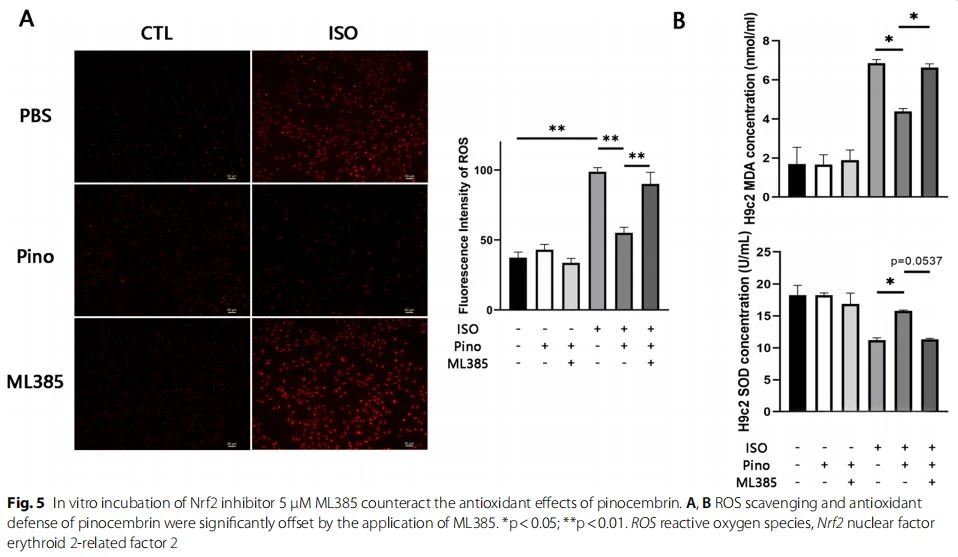
effect was further determined due to the reduction of expression of Nrf2 and HO-1 in the ISO+Pino+ML385 group(Fig.6). It was also notable that the ability of ROS scavenging of Pino diminished since the efficacies of Nrf2 were mainly presented by oxidant defense. A possible explanation for this phenomenon was that an imbalance of redox homeostasis generated excessive ROS beyond the maximum scavenging ability of 25 uM Pino.
We subsequently performed H9c2 cardiomyocytes western blot to investigate the imbalance of redox
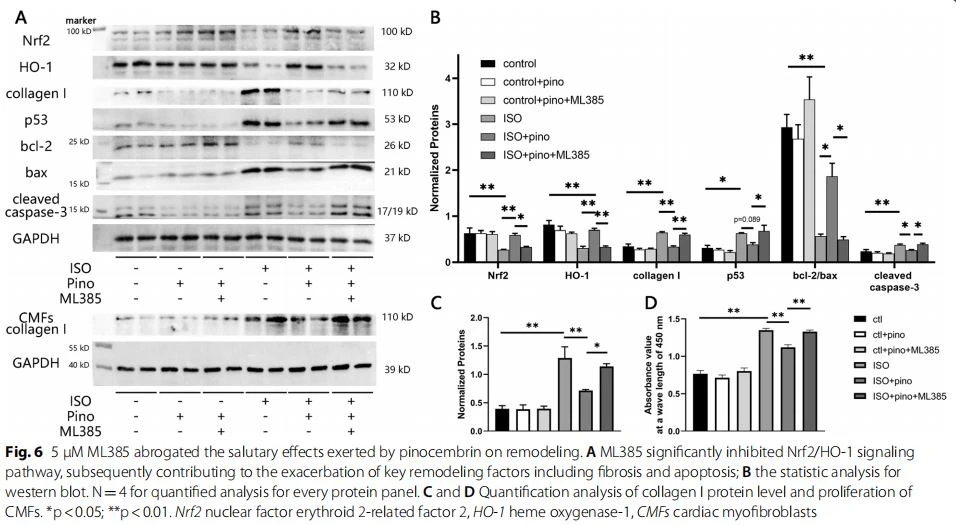
homeostasis resulting from ML385 was responsible for an augmented susceptibility for remodeling. Administration of Pino showed parallel effects in anti-fibrosis,anti-apoptosis, evidenced by a decrease of collagen I,p53, Bax, cleaved caspase-3 as well as an increase of BCL-2 (Fig.6A, B). Furthermore, the CCK-8 suggested inhibition of the activity of CMFs by Pino, with the reduction of collagen secretion supervening which was probed by CMFs western blot. In addition, the reversal of all these presentations by ML385 in vitro further demonstrated that Nrf2/HO-1 was the main target of Pino in the amelioration of PIHE.
Discussion
In the present study, we determined that the Pino treatment was beneficial for PIHF through the antioxidant effects. Pino ameliorated cardiac functions and remodeling resulting from PIHF by ROS scavenging and Nrf2/HO-1 pathway activation which further attenuated the key fac-tors of ventricular remodeling including collagen fibers deposition and apoptosis, and facilitated neovascularization in a p53 protein downregulation-dependent manner.
Antioxidants AND HF
A consensus is presented that OS aggravated dysfunction and remodeling in HF(Galli and Lombardi 2016; Dubois-Deruy et al. 2020; Velusamy et al, 2020; Tian et al. 2019; Kishimoto et al. 2019), there are also a number of experiments and trials implemented for the effects of antioxidants with which more and more molecular targets and novel drugs have been discovered and studied. However, in addition to several anti-oxidants tested in clinical trials that predisposed to show invalidity or even increased risk for HF(Lee et al. 2005; Made et al. 2015; Olesen et al.2014; Lonn et al. 2005), numerous molecular targets, such as the kinases, microRNAs(Tian et al.2020; Vagnozziet al.2013; Pfister et al. 2014), etc., have much difficulty in transfer-ring from basic experiments to trials, and even clinical application due to the manufacture and safety.

In contrast, Pino has the following advantages promising to be an auxiliary antioxidant in the therapy of HF:(i)significant antioxidant efficacy that has been testified in previous studies and our present research;(ii)Pino could be extracted from a number of natural plants, honey, and propolis or be artificially synthesized which ensured the sufficiency for production and a relatively cheap price;(ii)richness of Pino in honey and propolis indicated a dietary uptake for convenience. Actually, a recent phase-I clinical trial has been performed to provide Pino for healthy subjects where Pino showed well tolerance and safety(Cao et al. 2015). In addition, Pino has been approved in the therapy of ischemic stroke by China Food and Drug Administration with a phase-II clinical trial being implemented (Shen et al. 2019). These achieved progress make us look forward to further application of Pinon in more and more diseases with the involvement of PIHF.
The roles for Pino on HF
To our knowledge, this present study was the first research to investigate the roles of Pino on a rodent model of PIHF. Although the effects of Pino were widely explored in a plethora of models, only a few studies placed emphasis on the association between Pino and cardiovascular diseases including myocardial infarction, ischemia/reperfusion injury, and arrhythmias (Ye et al. 2019; Zheng et al.2020), which limited our comprehension of the protection on heart conferred by Pino. In addition, as previously demonstrated, Pino showed anti-fibrosis, -apoptosis,-inflammation, and antioxidant efficacies which were also the vital targets of therapy in PIHF. Since one of the inflammation pathways, the nuclear factor-kappa B/tumor necrosis factor-α(NF-KB/TNF-α)pathway has been investigated in our group (Ye et al.2019), thus, in this study, we focused on several factors that deteriorated cardiac functions and remodeling composed of apoptosis, oxidative stress, fibrosis and rarefaction of neovascularization. As expected, Pino postconditioning, which was of great significance, mitigated apoptosis and fibrosis in an antioxidant-dependent manner. We also observed VEGFR2-dependent angiogenesis that provided oxy-gen and nutriments for cardiomyocytes to facilitate survival, analogous to that elicited by Pino in a model of Alzheimer's disease (Liu et al. 2014). However, a controversy remained that Pino was authenticated to suppress VEGFR2 binding, capillaries migration, and sprouting (Cuevas et al.2015; Tian et al.2014)by which Pino could be utilized to hinder the proliferation of cancer as a latent novel drug. Therefore, neovascularization in the infarct bor-der zone was probably due to the recovery of other factors rather than the direct impact by Pino. P53 protein upregulated in PIHF could explain the alteration in part. Whether Pino affected some other factors which could modulate angiogenesis, such as protein kinase B(AKT), was also unknown. Thus, the underlying mechanisms of neovascularization conferred by Pino in PIHF needed further research to be elucidated.
Pino predominantly modulated Nrf2/HO-1 pathway in PIHF
Nrf2/HO-1 pathway was a dominant mechanism to with-stand the damages caused by OS. It has been well established that Pino could ameliorate OS by promoting overall Nrf2 and HO-1 expression and Nrf2 translocation from the plasm to the nucleus, which was also the reason we choose this pathway as the candidate. However, the effect exerted by Pino on Nrf2/HO-1 pathway was due to direct activation or indirect modulation after improvement of overall status remained undefined. Therefore, in this research, we determined Nrf as the main target of Pino through inhibition of Nrf2 by ML385 which nearly reversed the salutary effects of Pino on fibrosis, apoptosis, and angiogenesis. Nevertheless, this association per-formed in vitro needed further investigations where Nrf2 inhibitor or siRNA or virus transfected for genes silence was necessary to be applied in vivo. Furthermore, we also observed that the ROS scavenging was suppressed by ML385 about which we put forward an assumption that imbalanced redox homeostasis elicited excessive ROS generation beyond the capacity of Pino at a concentration of 25 μM. To testify to this assumption, a concentration gradient was proposed to be arranged to detect whether sufficient Pino was able to counteract the ROS production caused by blockade of the Nrf2/HO-1 pathway. Since ROS generation is generally ascribed to electronic leak from mitochondrial, activated nicotinamide adenine dinucleotide phosphate oxygenase, uncoupling of nitric oxide synthase, and accumulation of advanced glycosylation products, more in-depth studies could be performed to explore the detailed mechanisms by which Pino hindered ROS generation and eliminated ROS accumulation.
Limitations of study
The present study has several limitations. We must recognize that there was a subjective bias of the definition of infarct border zone which might intensely affect the accuracy of results. To resolve this limitation, the pathological sections were chosen by 3 persons which, however, could not completely dispense with the bias. Furthermore, few western blot images showed multiple bands attributed to the polyclonal primary antibodies that had negative impacts on the quality of figures. It was also noticeable that we utilized Nrf2 inhibitor, ML385, rather than Nrf2 siRNA or adenovirus transfection, resulting in less per-suasion. Last but not least, the antioxidant mechanisms of Pino were complicated, necessitating more research to further elucidate.
Conclusion
In conclusion, administration of Pino ameliorated myocardial infarction-induced heart failure, evidenced by improvement of cardiac functions and structural remodeling including fibrosis, apoptosis, and neovascularization, partially through the attenuation of OS, in an Nrf2/HO-1 pathway-dependent manner.
This article is extracted from Chen et al. Mol Med (2021) 27:100 https://doi.org/10.1186/s10020-021-00363-7