Polyphenols Targeting MAPK Mediated Oxidative Stress And Inflammation in Rheumatoid Arthritis Part 2
Mar 16, 2022
Please contact oscar.xiao@wecistanche.com for more information
4.1. Polyphenol's Antioxidant Characteristics
Extreme ROS generation can cause tissue damage, which can trigger an inflammatory reaction. The chemical structures of polyphenol impact their cell antioxidant actions[92]. The number of hydroxyl bunches fundamentally affects various cell antioxidant systems, including revolutionary searching and metal particle chelation abilities [93]. Polyphenol's antioxidant movement is connected to its ability to search for a broad scope of ROS. Suppress-ing ROS blend by repressing compounds engaged in their generation, searching for ROS, upregulating, or ensuring cell antioxidant guards are, overall, components engaged in the activity of polyphenols agent in cancer prevention [94].
Polyphenols might repress the synergistic action of compounds associated with the generation of ROS. Polyphenols protect against oxidative harm by producing hydrogen peroxide(H2O2), which helps in maintaining immune responses such as cell growth [95]. By diminishing hydrogen peroxidase and producing responsive hydroxyl radicals, ROS has been displayed to build free metal particles. As a result of their ability to chelate metal particles (iron, copper, etc.) and free radicals, polyphenols with lower redox potential can thermodynamically lessen exceptionally oxidizing free revolutionaries. Quercetin, for instance, has iron-chelating and iron-balancing actions [96].
Please click here to know more
4.2. Polyphenols and Their Interactions with Free Radicals
Polyphenols might react with non-polar atoms in the hydrophobic internal laver of the plasma membrane, causing changes in the oxidation pace of lipids and proteins. A few flavonoids found in the laver hydrophobic center might help in keeping oxidants out and protect the layer's uprightness and capacity. These cycles might also be considered in the understanding of polyphenols' essential systems of activity, such as cell attachment and signal transduction [97].
The connection of polyphenols with the movement of nitric oxide synthases (NOS)may control NO production. A few flavonoids, for example, quercetin, stilbenes, and luteolin were shown to smother the action of xanthine oxidase (XO), a basic generator of free radicals. Flavonoids may likewise forestall the emergence of these free radicals by neutrophils and the enactment of these cells by 1-antitrypsin, just as they decrease the movement of peroxidase [98].
4.3.Enzyme Inhibition Included in Oxidation
Different polyphenols manage the action of arachidonic enzymes (such as cyclooxygenase(COX), lipoxygenase(LOX), and NOS), by the creation of prostaglandins, leukotrienes, and NO, which mostly act as messengers and aggravation, and are reduced when these chemicals are hindered through the inflammatory arachidonic corrosive pathway [99].
Bacteria endotoxins and inflammatory cytokines might invigorate macrophages, prompting expanded iNOS articulation and NO age, as well as oxidative harm. Polyphenols might diminish oxidative harm by restraining (LPS)-initiated iNOS quality articulation and related movement in refined macrophages [100].
COX and LOX are enzymatic cycles that produce metabolites that can enhance oxidative injuries in tissues. Some polyphenols can stifle COX and LOX action. Metabolites, especially those produced in the XO course, may worsen tissue oxidative harm [101]. During ischemia, xanthine dehydrogenase (XDH) movement might change over to XO action, driving the development of ROS. Polyphenols were proved to decrease the action of XO by way of bringing down oxidative harm [102].
5. Anti-Inflammatory Polyphenols
5.1.Polyphenols Have Modulatory Effects on the Cells Involved in Inflammations
Dietary polyphenols are adjuvants that can improve the global management of RA due to their immunomodulatory and anti-inflammatory effects. Scientific evidence indicates that polyphenols interfere with the metabolic activity of dendritic cells, interact with macrophages, promote B cell and T cell proliferation and suppress Type 1 helper (Th1), Th2, Th9, and Th17 cells. Moreover, they are effective in both the adaptive and innate systems, involving stimulatory and inhibitory effects, depending on the interactions with the components of the immune system [103].
RSV may alter the differentiation of human dendritic cells from monocytes. This statement is supported by a study whose aim was to assess the regulatory actions of polyphenols [104]. EGCG also has an immunosuppressive effect due to its downregulation mechanisms acting on CD11c, CD80, CD83, and major histocompatibility complex(MHC)class I, which are required for antigen presentation by dendritic cells [105]. Furthermore, the inhibitory effects of polyphenols have also been demonstrated in a preclinical study using a mouse model that fisetin (50 mg/kg) inhibited the migration and allow the stimulatory capacity of dendritic cells [106].
Macrophages are classified into two groups based on their polarization: inflammatory M1 and immunosuppressive M2 phenotypes. The effect of cocoa polyphenolic bioactive molecule extract (caffeine, quinic acid, chrysophanol-hexoside, vanillic acid derivative, catechin-3-O-glucoside, theobromine, cinnamic acid derivative, procyanidin B dimer, clo-vamide) on macrophage polarization has been evaluated in an experimental study and a phenotypic switch from the M1 to the alternative M2 state has been reported [107].

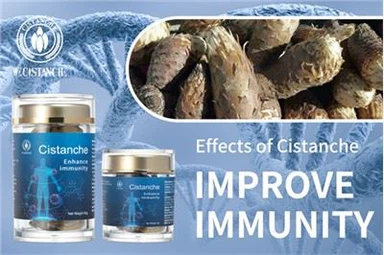
Cistanche can improve immunity
Natural killer (NK) cells have a potent cytolytic activity and a significant role in immunological processes. Perforin and granzyme B are cytoplasmic granule-associated proteins secreted by activated NK cells, which cause apoptosis and necrosis in target cells. Green tea catechin metabolites have immunomodulatory effects by promoting NK cell cytotoxicity through an increase in their activity [103].
The adaptive immune system's main components are B and T cells, and the medical data suggest the involvement of polyphenols in the modulation of these cells. An experimental study conducted in vitro has reported that catechins may suppress the B cell production of immunoglobulin E(lgE), without being associated with cell necrosis and apoptosis [108]. Moreover, the immunoregulatory effects of polyphenols have also been determined in another experimental study which has shown their potential to inhibit the mitogen-induced proliferation of T cells and polyclonal immunoglobulin production by B cells, depending on the dose administered [109].
Treg cells are a type of T cell with a significant role in modulating auto-immunity processes. Medical evidence obtained from a preclinical study suggested that EGCG can stimulate Foxp3 expression, following the activation of Treg and the suppression of cytotoxic T cell function [110]. Furthermore,it has been reported in preclinical studies that RSV reduces the quantity of Th17 cells and proanthocyanidins modulate the Th17/Treg ratio [103].
In animal models of intense and ongoing aggravation, polyphenols such as quercetin, rutin, morin, hesperetin, and hesperidin were shown to have mitigating properties [96. Rutin is helpful in constant provocative illnesses, such as joint pain, while flavanones are additionally viable in xylene-instigated neurogenic irritation. Carrageenan-actuated paw edema has been demonstrated to be decreased by quercetin. Daidzin, glycerin, genistein, and their glucosides can adjust the intense reaction produced by LPS infusion [111].
Polyphenols can possibly impact provocative enzymatic and signaling systems, for example, tyrosines and serine-threonine protein kinase. The following catalysts are perceived to play a part in cell enactment, immune system microorganism multiplication, B lymphocyte activation [112] and others, or the generation of cytokines by activated monocytes. Genistein has been distinguished as a tyrosine-protein-specific inhibitor kinase [113,114]. T cell augmentation is followed by the phosphorylation of tyrosine of specific proteins; this last substance could be responsible for a part of the calming effect. Polyphenols additionally affect inflammatory cells' secretory cycles. Luteolin, kaempferol, apigenin, and quercetin have been shown to be effective inhibitors of the chemicals β-glucuronidase and lysozyme delivered by neutrophils. Moreover, these polyphenols substantially reduce arachidonic corrosive delivery from cell layers [115].
The results of preclinical studies are promising, but further research is needed in order to extrapolate the results to RA patients.
5.2.Mechanism of Anti-Inflammatory Effects of Polyphenols
Polyphenols might have anti-inflammatory impacts, particularly through radical scavenging, cell movement guidelines in inflammatory cells, and action regulations indigestion with arachidonic corrosive, arginine digestion (phospholipase A2, COX) (NOS), and the modulation of other generations of proinflammatory atoms. The hindrance of pro-inflammatory provocative catalysts, such as COX-2, LOX, and INOS, hinders NF-kB and actuates protein-1 (AP-1), enacting stage Il cancer prevention agent detoxified chemicals and initiating (MAPK), protein kinase-C, and nuclear factor erythroid 2-related subatomic components for polyphenol-mitigating activities [113]. Solid proof comes from a normal phytochemical analysis that exhibited the adjustment of various inflammatory mediators, for example, arachidonic corrosives, various peptides, excitatory amino corrosive cytokines, and acids, determining metabolites. Likewise, in other exercise messaging (cGMP, cAMP, protein kinases, and calcium), certain record components, chemicals, and mixtures(AP-1, NF-fraction, and protocol conservations), (iNOS, COX-2), neuropeptides, proteases, and cytokines (IL-1β, TNF-α), in the aggravation interaction, are known to be focal [116]. An experimental study assessing pomegranate peel polyphenolic compounds has reported that TNF-α, IL-1β, IL-6 pro-inflammatory cytokines, NO, and PGE2 inflammatory mediators were found to be at lower levels, due to the actions of punicalagin (PA) and ellagic acid(EA) on iNOS and COX-2 expression [117l. Moreover, it has been reported that PA and EA also inhibit the LPS-induced production of ROS and suppress TLR4, a protein with significant roles in inflammation [103].
The anti-inflammatory mechanisms of polyphenols can have an impact on RA management and are based on interactions with different signaling pathways, generating different immune responses, as follows:
Curcumin suppresses NF-kB, reduces IL-1β, and stimulates IL-6 and vascular en-。
endothelial growth factor(VEGF) by rheumatoid arthritis fibroblast-like synoviocytes (RA-FLS);
Curcumin stimulates IL-6 and VEGF by RA-FLSand induces the apoptosis of RA-FLS;· RSV inhibits Th-17, B-cells, and the MAPK signaling pathway and reduces IL-6 and IL-1;
● EGCG suppresses NF-kB and MAPK and inhibits osteoclast differentiation;
Extra virgin olive oil polyphenol extract (oleocanthal, oleoresin, ligstroside aglycone
monoaldehyde) reduces TNF-α, IL-1β, IL-6 pro-inflammatory cytokines, COX-1 and NF-kB translocation [53];
Quercetin alters the phosphatidylinositol 3-kinase/protein kinase B signaling pathway and reduces IL-1 and IL-6 [103].
Medical records suggest that polyphenols may help RA patients enhance their quality of life.
6. The Roles of Polyphenols in MAPK Pathway in Rheumatoid Arthritis
Polyphenols are the plant secondary metabolites that can release a signaling cascade, which can be neutral or detrimental to cell survival. Toll-like-receptor (TLR)is the class of pattern recognition receptors (PRRs) that plays a major role in innate immune responses. TLR activation triggers several different pathways. The key signaling proteins are mitogen-activated protein kinases (MAPKs), key pathways in the development of RA. In a physiologically normal state, MAPK loops are important signaling pathways that play a role in a variety of processes in the control of cell proliferation, survival, and differentiation of healthy cells. Nonetheless, TLR-dependent MAPK pathway activation mediates pro-inflammatory cytokine expression in macrophages and RA synovial fibroblasts (SF), which promotes joint damage and persistent inflammation. MAPKs are serine/threonine protein kinases that are extremely conserved [118,119].
Extracellular stimuli such as cytokines, TLRs, neurotransmitters, and oxidative stress primarily activate them. They stimulate corresponding receptors, which then transduce intracellular signaling into the nucleus via three primary MAPK cascades. In humans,
the three primary kinase chains are extracellular signal-regulated kinase (ERK) 1/2, C-jun N-terminal kinase (JNK), and p38 MAPK [120]. Intracellular kinases (such as MAPKK, MEK, or MKK, as well as MAPK) are hypothesized to initiate the downstream activation of MAPKs (ERK1/2, INK, and p38 MAPK) by phosphorylating serine, threonine, or tyrosine residues in the appropriate protein [121-123]. The dynamic MAPKs (ERK1/2,JNK, and p38 MAPK) phosphorylate the proper record characteristics and move into nuclei, where they impact quality gene expression [124].
The MAPK signaling pathway has been observed to be dynamic and associated with the pathophysiology of RA. In the RASFs, there is a raised measure of phosphorylated p38 MAPK. Additionally, upgraded ERK and JNKsignaling particle expression have been found in RASFs and the macrophages of RA patients [125].
Previous research has uncovered that actuating the TLR-dependent MAPK signaling pathway causes transforming growth factor-beta (TGF-β), VEGF, HIF-1, and MMPs to be initiated in RASFs, bringing about RASF multiplication and synovial hyperplasia. The MAPK signaling pathway in RA builds the statement of key favorable to an incendiary go-between, development components, and MMPs by stimulating RASFs and synovial macrophages with the support of fiery cytokines like TNF-α, IL-1, and IL-6.In RA, the effect of the P38 MAPKpathway on persistent aggravation and the creation of pro-inflammatory cytokines is being examined [126]. According to research, many pro-inflammatory cytokines in RA are thought to be mediated by the p38 MAPKpathway. In numerous RA disease models, the specific inhibition of p38 MAPK has been demonstrated to reduce joint deterioration and TNF-α release. There are four isoforms of p38 that have been identified so far. In RA, the p38 isoform plays a key role in the generation of inflammatory cytokines by synovial macrophages. Jenkins another key MAPK signaling molecule involved in the creation of MMPs in RASFs and synovial macrophages. Conversely, a JNK inhibitor study found that restraining the JNK-intervened enactment of AP-1, collagenase-3, and MMP articulation shielded rodents from bone weakening in an adjuvant-induced ligament rat model. In inclusion, the principal work of other upstream MAP kinase kinases (MAPKKs)like MEKK-2, MKK-4, and MKK-7 in RA pathogenesis has also been mentioned [127].
Epigallocatechin-3-Gallate, Magnolol, and Other Polyphenols'Anti-Inflammatory Properties against RA, via MAPK Pathway
Bioactive compounds have been identified as key mediators in the pathogenesis of RA, and they may lead to a prospective treatment goal. Multiple investigations have revealed JNK, a crucial factor in joint deterioration in inflammatory arthritis, to be widely recognized [128].
More bioactive substances have been identified in RA for their efficacy in reducing disease severity, mostly via regulating the TLR/MAPK signaling system. Many studies have recently been published that show that bioactive substances may play a function in TLR-mediated MAPKsignaling pathways. In LPS-induced RAW 264.7 cells, bioactive substances such as tanshinone IIA and alter naramide were found to inhibit NF-kB, MAPK, and TLR-4 MYD88-mediated pathways [129,130].
Furthermore, there are studies that demonstrated that anti-arthritic natural pyrano-chalcone-derived compounds downregulated LPS-induced NF-kB, TLR-4, JNK, and ERK expression in a collagen-induced arthritic(CIA)rat model131l, as indicated by in vivo experiments. The green tea polyphenol EGCG has been demonstrated to reduce IL-12 production and alleviate RA and some other inflammatory illnesses by inhibiting ERK and p38 MAPK activation. In RA synovial fibroblasts, EGCG therapy reduced the TNF-induced phosphorylation of all three major classes of MAPKs, including ERK, p38 MAPK, and JNK. Curcumin, the key active ingredient in turmeric, has been shown to suppress ERK1/2 and p38 while activating NK, c-Fos, and NFATc-1 in RA patients' peripheral blood mononuclear cells (PBMCs), a considerable reduction in pro-inflammatory cytokines [132].

Additionally, in vitro studies have indicated that RA patients show less phosphorylation of MAPK signaling molecules, which inhibits osteoporosis and bone degradation [133]. Furthermore, they demonstrated that phloretin can block the NF-kB and MAPK pathways, potentially limiting T cell activation and macrophage-mediated inflammatory cycles. Anti-arthritic effects of pomegranate-derived polyphenol, particularly punicalagin(PA)and ellagic acid (EA), have been found to reduce cartilage degradation by inhibiting IL-1-induced p38-MAPK activation in human osteoarthritis chondrocytes [134].
The pure polysaccharide ESP-B4, which is a key component of Ephedra sinica acidic polysaccharides, has recently been shown to have an immunosuppressive effect on RA. Eosinophil stimulation promoter(ESP)-leukotriene B4 inhibited the TLR-4 signaling tracks and the phosphorylated MAPKs caused by LPS stimulation in vitro and in vivo experiments, reducing the production of inflammatory cytokines and mediators [135].
Magnolol, a naturally occurring phenolic molecule, has been shown to have anti-inflammatory properties in RA patients by inhibiting lipopolysaccharide receptors'LPS-induced TLR-4 expression, TLR-4-mediated MAPK signaling, and the production of pro-inflammatory cytokines [136]. However, the exact mechanism of Triptervgium wilfordii hook factor (TwHF)-mediated miR-146a regulation and the bioactive molecule found in TwHF have yet to be discovered. The importance of bioactive substances in the control of microRNAs in RA is highlighted in this context [137,138]. As a result, targeted microRNA balancing via prospective bioactive medicines is a viable technique in TLR/MAPK signaling and RA reduction [139].
The involvement of numerous bioactive substances in the TLR-dependent MAPK signaling cascade in RA is depicted in Figure 4.
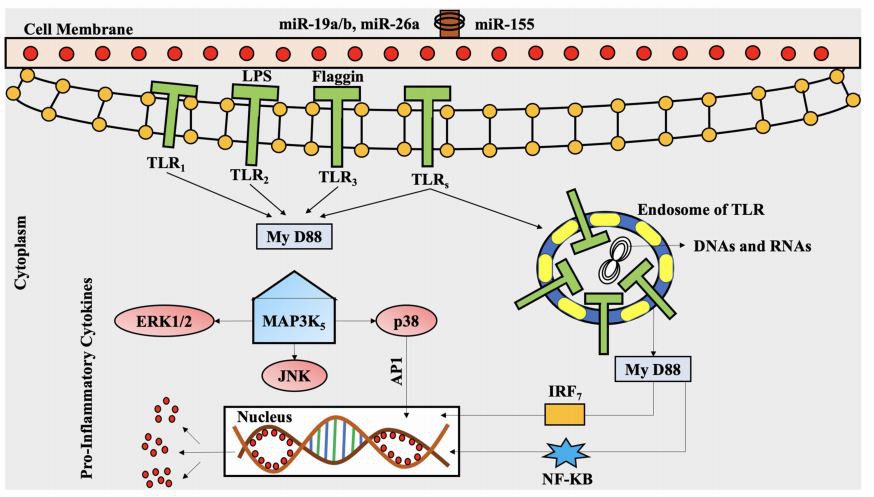
Figure 4. The involvement of numerous bioactive substances in the TLR-dependent MAPK signaling cascade in RA. The TLR receptor attracts(MD)88 and other related adaptor proteins are activated (ERK1/2, JINK, P38). The MyD88-dependent system controls the expression of pro-inflammatory cytokines and other immune-related genes, signaling through the MAPK pathway, which in turn leads to the activation of the transcription factor AP-1 in RA.ERK: extracellular regulated kinase; IRF: interferon regulatory transcription factor; My D88: myeloid differentiation primary response 88; TLRs; Toll-like receptors; LPSs: lipopolysaccharide receptor; MAPK: mitogen-activated protein kinase; JINK: Jun N-terminal kinases; NF-kB: nuclear factor kappa-light-chain-enhancer of activated B cells; miR: microRNA; AP1: activator protein l; p38: a MAPK.
7.p53 Gene Mutation via Oxidizing Agents in RA
The persistent inflammation of RA has been predicted to cause DNA damage serious enough to determine p53 changes and different transformations in the cell cycle and growth suppressant qualities [140]. Surely, in patients with RA synovial tissue, the measure of fractured DNA is essentially higher than with controls [141]. Additionally, the high p53 articulation transformations may help to explain FLS and insufficient apoptosis changes in aggregate observed in rheumatoid synovial tissue [142].

Refined FLS and RA synovial tissue cDNA (complementary DNA) were analyzed with RNA location to determine the contribution of p53 in RA; p53 transformations in RA were found. Following subclone and subsequent series examinations, around 40% of the p53 cDNA was shown. Clones containing mutations are isolated from the rheumatoid synovium [141].
This is thought to explain why single-stranded conformation polymorphism (SSCP)testing or standard sequencing is not sensitive enough to detect rheumatoid synovium changes [143]. Transformations normal for oxidative deamination were changed in >80%of the cases available. The presence of p53 transformations in the condition and FIS culture from long-haul erosive patients has recently been affirmed, albeit the outcomes differ. A new report has shown p53 FLS changes in the synovium of RA American patients [144].
Transformations of p53 can likewise help in the overproduction in the rheumatoid synovium of cytokines and metalloproteinases. Mutant p53 protein fails to suppress interleukin 6 and metalloproteinase 1, encoding qualities for the ex-accessibility of the p53 protein. Moreover, the yield of NO might keep on developing. TNF-α and insulin-like factor necrotization may impact the appearance of p53, a factor of development that can play a role in downregulation and upregulation in p53 [145,146]. Table 1summarizes the polyphenols inhibiting RA.

8. Future Directions and Conclusions
Cytokine release, angiogenesis, osteoclast activity, and oxidative stress lead to inflammatory processes in synovial joint tissue and have all been linked to the progression and severity of RA, making them ideal targets in the research for therapeutic improvement [3,4,43,45,48]. The literature investigated in this review shows that polyphenolic compounds (such as EGCG, butein, wogonins, resveratrol, curcumins, etc.)have very effective anti-inflammatory properties, being also cancer prevention agents
Disease-modifying anti-rheumatic drugs and surgical procedures have been unable to fully control the onset and outcome of RA, so there is a critical need to develop inno-yativye and safe compounds as an alternative to the current management of this disease. Polyphenolic compounds have a lot of potentials to become a priority choice in order to control oxidative damage. The results of numerous studies conducted with animal and cell models have shown the potential effectiveness of polyphenols as adjuvant treatments in the global management of RA. However, only a few clinical trials involving a small number of patients have been conducted to determine the possibility of extrapolating the results to human beings, so further research is needed in order to assess their efficacy and safety profiles [148].
Anti-inflammatory supplements and diets consisting of foods rich in phenolic compounds may be a way to emphasize prevention over therapy. Exogenous antioxidants are increasingly important in order to manage the oxidative damage specific to RA. Moreover, the results of medical studies conducted on polyphenols may represent a starting point in the development of chemopreventive compounds with favorable safety and efficacy profiles [149].
The absorption of polyphenols is limited, and ingested polyphenolic compounds are intensively metabolized by phase II reactions. Pharmaceutical development should also focus in the future on the synthesis of derivates with a higher bioavailability [150].
9. Conclusions
In this review, an overview was presented of the implications of polyphenolic compounds in the MAPK pathway in RA.In recent years, the importance of polyphenols in mitigating RA due to their antioxidative and anti-inflammatory effects has been more and more recognized, making them promising tools for RA adjuvant therapy as new pathophysiological mechanisms of RA are being discovered.
Polyphenols alleviate the symptoms of RA by modulating a wide range of RA-related molecules, including MAPK, ILs 1 and 6, TNF-α, NF-kB, JNK, ERK1/2, AP-one, and COX-2. Polyphenol's anti-RA efficacy has primarily been studied in terms of its impact on inflammatory pathways. The mechanistic explanation of polyphenol antioxidative, anti-inflammatory, and apoptotic activities, which also control RA pathogenic systems, needs more research. Clinical studies could be carried out based on the preclinical data. The specific exchange of combinational miRNAs associated with negative regulation of TLR/MAPK enactment across many tissues or cell types could be an effective therapeutic method for the future treatment of RA. Based on miRNA research, new potential biomarkers and innovative diagnostic methods are expected to be developed in the near future. A better understanding and description of the systems that are thought to require polyphenols in adverse situations would aid in medically clarifying those situations where polyphenol consumption will be beneficial. In addition, such research could aid in the creation of new anti-inflammatory drugs. These polyphenols have been displaced to scavenge ROS; furthermore, they initiate the antioxidant limitation system in chondrocytes and suppress inflammation by hindering supportive pro-inflammatory signaling pathways.
Despite the antioxidant, anti-inflammatory, and immunomodulant properties of polyphenols, there are no dietary recommendations for RA patients. There are many polyphenolic compounds, and their chemical structures influence their biological activities, including specific interactions with protein receptors. Therefore, it is important to perform qualitative and quantitative analyses on polyphenols from different extracts.
This article is extracted from Molecules 2021, 26, 6570. https://doi.org/10.3390/molecules26216570 https://www.mdpi.com/journal/molecules