Protecting The Brain's Blood Supply: How Cistanche Tubulosa Supports Vascular Cognitive Health
Sep 23, 2026
When we think about cognitive decline, we usually think about Alzheimer's disease-the amyloid plaques, the tau tangles, the devastating memory loss. But Alzheimer's is not the only cause of dementia, and it is not even the most preventable. Vascular cognitive impairment-cognitive decline caused by damage to the brain's blood vessels-is the second most common cause of dementia and arguably the most underrecognized. It exists on a spectrum, from mild cognitive impairment caused by small vessel disease to full-blown vascular dementia following multiple strokes. What makes it particularly insidious is that it develops silently, over decades, driven by the same risk factors that cause heart attacks and strokes: hypertension, diabetes, high cholesterol, and smoking. The brain, with its insatiable demand for oxygen and glucose, is exquisitely vulnerable to vascular compromise. Cistanche tubulosa, through its active ingredients echinacoside and acteoside, is being studied for its ability to protect the brain's microvasculature, maintain blood-brain barrier integrity, and support the neuronal health that depends on adequate blood flow.
The Brain's Vascular Vulnerability
The brain represents only 2% of body weight but consumes 20% of the body's oxygen and glucose. This extraordinary metabolic demand is met by a dense network of microvessels-every neuron is within 50 to 100 micrometers of a capillary. The blood-brain barrier, formed by tight junctions between cerebral endothelial cells, regulates the passage of molecules between blood and brain tissue, protecting neurons from toxins and pathogens while allowing essential nutrients to enter.
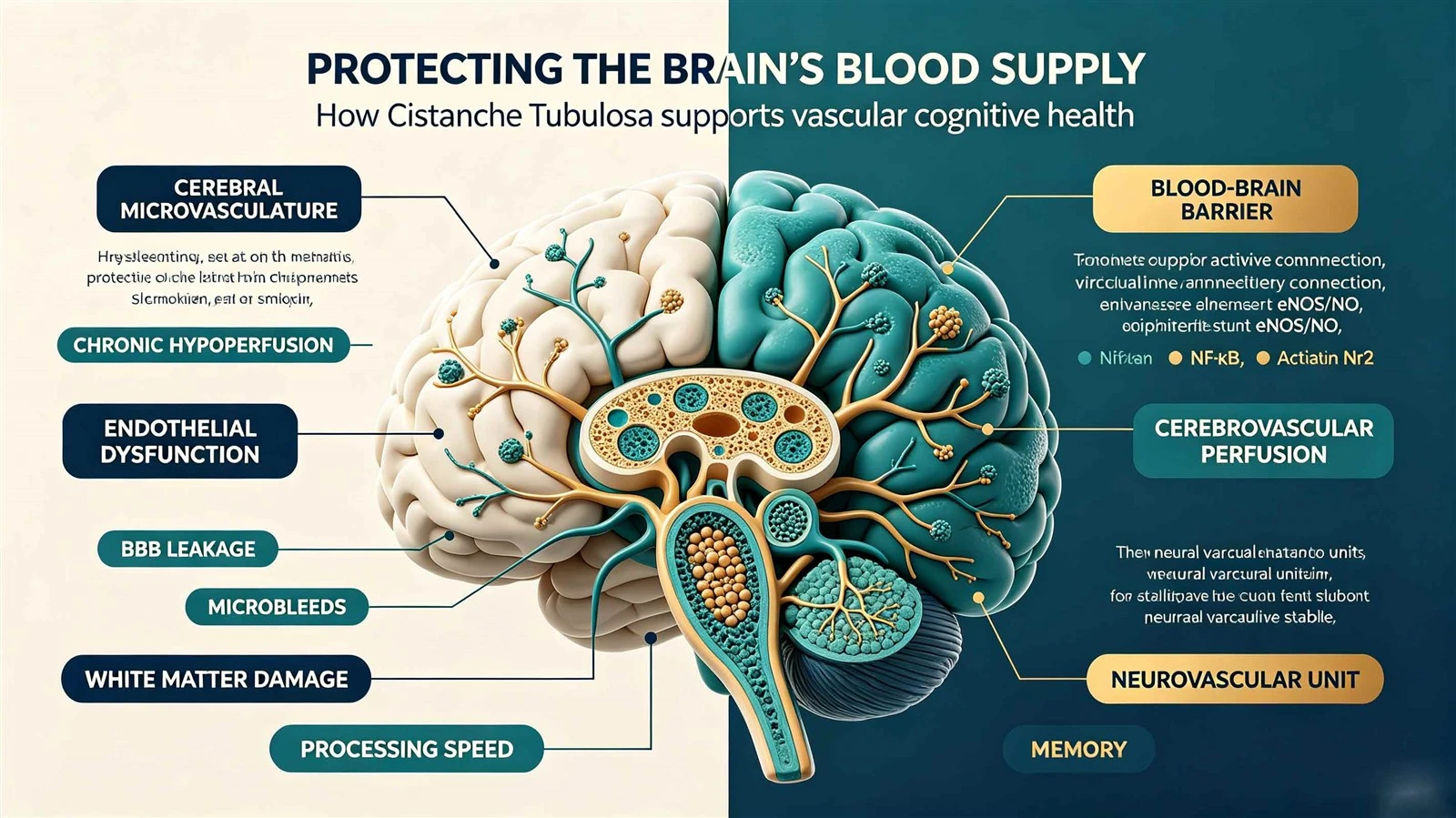
When the brain's blood supply is compromised-by hypertension, diabetes, or atherosclerosis-the consequences are immediate and cumulative. Chronic hypoperfusion, or reduced blood flow, starves neurons of oxygen and glucose, impairing ATP production and triggering oxidative stress. The blood-brain barrier becomes leaky, allowing circulating inflammatory molecules and blood-derived proteins to enter the brain, activating microglia and triggering neuroinflammation. Small vessels become stiff and narrow, and in some cases, they rupture, causing microbleeds that damage surrounding tissue. White matter-the bundles of nerve fibers that connect different brain regions-is particularly vulnerable to vascular damage, which is why vascular cognitive impairment often affects processing speed and executive function before memory.
The molecular mechanisms of vascular cognitive impairment are now well understood. Endothelial dysfunction, driven by oxidative stress and inflammation, reduces nitric oxide production and impairs vasodilation. This worsens hypoperfusion and creates a vicious cycle: less blood flow, more oxidative stress, more endothelial damage, even less blood flow. Meanwhile, the same inflammatory cytokines that damage the vasculature-TNF-α, IL-6, IL-1β-also impair synaptic function and promote neuronal death.
An ideal intervention would therefore address the vascular and neuronal dimensions simultaneously: protecting endothelial cells from oxidative damage, suppressing vascular inflammation, maintaining blood-brain barrier integrity, and supporting the neuronal health that depends on adequate perfusion. Cistanche tubulosa's phenylethanoid glycosides demonstrate activity across all these domains.
How Cistanche Tubulosa Protects the Brain's Vasculature
1. Activating Nrf2 to Protect Cerebral Endothelial Cells
Cerebral endothelial cells are among the most vulnerable components of the neurovascular unit. They are exposed to high levels of oxidative stress from circulating toxins, hyperglycemia, and the byproducts of their own metabolism. Echinacoside, through Nrf2 activation, upregulates the antioxidant enzymes-superoxide dismutase, glutathione peroxidase, heme oxygenase-1, and catalase-that protect endothelial cells from oxidative damage. By preserving endothelial cell viability and function, echinacoside helps maintain the integrity of the blood-brain barrier and the microvasculature that supplies the brain.
2. Preserving Tight Junction Proteins and Blood-Brain Barrier Integrity
When the blood-brain barrier becomes leaky, peripheral inflammatory molecules enter the brain, triggering microglial activation and neuroinflammation. This is a central mechanism in vascular cognitive impairment. Acteoside has been shown to preserve the expression of tight junction proteins-claudin-5, occludin, and ZO-1-in cerebral endothelial cells under inflammatory and oxidative stress. By maintaining the tight junction scaffold, acteoside helps prevent the blood-brain barrier breakdown that exposes neurons to harmful blood-derived factors. In animal models of cerebral ischemia and inflammation, acteoside treatment reduced blood-brain barrier permeability, decreased brain edema, and preserved neurological function.
3. Enhancing eNOS Activity and Cerebral Blood Flow
Cerebral blood flow declines with age, and this hypoperfusion is a major contributor to age-related cognitive decline and the progression of cerebral small vessel disease. Cistanche phenylethanoid glycosides support endothelial nitric oxide synthase activity, increasing nitric oxide production. NO is the primary mediator of cerebral vasodilation-it relaxes the smooth muscle of cerebral arterioles, maintaining adequate blood flow to match metabolic demand. By supporting eNOS function and preventing its oxidative uncoupling, echinacoside and acteoside help maintain cerebral perfusion, ensuring that neurons receive the oxygen and glucose they need. In models of chronic cerebral hypoperfusion, Cistanche extract improved cerebral blood flow, reduced white matter damage, and preserved cognitive function.
4. Suppressing Neurovascular Inflammation
The neurovascular unit is a site of active inflammatory signaling. Circulating inflammatory cytokines activate NF-κB in endothelial cells, increasing the expression of adhesion molecules that recruit immune cells and further compromise barrier function. Acteoside, through its potent NF-κB inhibition, suppresses this inflammatory activation. It reduces the expression of VCAM-1 and ICAM-1, the adhesion molecules that capture circulating leukocytes and facilitate their transmigration across the blood-brain barrier. By calming endothelial inflammation, acteoside protects the vascular-brain interface from the immune-mediated damage that contributes to cognitive decline.
5. Protecting Neurons from Ischemic and Oxidative Damage
Even when blood flow is adequate, neurons face oxidative stress from normal metabolism and from the inflammatory milieu of vascular cognitive impairment. Echinacoside's Nrf2 activation upregulates neuronal antioxidant defenses, protecting neurons from oxidative damage. Its BDNF upregulation supports synaptic plasticity and neuronal survival, helping to maintain the neural circuits that support memory and cognition. And its autophagy enhancement promotes the clearance of damaged proteins and organelles, maintaining neuronal health in the face of vascular compromise.
A comprehensive 2022 review in Frontiers in Pharmacology catalogs the neuroprotective, vascular-protective, anti-inflammatory, and antioxidant properties of Cistanche tubulosa, confirming its multi-targeted relevance to vascular cognitive health. (Frontiers in Pharmacology review)
The Active Ingredients for Vascular Cognitive Health
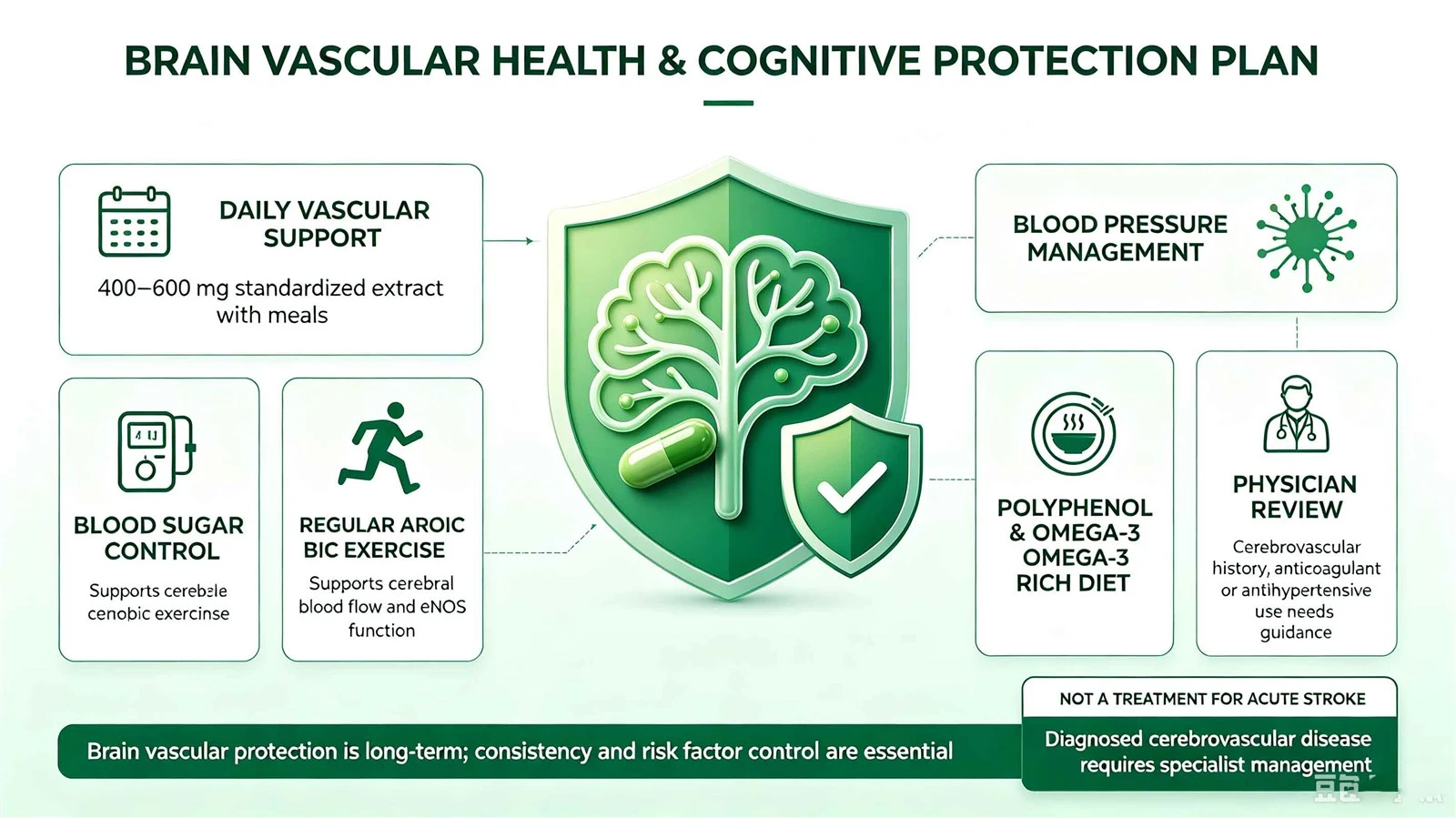
The protective effects are driven by echinacoside and acteoside. Echinacoside is the primary Nrf2 activator, endothelial cell protector, and neuronal antioxidant. Acteoside is the primary NF-κB inhibitor, tight junction stabilizer, and anti-inflammatory agent. Both cross the blood-brain barrier and can act directly on the neurovascular unit. A standardized extract containing 20–40% total phenylethanoid glycosides is essential. The evidence-informed dose is 400–600 mg daily, taken with a meal.
Integrating Cistanche for Brain Vascular Health
Protecting the brain's vasculature is a long-term investment. Cistanche should be taken daily, alongside other vascular-protective strategies: blood pressure and blood sugar management are the two most important modifiable risk factors for cerebral small vessel disease. Regular aerobic exercise enhances cerebral blood flow and eNOS function. A diet rich in polyphenols and omega-3 fatty acids supports endothelial health. Cistanche complements these approaches by providing cellular-level protection to the microvasculature that no lifestyle intervention alone can fully achieve.
For those seeking reliable, research-grade support for brain vascular health, we offer Cistanche tubulosa extract products with verified active ingredient content.
Safety and Medical Context
Cistanche tubulosa is well tolerated with a centuries-long safety record. It does not cause hypotension or excessive vasodilation. However, individuals with cerebrovascular disease, stroke history, or on anticoagulant or antihypertensive medications should consult their physician before adding supplements. This botanical is a preventive and supportive tool for brain vascular health, not a treatment for acute stroke or diagnosed cerebrovascular disease.