Purge Functions Of Different Extraction Parts Of C. Deserticola Against Constipation Rat Model
May 05, 2023
ABSTRACT: OBJECTIVE To investigate the laxative effects of different extracted parts of C. deserticola. METHODS Imodium constipation rat model was established to observe defecation and determine gastrointestinal hormones and neurotransmitters, etc. RESULTS Different extracted parts of C. deserticola had to promote effects on constipating excretion of rats. Compared with the model group, SS, AchE, SP, and MTL of the oligosaccharide part tended to rise, 5-HT, VIP, and NT of the oligosaccharide part significantly increased (P<0. 05 or P<0. 01), AQP3 significantly reduced (P<0. 01), which suggested that the oligosaccharide part had obvious therapeutic effects. The remaining parts showed no significant difference. Oligosaccharide was an ef-the festive working part of C. deserticola. CONCLUSION The oligosaccharide of C. deserticola has good purging effects, and can effectively treat constipation, which provides the scientific basis for pharmaceutical development.
KEY WORDS: C. deserticola; purge; gastrointestinal hormones; neurotransmitters; oligosaccharides
Cistanche deserticola is a dry, scaly, fleshy stem of the Orobaceae plant Cistanche deserticola or the tubular flower Cistanche deserticola. It is known as "desert ginseng" and has functions such as moistening the intestines, promoting bowel movements, tonifying the kidneys, and strengthening the yang. Cistanche deserticola has a soothing and laxative effect and is suitable for constipation treatment in people with weak bodies. At present, there are many reports on the defecation effect of Cistanche deserticola, but there is a little comparison of the differences in the defecation effects of different extraction parts. Our research group has previously explored the defecation effect of Cistanche deserticola on constipation rats and normal rats. To identify its effective parts, our research group further explored the differences in the defecation effect of different extracts of Cistanche deserticola on constipation rats, providing a scientific basis for the development of new drugs.

Desert ginseng
Click here to view Cistanche products
【Ask for more】 Email:cindy.xue@wecistanche.com / Whats App: 0086 18599088692 / Wechat: 18599088692
1 Material
1.1 Trial drug
Cistanche deserticola was purchased from Inner Mongolia Wangyedi Co., Ltd. and identified by Professor Zhai Yanjun from Liaoning University of Traditional Chinese Medicine as a dry, scaly, fleshy stem of the plant Cistanche deserticola Y.C.Ma in the family of Chinese medicine; Loperamide hydrochloride capsules (trade name: Yimengting, batch number: 150413966, Xi'an Janssen Pharmaceutical Co., Ltd.); Tongbianling Capsules (batch number 12090202, Jinan Limeng Pharmaceutical Co., Ltd.); Activated carbon (batch number 20040602, Liyang Zhuxi Activated Carbon Co., Ltd.); Substance P (SP) kit (batch number: BPE30328), somatostatin (SS) kit (batch number: BPE30378), motilin (MTL) kit (batch number: BPE30376), acetylcholinesterase (AchE) kit (batch number: BPE30063), Vasoactive intestinal peptide (VIP) test kit (batch number BPE31682), 5-hydroxytryptamine (5-HT) test kit (batch number BPE30326), aquaporin 3 (AQP3) test kit (batch number BPE30361), neurotensin (NT) test kit (batch number BPE30823), All provided by Shanghai Langton Biotechnology Co., Ltd; The remaining reagents are analytical pure.

Superman herbs cistanche
1.2 Instrument
Enzyme Labeling Instrument (Thermo Fisher Scientific, USA); TGL-16C desktop centrifuge (Shanghai Anting Scientific Instrument Factory); Electronic balance (Shanghai Yousheng Weighing Instrument Co., Ltd.); Vortex mixer (Shanghai Qingpu Huxi Instrument Factory); Constant temperature and humidity box (Shanghai Yiheng Scientific Instrument Co., Ltd.).
1.3 Animal
SD rats, with a body weight of 180-220g, SPF grade, provided by Liaoning Changsheng Biotechnology Co., Ltd., license number SCXK (Liao) 2015-0001.
2 Methods
2.1 Preparation of various extracted parts of Cistanche deserticola
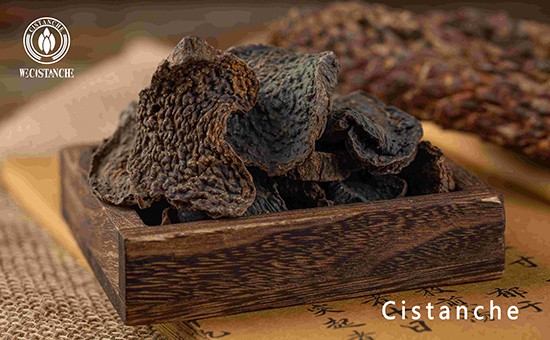
Cistanche deserticola slice
Take an appropriate amount of Cistanche deserticola decoction pieces, add 8 times the amount of water, heat, and reflux to extract 3 times, each time for 1 hour. Combine the filtrate, reduce pressure, and concentrate to a relative density of 1.15 (measured at 50 ℃), add 95% ethanol to 60% alcohol content, precipitate at low temperature for 12 hours, filter, and precipitate to the total polysaccharide extraction site; Take the liquid obtained from vacuum concentration, purify it with macroporous resin, wash it with water, collect the water washing solution, and evaporate it to dryness to obtain the total oligosaccharide fraction; Then elute with 40% ethanol, collect the 40% ethanol eluent, concentrate under reduced pressure, and dry to obtain the total glycosides. Dissolve each extracted part in water and set aside.

Cistanche deserticola experiment
2.2 Grouping
After one week of adaptive feeding, SD rats were randomly divided into 6 groups with 8 rats in each group, including a normal control group, model group, positive drug control group, total polysaccharide group, total oligosaccharide group, and total saponin group. Normal rats were taken. Except for the normal control group, each group of rats was given 3.0mg · kg-1 loperamide hydrochloride capsules (trade name: Yimengting) by gavage for three consecutive days to replicate the constipation model. After successful modeling, except for the normal control group and model group, rats in all other groups were continuously gavaged at a dose of 1mL/100g for 9 days with a concentration of 2.74g · kg-1 corresponding to the test sample. The normal control group and model group were gavaged with the same amount of physiological saline.

Cistanche deserticola slice
2.3 Observation indicators
2.3.1 Defecation status of rats
After the last administration, rats fasted for 12 hours and couldn't help but water. Each group was given 20% activated carbon by gavage at a rate of 25mL · kg-1. The rats were placed in a metabolic cage and the number of particles and weight of black stool excreted within 6 hours were observed.
2.3.2 Expression levels of various indicators in serum, plasma, and colon tissue of rats
After completing the observation, all rats continued to fast for 6 hours and couldn't help but water. About 5mL of blood was taken from all abdominal aorta and placed into two EP tubes, one of which was added with heparin 50 in advance μ L. To collect plasma, and another to collect serum. After standing for 30 minutes, centrifuge at 2500r · min-1 for 5 minutes, collect serum and plasma separately, take supernatant for testing, and store at -70 ℃ at low temperature. The colon tissue 2cm after the removal of the blind valve was dissected. The contents were washed with physiological saline, and dried with filter paper, and an appropriate amount of PBS (pH 7.4) was added. Centrifuge at 4 ℃ 3500r · min-1 for 15min and the supernatant was taken for testing. The supernatant was stored at -70 ℃ at a low temperature. Take serum, plasma, and colon tissue supernatant according to the instructions of the kit, and operate SS, AchE, SP, MTL, 5-HT, VIP, NT, and AQP3.
2.4 Data processing
SPSS 17.0 statistical software was used for the analysis of variance, and the data were all expressed in 珚 x ± s. t-test was conducted for inter-group differences, and P<0.05 was considered significant and statistically significant.
3 Results
3.1 Effect on defecation in rats with constipation
Compared with the normal control group, the fecal particles and weight of the model group rats showed a decreasing trend. Compared with the model group, the Cistanche deserticola groups showed a trend of promoting the number of fecal particles and fecal weight in rats. The total oligosaccharide group of Cistanche deserticola showed a higher trend than other treatment groups, but there was no statistical significance, indicating that the total oligosaccharide group had a significant therapeutic effect and was an effective site of action. The results are shown in Table 1.
Tab 1 Effects of test samples on the waste grain number and weight of feces of constipation rats(士s,n=8)

3.2 Effects on serum SS, NT, and AchE levels in constipation model rats
From the results in Table 2, it can be seen that compared with the normal control group, the SS and NT of the model group rats were significantly reduced (P<0.01), and AchE showed a downward trend, indicating that the constipation model was successfully established. Compared with the model group, the NT of rats in each treatment group was significantly increased (P<0.05), while SS and AchE showed an increasing trend. Among them, the total oligosaccharide group showed a significant increase, indicating that the total oligosaccharide had a significant therapeutic effect and was an effective site of action for Cistanche deserticola.
3.3 Effects on plasma SP and MTL levels in constipation model rats
From the results in Table 3, it can be seen that compared with the normal control group, the SP and MTL of the model group rats were significantly reduced (P<0.05 or P<0.01), indicating that the constipation model was successfully established. Compared with the model group, the SP and MTL of rats in each treatment group showed an increasing trend. Among them, the SP of rats in the total oligosaccharide group was significantly increased compared to the other treatment groups (P<0.05 or P<0.01), and the MTL showed an increasing trend, but there was no statistical difference, indicating that the total oligosaccharide group had a significant therapeutic effect and was an effective part of Cistanche deserticola.
Tab 2 Effect of test samples on SS, NT and AchE in serum of constipation rats(士s,n=8)

Note: Compared with the normal control group, aP<0.05, bP<0.01; Compared with the model group, cP<0.05, dP<0.01; Compared with the total oligosaccharide group, eP<0.05, fP<0.01 (the same in the following table)
3.4 Effect on AQP3, 5-HT, VIP Content in Colon Tissue of Constipation Model Rats
Compared with the normal control group, the 5-HT, and VIP of the model group rats were significantly reduced (P<0.05 or P<0.01), and AQP3 showed an upward trend, indicating that the constipation model was successfully established. Compared with the model group, the 5-HT, and VIP of the total oligosaccharide group rats were significantly increased (P<0.05 or P<0.01), while AQP3 was significantly reduced (P<0.01). The AQP3 and 5-HT of the total oligosaccharide group rats showed significant differences compared to the other treatment groups (P<0.05 or P<0.01), and VIP showed an upward trend, but there was no statistical difference, It indicates that the total oligosaccharide group has significant therapeutic effects and is the effective site of action for Cistanche deserticola (Table 4).
Tab 3 Effect of test samples on SP and MTL in plasma of constipation rats(士s,n=8)

4 Discussion
Constipation is a common clinical disease closely related to gastrointestinal motility. MTL and SP are excitatory peptides with regulatory functions in gastrointestinal motility, which can promote gastrointestinal motility. NT is located in the nerve tissue, distal ileum, and jejunum, and has the function of enhancing colon motility. SS exists in the intestinal nerve plexus and D cells of the pancreas and stomach, which can inhibit gastrointestinal peristalsis, prolong the transit time of the colon and small intestine [6], and inhibit the secretion of VIP and other gastrointestinal hormones. 5-HT is an important neurotransmitter in the enteric nervous system, which can promote secretion and intestinal peristalsis. AQP3 is located in the epithelial cells of the digestive tract and plays an important role in water absorption. This experiment has a therapeutic effect on constipation by regulating these gastrointestinal hormones and intestinal neurotransmitters.
The extraction site has a promoting effect on the excretion of constipation rats. Compared with the model group, the total oligosaccharide group showed an increasing trend in SS, AchE, SP, and MTL, with a significant increase in 5-HT, VIP, and NT (P<0.05 or P<0.01), and a significant decrease in AQP3 (P<0.01), indicating that the total oligosaccharide group has a significant therapeutic effect, There was no significant difference between the other groups, and total oligosaccharides were the effective active sites of Cistanche deserticola. The total oligosaccharides of Cistanche deserticola have good moisturizing and defecating effects, which can effectively treat constipation. It is hoped that this result will provide a scientific basis for the development of new drugs.
Tab 4 Effect of AQP3, 5-HT and VIP in colon tissues of rats(士s,n=8)

reference:
[1] Chinese Pharmacopoeia. Part 1 [S]. 2010:126
[2] Zhong Ping. Desert Ginseng and Cistanche [J]. Forest and Human, 2004, 24 (11): 25
[3] Tu Pengfei, Jiang Yong, Guo Yuhai, et al. Research on Cistanche deserticola and its industrial development [J]. Chinese Journal of Pharmacy, 2011, 46 (12): 882-886
[4] Wu Feng, Zhao Xi, Xue Hua, et al. The effect of aloe vera Lingzhi capsules on moistening the intestines and relieving constipation [J]. Journal of Transportation Medicine, 2008, 22 (4): 338
[5] Foxx OA, Camilleri M, Ste PD, et al. Effect of a somatostatin-tin analog on gastric motor and sensory functions in healthy humans[J]. Gut, 2003, 52: 1555-1561.
[6] Park JH, Rhee PL, Kim G, et al. Enteroendocrine cell counts correlate with visceral hypersensitivity in patients with diarrhoea predominant irritable bowel syndrome[J]. Neurogastro-enterol Motil, 2006, 18(7): 539-546.
[7]Brancati SB, Zadori ZS, Nemeth J, et al. Substance P induces gastric mucosal protection at the supraspinal level by increasing the level of endomorphin-2 in rats[J]. Brain Res Bull, 2013,91(2):38-45.
[8] Fukuda A, Goto T, Kuroishi KN, et al. Hemokinin-1competitively inhibits substance P-induced stimulation of os-teoclast formation and function[J]. Neuropeptides, 2013, 47 (4):251-259.
[9] Layer PK, Laczinski J, Salfelder A, et al. Cholinesterases in development: AChEasa firewall to inhibit cell proliferation and support differentiation[J]. Chem Biol Interact, 2013, 203(1):227-269.