Repairing The Skin Barrier Naturally: How Cistanche Tubulosa Calms Sensitive Skin And Restores A Healthy Glow
Sep 02, 2026
The skin barrier is the body's first line of defense-a delicate brick-and-mortar structure of corneocytes embedded in a lipid matrix of ceramides, cholesterol, and fatty acids. When this barrier is intact, skin is smooth, hydrated, and resilient. When it is compromised-by harsh cleansers, over-exfoliation, environmental stress, or chronic inflammation-the consequences are immediate and visible: redness, stinging, flaking, and a heightened sensitivity to products that were once well tolerated. Sensitive skin is now one of the most common dermatological complaints worldwide, affecting an estimated 60–70% of women and 50–60% of men at some point. Yet the solution is not simply to avoid irritants; it is to actively rebuild the barrier from within and without. Cistanche tubulosa, through its active ingredients echinacoside and acteoside, is emerging as a uniquely comprehensive botanical for barrier repair-combining anti-inflammatory, antioxidant, and lipid-restoring activities that address the root causes of skin sensitivity.
The Skin Barrier: Structure and Vulnerability
The stratum corneum, the outermost layer of the epidermis, is the primary physical barrier. It consists of flattened, dead corneocytes surrounded by a complex lipid matrix composed primarily of ceramides (about 50%), cholesterol (25%), and free fatty acids (15%). This lipid matrix is what makes the barrier waterproof and prevents the loss of essential moisture. Below the stratum corneum lies the living epidermis, where keratinocytes proliferate and differentiate, and the dermis, where fibroblasts produce collagen and elastin.
Barrier disruption occurs when the stratum corneum lipids are depleted or disorganized. This can be caused by over-cleansing with harsh surfactants, excessive exfoliation with acids or retinoids, low humidity, UV exposure, and chronic low-grade inflammation. When the barrier is breached, water evaporates from the skin (transepidermal water loss increases), irritants penetrate more easily, and the skin becomes reactive and inflamed. This inflammatory state further damages the barrier, creating a vicious cycle of sensitivity.
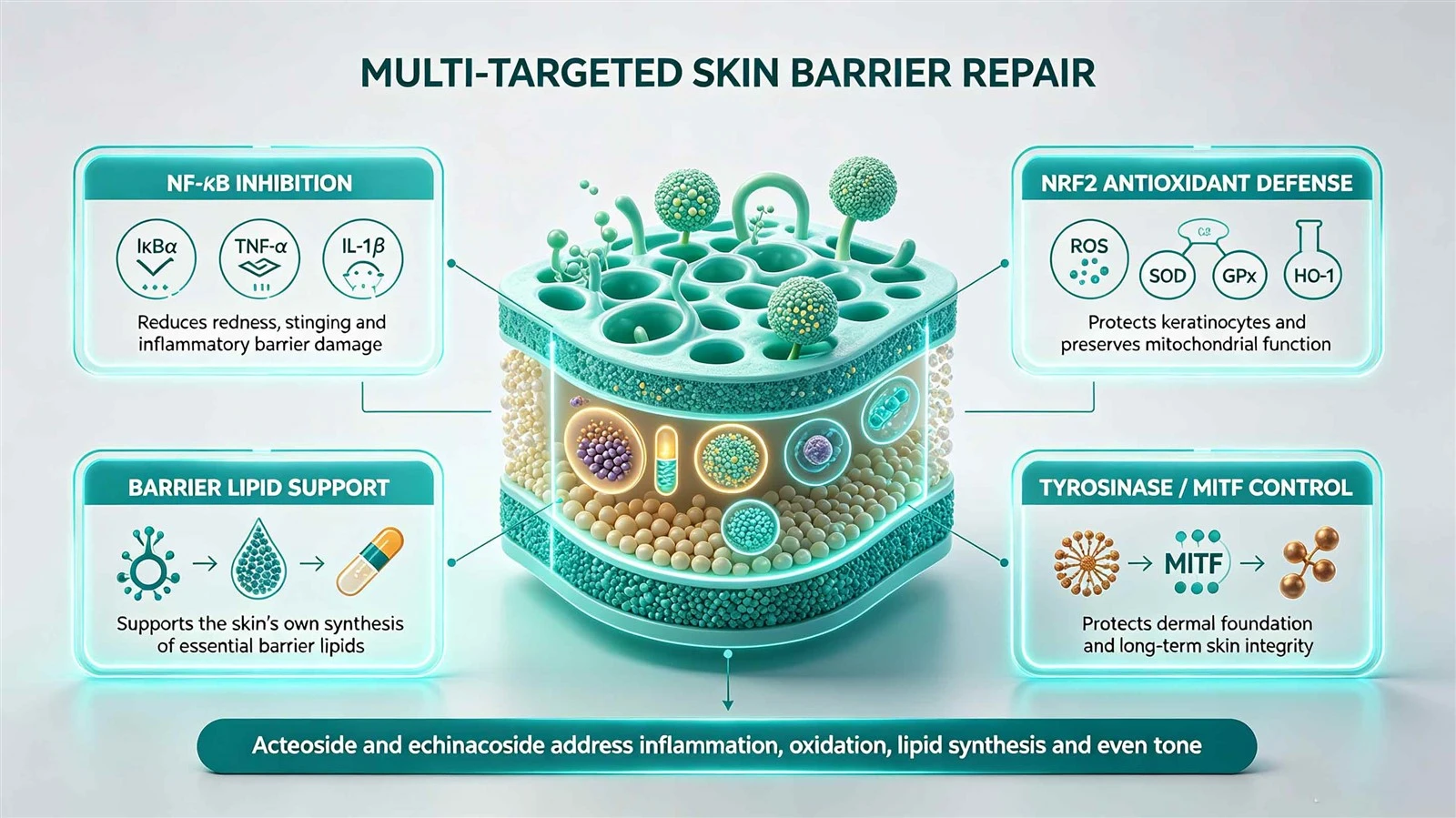
The molecular underpinning of this cycle is NF-κB activation. Inflammatory cytokines-TNF-α, IL-1β, IL-6-are produced in response to barrier disruption and activate NF-κB in keratinocytes and immune cells. This amplifies the inflammatory response, impairs keratinocyte differentiation, and suppresses the synthesis of barrier lipids. At the same time, oxidative stress from environmental exposure generates reactive oxygen species that damage cell membranes and further weaken the barrier. An ideal barrier-repair agent would therefore calm inflammation, reduce oxidative stress, and support the synthesis of the lipids that rebuild the barrier. Cistanche tubulosa addresses all three.
How Cistanche Tubulosa Repairs the Skin Barrier
1. Suppressing NF-κB to Calm Skin Inflammation and Redness
Acteoside is a potent NF-κB inhibitor. In the context of sensitive skin, this means it reduces the production of the inflammatory cytokines that drive redness, stinging, and barrier breakdown. By preventing the degradation of IκBα, acteoside keeps NF-κB sequestered in the cytoplasm, unable to activate the transcription of pro-inflammatory genes. In keratinocyte and macrophage models, acteoside has been shown to dramatically reduce the expression of TNF-α, IL-6, and IL-1β following inflammatory challenge.
This anti-inflammatory activity is directly relevant to the management of sensitive skin conditions. By calming the inflammatory cascade, acteoside helps break the cycle of inflammation → barrier damage → more inflammation. It also reduces the vasodilation and vascular permeability that produce visible redness. For individuals with rosacea, atopic dermatitis, or general skin reactivity, this botanical NF-κB inhibition offers a gentle, non-steroidal approach to managing inflammation.
2. Activating Nrf2 to Protect Skin Cells from Oxidative Stress
Oxidative stress is both a cause and a consequence of barrier dysfunction. ROS generated by UV exposure, pollution, and inflammation damage keratinocyte membranes, impair mitochondrial function, and activate the inflammatory pathways that perpetuate barrier disruption. Echinacoside, through Nrf2 activation, upregulates the skin's own antioxidant enzyme systems-superoxide dismutase, glutathione peroxidase, heme oxygenase-1, and catalase-that neutralize ROS before they can cause damage.
This endogenous antioxidant defense is particularly important in the skin, which is constantly exposed to environmental oxidative stressors. By boosting the skin's own capacity to neutralize free radicals, echinacoside helps protect the structural integrity of the stratum corneum and the living cells below it. This protection extends to the mitochondria of skin cells, preserving the energy production needed for barrier repair and cell renewal.
3. Supporting Barrier Lipid Synthesis
A healthy barrier requires an intact lipid matrix, and ceramides are its most critical component. Research suggests that Nrf2 activation can influence the expression of enzymes involved in ceramide synthesis. By activating Nrf2, echinacoside may support the production of ceramides and other barrier lipids, providing the molecular building blocks for barrier restoration. Additionally, by reducing inflammation and oxidative stress-both of which impair keratinocyte differentiation and lipid synthesis-the combined action of echinacoside and acteoside creates an environment conducive to barrier repair. This is a more fundamental approach than simply applying ceramides topically; it supports the skin's own capacity to produce them.
4. Inhibiting Melanin Production for Even Tone
Sensitive skin is often accompanied by uneven tone and post-inflammatory hyperpigmentation. When the barrier is compromised, inflammatory mediators stimulate melanocytes, leading to dark spots that linger long after the original irritation has resolved. Acteoside's ability to inhibit tyrosinase and suppress MITF expression-discussed in detail in our skin whitening articles-helps prevent this inflammation-induced pigmentation. By calming inflammation and reducing melanin production, Cistanche supports a clearer, more even complexion in sensitive skin types.
5. Anti-Glycation for Long-Term Barrier Health
Glycation-the non-enzymatic binding of sugars to proteins-damages collagen and elastin in the dermis, weakening the structural support for the epidermis. Acteoside's anti-glycation activity protects these structural proteins, helping to maintain the dermal foundation upon which a healthy barrier depends. This long-term protective effect complements the immediate anti-inflammatory and antioxidant benefits.
A comprehensive 2022 review in Frontiers in Pharmacology catalogs the anti-inflammatory, antioxidant, and skin-protective properties of Cistanche tubulosa and its active ingredients, confirming the multi-mechanism basis for its application in skin health. (Frontiers in Pharmacology review on Cistanche tubulosa)
The Active Ingredients for Barrier Repair
The barrier-repairing effects are driven by echinacoside and acteoside. Acteoside is the primary NF-κB inhibitor, calming the inflammation that drives sensitivity and redness. Echinacoside is the primary Nrf2 activator, protecting skin cells from oxidative stress and supporting lipid synthesis. Together, they address the inflammatory, oxidative, and structural dimensions of barrier dysfunction. A standardized extract containing 20–40% total phenylethanoid glycosides is essential. The evidence-informed dose for skin health is 400–600 mg daily orally, with topical formulations at 0.5–2% concentration for targeted delivery.
Integrating Cistanche for Sensitive Skin
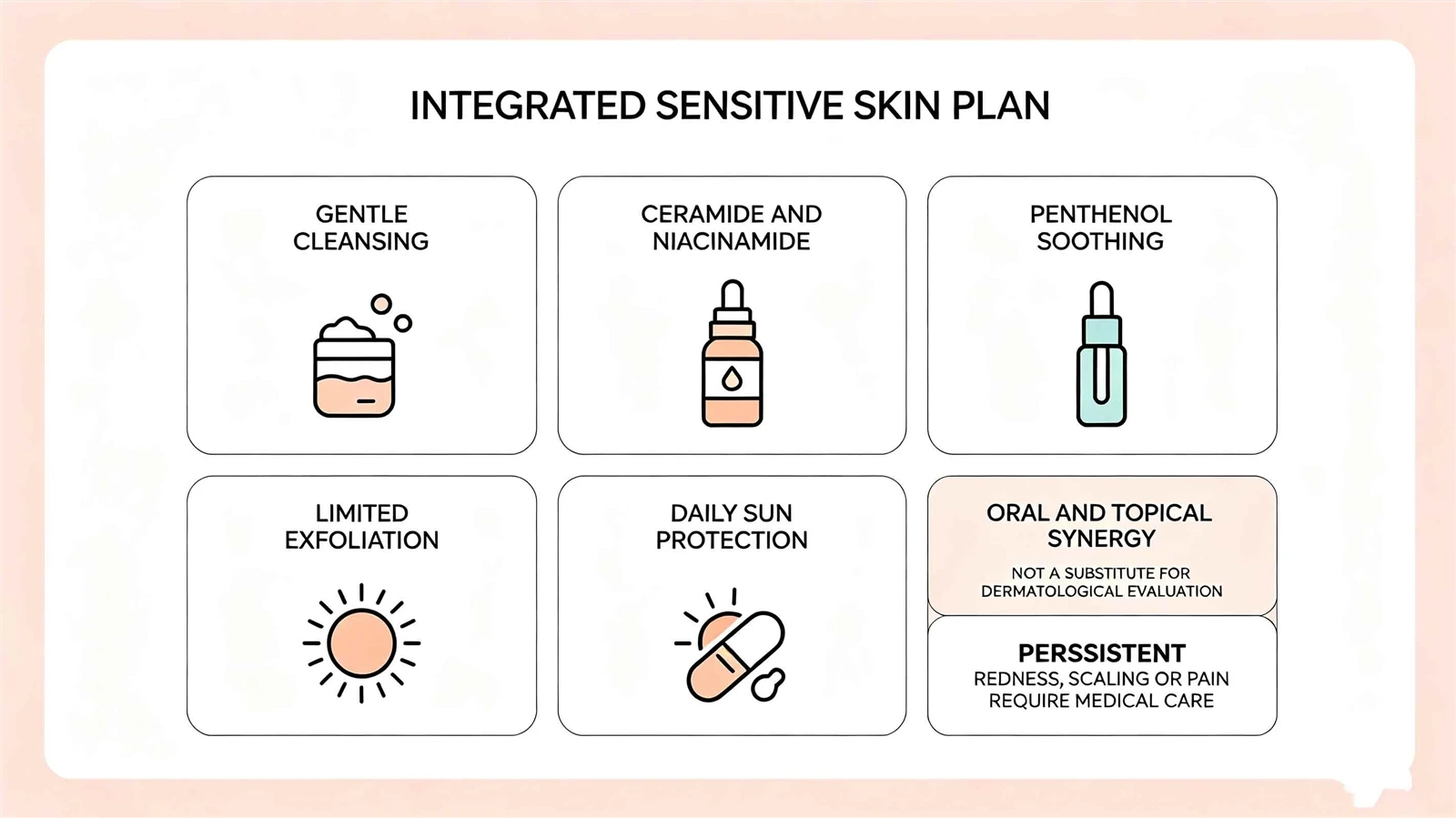
For optimal barrier repair, a dual approach is recommended: oral supplementation to address systemic inflammation and oxidative stress, and topical application to deliver acteoside and echinacoside directly to the skin. Orally, Cistanche should be taken daily with a meal; improvements in skin resilience typically become apparent after 4–8 weeks. Topically, a serum or cream containing 0.5–2% Cistanche extract can be applied to clean skin morning and evening. The extract pairs well with other barrier-supportive ingredients: ceramides replenish the lipid matrix, niacinamide supports ceramide synthesis and reduces redness, and panthenol provides immediate soothing. Gentle cleansing, avoidance of harsh exfoliants, and diligent sun protection remain foundational.
For those seeking reliable, research-grade skin barrier support, explore our Cistanche tubulosa extract product line - every batch is standardized and third-party tested to ensure consistent potency of echinacoside and acteoside, the active ingredients behind the research.

Safety and Medical Context
Cistanche tubulosa is well tolerated with a centuries-long safety record. It is non-irritating and non-sensitizing, making it suitable for sensitive skin types. However, persistent severe redness, scaling, or pain should be evaluated by a dermatologist, as these can indicate underlying conditions such as rosacea, eczema, or contact dermatitis that require specific treatment. This botanical is a supportive, restorative tool for skin barrier health, not a substitute for medical diagnosis or treatment.