What Is TCM Cistanche?
Sep 02, 2026
What Is TCM Cistanche?
A Practical, Pharmacist-Style Guide to Summer Kidney Nourishment with Cistanche + Prepared Rehmannia (From TCM Logic to How to Use It Safely)
As pharmacy professionals, we carry the responsibility of helping customers solve everyday health concerns and improve quality of life. In real-world consultations, kidney deficiency is a common complaint pattern. People may describe difficulty with urination, soreness/weakness in the lower back and knees, dizziness, ringing in the ears, and more. Understanding what kidney deficiency means in Traditional Chinese Medicine (TCM)-and offering practical, safe adjustment strategies-is a key part of professional service.

A Multi-Dimensional TCM View of Kidney Deficiency
In TCM, kidney deficiency is commonly discussed as two states:
Kidney Yin deficiency
Kidney Yang deficiency
However, Yin and Yang are not isolated. TCM emphasizes mutual damage of Yin and Yang: if Yin or Yang becomes deficient to a certain degree, it can affect the other side, potentially forming a combined Yin–Yang deficiency pattern. In such cases, a person may even experience symptoms that seem contradictory-feeling cold yet also feeling heat.

The Kidney's key function in TCM: Storing Essence
In TCM theory, the kidney is primarily responsible for storing essence (jing). If kidney deficiency persists, it may lead to insufficient kidney essence, which in TCM is associated with concerns such as:
reduced reproductive function
slowed growth and development
dizziness and tinnitus
mental fatigue and forgetfulness
decreased libido
weak or soft bones and joints
This is why many TCM kidney-tonifying approaches emphasize not only Yin or Yang, but also nourishing and replenishing essence.

Practical TCM Adjustment Advice: Two Common Herbs for Modern Summer Wellness
For customers with kidney-deficiency-type discomfort, pharmacy professionals may recommend two commonly used herbal materials:
Prepared Rehmannia root (Shú Dì Huáng, 熟地黄)
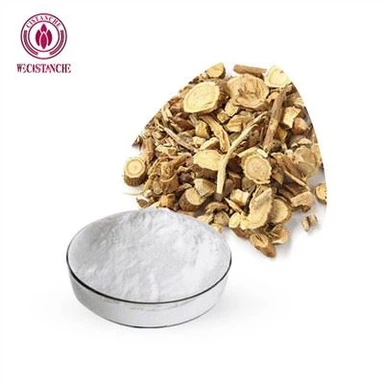
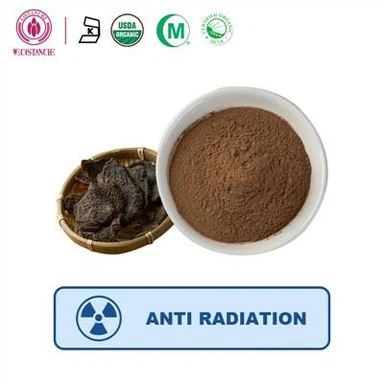
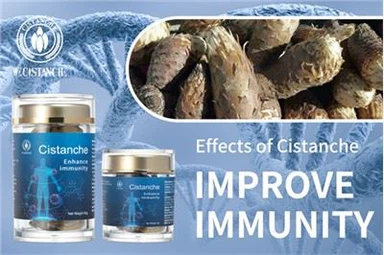
Cistanche (Ròu Cōng Róng, 肉苁蓉)
They can be steeped or simmered as a daily wellness drink, with the TCM intention of supporting yin nourishment, yang support, and essence replenishment.

1) Prepared Rehmannia (Shu Di Huang, 熟地黄)
TCM function (traditional use): nourishes Yin, supports blood, and helps replenish essence and marrow.
TCM often says Yin and blood share the same source and fluids and blood share the same source. From this perspective, prepared Rehmannia isn't only about Yin fluids-it also supports the broader Yin–blood foundation.
Common TCM-fit complaints it is often used for:
Especially when kidney yin deficiency and essence insufficiency are present, prepared Rehmannia is traditionally used for complaints such as:
forgetfulness / reduced memory
dizziness
fatigue and low vitality

2) Cistanche (Rou Cong Rong, 肉苁蓉) - the TCM Cistanche people ask about
If the picture of kidney yin/essence insufficiency also includes yang-deficiency-type signs such as:
feeling cold
cold hands and feet
…then TCM practice often adds Cistanche.
Why wine-processed Cistanche is often mentioned
In traditional processing, wine-processed Cistanche is commonly regarded as having a more pronounced kidney-yang supporting character, and is often chosen for people whose pattern looks like yang deficiency with essence insufficiency.
Why Combine Them? (One Supports Yin, One Supports Yang)
Used together, Prepared Rehmannia + Cistanche is a classic-style pairing logic:
one nourishes (Yin/blood/essence foundation)
one warms/supports (Yang动力)
both are used in TCM thinking to support kidney essence
For customers who are not purely Yin-deficient or purely Yang-deficient-but show a mixed picture-this combination is often considered a practical option.
How to Choose Quality Prepared Rehmannia & Cistanche (Purchasing Tips)
(A) Prepared Rehmannia: the 3-Check Rule
Check color: choose pieces that are deep black and glossy, with a shiny cut surface (avoid brown-yellow or overly dried pieces).
Check texture: should feel soft yet tough, with noticeable stickiness (easily crumbling pieces often indicate insufficient steaming).
Check processing: products labeled nine-steamed, nine-sun-dried (九蒸九晒) are often considered milder and more suitable for longer-term use.

(B) Cistanche: quick ways to judge quality
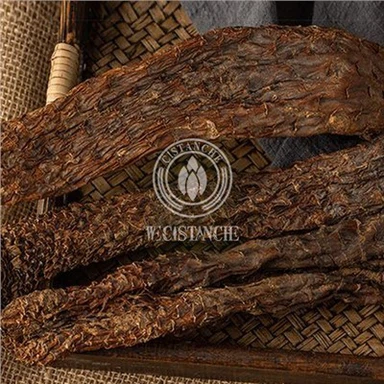
Preferred characteristics: thick and long strips (diameter ≥ 1.5 cm), brownish surface, and a cut surface that looks oily and glossy.
Try to avoid: slices that are too thin (< 2 mm), woody/hard texture, or pieces lacking an oily look-these are often considered lower quality in the herbal trade.
How to Use (Typical Serving Guidance)
A commonly suggested ratio:
Cistanche: 6–10 g
Prepared Rehmannia: 9–15 g
Adjust based on individual condition. Cut into small pieces.
Method 1 (steeping): pour boiling water and cover for 30 minutes.
Method 2 (simmering): simmer for about 20 minutes, then drink.

Safety Notes (Must-Read)
(A) People who should avoid this approach
Excess-heat constitution (TCM description): bitter taste/bad breath, swollen/painful gums, dry constipation
Spleen deficiency with dampness (TCM description): loose stools, thick/greasy tongue coating, poor appetite
(B) Special populations - consult a clinician first
pregnancy
breastfeeding
diabetes
(C) People often considered more suitable (TCM wellness context)
Middle-aged and older adults: discomfort such as lower-back/knee weakness and frequent nighttime urination
High-stress office workers (sub-health): dizziness, tinnitus, reduced memory
Constipation tendency: especially yang-deficiency constipation (not necessarily hard stools, but weak, difficult passage)
Closing: Be the Trusted Health Advisor
With professional guidance and appropriate recommendations, pharmacy staff can help customers better understand kidney-deficiency-type discomfort and make safer wellness choices-while also improving health literacy. In the pharmacy setting, our role is to become a trusted advisor and support healthier lives.
Notes for your independent site (xjcistanche.com)
If you want, I can turn the above into a conversion-friendly independent-site layout for Western visitors (still non-marketing, practical), including:
an FAQ section (Is Cistanche yin or yang?, When to take it?, What does 'wine-processed' mean?)
a compliance-safe disclaimer block (US/EU wording)
suggested internal links (Raw material → Processing → COA/QC → Finished products)
image placement captions tailored to your factory strengths
Tell me your target market (US, UK, EU, Middle East?) and whether you sell raw slices, extract powder, or capsules, and I'll adapt the wording and page structure.