Recharging Your Mental Batteries: How Cistanche Tubulosa Fights Cognitive Fatigue And Restores Mental Clarity
Sep 02, 2026
The modern workplace demands sustained mental effort: hours of screen time, back-to-back meetings, constant multitasking, and the relentless pressure of information overload. The result is a phenomenon known as cognitive fatigue-a state of mental exhaustion characterized by difficulty concentrating, slower processing speed, word-finding problems, and the sensation of "brain fog." Unlike physical fatigue, which is relieved by rest, cognitive fatigue often persists even after a full night's sleep. It is the brain's way of signaling that its energy reserves are depleted and its neural circuits are overtaxed. Stimulants like caffeine offer temporary relief by blocking adenosine receptors, but they do not address the underlying energy deficit. Cistanche tubulosa, through its active ingredients echinacoside and acteoside, is uniquely positioned to address the root causes of cognitive fatigue: mitochondrial energy depletion, oxidative stress, neuroinflammation, and neurotransmitter imbalance.

The Neurobiology of Cognitive Fatigue
The brain is the most energy-demanding organ in the body, consuming approximately 20% of total oxygen and glucose despite representing only 2% of body weight. This energy is used primarily to maintain ion gradients across neuronal membranes-the electrochemical basis of neural signaling-and to support synaptic transmission and plasticity. When energy supply fails to meet demand, cognitive function suffers.
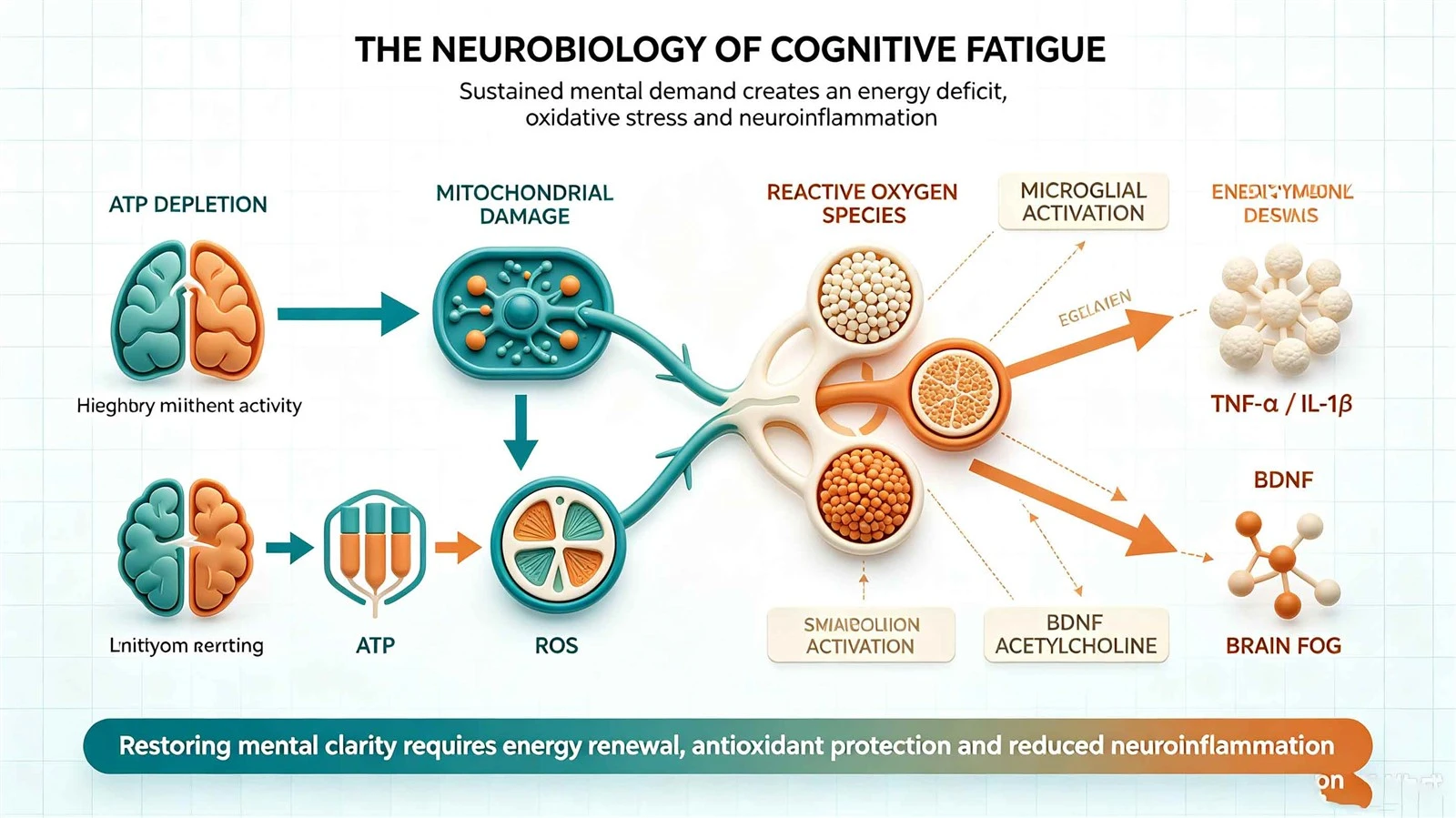
Cognitive fatigue is fundamentally a mitochondrial problem. Neurons depend on mitochondria to generate the ATP required for neurotransmitter synthesis, vesicle release, and synaptic maintenance. Under conditions of sustained mental demand, mitochondrial respiration ramps up, generating reactive oxygen species as a byproduct. When these ROS exceed the brain's antioxidant capacity, they damage mitochondrial membranes, impair electron transport chain function, and reduce ATP production. This creates a vicious cycle: less energy, more oxidative stress, further mitochondrial damage, and worsening cognitive performance.
Neuroinflammation amplifies the problem. Chronic mental stress and sleep deprivation activate microglia, the brain's immune cells, which release pro-inflammatory cytokines including TNF-α and IL-1β. These cytokines directly suppress mitochondrial function, impair synaptic plasticity, and contribute to the subjective experience of brain fog. Elevated inflammatory markers are consistently associated with cognitive fatigue in clinical studies.
At the neurotransmitter level, cognitive fatigue is associated with reduced acetylcholine signaling-the neurotransmitter essential for attention, learning, and memory-and reduced BDNF, the growth factor that supports synaptic plasticity and neuronal survival. An effective intervention for cognitive fatigue must therefore address energy metabolism, oxidative stress, inflammation, and neurotransmitter balance simultaneously. Cistanche tubulosa's phenylethanoid glycosides are demonstrating activity at each level.
How Cistanche Tubulosa Combats Cognitive Fatigue
1. Activating AMPK and PGC-1α to Recharge Brain Mitochondria
Echinacoside activates AMPK, the cellular energy sensor that detects declining ATP levels and orchestrates a response to restore them. AMPK activation in neurons triggers mitochondrial biogenesis through the PGC-1α pathway, increasing the number of functional mitochondria available to generate ATP. It also enhances the efficiency of existing mitochondria by promoting fatty acid oxidation and improving electron transport chain function. This mitochondrial rejuvenation directly addresses the energy deficit at the core of cognitive fatigue.
The effect is not a stimulant-like jolt but a gradual restoration of the brain's energy-producing capacity. Over weeks of consistent use, the expanded mitochondrial network supports sustained mental effort without the crash that follows caffeine or other acute cognitive enhancers. This is why users often describe Cistanche as providing "clean" mental energy-alertness without jitters, focus without overstimulation.
2. Activating Nrf2 to Protect Brain Cells from Oxidative Damage
The high metabolic rate of neurons makes them particularly vulnerable to oxidative stress. Echinacoside's Nrf2 activation upregulates the brain's own antioxidant enzymes-superoxide dismutase, glutathione peroxidase, heme oxygenase-1, and catalase-that neutralize the ROS generated during intense mental work. This protection preserves mitochondrial function and synaptic integrity, allowing neurons to sustain high levels of activity without accumulating damage. By reducing the oxidative burden, echinacoside helps break the cycle of energy depletion and oxidative stress that drives cognitive fatigue.
3. Suppressing NF-κB to Calm Neuroinflammation
Acteoside's potent NF-κB inhibition directly addresses the neuroinflammatory component of cognitive fatigue. By preventing the nuclear translocation of NF-κB, it suppresses the production of TNF-α, IL-6, and IL-1β in microglia. This calms the low-grade brain inflammation that impairs cognitive function and contributes to the subjective sensation of brain fog. The anti-inflammatory effect is particularly important for individuals under chronic stress, where microglial activation is a persistent driver of mental fatigue.
4. Supporting Acetylcholine and BDNF for Mental Sharpness
Cognitive function depends on adequate acetylcholine signaling for attention and memory encoding, and on BDNF for synaptic plasticity. Echinacoside inhibits acetylcholinesterase, the enzyme that breaks down acetylcholine, thereby preserving the neurotransmitter's availability in the synaptic cleft. Simultaneously, it upregulates BDNF expression through the cAMP-CREB pathway, supporting the growth of new synaptic connections and the maintenance of existing ones. This dual action-protecting the neurochemical signal while supporting the structural substrate-addresses both the immediate and the long-term dimensions of cognitive function.
5. Normalizing the Stress Response
Chronic stress is a primary driver of cognitive fatigue. Elevated cortisol suppresses mitochondrial function, impairs synaptic plasticity, and contributes to the inflammatory state that underlies brain fog. Cistanche's adaptogenic properties help regulate the HPA axis, reducing excessive cortisol output and restoring a more balanced stress response. Acteoside's GABA-A receptor modulating activity provides additional calming, reducing the mental chatter and anxiety that accompany and exacerbate cognitive fatigue. By normalizing the stress response, Cistanche helps create the neurochemical environment in which clear thinking can flourish.
A comprehensive 2022 review in Frontiers in Pharmacology catalogs the neuroprotective, anti-inflammatory, antioxidant, and cognitive-enhancing properties of Cistanche tubulosa, confirming the multi-mechanism basis for its application in cognitive fatigue and mental performance. (Frontiers in Pharmacology review on Cistanche tubulosa)
The Active Ingredients for Cognitive Recovery
The cognitive benefits are driven by echinacoside and acteoside. Echinacoside is the primary AMPK activator, Nrf2 stimulator, acetylcholinesterase inhibitor, and BDNF upregulator. Acteoside is the primary NF-κB inhibitor and GABA-A modulator. Together, they address the four pillars of cognitive fatigue: energy metabolism, oxidative stress, neuroinflammation, and neurotransmitter balance. A standardized extract containing 20–40% total phenylethanoid glycosides is essential. The evidence-informed dose for cognitive support is 400–600 mg daily, taken with breakfast.

Integrating Cistanche for Mental Performance
For cognitive fatigue, Cistanche should be taken consistently-daily, with a meal-as a long-term support. Unlike acute cognitive enhancers, it does not produce an immediate rush; its benefits build over weeks as mitochondrial biogenesis and synaptic remodeling occur. It pairs well with other cognitive-supportive practices: regular aerobic exercise (the most potent natural BDNF booster), adequate sleep (during which the glymphatic system clears metabolic waste), stress management, and a diet rich in omega-3 fatty acids and polyphenols. For individuals facing periods of intense mental demand-exam preparation, project deadlines, or creative work-the combination of Cistanche's mitochondrial support and these lifestyle practices provides a sustainable foundation for peak cognitive performance.
For those seeking reliable, research-grade cognitive support, explore our Cistanche tubulosa extract product line - every batch is standardized and third-party tested to ensure consistent potency of echinacoside and acteoside, the active ingredients behind the research.
Safety and Medical Context
Cistanche tubulosa is well tolerated with a centuries-long safety record. It does not cause the jitters, anxiety, or cardiovascular effects associated with stimulant-based cognitive enhancers. However, cognitive fatigue that is severe, progressive, or accompanied by significant memory loss, confusion, or personality changes warrants a thorough neurological evaluation to rule out underlying conditions such as depression, sleep disorders, thyroid disease, or early dementia. This botanical is a supportive tool for stress-related and age-related cognitive decline, not a substitute for medical diagnosis or treatment.