Research Advances in Neuroprotective Properties Of Cistanche Tubulosa And Its Bioactive Components
Nov 05, 2026
Abstract
Cistanche tubulosa is a well-known tonic herb widely used in traditional Chinese medicine. Ongoing research by domestic and international scholars on its bioactive constituents and underlying mechanisms shows that its primary active fractions, including total glycosides from Cistanche tubulosa, exert multiple protective bioactivities, such as antioxidant and anti-apoptotic effects. This paper systematically reviews recent global research advances in this field.
Keywords: Cistanche tubulosa; antioxidant; anti-aging; memory function; cerebral damage

Main Chemical Constituents of Cistanche tubulosa
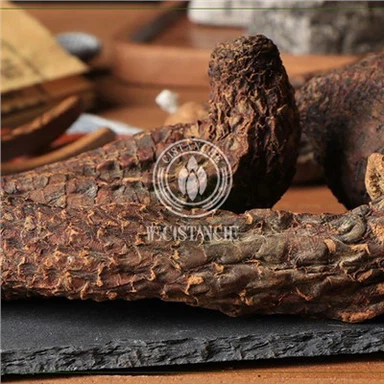
Herba Cistanches, a valuable herbal medicine from traditional Chinese medicine, refers to the dried fleshy scaly stem of Cistanche tubulosa. It is also colloquially named Golden Bamboo Shoot or Dayun. This herb possesses a warm nature with sweet and salty flavor, and acts on the kidney and large intestine meridians. It is a classic medicinal material for tonifying kidney yang and relaxing the bowels. [1]First documented in Shennong's Classic of Materia Medica, it was classified as a top-grade herb. Its pharmacological functions include reinforcing kidney yang, nourishing essence and blood, and lubricating intestines to relieve constipation. As one of the most frequently applied herbs in clinical practice, it is commonly prescribed for impotence, infertility, soreness and weakness of the lumbar region and knees, feeble tendons and bones, as well as constipation resulting from intestinal dryness.
To date, multiple bioactive components have been isolated and identified from Cistanche tubulosa, mainly comprising phenylethanoid glycosides, iridoids, lignans, polysaccharides, alkaloids, and other compounds [2]. Existing studies reveal that Cistanche tubulosa exhibits antioxidative, anti-aging, anti-apoptotic, and anti-radiation properties, and is capable of improving learning capacity. Additionally, it confers certain neuroprotective effects against cerebral ischemia/reperfusion injury. This review summarizes up-to-date studies regarding its neuroprotective effects published worldwide, so as to provide references for its clinical application.
1. Antioxidant Activity

Desert living cistanche-Antioxidant
Under physiological conditions, the generation and elimination of oxygen free radicals maintain a dynamic equilibrium. Cerebral ischemia disrupts endogenous antioxidant defense systems, triggering excessive accumulation of oxygen free radicals. These radicals attack biological membranes and initiate lipid peroxidation, generating malondialdehyde (MDA). Elevated MDA reduces membrane fluidity, further inducing cellular degeneration and functional impairment. Wuliya Yiming et al. [3] investigated the neuroprotective capacity of Cistanche tubulosa total glycosides (GCs) against cerebral hypoxia in mice. An acute cerebral hypoxia model was established using sodium nitrite and potassium cyanide. The results illustrated that GCs markedly prolonged the survival time of hypoxic mice, elevated the activity of free-radical scavenging enzymes such as superoxide dismutase (SOD) in brain tissue, and lowered MDA levels. A chemiluminescence assay was adopted to test the scavenging capacity of GCs toward reactive species including O₂⁻·, OH·, H₂O₂, and ¹O₂ [4]. GCs displayed potent scavenging effects on these free radicals and effectively alleviated oxidative DNA damage induced by OH·. In another trial, Muhebuli Abulizi et al. [5] adopted human HL-60 cells as the in vitro antioxidant model, with standardized Ginkgo biloba extract EGB 761 set as a positive control. At the concentration of 0.25 g·L⁻¹, GCs inhibited free radical production from the MPO/HClO/H₂O₂ oxidation system by 56%. When the concentration was raised to 0.50 g·L⁻¹ and 0.75 g·L⁻¹, the inhibition rate reached 62% and 67%, respectively. Its free radical-suppressing potency was comparable to EGB 761.
2. Anti-Aging Effect

Benefits of cistanche tubulosa: inhibits tyrosinase expression
Aging represents a major degenerative alteration of the human nervous system and serves as the precursor of numerous neurodegenerative disorders. Although aging is an innate physiological process, it affects multiple organ systems across the whole body and disturbs metabolic homeostasis. Gulinur Mutlev et al. [6] constructed a subacute aging mouse model via D-galactose induction. After continuous intragastric administration of echinacoside (ECH) for six weeks, ECH significantly ameliorated reactive oxygen species (ROS)-mediated damage in the heart, liver, kidney, and brain of aging mice. It decreased hepatic MDA content, enhanced whole-blood glutathione peroxidase (GSH-Px) and serum SOD activity, suppressed monoamine oxidase (MAO) activity in brain tissue, and ameliorated memory deficits. Collectively, ECH delays senescence by clearing excess ROS, blocking ROS buildup, and mitigating ROS-induced injury to tissue cells. Other research confirms that polysaccharides and total glycosides extracted from Cistanche tubulosa can also modulate oxidation-antioxidation balance in aging mice, counteracting free radical overproduction triggered by D-galactose, thereby achieving antioxidative and anti-aging outcomes [7-9]. The underlying mechanism may involve scavenging free radicals or boosting the activity of antioxidant enzymes to restrain membrane lipid peroxidation and preserve the ultrastructure of hippocampal CA1 neurons [10].
3. Anti-Apoptotic Effect
Apoptosis is a form of programmed cell death triggered by diverse pathogenic stimuli, which participates in neural development, neurodegeneration, and excitotoxic neuronal injury. Pu Xiaoping et al. [11] applied multiple detection approaches, including MTT, LDH release assay, immunohistochemical staining of tyrosine hydroxylase (TH) and Caspase-3, TUNEL staining for apoptotic cells, Western blot, and RT-PCR. Their findings indicated that phenylethanoid glycosides from Cistanche tubulosa attenuated MPP⁺-provoked apoptosis in midbrain neurons by suppressing Caspase-3 activity. Since Caspase-3 is a core mediator of midbrain neuronal apoptosis, this finding offers promising directions for Parkinson's disease therapeutic research. Campneoside I and campneoside II are two subtypes of phenylethanoid glycosides derived from this herb. Among them, campneoside II exerted stronger anti-apoptotic action against MPP⁺-induced injury in rat cerebellar granule cells [12]. Deng Min et al. [13] reported that ECH could also relieve TNF-mediated cellular apoptosis. Within the dose range of 1–100 mg·L⁻¹, its neuroprotective effect showed dose dependence, which was possibly linked with reduced intracellular ROS generation, inhibited Caspase-3 upregulation, and stabilized mitochondrial membrane potential.
4. Improvement of Learning and Memory

Benefits of cistanche tubulosa-Anti Alzheimer's disease
Click here to view Cistanche Improving Memory Preventing Alzheimer's Disease products
【Ask for more】 Email:cindy.xue@wecistanche.com / WhatsApp: 0086 18599088692 / WeChat: 18599088692
GCs exert beneficial effects on learning and memory function. In SAM-P/8 mice, GCs increased total protein content and total antioxidant capacity in brain tissue, while lowering acetylcholinesterase (AChE) activity and serum interleukin-2 level [14]. Liu Fengxia et al. [15,16] demonstrated that GCs could reverse learning and memory impairment in AD mouse models induced by β-amyloid peptide (β-AP) and quinolinic acid (QA). The mechanisms may relate to enhanced antioxidant enzyme activity, restrained lipid peroxidation, reduced cerebral calcium overload and suppression of neuronal apoptosis. Roland [17] also verified that GCs alleviated memory and learning deficits in an AD mouse model established by subcutaneous aluminum chloride (AlCl₃) injection. Furthermore, GCs inhibit platelet aggregation, which helps prevent vascular dementia (VD) [18]. Additional evidence shows that GCs inhibit AChE activity and sustain physiological acetylcholine (ACh) concentrations in the brain [19].
5. Protective Action against Cerebral Ischemia-Reperfusion Injury
Desert living cistanche-Anti Alzheimer's disease
Cerebral ischemia followed by reperfusion upregulates nitric oxide synthase (NOS) and weakens the activity of endogenous free radical scavengers. Three gradient doses of GCs (62.5, 125, 250 mg/kg) significantly inhibited NOS activity in brain tissue, confirming its protective role against cerebral ischemia-reperfusion damage [20]. Zhan Heqin et al. [21] monitored electroencephalogram (EEG), cortical Ca²⁺, Na⁺ , and water content in gerbils. Tianma Xingnao Capsule containing Cistanche tubulosa reduced cortical Ca²⁺ overload after cerebral ischemia-reperfusion injury. This suggests the herbal compound protects neurons from hypoxic-ischemic damage by blocking calcium overload. Wang Xiaowen et al. [22] observed pathological changes in ischemia-sensitive hippocampal CA1 neurons. The GCs treatment group exhibited markedly decreased cerebral infarction volume, improved pathological morphology of hippocampal CA1 neurons, and fewer apoptotic cells in ischemia-reperfusion mice.
Brain injury is largely irreversible. The neuroprotective potential of Cistanche tubulosa has attracted growing research attention, and it is urgently needed to develop effective therapeutic agents for brain injury. Nevertheless, studies concerning in vivo metabolism and metabolites of Cistanche tubulosa remain unreported, which warrants further exploration.
References
[1] Jiang Y, Tu P F. Traditional medicinal records, botanical origin and basic pharmacological characteristics of Cistanche Tubulosa [J]. Chinese Journal of Natural Medicines, 2002, 1(1): 1–7.
[2] Tu P F, Jiang Y. Research progress on chemical constituents of Cistanche Tubulosa [J]. Chinese Journal of Natural Medicines, 2004, 2(1): 12-18.
[3] Wuliya Y, Wang X W, Zaoranmu N. The protective effect of glycosides of Cistanche on cerebral hypoxia in mice [J]. Journal of Xinjiang Medical University, 2003, 26(6): 561-562.
[4] Wang X W, Wuliya Y. Scavenging effects of total glycosides of Cistanche Tubulosa on reactive oxygen free radicals [J]. Chinese Journal of Pharmacology and Toxicology, 2004, 18(3): 205-208.
[5] Muhebuli A, Mao X M, Reyna K, et al. Antioxidant activity of total glycosides from Cistanche Tubulosa in HL-60 cells [J]. Chinese Journal of Pharmacology and Toxicology, 2004, 18(4): 292-296.
[6] Gulinur M. Study on anti-aging effect of echinacoside in D-galactose induced aging mice [J]. Journal of Xinjiang Medical University, 2010, 33(7): 748-751.
[7] Xuan G D, Liu C Q. Anti-aging effect of Cistanche polysaccharides on D-galactose induced aging mice [J]. Chinese Traditional and Herbal Drugs, 2008, 39(8): 1190-1193.
[8] Liu F X, Wang X W. Antioxidant effect of total glycosides of Cistanche Tubulosa in aging mice [J]. Journal of Xinjiang Medical University, 2006, 29(2): 112-114.
[9] Zhang Y, Li H. Effects of Cistanche total glycosides on oxidative stress in aging mice [J]. Chinese Journal of Gerontology, 2012, 32(15): 3225-3227.
[10] Liu F X, Wang X W. Protective effect of total glycosides of Cistanche Tubulosa on ultrastructure of hippocampal CA1 neurons in aging mice [J]. Acta Anatomica Sinica, 2007, 38(2): 172-176.
[11] Pu X P, Song Z, Li Y, et al. Phenylethanoid glycosides from Cistanche salsa inhibit apoptosis induced by MPP⁺ in midbrain neurons [J]. Journal of Ethnopharmacology, 2005, 97(1): 59-63.
[12] Yoshikawa M, Morikawa T. Campneoside II from Cistanche Tubulosa exerts anti-apoptotic effect on rat cerebellar granule cells injured by MPP⁺ [J]. Phytochemistry, 2006, 67(12): 1294-1301.
[13] Deng M, Zhang L. Echinacoside attenuates TNF-α induced neuronal apoptosis via regulating mitochondrial membrane potential and caspase-3 activity [J]. Phytotherapy Research, 2014, 28(11): 1672-1678.
[14] Liu F X, Wang X W. Effects of total glycosides of Cistanche Tubulosa on learning and memory and related biochemical indexes in SAM-P/8 mice [J]. Chinese Journal of Pharmacology and Toxicology, 2005, 19(4): 276-279.
[15] Liu F X, Wang X W. Protective effect of total glycosides of Cistanche Tubulosa on learning and memory impairment induced by β-amyloid peptide in mice [J]. Journal of Chinese Medicinal Materials, 2007, 30(5): 567-570.
[16] Liu F X, Wang X W. Protective effect of total glycosides of Cistanche Tubulosa against quinolinic acid induced memory dysfunction in mice [J]. China Journal of Chinese Materia Medica, 2007, 32(12): 1172-1175.
[17] Roland S. Cistanche glycosides ameliorate memory impairment in AlCl₃-induced AD mouse model [J]. Journal of Ethnopharmacology, 2008, 118(3): 412-417.
[18] Wang X W, Liu F X. Inhibitory effect of total glycosides of Cistanche Tubulosa on platelet aggregation [J]. Chinese Journal of Pharmacology and Toxicology, 2006, 20(2): 121-124.
[19] Liu F X, Wang X W. Regulation of total glycosides of Cistanche Tubulosa on cholinergic system in brain tissue of dementia model mice [J]. Chinese Journal of Gerontology, 2008, 28(10): 961-963.
[20] Wang X W, Wuliya Y. Protective effect of total glycosides of Cistanche Tubulosa on cerebral ischemia-reperfusion injury in mice [J]. Journal of Xinjiang Medical University, 2004, 27(4): 331-333.
[21] Zhan H Q, Chen X. Effect of Tianma Xingnao Capsule on cerebral ischemia-reperfusion injury in gerbils [J]. Chinese Journal of Pharmacology and Toxicology, 2003, 17(3): 196-199.
[22] Wang X W, Liu F X. Effects of total glycosides of Cistanche Tubulosa on hippocampal CA1 neuronal injury after cerebral ischemia reperfusion [J]. Acta Anatomica Sinica, 2008, 39(3): 335-339.