Your Father's Forgetfulness May Not Be Due To A Brain Failure — An Aging Switch Overlooked By Modern Medicine
Oct 23, 2026
The first time my mother asked me the same question twice in one evening, I laughed it off.
The third time, I felt a chill.

Effects of Cistanche on Alzheimer's disease
Not the dramatic kind - not "she didn't recognize me" or "she wandered off and got lost." Just… a stutter. A pause. A question she'd asked me ten minutes earlier, asked again with the same tone, the same inflection, as if the first answer had never landed.
I did what any anxious adult child does. I took her to a neurologist.
MRI. Cognitive screening. Blood panel. The works.
The verdict: mild cognitive impairment. Not dementia. Not yet. "Watch it. Control her blood pressure. Keep her socially active. Come back in six months."
It was a good doctor. A reasonable plan. But as I walked out of that clinic, my father said something that stopped me cold:
"Your mother's back has been killing her. She's up three, four times a night to pee. And she hasn't had a decent bowel movement in days."
I had been staring at her brain. He was describing her kidneys, her gut, her sleep, her entire aging body - none of which the neurologist had asked about.
That gap between what Western medicine sees and what was actually happening to my mother sent me down a rabbit hole that changed how I think about aging, memory, and a desert plant called Cistanche tubulosa.

Cistanche prevents Alzheimer's disease
The Reductionism Problem
Modern medicine is brilliant at naming things. It is less brilliant at connecting them.
Memory loss? Neurology. Lower back pain? Orthopedics. Frequent urination? Urology. Constipation? Gastroenterology. Poor sleep? Sleep clinic.
Each specialist gives you a label, a prescription, and a referral. Nobody looks at the whole picture. Nobody asks whether these symptoms might be the same disease wearing different masks.
But aging doesn't work in silos. It works in cascades.
When you're 70, your hormones don't just dip - your entire endocrine orchestra goes slightly out of tune. Your mitochondria don't just slow - they start leaking free radicals. Your gut lining doesn't just thin - it starts letting bacterial toxins into your bloodstream. Your kidneys don't just shrink - they lose their ability to clear inflammatory waste overnight.
And the brain - the most metabolically demanding organ in your body - feels every single one of these changes first.
This is where Traditional Chinese Medicine (TCM) says something interesting. Not mystical. Not woo-woo. Just… structurally different from how we've been taught to think.

Dragon Herbs cistanche-improve kidney function
"The Kidney produces marrow. The brain is the sea of marrow."
In TCM, "Kidney" doesn't mean the two beans in your lower back. It means the entire system of regeneration, reserve, and deep energy. Hormone axes. Stem cell vitality. Antioxidant capacity. Mitochondrial health. Bone marrow. The body's "savings account."
When that account runs low - which it does, inevitably, past 60 - the "sea of marrow" (your brain) starts to dry up. Not catastrophically. Quietly. First as slower recall. Then as repetition. Then as the things you can't unsee.
Western medicine calls this neurodegeneration. TCM calls it kidney essence deficiency leading to marrow emptiness.
Same observation. Different vocabulary.
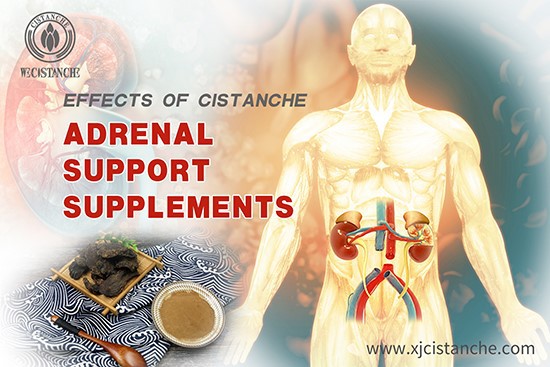
Effects of cistanche-Improve Kidney Function
Cistanche tubulosa: The Desert Plant That Shouldn't Work (But Might)
I first encountered Cistanche tubulosa deserticola - known in Chinese as rou cong rong, "the Ginseng of the Desert" - while scrolling through PubMed at 2 a.m., fueled by the particular anxiety that only a worried child of aging parents can know.
I expected the usual: a few low-impact papers from obscure journals, heavy on tradition and light on data.
What I found instead stopped me mid-scroll.
Cistanche tubulosa has been the subject of hundreds of peer-reviewed studies over the last two decades. Not just in Chinese journals. In Phytomedicine, Journal of Ethnopharmacology, Neuroscience Letters, Free Radical Biology and Medicine. The pharmacology is real. The mechanisms are specific. And the results, while preliminary, point in a direction that nobody in my mother's neurology clinic had mentioned.
Here's what the research actually says.

Cistanche bodybuilding
1. It Protects the Hippocampus - Not by "Boosting Brain Power," But by Slowing the Burn
The active compounds in Cistanche tubulosa - primarily phenylethanoid glycosides like echinacoside and acteoside (verbascoside) - do something very specific in animal models of cognitive decline:
They increase survival of hippocampal neurons under stress (Aβ toxicity, ischemia, oxidative damage).
They upregulate BDNF (brain-derived neurotrophic factor) and NGF (nerve growth factor) - the brain's own repair signals.
They increase synaptic proteins like synaptophysin and PSD-95, meaning neurons maintain their connections better.
They reduce amyloid-β plaque formation and inhibit microglial overactivation (neuroinflammation).
In plain English: Cistanche tubulosa doesn't make you smarter. It makes your neurons die more slowly. It keeps the wiring intact longer. It reduces the "rust" in a system that's already starting to corrode.
This is not a nootropic in the Silicon Valley sense - it won't give you laser focus or help you crush a coding session. It's something quieter and, for an 80-year-old, potentially more valuable: neuroprotection at the rate of aging.
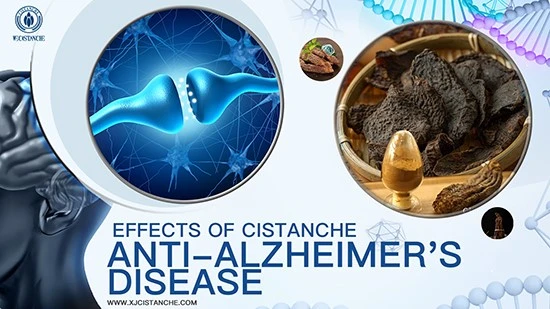
Cistanche- prevent Alzheimer's disease
Click here to view Cistanche Improving Memory Preventing Alzheimer's Disease products
【Ask for more】 Email:cindy.xue@wecistanche.com / WhatsApp: 0086 18599088692 / WeChat: 18599088692
2. It Protects the Kidneys and the Brain - Using the Same Mechanisms
Here's the part that made me sit up.
Cistanche tubulosa's phenylethanoid glycosides don't just cross the blood-brain barrier. They also accumulate in kidney tissue, where they:
Reduce tubular atrophy in aging kidney models
Inhibit cellular senescence pathways (p53, p16INK4a)
Suppress the cGAS-STING inflammatory cascade
Restore mitochondrial function in renal cells
Upregulate Klotho - a protein so central to aging that it's sometimes called the "anti-aging hormone"
The same molecular actions that protect neurons from oxidative death also protect kidney cells from age-related decline.
This is, quite literally, pharmacological evidence for the TCM concept of kidney–marrow–brain connectivity. The herb doesn't "know" it's treating a TCM pattern - but its effects map onto that pattern with uncanny precision.
A plant that protects both the kidneys and the brain, through shared pathways of oxidative stress reduction and anti-senescence signaling, is not something you can easily dismiss as folklore.
3. It Treats Constipation - And That Matters More Than You Think

Effects of cistanche-treat constipation
This is the part that sounds like a punchline until you read the literature.
Chronic constipation in the elderly is not a benign inconvenience. Over the last five years, the gut–brain axis has become one of the hottest fields in neurodegeneration research. The mechanism:
Chronic constipation → gut dysbiosis → increased intestinal permeability ("leaky gut") → LPS (lipopolysaccharide) and other bacterial toxins enter circulation → systemic low-grade inflammation → neuroinflammation via the vagus nerve and circulating cytokines → accelerated cognitive decline.
Cistanche tubulosa has been used for centuries in China specifically for "intestinally dry constipation in the elderly." Its polysaccharides:
Modulate gut microbiota composition
Increase short-chain fatty acid production
Improve intestinal barrier integrity
Reduce systemic inflammatory markers
So when my mother's Chinese medicine doctor prescribed a formula containing Cistanche tubulosa, the first thing that changed wasn't her memory. It was her bowels. Then her sleep. Then her daytime alertness. Then - subtly, gradually - her ability to hold a thread of conversation without losing the plot.
The sequence matters. Cistanche tubulosa doesn't directly "fix" memory. It fixes the foundation - gut, sleep, systemic inflammation - on which memory depends.