Research And Development Of Medicinal Plants Of Cistanche
Mar 20, 2022
Abstract: This paper systematically introduces the research results of Cistanche medicinal plant resources, chemical components, pharmacological effects, mechanism of action, clinical trials for the treatment of vascular dementia, in vivo metabolism, quality control, harvesting, processing, etc. It is a medicinal plant of the genus Cistanche It provides a scientific basis for sustainable utilization and protection of resources, in-depth development and utilization, production of high-quality Chinese medicinal materials, and industrial development.
Keywords: Cistanche; Cistanche genus; Resource science; Chemical composition; Pharmacological action; New drug; Quality control; Harvesting and processing.
Contact: ali.ma@wecistanche.com

Cistanche deserticola is a well-known tonic Chinese medicine. It has the effects of invigorating kidney yang, nourishing essence and blood, moistening intestines, and laxatives. It is used to treat male impotence, female infertility, blood metrorrhagia, vaginal discharge, cold pain in the waist and knees, blood dry constipation, and other symptoms. The most frequently used medicine for kidney yang in the past dynasties. There are 4 species and 1 variety of Cistanche in my country, which are CistanehedesaieolaY. c. Ma, Cistanche salsa C salsa (C.A.Mey.)G. Beck, Cistanche salsa £salsa vat. albitlora P. F. Tu et Z. c. Lou, Cistanche C tubulosa (Schenk) R. Wight and Cistanche £sinensis G. Beck. The 2005 edition of "Chinese Pharmacopoeia" contains Cistanche deserticola Cistanche deserticola Y. c. Ma and Cistanehe tubulosa (Schenk) R. Wight Dried fleshy stems with scaly leaves, other species are also used as Cistanche in the Northwest. In order to promote the development and utilization of medicinal plants of the genus Cistanche, we have systematically studied the domestic medicinal plants of the genus Cistanche in terms of resources, chemical composition, biological activity, in vivo metabolism, quality control, harvesting, and processing, etc. The effective part of Cistanche Cistanche, total phenylmethyl glycosides, has been developed into a second-class new drug for the treatment of vascular dementia.
1. Resources research on medicinal plants of the genus Cistanche
In the seventeen years from 1990 to the present, a systematic follow-up investigation has been conducted on the species, distribution, and resources of the genus Succulent in my country, which not only clarifies the species, distribution, and resource status of the genus Succulent in China but also comprehensively understands ten The evolution of the plant resources of Cistanche in my country in the past few years; the discovery of a new variety Cistanche salsavai. albiflora P. F. Tu et ZC Lou; Recommendations for the conservation and sustainable use of plant resources. To provide a scientific basis for sustainable utilization of Cistanche plant resources, development of artificial cultivation, and resource protection.

2. Study on the chemical constituents of the medicinal plants Cistanche
2.1 Research on small molecular compounds of medicinal plants of the genus Cistanche
The small molecular components contained in Cistanche plants mainly include iridoids and their glycosides, lignan glycosides, oligosaccharide esters, and polyols. In order to elucidate the chemical constituents of the medicinal plants of the genus Cistanche, we have systematically studied the chemical constituents of Cistanche Cistanche, Cistanche Cistanche, Cistanche salina, and Cistanche sand, and isolated and identified 101 compounds, of which 18 are new compounds. The chemical constituents of the domestic medicinal plant Cistanche.
Twenty-four compounds were isolated and identified from Cistanche deserticola, including 12 phenylethanoid glycosides, 3 iridoid glycosides, and 9 other components, of which 1 was a new compound.
Thirty-two compounds were isolated and identified from Cistanche Cistanche, including 18 phenethanol glycosides, 4 iridoid glycosides, 4 oligosaccharide esters, and 6 other components, of which 7 were new compounds.
Twenty-one compounds were isolated and identified from Cistanche salina, including 10 benzyl alcohol glycosides, 3 benzyl alcohol glycosides, and 8 other components, of which 7 were new compounds, especially the benzyl alcohol glycosides discovered in the world Such a natural product was discovered for the first time.
Twenty-one compounds were isolated and identified from Cistanche deserticola, including 13 phenylethanoid glycosides, 2 iridoid glycosides, 2 oligosaccharide esters, and 4 other components, of which 4 were new compounds.
2.2 Chemical structure and biological activity of polysaccharides in Cistanche deserticola
The chemical structure and immunomodulatory activity of the polysaccharide components of Cistanche deserticola were systematically studied, and 17 new polysaccharides were isolated and identified based on their immune activity, including 5 glucans, 5 heteropolysaccharides, and 2 galacto-glucans. 1, 1 galactan, 4 arabinogalactan. Six homopolysaccharides with obvious immune-promoting activity were found, their structure-activity relationship and action targets were studied, and their structure-activity relationships and action targets were preliminarily clarified.
3. Biological activity and action mechanism of phenylethanoid glycosides in Cistanche Medicinal Plants
According to the theory of traditional Chinese medicine, "dementia is mostly a syndrome of deficiency, spleen and kidney yang deficiency, heart failure, and marrow depletion, which leads to dementia and dementia." After screening, we found that the extract of Cistanche deserticola has anti-senile dementia effects. , The systemic anti-senile dementia and its mechanism of action were studied on the total phenylethyl alcohol glycosides and monomer compounds echinacoside and verbascoside isolated and purified from Cistanche deserticola.
3.1 Pharmacodynamic study of total glucosides of Cistanche deserticola against Alzheimer's disease
The total glucosides of Cistanche deserticola are the total phenylethanoid glycosides separated and purified from Cistanche Cistanche, which contains more than 90% of phenethyl alcohol glycosides and more than 40% of echinacea.
We used mouse learning and memory model, ethanol-induced mouse memory loss model, scopolamine-induced mouse memory acquisition disorder model, sodium nitrite-induced mouse memory consolidation disorder model, hydrocortisone-induced kidney-yang deficiency mice learning and memory model A systematic pharmacodynamic test was conducted on the total glucosides of Cistanche deserticola, and the results showed that the total glucosides of Cistanche deserticola were at 200.400 mg/kg.
It can obviously improve the learning and memory function of various model animals, suggesting that the total glucosides of Cistanche have an anti-senile dementia effect.
3.2 Pharmacodynamic study of echinacoside against Alzheimer's disease
Echinacea is the most abundant component in the medicinal plants of Cistanche. We conducted a systematic study on the pharmacodynamics of echinacea against Alzheimer's disease. The memory impairment caused by the rat scopolamine model, the ethanol model, the cerebral ischemia model, the rat cerebral ischemia model, etc. all has obvious improvement effects, suggesting that the compound has an anti-vascular dementia effect.
3.3 Study on the improvement of learning and memory activity by verbascoside
Verbasoside is the most abundant component in Cistanche spp. after echinacoside. We used the scopolamine model to study the activity of improving learning and memory. The results show that the compound has a significant effect on improving learning and memory.
3.4 Study on the mechanism of action of phenylethanoid glycosides against senile dementia
The mechanism of action of phenylethanoid glycosides against senile dementia has been systematically studied using animal models and cell models, and the results show that these compounds
It has the functions of inhibiting platelet aggregation, antithrombosis, promoting nerve cell growth, and inhibiting nerve cell apoptosis, and its mechanism of action has been basically elucidated.
4. Toxicological tests of total glucosides of Cistanche deserticola and echinacoside
On the basis of the acute toxicity test, a six-month long-term toxicity test was carried out for the total glucosides of Cistanche deserticola in rats and beagle dogs, and six months for rats and nine months for beagle dogs for echinacoside. Long-term toxicity test, the results show that the total glucosides of Cistanche and echinacoside have no obvious effect on the body weight, blood biochemical indicators, and growth and development of various organs of the test animals, indicating that the phenylethanoid glycosides have high safety. Suitable for long-term medication.
5. Clinical trial of Cistanche total glycosides capsules in the treatment of vascular dementia
Cistanche total glycosides capsules were used in the treatment of vascular dementia. Phase III clinical trials.
Phase 1 clinical trials of single-dose (dose of 150-400 mg/d) and multi-dose (three times a day, 600, 900 mgs each time, continuous taking for 10 days) test on normal volunteers showed that this product is effective against There was no significant effect on the subjects' body temperature, respiratory rate, heart rate, systolic blood pressure, diastolic blood pressure, liver, and kidney function, fasting blood glucose, three routines, and electrocardiogram; during the test, no adverse reactions were found in each group of subjects, indicating that The clinical drug safety of this product is very high.
Phase II clinical double-blind and double-simulation test was conducted on 120 pairs of Cistanche total glucosides group and positive control group (Xidezhen). The effective rates were 76.65%, 66.09%, 50.43%, and 84.35%, respectively, and the control group was 72.32%, 54.46%, 40.18%, 70.54%, Phase III clinical trials were conducted on 333 cases of Cistanche total glycosides capsule group and 111 cases of positive control drug (Xidezhen). The effective rates were 77.74%, 72.10%, 57.37% and 91.19%, respectively, and the control group was 64.15%, 62.26%, 38.68%, 66.98%, and the curative effect was obvious. The control drug Xidezhen.
The new drug obtained a new drug certificate in April 2005 and has now been listed.
6 Pharmacokinetic studies of total glucosides of Cistanche deserticola and echinacoside
6.1 Metabolism of total glucosides of Cistanche in the gastrointestinal tract of beagle dogs
The gastrointestinal metabolism of Cistanche total glycosides was studied by Beagle dogs. The results showed that the components of Cistanche total glycosides did not undergo significant metabolism in the stomach and small intestine, but echinacoside was partially converted to verbascoside in the large intestine, which may be Echinacea was partially hydrolyzed by the action of intestinal bacteria.
6.2 Metabolism of echinacoside in rats and the biological activity of its metabolites
The pharmacokinetics of echinacoside in rats were studied by gavage and intravenous injection. Eight metabolites were isolated and identified from rat bile, of which six were new compounds. The antioxidant activity of 1 metabolites was screened, and the results showed that the metabolites had obvious antioxidant effects on superoxide free radicals; 9 metabolites were isolated and identified from rat urine, and 8 metabolites were tested on nerve cells. Screening of protective activity showed that 4 metabolites had obvious activity.
7 Establishment of the quality control system for the medicinal materials of Cistanche deserticola
According to the research results that the main active components related to the function and indication of Cistanche deserticola are phenylethanoid and galactitol, HPLC-UV and HPLC-ELSD were used to establish the representative components of phenylethanoid, echinacoside, verbascoside, and galactitol, respectively. Quantitative analysis method, according to the analysis results of different types and origins of Cistanche deserticola medicinal material samples, the corresponding standards were formulated, and a multi-component content determination method was established. The fingerprint detection method was established by HPLC-Uv and HPLC-MS, and the samples of Cistanche deserticola from different species and origins were systematically analyzed, and corresponding standards were established. Combined with the inspection of traits, structure, powder microscopic identification, TLC identification, moisture, ash content, acid-insoluble components, heavy metals, etc., an effective quality control system for Cistanche Cistanche medicinal materials was constructed, and Cistanche Cistanche was included in the 2005 edition of the Chinese Pharmacopoeia.

8. Research on the harvesting, processing, and processing methods of Cistanche deserticola and the quality standard of its decoction pieces
8.1. Study on the technology and quality standard of fresh Cistanche for processing Cistanche tablets
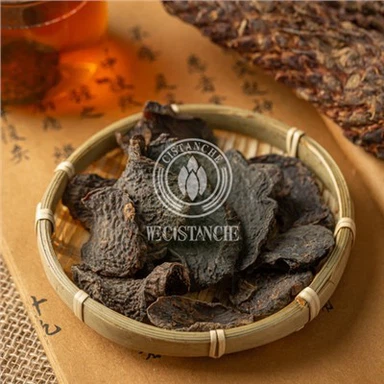
On the basis of discovering that Cistanche contains hydrolase of phenylethanoid glycosides, which leads to the great reduction of phenethylglycosides in the medicinal material of Cistanche deserticola obtained by traditional drying methods, a method of slicing fresh Cistanche, killing enzymes at high temperature, and drying was invented to make the phenethylglycosides of Cistanche The content of these components has been increased by 5 to 10 times, providing high-quality raw materials for the industrial production of total glucosides and echinacoside of Cistanche deserticola, and at the same time making the processing of decoction pieces easier, saving processing costs and resources, and providing an effective method for the production of high-quality Cistanche decoction pieces. Methods. On this basis, the quality standard of "Fresh Cistanche Slices" was formulated.
8.2. Research on the processing technology and quality standards of Cistanche tablets and Cistanche tablets
The processing technology of Cistanche and Cistanche for the production of Cistanche and Cistanche Wine Tablets has been systematically studied, various process parameters have been optimized, the processing technology of high-quality decoction pieces has been established, and the quality standards of Cistanche and Cistanche Wine Tablets have been formulated.
8.3. Research on the production technology and quality standard of Cistanche cistanche formula granules
The production process of Cistanche deserticola formula granules including extraction, concentration, drying, granulation, and other processes was systematically studied, various process parameters were optimized, the production process of formula granules was established, and corresponding quality standards were formulated.

9. Summary
After more than 16 years of systematic research, this research group has done research on the resources, chemical components, pharmacological effects, mechanism of action, and quality standards of medicinal plants of the genus Cistanche, research on new drugs, and the promotion of large-scale cultivation of Cistanche tubulosa and Cistanche. A lot of work has played a positive role in the industrial development, clinical drug use, and resource protection of Cistanche Cistanche, especially the inclusion of Cistanche Cistanche in the "Chinese Pharmacopoeia", making Cistanche Cistanche a legal Chinese herbal medicine, and effectively promoting the economic development of southern Xinjiang. and farmers and herdsmen to get rid of poverty and become rich, and achieve good economic, social, and ecological benefits. However, many problems of Cistanche still need further research, such as the further elucidation of the mechanism of action, discovery of new uses, development of more new products, large-scale high-yield, stable-yield cultivation techniques, etc. We will continue to work with colleagues across the country to make official production. Combining learning and strengthening the Cistanche industry.

Click to Cistanche powder health benefits for improving sexual