Research On The Clinical Medication Rules Of Traditional Chinese Medicine in The Treatment Of Prostatic Hyperplasia Based On Data Mining
May 23, 2024
Introduction
Prostatic hyperplasia is a common disease in elderly men. The cause and pathogenesis of the disease are still not uniformly established. Clinically, it is more common in men over 50 years old, which affects the quality of life of elderly male patients. The main clinical symptoms are lower urinary tract symptoms, including a series of symptoms such as frequent urination, urgency of urination, painful urination, and difficulty in urination. Alpha-receptor blockers and 5a-reductase inhibitors are commonly used in clinical treatment to improve urinary symptoms and reduce prostate size. If conservative treatment with drugs is ineffective or there are recurrent urinary tract infections, recurrent hematuria, recurrent urinary retention, bladder stones, etc., surgical treatment is required. At present, clinical surgical treatment of prostatic hyperplasia includes traditional electroreception of the prostate (TURP), which also includes laser, microwave, acupuncture ablation, and other technologies. Although there is a trend of replacing the electroreception of the prostate, TURP is still the most popular surgical treatment for prostatic hyperplasia. main means.
The treatment of prostatic hyperplasia by traditional Chinese medicine has existed thousands of years ago. It belongs to the categories of urination and phlegm in ancient books. The disease is often described as difficulty in urination. "Suwen", "Medical True Story", "Danxi Xinfa", and Ancient books such as "Yi Zong Jin Jian" have discussed its etiology and pathogenesis. Traditional Chinese medicine has certain advantages in treating prostatic hyperplasia, but its dialectical treatment is difficult for young doctors to master. The urology department of our hospital is a key specialty in Guangdong Province and has strong capabilities. Traditional Chinese medicine has its characteristics in treating prostatic hyperplasia, and Jinglong is the dominant disease in our department. Professor Cui Xuejiao from our department is one of the third batch of nationally renowned traditional Chinese medicine practitioners and has now established a nationally renowned traditional Chinese medicine inheritance studio. My tutor studied under Professor Cui Xuejiao, He is among the third batch of famous academic inheritors of traditional Chinese medicine in the country. These conditions provide convenience for me to study the traditional Chinese medicine treatment of prostatic hyperplasia.

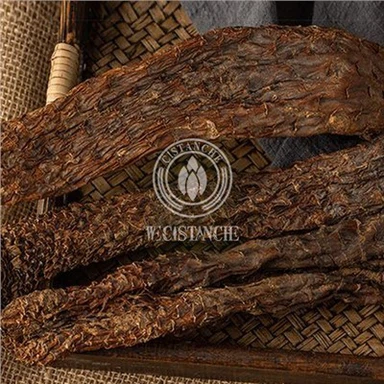
CISTANCHE EXTRACT FOR TREAT PROSTATIC HYPERPLASIA
I use big data mining technology to analyze the clinical medication rules of clinical dialectical treatment of prostatic hyperplasia. Use Excel tables for data statistics, establish a database, conduct an overall analysis of the meridian distribution of the four qi and five flavors of all prescribed Chinese medicines, and use factor analysis and association rules to analyze the rules of Chinese medicine combinations. Factor analysis reduces the overall dimension and uses several obtained component factors to explain the entire analyzed data; association rules can dig out potential drug combination patterns. Through the above methods, we hope to better understand the clinical treatment of benign prostatic hyperplasia. medication characteristics. Through the analysis of the data mining results, I found that the treatment methods of traditional Chinese medicine in our department for the treatment of prostatic hyperplasia are mostly based on general methods, starting from the spleen and kidneys, focusing on tonifying deficiency and releasing excess, which is consistent with the dialectical thinking and clinical medication characteristics of Mr. Cui and my tutor. Similarly, general methods should be used to treat Jinglang, and blood-activating and blood-stasis-removing medicines are commonly used.
Big data mining technologies include correlation analysis, cluster analysis, factor analysis, decision trees, etc. Although this study did not consider the laws of dialectical theory and treatment when analyzing clinical Chinese medicine prescriptions, the results obtained still have certain significance and provide new learning ideas and unexpected help for us to study ancient books and inherit the academic thoughts of famous traditional Chinese medicine.
Chapter 1 Literature Research Fu Yi Han Yi Zou Yan Jiu
Section 1: Traditional Chinese Medicine's understanding of the name, etiology and pathogenesis of prostatic hyperplasia
Prostatic hyperplasia is the name of the disease in modern medicine. Its symptoms are similar to the symptoms of "long closed, fine long" in ancient books, and it belongs to the category of fine long. "Close" refers to difficulty in urinating, and "Long" refers to difficulty in urinating. Both refer to difficulty in urinating, and the difference lies in the severity. Modern Chinese medicine literature often calls it "Jinglong". If it is combined with acute urinary retention, it is called "Longshu" or "impeded urination". Ancient Chinese medicine books believe that the etiology and pathogenesis of this disease are complex, and have different explanations of the etiology and pathogenesis of constipation. Among them, "Stone Chamber Secret Records" says, "If there is no urination after a long illness, it is because the kidney qi is not in contact with the bladder." If kidney qi is present, urine will come out on its own." Jinglong is mostly responsible for the dysfunction of the kidneys, liver, spleen, lungs, bladder, and other internal organs. Its basic pathological mechanism is mostly believed to be the dysfunction of bladder pneumatization.

1. The traditional Chinese medicine's understanding of the etiology and pathogenesis of this disease in ancient Chinese medicine books
(1) Dietary factors
Dietary factors are often due to long-term addiction to spicy, fatty, sweet, and thick food, which leads to an imbalance of spleen and stomach transportation and transformation, spontaneous internal dampness, and accumulation of dampness to generate heat, which is blocked in the middle burner, which mainly rises and falls. Injection into the bladder will lead to unfavorable gasification of the bladder, leading to constipation; or an imbalance in diet, hunger, and fullness, leading to spleen and stomach qi deficiency, inability of the middle Jiao to ascend and move, affecting the Qi transformation of the lower Jiao. Insufficient Qi means that Qi cannot be transformed, resulting in constipation. "Su Wen" states that "if the spleen is not as good as it is, it will make people confused". With the rapid development of modern society, people live at a fast pace and have rich nightlife. Work and entertainment often lead to rich dinners, and breakfast and lunch are often hasty. Overeating spicy food can easily consume Yin fluid, and cold and cold food can easily damage the spleen yang. Overeating Excessive hunger can easily damage the reception of the spleen and stomach. Various dietary factors will ultimately lead to an imbalance in the movement and transformation of the spleen and stomach, failure to rise and fall in the middle coke, and poor Qi movement, resulting in unfavorable gasification of the lower coke, resulting in difficulty in urination.
(2) Invasion of external evils
The bladder has the functions of storing urine and urinating, and it belongs to the bladder meridian of Foot Taiyang. The Taiyang meridian governs the surface of the body and is easily invaded by external evils. If this meridian is invaded by evil spirits, the menstrual qi will be blocked, and the bladder qi will be unfavorable, resulting in distension and fullness in the lower abdomen, difficulty urinating, and even obstruction of urination. "Lingshu Nine Needles Theory" says: "The lungs are the cover of the five internal organs." The lungs can spread the defense qi on the body surface, and have the function of protecting the internal organs from the invasion of external evils. The lungs are at a high position and are easily invaded by various evils. The lungs regulate water passages. If the lung qi is not released properly, the water passages will be blocked and urination will be difficult. As explained in "Sheng Zhi Hui Bu", the lungs govern the qi of the whole body. If the lung qi is clear, the qi movement will be smooth. If the lung qi is turbid, the qi movement will be easily blocked, which may obstruct urination. Both the lungs and bladder are closely related to urinary excretion, and the two internal organs are susceptible to invasion by external evils, so difficulty in urination is closely related to external evils.

(3) Internal emotional injury
Emotional activities are produced on the basis of the essence of the internal organs. The five internal organs store essence and the essence is transformed into qi. The movement of qi responds to the external environment and produces emotional activities. Excessive changes in the external environment or excessive emotions can lead to dysfunction of the yin and yang of the internal organs, essence, qi, and qi and blood. The liver governs dispersion. Panic, depression, worry, etc. can cause stagnation of liver qi and loss of dispersion, which can lead to disorders in the transportation and gasification of water in the triple burner. If the water channel is blocked, urination will be difficult; the liver meridian surrounds the vagina, If this meridian is affected by evil, wherever it passes will be affected by it. In addition, the liver wood is self-depressed and the catharsis is imbalanced. The liver wood suppresses the spleen earth, and the liver and spleen are affected at the same time.
Progress can affect the internal organs, water channels are blocked, and urine cannot be excreted normally.
(4) Phlegm and blood stasis blockage
The main reason is that phlegm, blood stasis, semen loss, turbidity, etc. block the bladder, and the meridians are not harmonious, causing water channels to be blocked, or even blockage. "Jingyue Complete Book" states: "If the heat is in the liver and kidneys, it may cause semen loss, or it may lead to semen loss." The blood will block the waterway and make it blocked."... Prolonged illness leads to excessive phlegm and blood stasis, and blood stasis blocks the water channels, causing difficulty in urination. Phlegm, blood stasis, turbidity, etc. are all pathological products of organ dysfunction and are all tangible evils. They can easily block the meridians, thereby aggravating organ dysfunction. If they block the bladder or waterways, they can cause constipation.
(5) Insufficiency of kidney yin and kidney yang due to physical weakness and chronic illness
Old age, physical weakness, or long-term illness can cause the depletion of the essence of the internal organs, which can lead to insufficient kidney yang and weakening of the Mingmen fire. Yang and Yin are inseparable. Without yang, yin cannot be produced, which will eventually lead to poor gasification of the bladder and difficulty in urination. Just as "Dialectical Anecdotes" says: "The fire of Mingmen is weak and the water in the bladder is closed"; or due to fever or excessive sexual intercourse, kidney yin is depleted. Without yin, yang cannot be transformed, and water cannot be poured into the bladder, just like Zhong Jing said, "Yin deficiency makes it difficult to urinate." Kidney - bladder ~ urine, bladder gasification determines urinary excretion and bladder gasification function is determined by kidney Qi. This is the embodiment of the kidney's two defecation functions. There are many types of causes of this disease, but the pathogenesis is mostly due to unfavorable gasification of the bladder, and most of them are related to the kidneys and bladder and are related to the five internal organs. It has the closest relationship with the five internal organs, and the five internal organs influence each other inseparably. The lungs are located on the upper burner and are the source of water. They regulate the water channels. Lung metal generates water. Lung metal needs to be fumigated by spleen earth qi before the lungs can obtain the source of biochemistry. Kidney water will not grow without lung metal, and lung metal will not moisten without kidney water. , the internal organs are interconnected. If the function of Lung Metal is imbalanced, and improper Xuan and Qi are not properly regulated, the water channels will fail to regulate; the Spleen Earth is in the middle Jiao, which is the lifting and lowering hub of Qi, water, and liquid. If the Spleen Earth transportation and transformation are abnormal, the Lung Metal will be born in the Earth, the Earth Qi will be damaged, and the Metal will be weak. According to the theory of the mutual generation and mutual restraint of the five elements, if the spleen earth is weak, the kidney water cannot be produced, the liver wood will not be nourished, the heart fire will become stronger, the lung metal will be weak, the functions of the five internal organs will be imbalanced, and the water passages will not rise and fall normally, resulting in difficulty in urination; the bladder qi will be transformed by kidney qi. Insufficient kidney yin or kidney yang can lead to poor gasification of the bladder. However, if the liver wood is not nourished by water, dryness of the wood will cause fire, which will consume the fluids of the spleen and stomach, damage the lung metal and heart, and cause even more kidney water deficiency. Chen Shiduo said: "The five elements will be moistened if they get water, and they will be damaged if they lose water." Building 1 means that insufficient kidney water will damage the five internal organs, which can aggravate the symptoms of dysuria. It can be seen that dysuria is closely related to the five internal organs, and its pathological factors can be both false and true.

2. Understanding of the etiology and pathogenesis of this disease in modern Chinese medical literature
Modern Chinese medicine literature has many views on the etiology and pathogenesis of Jinglong. Zhao Jianye b3 et al. believe that the basic pathogenesis of prostatic hyperplasia is kidney deficiency and blood stasis, and its pathological changes are blood stasis and knots. They also believe that its constitution is originally due to weak kidney qi. Luo Jijun H3 believes that in middle-aged and elderly male patients, the functions of the lungs, spleen, kidneys and internal organs are declining, and the Qi and blood are insufficient or the Qi and blood are not flowing smoothly, resulting in stasis and blockage, which gradually leads to abnormal water passages and leads to obstruction. Zhou An Fangji et al. believe that kidney deficiency and liver excess are the key causes and important factors of prostatic hyperplasia respectively. Kidney deficiency and liver excess are the basic pathogenesis of prostatic hyperplasia. The growth of the prostate is controlled by kidney qi.
Overgrowth of the prostate is caused by kidney deficiency. In addition, it can be caused by phlegm, dampness and heat, and blood stasis that accumulate in the liver meridian. The phlegm, blood stasis, and dampness and heat in the liver meridian are all tangible evils, so liver deficiency is also caused by prostate disease. One of the causes of hyperplasia. Liu Haishengyang 3 believes that BPH is caused by old age, physical weakness or congenital deficiency of kidney qi, inability to control the bladder, unfavorable qi transformation, and imbalance of qi movement, thus causing difficulty in urination. He uses Tonglin decoction to treat prostatic hyperplasia and achieves good results. Wang Quansheng"1 and others believe that blood stasis in the lower burner is one of the common pathogenesis of prostatic hyperplasia, and blood stasis is one of the main factors in the pathophysiological changes of prostate gland hyperplasia. Chen Qiongke et al. believe that spleen and kidney deficiency and lack of qi lead to a lack of motivation, and poor blood circulation leads to blood stasis, which blocks the seminal chamber and compresses the urethra, thus affecting the normal excretion of water and the gasification function of the bladder. Sun Chengli believes that spleen and kidney deficiency is the main cause of prostatic hyperplasia. Yang 1 and others discussed the clinical symptoms and concluded that the pathogenesis can be divided into two types. One is insufficient righteousness and weak agitation; the other is obstruction of yin and tangible evils, resulting in poor urination. The syndrome can be differentiated into spleen and kidney yang deficiency and cold. Damp stasis is the main cause, cold stasis results in blood stasis, and water channel obstruction results in poor urination. Chen Pengyue and others treat prostatic hyperplasia from the perspective of liver and kidney. They believe that the fundamental pathogenesis of prostatic hyperplasia is kidney deficiency, which can be divided into kidney yin deficiency and kidney yin deficiency. In the case of yang deficiency, the liver meridian surrounds the yin organs, resulting in stagnation of liver qi and abnormal drainage, resulting in qi stagnation and blood stasis, which affects the gasification and transportation of water and liquid in the triple burner and blocks the water channels.
Zhang Tong and others believe that liver and kidney yin deficiency is the cause of prostatic hyperplasia. Kidney yin deficiency can involve the liver due to the homology of Yigui and cause prostate blood stasis and blockage. In short, most modern literature believes that prostatic hyperplasia is actually caused by deficiency, and gradually develops into local blood stasis as the main pathogenesis. Local Qi is not smooth, and metabolic pathological products such as stagnation of heat, phlegm, and blood stasis accumulate in water channels, and Qi and blood are blocked after water channels are blocked. , and can produce cold, phlegm, blood stasis, and other pathological products, further damaging the essence of the organs, thus forming a vicious cycle.
3. Clinical dialectical classification of prostatic hyperplasia by traditional Chinese medicine
Doctors and scholars have slightly different understandings of the clinical dialectical classification of this disease. Ye Kegui n23 regards prostatic hyperplasia as a combination of blood stasis and dampness and heat, kidney deficiency, qi deficiency, qi stagnation, and phlegm and turbidity for dialectical treatment. Chinese medicines that promote blood circulation and remove blood stasis are added to the treatment of this disease, and good clinical therapeutic effects are achieved. Zhu Daming divided prostatic hyperplasia into four syndrome types, including liver and kidney yin deficiency type and blood stasis and stasis type. He also formulated a modified Qingli Xiaoyu Decoction to obtain a certain clinical effect.
Zhang et al. systematically observed the clinical symptoms of 220 BPH patients and divided them into five syndrome types according to the "Diagnostic and Efficacy Standards of Traditional Chinese Medicine Disease Syndrome": bladder dampness and heat, lung heat and qi blockage, kidney yin or kidney yang deficiency, and blood stasis and lower burner. Cui Xuejiao et al. treated BPH according to the four syndrome types of dialectical treatment: kidney qi or spleen deficiency, stasis blocking qi deficiency, and stasis and dampness transforming heat. They also focused on comprehensive overall adjustment of traditional Chinese medicine treatment and achieved good clinical therapeutic effects. Zhang Chunhe et al. conducted a study on the distribution of traditional Chinese medicine syndromes in 540 BPH patients and concluded that the eight basic syndromes are kidney yang or kidney yin deficiency syndrome, water stasis obstruction syndrome, damp-heat syndrome, spleen weakness syndrome, Each patient can have ≥1 basic syndrome including phlegm stagnation, liver stagnation and qi stagnation, and lung heat and qi stagnation. Different doctors have different views on the dialectics of prostatic hyperplasia, but the dialectics of prostatic hyperplasia all have actual and deficient conditions. Deficiencies are mainly caused by the lungs, spleen, and kidneys, as well as deficiency of qi, blood, yin, and yang. The actual symptoms include blood stasis, heat, dampness, Phlegm and turbidity, blood stasis, heat and dampness, and phlegm and turbidity are both pathological products and causes of disease. Therefore, the classification of syndrome types cannot be treated simply. There is no simple deficiency syndrome, and there is no simple positive syndrome. Deficiency syndrome is often accompanied by the occurrence of positive syndrome. Positive evidence leads to false evidence. Therefore, clinical dialectical treatment of prostatic hyperplasia can be based on the main symptoms to determine the syndrome type, but the medication should be comprehensively considered. Blood circulation should appropriately promote qi and replenish qi, clear heat and appropriately replenish deficiency, etc. In short, it is necessary to pay attention to tonifying deficiency and releasing excess.
4. Research progress in the treatment of prostatic hyperplasia with traditional Chinese medicine
(1) External treatment method
External treatment of prostate hyperplasia has the advantage of local treatment. It can directly reach the disease site through local acupuncture and acupoint selection along the meridian, and local administration of drugs, and can achieve good therapeutic effects. Shi Jiangfeng n71 acupuncture at the Zujueyin meridian to treat 30 cases of prostatic hyperplasia. One group chose Zuwuli, Taichong, and Ququan, and the other group took Qianliekang capsules orally. Both groups were treated for 3 months. The results showed that both groups could improve the clinical symptoms and quality of life of patients, and there was no statistically significant difference between the two groups. Liu Hongn just randomly divided 80 BPH patients into an acupuncture treatment group and an oral finasteride control group.
Qianlieshu, Shenshu, and Zusanli were taken, and the control group was orally administered Proscar at conventional doses. The results showed that the total effective rate of the treatment group was significantly better than that of the control group. Lu Shandong and Diao used Chinese medicine to apply navel to treat 68ffIJ patients with prostatic hyperplasia. The control group took terazosin hydrochloride orally. The results showed that there was a significant improvement, but the improvement in the treatment group was more significant and the side effects were less. Fan Xuezhong et al. used homemade prostatic plugs to treat 369 BPH patients. The composition of the prostatic plugs was: leech 159, peach kernel 129, peach kernel 159, pangolin 129, American ginseng 129, amber powder 69, rhubarb 10g, red vine 409, yellow and white 10g, dandelion, plantain, and coix seed each 309, the total clinical cure rate is 96%. Prostatic hyperplasia is a local disease, closely related to body function, and can be treated through systemic conditioning or local medication. Meridians circulate throughout the body, and the internal organs are closely connected through meridians. Applying local medicine to the prostate to warm and unblock the meridians can also achieve obvious therapeutic effects. Acupuncture along the meridians, combined with overall conditioning drugs, can better exert the external therapeutic effect.
(2) Oral treatment with traditional Chinese medicine
There are also different prescriptions for the treatment of this disease with traditional Chinese medicine. Changjinjian "Changjinjianyi" mainly takes Baihuang Decoction plus raw rhubarb in the morning, combined with Jiwei Jisheng Shenqi Decoction plus Cistanche deserticola in the evening to treat 86 cases of prostatic hyperplasia, and 27 cases were clinically cured. , 43ff4 were significantly effective, 14 cases were improved, and 2 cases were ineffective; Li Qixin and other Xinyu used Tonglong Qiquan Decoction (cinnamon twig, aconite, dogwood, yam, Rehmannia glutinosa, poria, Alisma, plantain, peony bark, trigonelline, Curcuma, seaweed, and kelp) were used to treat 41 cases of BPH, and it was concluded that Tonglong Qiguan Decoction can significantly improve the symptoms of BPH patients; Peng Shiqiao and others used Guizhi Fuling Pills plus Chuanshan
A, leech and other treatments were used to treat 100 BPH patients, with a total effective rate of 89%; Lu Hong and others used Buzhong Yiqi Decoction with flavored BPH to treat 33 cases of BPH, and after 2 months of treatment, the total effective rate was 81.8%. Prostatic hyperplasia is now generally considered to be caused by deficiency in origin and excess in excess. Different Chinese medicine prescriptions used by different clinicians are different. They all have the meaning of replenishing deficiency and releasing excess, activating blood circulation, and removing blood stasis to clear water channels, which embodies the "tong method" in the treatment method, removing blood stasis. Then the meridians will be unblocked and Qi and blood will be harmonious. If the deficiency is properly replenished, the body's Qi will flow around. When the Qi movement is restored, the symptoms of discomfort will disappear.
(3) Combination of multiple treatment methods
Wu Changhong et al. used a combination of acupuncture and medicine to treat 30 cases of BPH, selecting Ji, Qugu, Qichong, and Sanyinjiao; the traditional Chinese medicine prescription was based on the treatment principles of benefiting the kidneys, diuresis, promoting blood circulation and clearing the orifices, and made a self-made Longguan decoction: Guizhi 99, Rehmannia glutinosa 159 each for Huang, Cuscuta, and Wangbuliuxing, 159 for Plantagoides (fried), 69 for Pangolin (for flushing), 209 for Scutellaria barbata, 10g for Akebia acute, and 309 for Astragalus.
Zhu Xiuping 61 used electromagnetic therapy combined with warm acupuncture to treat 61 cases of BPH. First, electromagnetic therapy was performed on Zhongji, Guanyuan, and Shuidao points for 30 minutes, and then Shenshu, Bladdershu, and Zusanli points were treated with warm acupuncture. Each point was treated with electromagnetic therapy. 2 Strong, the results showed that the total effective rate of the treatment group was significantly better than that of the control group. There are also various combined therapies such as auricular acupuncture combined with Chinese medicine, acupoint electromagnetic medicine combined with Chinese medicine, Chinese medicine encapsulation, acupoint injection, Chinese medicine embolization, etc. Each treatment method has its advantages, and the combination of multiple treatment options can provide better treatment. Effect.