Research Progress On The Effect Of Active Components Of Cistanche On The Nervous System
Jun 23, 2022
For more info. contact tina.xiang@wecistanche.com
Abstract: Herba Cistanche includes a variety of chemical constituents, such as phenylethanoid glycosides, iridoid glycosides, and so on. Its effective constituents can inhibit neuronal apoptosis, reduce ischemic brain injury, treat Alzheimer's disease, Parkinson's disease, and vascular dementia, and improve the function of learning and memory. Its effective constituents play an important role in the nervous system, which has received more and more attention from scholars both at home and abroad. This article reviewed the effects of effective constituents in Herba Cistanche on the nervous system.
Keywords: Herba Cistanche; effective constituents; nervous system; review
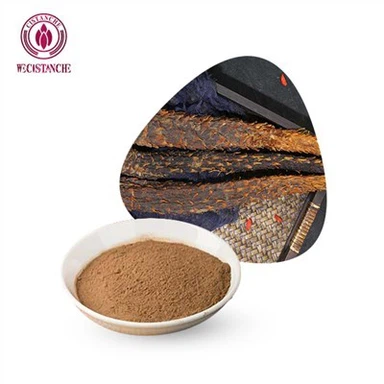
Cistanche, also known as Dayun and goblin, has the reputation of "desert ginseng". It is the dry and scaly succulent stem of Cistanche deserticola Y. C. Ma. It has a variety of functions such as protecting the nervous system, improving immunity, anti-tumor and laxative, and is very safe. Scholars at home and abroad have found that the active ingredients of Cistanche play an increasingly important role in the prevention and treatment of nervous system diseases. The related research is summarized as follows.

1 Main chemical composition
At present, nearly 100 chemical components and trace elements have been isolated and identified from Cistanche, such as phenylethanol glycosides, iridoid glycosides, lignan glycosides, monosaccharides, disaccharides, polysaccharides, amino acids, polypeptides, proteins, triglycerides Terpenes, sterols, and polyols, etc. Among them, phenethyl alcohol glycosides (PhGs) have the highest content, which is one of the main active components of Cistanche spp.
1.1 Phenylethanol glycosides
PhGs are a class of compounds containing hydroxy, methoxy substituted phenethyl and hydroxy, methoxy substituted cinnamoyl, mainly composed of caffeic acid, phenethyl aglycone, and sugar group. Among them, echinacoside (ECH) and ergosteroside are its main components, and ECH is the first phenoxyethanol glycoside compound recorded in the literature.
1.2 Iridoids and their glycosides
Iridoid glycosides are one of the main components of the Cistanche genus and have various biological activities. Iridoids are a class of monoterpenes widely distributed in the plant kingdom, their structures are cyclopentanopyrans, and they mostly exist in the form of glycosides. Such compounds can be classified into iridoid glycosides, split iridoids, non-glycoside iridoids, polymeric iridoids, and the like.
1.3 Others
At present, lignans and lignan glycosides have been isolated from Cistanche plants; in addition, there are also monoterpene glycosides, phenolic glycosides, alkaloids, sugar alcohols, sterols, sugars, amino acids, trace inorganic elements in Cistanche.

2 Effects on the nervous system
2.1 Inhibit nerve cell apoptosis
Apoptosis is very important for the development of the nervous system and is closely related to the pathogenesis of cerebrovascular disease and some neurodegenerative diseases such as Alzheimer's disease (AD) and Parkinson's disease (PD). a common mechanism of death. In the process of neuronal apoptosis, oxidative stress and the decrease of mitochondrial membrane potential are particularly critical.
PhGs have antioxidant effects, can resist DNA damage caused by oxidative stress, effectively scavenge superoxide anion and hydroxyl free radicals, ECH can resist reactive oxygen free radical damage [5], inhibit the generation of intracellular reactive oxygen radicals, and contain semi-hydrogen free radicals. Elevated caspase-3 activity of cystine and maintained a high-energy state of mitochondrial membrane potential, thereby inhibiting tumor necrosis factor α-induced neuroblastoma cell apoptosis; ECH reduced PC12 cells by reducing The generation of reactive oxygen species (ROS) in the brain can inhibit the mitochondrial dysfunction and inflammatory response induced by 6-hydroxydopamine; ECH can improve the scavenging ability of oxygen free radicals, reduce lipid peroxidation damage in brain tissue, and reduce apoptotic cells caused by cerebral ischemia. . Tuberoside B is a phenylethanoid glycoside compound isolated from Cistanche tubulosa. Tubuloside B pretreatment can maintain the mitochondrial membrane potential in a normal state, reduce the activity of caspase-3, the toxic effect of hydrogen peroxide (H2O2), and inhibit neuronal apoptosis.
2.2 Relief of ischemic brain injury
Cerebral ischemia-reperfusion injury is a complex cascade associated with increased excitatory amino acid (EAA) release, intracellular calcium imbalance, energy disturbance, immune-inflammatory responses, free radical generation, and nitric oxide (NO) abundance. It is related to multiple links such as the release and activation of apoptotic genes.
Total glucosides (GCs) of Cistanche can reduce the content of aspartic acid in brain tissue after cerebral ischemia-reperfusion in rats, regulate the content of EAA in the cerebral cortex, and protect against ischemic brain injury. ECH can reduce the increase of monoamine neurotransmitters in the extracellular fluid of the striatum caused by cerebral ischemia, and improve the damage of cerebral ischemia; ECH can also reduce the extracellular level of the striatum during cerebral ischemia. EAA neurotransmitters in the liquid can reduce the infarct size after cerebral ischemia and protect the ischemic damage to brain tissue; ECH can also effectively reduce the generation of free radicals, improve the total protein content and total antioxidant capacity of brain tissue, reduce The activity of acetylcholinesterase and the content of interleukin-2 in serum can protect brain neurons; ECH can also improve the nerve damage caused by free radical damage and other factors after cerebral ischemia, and the enzyme synthesis disorder caused by the decline of cell synthesis function. Increase cholinesterase (AChE) activity, improve the metabolic status of acetylcholine (ACh), increase ACh content, decrease choline content, and restore cholinergic neurotransmitter levels. Cistanche phenylethanoid glycosides can improve cell survival, reduce apoptosis and the generation of reactive oxygen species, inhibit the reduction of mitochondrial membrane potential, the release of cytochrome C, and the clearance of caspase-3. SH-SY5Y cytotoxicity by amyloid (Aβ) 25-35 plays a protective role.
2.3 Effects on Alzheimer's disease
AD is a degenerative disease of the central nervous system with progressive cognitive impairment and memory impairment as the main clinical manifestations. The main pathologies include cholinergic system damage, Aβ deposition, abnormal phosphorylation of microtubule-related proteins, neurofibrillary tangles, oxidative stress, and calcium homeostasis imbalance.
Roche et al. made an AD model by subcutaneously injecting aluminum trichloride into mice and found that GCs could increase the activity of superoxide dismutase (SOD) in brain tissue, and reduce the content of malondialdehyde (MDA) and increase the brain weight coefficient, thereby improving AlCl3 Learning and memory impairment. GCs capsules can significantly improve patients' cognitive ability, and self-care ability, slow down the progression of dementia and thus treat AD. Cistanche extract containing a large amount of echinacoside and cohesion can improve Aβ1-42-induced cognitive dysfunction by blocking amyloid deposition and reversing cholinergic and hippocampal dopamine neuron function.

2.4 Effects on Parkinson's disease
PD is a neurodegenerative disease common in the middle-aged and elderly population, and its pathological features are striatal-black body degeneration in the brain, characteristic eosinophilic inclusions in the cytoplasm, and the resulting striatal dopamine (DA) content decreased.
Roucongron extract inhibits 1-methyl-4-phenyl-pyridine ion (MPP+)-mediated SH-SY5Y cell damage by regulating DNA damage-inducing gene 153. Total phenylethanol glycosides can significantly improve the behavioral characteristics of the 1-methyl-4-phenyl-1,2,3,6-tetrahydropyridine (MPTP)-induced PD model in C57BL/6 mice and increase intrastriatal DA and the expression of tyrosine hydroxylase in the substantia nigra, effectively inhibited the decrease of cerebellar granule cell viability and the activation of caspase-3 and 8 caused by MPP+. Zhao et al. found that ECH can reduce the increase of biliverdin reductase B caused by oxidative stress through anti-oxidation, and protect DA neurons from oxidative stress damage; ECH can also inhibit the substantia nigra of PD mice induced by MPTP. Decreases in dopaminergic neurons, DA, and their transporters, increase the expression levels of glial cell-derived trophic factor and brain-derived neurotrophic factor mRNA and protein, reduces apoptosis, and decrease Bax/Bcl-2 mRNA and protein ratio. In the rat model of PD induced by 6-hydroxyDA, ECH can increase the content of DA, dihydroxyphenylacetic acid, and homovanillic acid in the extracellular fluid of the striatum, and protect the DA neurons of PD. ECH can also inhibit the reduction of monoamine neurotransmitters in the extracellular fluid of the striatum and hippocampus of PD rats, and treat PD.
Cistanche can significantly improve the behavioral performance of MPTP-induced C57 mice, increase the content of DA in the striatum, the number of dopaminergic neurons in the substantia nigra, and the expression of the nigrostriatal α-synuclein protein. It can also resist the damage of DA neuron SH-SY5Y cells caused by rotenone, reduce the release of cellular lactate dehydrogenase, inhibit the degradation of PD-related protein Parkin, and the formation of dimerization of α-synuclein protein. Verbasin is a phenylethanoid glycoside compound isolated and purified from the tuberosity flesh, which can improve the survival rate of MPP+-induced SH-SY5Y cells, reduce the apoptosis rate and the level of intracellular reactive oxygen species, restore mitochondrial The high-energy state of membrane potential, inhibits the activity of caspase-3, and up-regulates the expression of Bcl-2.
2.5 Effect on Vascular Dementia
Vascular dementia (VaD) refers to a group of clinical syndromes characterized by cognitive decline caused by brain tissue damage caused by a series of cerebrovascular factors. Vad is currently the only preventable dementia that can be reversed with early treatment.
Yang et al. conducted a clinical observation on the efficacy of oral GCs in 37 VaD patients and found that GCs can significantly improve cognitive function, and daily life self-care ability, and reduce the degree of dementia in VaD patients. Phenylethanol glycosides can protect VaD hippocampal neurons by inhibiting the phosphorylation of tubulin P-tau and upregulating the expression level of brain failure response regulator protein-2. ECH increases the activities of choline acetyltransferase (ChAT) and AChE in the cortex and hippocampus of VaD rats, improves the metabolic status of ACh, and improves the enzyme synthesis disorder caused by the decline of cell synthesis function caused by free radical damage factors after cerebral ischemia, improve the activity of the enzyme and increase the activity of ChAT and AChE. ECH can improve the learning and memory ability of VaD rats, and its mechanism may be related to reducing oxygen free radicals in the cortex and hippocampus and improving the metabolic rate of cholinergic neurotransmitters.
2.6 Improve learning and memory function
GCs can promote memory and improve memory impairment caused by chemical drugs. For example, GCs can regulate the transmitter system related to memory, increase the activity of transmitter synthase, and improve the learning and memory function of normal mice. ECH can increase the activity of SOD in the cortex and hippocampus of AD rats, reduce the content of MDA, reduce the production of NO and nitric oxide synthase (NOS), enhance the ability to scavenge free radicals, and protect the rat brain by injecting Aβ25-35 into the hippocampus. induced oxidative damage. ECH can resist the effects of D-galactose-induced amyloid deposition in the hippocampus of rats, promote the scavenging of oxygen free radicals, reduce cell deformation and loss caused by oxygen free radical damage, and improve learning and memory ability.
Cistanche polysaccharides can promote the formation of synapses, increase synaptic plasticity, and improve learning and memory impairment by increasing the expression level of synaptic plasticity-related proteins. Choi et al found that Cistanche extract can increase the level of nerve growth factor in rat glioma C6 cells, promote the axonal growth of rat pheochromocytoma PC12 cells, and also stimulate the secretion of NGF in mouse cortex and hippocampus, to promote the differentiation, axonal growth and synapse formation of hippocampal neurons, thereby significantly improving the ability of learning and memory.
2.7 Others
PhGs can significantly increase the SOD activity in the brain tissue of D-galactose-induced aging model mice, improve learning and memory ability, and immunity, and enhance antioxidant capacity. PhGs can also reduce the water content of brain tissue, down-regulate the expression of water channel 4 gene and protein in the brain tissue of rats with high-altitude cerebral edema, and improve the pathological changes of brain edema in rats with high-altitude cerebral edema.

3 Outlook
The clinical value of Cistanche, a national second-class protected plant, is very high. In recent years, research on its chemical components and pharmacological effects has continued to progress and deepen. Modern medical and pharmaceutical research has shown that it has many new functions and activities in the nervous system, and has a wide range of pharmacological effects. The active ingredients of Cistanche not only have a clear structure, simple ingredients, and clear physical and chemical properties, but also have the characteristics of multi-target, multi-channel and multi-level action, so they will have more important roles and advantages in the nervous system, and the research and development of their preparations will also have Greater potential and better prospects.