Research Progress On The Mechanisms Of Action Of Cistanche Deserticola Ma Extracts in The Prevention Of Osteoporosis
Mar 14, 2025
Abstract: Cistanche deserticola Ma is a traditional medicinal and edible plant that has demonstrated significant potential for the prevention and treatment of osteoporosis in recent years. Conventional medications for osteoporosis, including bisphosphonates, calcitriol, and VD, may induce various adverse reactions and increase the physiological burden on patients when used long-term. In contrast, C. deserticola offers unique advantages due to its lower toxicity and fewer side effects, making it particularly suitable for osteoporosis management. Research indicates that C. deserticola effectively mitigates the loss of bone density and bone mass. It regulates bone metabolism by enhancing osteoblast activity and inhibiting osteoclast function, thereby preserving bone microarchitecture and consequently enhancing the overall stability of the internal bone structure and reducing the risk of fractures. This review aims to summarize the pharmacological effects and molecular mechanisms of C. deserticola in combating osteoporosis. By systematically reviewing and analyzing existing literature, we seek to elucidate the potential mechanisms through which C. deserticola modulates bone remodeling and to explore its prospects for clinical application. The insights gained from this study are intended to provide an important reference for the development and clinical application of functional foods derived from C. deserticola.
Keywords: Cistanche deserticola Ma; medicinal and edible plant; osteoporosis; bone metabolism; mechanism

Herbal Cistanche Supplements For the Treatment Of Osteoporosis
Osteoporosis is a common chronic skeletal disease, and with the aging global population, the prevalence of osteoporosis has significantly increased, especially among postmenopausal women and the elderly [1]. Osteoporotic fractures are one of the key factors leading to disability and mortality in the elderly [2]. Recent surveys show that the prevalence of osteoporosis among people over 50 years old in China is 20.7% for women and 14.4% for men, with women over 60 years old having a significantly higher prevalence than men [3]. The associated treatment costs are expected to amount to tens of billions of dollars, imposing a huge economic burden on patients' families and society [4]. Currently, conventional clinical treatments mainly include pharmacological therapy, lifestyle interventions, and physical therapy [5-7]. Bisphosphonates are the most commonly used drugs, which can effectively reduce the risk of fractures, but long-term use may lead to severe side effects such as osteonecrosis of the jaw and atypical femoral fractures [8-9]. Additionally, other drugs, such as selective estrogen receptor modulators and parathyroid hormone analogs, are also used in clinical practice but have their limitations [10]. Lifestyle interventions, such as increasing calcium and vitamin D intake [11-12] and engaging in appropriate weight-bearing exercises [13], have positive effects on the prevention and treatment of osteoporosis but have low adherence. Physical therapies, such as low-intensity pulsed ultrasound, have shown some potential, but their long-term effects and mechanisms require further study [14]. Overall, although there are multiple treatment options, the treatment of osteoporosis still faces many challenges, and finding more effective drugs and methods is particularly important.

Cistanche deserticola Ma, commonly known as "desert ginseng," is a traditional Chinese medicinal herb with unique therapeutic value [15]. Traditional Chinese medicine believes that Cistanche deserticola has the effects of tonifying kidney yang and replenishing essence and blood [16]. Modern pharmacological studies have found that Cistanche deserticola exhibits biological effects such as antioxidation [17], anti-aging [18-19], neuroprotection [20-21], anti-osteoporosis [22-23], anti-inflammation [24], and anti-depression [25]. Notably, studies have shown that Cistanche deserticola demonstrates significant potential in anti-osteoporosis. Therefore, this paper aims to review its pharmacological effects and specific molecular mechanisms in the treatment of osteoporosis, in order to provide a reference for the development of functional foods and clinical applications of Cistanche deserticola.
1. Major Active Components and Extraction of Cistanche deserticola
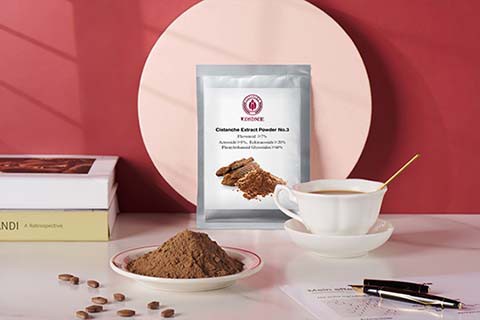
The chemical composition of Cistanche deserticola began to be extensively studied in the 1980s. With the continuous advancement of modern research technologies, researchers have isolated and identified hundreds of compounds from Cistanche deserticola and conducted in-depth analyses of their pharmacological activities. The main chemical components of Cistanche deserticola include phenylethanoid glycosides, polysaccharides, lignans, iridoids, monoterpene glycosides, phenolic glycosides, sterols, flavonoids, alkaloids, amino acids, minerals, and volatile components [26-27]. Historically, Cistanche deserticola has been considered a highly precious tonic and has been commonly used in daily diets [28]. Modern research indicates that active components such as phenylethanoid glycosides, polysaccharides, and iridoids in Cistanche deserticola exhibit significant antioxidant, anti-fatigue, and immunity-enhancing effects [29-31]. Therefore, in recent years, the application of Cistanche deserticola in the food industry has gained widespread attention from researchers. It is considered a promising functional food ingredient and is widely used in the development of functional foods. For instance, Cistanche deserticola extract (C. deserticola extract, CDE) can be added to beverages to create functional drinks with anti-fatigue properties; it can also be combined with herbs like wolfberry and ginseng to produce health teas or herbal wines; its polysaccharides can be utilized to develop fermented beverages [32]. Additionally, Cistanche deserticola powder or extracts can be used as natural food additives in baked goods, seasonings, snack foods, and special dietary products, providing rich nutritional value. Currently, common Cistanche deserticola health products on the market include immunity-enhancing capsules, anti-fatigue tablets, and kidney-tonifying oral liquids. These applications demonstrate the broad potential of Cistanche deserticola in the food industry. By integrating traditional and innovative foods, Cistanche deserticola and its extracts can serve as key ingredients in health foods to meet the growing demand for wellness products. Detailed information on extraction methods of Cistanche deserticola's major components is shown in Table 1.
1.1 Phenylethanoid Glycosides
Phenylethanoid glycosides are the primary active components of Cistanche deserticola and the most extensively studied compounds in its composition. They are present in the highest quantities and serve as key markers for identifying Cistanche deserticola. Phenylethanoid glycosides, also known as phenylpropanoids, are compounds formed by the combination of glycosides and phenylethanol aglycones. The chemical structures of representative phenylethanoid glycosides in Cistanche deserticola are shown in Table 2. To date, researchers have identified 86 phenylethanoid glycoside compounds in Cistanche species, primarily including phenylethanoid glycosides, caffeic acid derivatives, and glycosides [27]. Among them, echinacoside and acteoside are the main active components in the fleshy stems of Cistanche deserticola [42] and are listed in the 2020 edition of the Chinese Pharmacopoeia as key indicators for assessing the quality of Cistanche deserticola. Furthermore, numerous studies have shown that echinacoside and acteoside are also key compounds for treating osteoporosis. Cistanche deserticola glycoside A (Cis A) also plays an important role in osteoporosis treatment.
The extraction methods for phenylethanoid glycosides in Cistanche deserticola include water extraction, ethanol extraction, ultrasonic-assisted extraction, microwave-assisted extraction, and enzyme-assisted extraction [43]. Water extraction is typically suitable for water-soluble components that are relatively stable under temperature and humidity. While it is cost-effective and extracts a wide range of components, it often includes a large number of impurities. Therefore, combining traditional methods with modern advanced technologies can improve efficiency and increase extraction yields. For example, Liu Lisha et al. [33] used water extraction to extract phenylethanoid glycosides from Cistanche tubulosa. Under conditions of a material-to-liquid ratio of 1:15 (g/mL) and extraction at 80°C for 2 hours, the yield reached 17.59%. Gao Jiande et al. [34] combined modern biotechnology with traditional water extraction and optimized parameters using orthogonal experimental design. They determined that a cellulase dosage of 0.1%, enzymatic hydrolysis temperature of 55°C, and hydrolysis time of 2.5 hours resulted in a phenylethanoid glycoside yield of 7.26%, a 64% improvement over traditional water extraction. Kong Zheng et al. [35] used a 63% ethanol solution with a material-to-liquid ratio of 8:1 (mL/g), soaking for 2 hours, and extracting for 1.5 hours to obtain 3.64% acteoside from Cistanche tubulosa.
Wu Honglei et al. [36] compared ethanol extraction, microwave extraction, and ultrasonic extraction methods for phenylethanoid glycosides. Microwave extraction, which accelerates component dissolution by destroying cell structures with microwave heating, offers advantages such as high specificity, minimal loss, efficiency, speed, and simplicity. However, its potential to damage heat-sensitive components limits its further development. Similarly, ultrasonic extraction offers broad applicability, simplicity, speed, and high purity, but challenges include ultrasonic blank zones and limitations for large-scale production. Wei Yuping et al. [37] achieved a phenylethanoid glycoside yield of 14.36% using ultrasonic extraction under conditions of 40°C, a material-to-liquid ratio of 1:41.7 (g/mL), and 51% ethanol concentration. Ultrasonic-microwave synergistic extraction increases extraction rates while reducing time. Ding Huiling et al. [38] optimized ultrasonic-microwave synergistic extraction using response surface methodology, setting ultrasonic frequency at 40 kHz, ultrasonic power at 50 W, extraction time at 15 minutes, acetone concentration at 50%, material-to-liquid ratio at 14:1 (mL/g), and microwave power at 100 W, achieving a final extraction rate of 49.2%.
Each extraction method has its own advantages, and selecting appropriate conditions can significantly improve the efficiency of phenylethanoid glycoside extraction. Future developments in extraction methods should focus on high efficiency, energy conservation, environmental friendliness, and the integration of multiple methods to support the development and utilization of Cistanche deserticola.
Table 2 Main phenylethanoid glycosides found in the extract of C. deserticola
| Compound | R₁ | R₂ | R₃ | R₄ | R₅ | R₆ | R₇ | Molecular Formula |
|---|---|---|---|---|---|---|---|---|
| Echinacoside | OH | H | H | OAc | OH | Rha | Glu | C₃₅H₄₆O₂₀ |
| Acteoside | OMe | H | H | OAc | OH | Rha | Glu | C₂₉H₃₄O₁₅ |
| Cis A | OH | CF | H | H | OH | Rha | Glu | C₃₀H₃₆O₁₅ |
| Cis B | OH | H | H | H | OH | Rha | Glu | C₂₉H₃₂O₁₄ |
| Cis C | OH | H | CF | H | OH | Rha | Glu | C₃₀H₃₆O₁₅ |
Notes:
Ac: Acetyl group (acetyl).
Rha: α-L-rhamnopyranose.
CF: trans-caffeoyl group (trans-caffeoyl).
Fr: trans-feruloyl group (trans-feruloyl).
Glu: β-D-glucopyranose.
1.2 Polysaccharides
Polysaccharides are commonly used active components in traditional Chinese medicine and are one of the key active components of Cistanche deserticola [44]. They have the advantages of being widely available, enhancing immune regulation, and offering safety. Studies have revealed that Cistanche deserticola polysaccharides (CDP) can prevent osteoporosis caused by ovariectomy in women and improve bone loss. Since polysaccharides are primarily found within plant cells, dried Cistanche deserticola is typically crushed and immersed in ethanol before extraction to remove lipids, pigments, and low-molecular-weight sugars. CDP extraction methods include hot water/cold water extraction, alkaline extraction, enzyme-assisted extraction, and ultrasound-assisted extraction. After extracting crude polysaccharides, Sevag reagent (chloroform: n-butanol = 4:1 (V/V)) is used for further separation via membrane separation and anion-exchange chromatography. Cellulose DE-52 is widely used for polysaccharide separation due to its high loading capacity, good resolution, high flow rate, and ease of use. Finally, the polysaccharides are purified using agarose, Sephacryl, and Sephadex gel filtration columns.
Water extraction, including hot water and cold water extraction, is currently the most widely used method. Hot water extraction is simple to operate, does not require organic solvents, ensures safety for subsequent functional food development, and effectively preserves the activity of the polysaccharides. Cold water extraction minimizes the impact of high temperatures on polysaccharide structures but may reduce extraction yield due to lower solubility at low temperatures. For instance, Weng Xiang et al. [39] extracted Cistanche deserticola polysaccharides at 80°C using distilled water, repeated the process 2–3 times, and purified the crude polysaccharides using a DEAE-52 cellulose column to obtain CCDP-1 and CCDP-2 with yields of 2.63% and 1.13%, respectively. Xiao Xinghui et al. [40] optimized the hot water extraction process for desert CDP, determining the optimal conditions to be 75°C extraction temperature, 165 min extraction time, and a material-to-liquid ratio of 1:55 (g/mL). Using macroporous resin technology for separation and purification, the polysaccharide extraction yield reached 18.40%.

Additionally, since some acidic polysaccharides are soluble in alkaline solutions, dilute alkali can be used to extract polysaccharides. However, polysaccharides may degrade under alkaline conditions, reducing yield or altering their structure. Most polysaccharides are found in cell walls, and biological enzymes that disrupt biological barriers (i.e., cell walls and cell membranes) can promote the release of polysaccharides, thereby improving extraction efficiency, albeit at the cost of potentially damaging polysaccharide structures. Zeng Hui et al. [41] used an enzyme-assisted method to extract CDP by immersing the powder in 20 L of water and pretreating it at 55°C with 30 g cellulase, 10 g amylase, and 5 g papain for 1 hour, followed by enzyme deactivation at 100°C and extraction. The polysaccharides were separated using a DEAE-Sepharose cellulose column. Enzyme-assisted extraction, which operates under relatively mild conditions, yields high-purity polysaccharides while better preserving active components, making it a promising method for polysaccharide extraction. However, enzymes are unstable, prone to deactivation, require specific storage conditions, and are expensive, making large-scale extraction challenging.
Ultrasound-assisted extraction offers the advantages of speed and high yields, while the relatively low extraction temperatures prevent damage to polysaccharide structures. Yang Xiumei et al. [45] extracted polysaccharides from Cistanche deserticola using an ultrasound-assisted hot water-ethanol precipitation method, determining the optimal parameters as an extraction temperature of 40°C, ultrasonic power of 1,000 W, a solid-liquid ratio of 1:25, and extraction time of 10 minutes, achieving an extraction yield of 4.41%. Yang Wen et al. [46] optimized the CDP extraction process via single-factor experiments and orthogonal testing, determining the optimal conditions to be a compound enzyme dosage of 4% (cellulase:pectinase = 1:3 (m/m)), ultrasonic power of 350 W (40 kHz), ultrasonic time of 20 min, enzymatic hydrolysis temperature of 50°C, and pH 6, under which the average yield was 5.14%. Currently, there are numerous methods for polysaccharide extraction, and the combined use of multiple processes has become a growing trend in modern research on polysaccharide extraction techniques.
1.3 Other Components
In addition to the aforementioned components, Cistanche deserticola is also rich in lignans, phenylethanol glycosides, iridoids and their glycosides, organic acids, sterols, amino acids, vitamins, volatile substances, and minerals. Lignans and their glycosides are a class of natural chemical compounds, and 17 lignans and their glycosides have been isolated and identified from Cistanche deserticola. For example, Nan Zedong et al. [47] identified 11 lignan compounds from the ethanol extract of Cistanche deserticola, including (+)-syringaresinol-4'-O-β-D-glucopyranoside, (+)-isoeucommin A, naringenin A, and alashangelin A. Iridoids and their glycosides are typically monoglycosides of glucose, and 26 iridoids and their glycosides have been isolated and identified from Cistanche deserticola. Regarding alkaloids in Cistanche deserticola, only a few studies have mentioned betaine as a component. Furthermore, Hui Ruihua et al. [48] used distillation-extraction methods and identified over 20 volatile compounds, including diethyl disulfide, benzaldehyde, 3-methoxyaniline, benzyl alcohol, phenylacetaldehyde, menthone, eugenol, caryophyllene and its oxides, and linalool.