Research Progress On The Pharmacological Effects Of Cistanche Echinacea
Mar 09, 2022
For more information:ali.ma@wecistanche.com
Luo Guangming 1, Huang Yuanliang 2
(1. Tongji University, Shanghai 200072; 2. Oriental Hospital Affiliated to Tongji University, Shanghai 200120)
Abstract: Modern pharmacological studies have confirmed that Cistanche, traditional Chinese medicine for replenishing kidney yang, has a wide range of pharmacological effects and abundant chemical components. Echinacoside, one of the main active ingredients of Cistanche, has the functions of neuroprotection, promotion of new bone formation, anti-oxidation, anti-tissue damage, anti-inflammatory, etc. It is a safe and effective phytoestrogen factor. A brief review of its pharmacological effects is now given.
Keywords: Cistanche; echinacoside
Chinese Library Classification Number: R285 Document Identification Code: A Article Number: 1673-2197(2014)17-0058-03

Click to Cistanches and Cistanche products
1 Chemical constituents and pharmacological effects of Cistanche
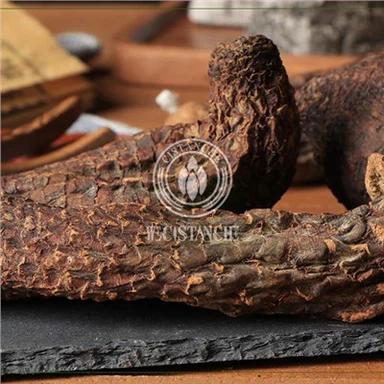
Cistanche YC Ma (C. deserticola) is a medicinal plant that grows in arid and semi-arid regions. There are four species of Cistanche in the Chinese herbal medicine market: C. Deserticola and C. Tu-bolsa ), C. salsa, C. Sinensis, chemical fingerprints combined with genetic fingerprints can identify and control the quality of Cistanche. Cistanche is a perennial parasitic herb, mainly distributed on land and hot deserts. Traditional Chinese medicine is mainly used as a tonic to treat symptoms such as kidney deficiency, impotence, female infertility, abnormal leucorrhea, irregular uterine bleeding, senile constipation, etc. Known as "desert ginseng". Modern pharmacological studies have confirmed that the meat hernia paste has a wide range of medicinal functions, including hormone-like regulation, laxative, immune regulation, neuroprotection, anti-oxidation, anti-apoptosis, anti-injury, anti-inflammatory, anti-aging, and anti-fatigue activities As well as promoting bone formation, it may also have the functions of protecting the heart and resisting myocardial ischemic damage, preventing and treating hyperglycemia and hyperlipidemia.
In recent years, people have conducted a lot of research on the chemical components of Cistanche deserticola, and a variety of compounds have been isolated from it. Analysis and identification are volatile oils, phenylethanoid glycosides (PhGs, mainly containing echinacoside and aktithe), Triacontanol, caffeic acid glycolipids, cycloalkenyl myelin, lignans, polyhydric sugar alcohols, oligosaccharides, betaine, sitosterol, carotene, mannitol, stearic acid, bitumen Sterols, carrots, succinic acid, polysaccharides, etc. Among them, PhGs are the main active ingredients for the treatment of kidney deficiency, antioxidant, and neuroprotection; galactitol and oligosaccharides are the active ingredients for the treatment of senile constipation; polysaccharides are concentrated from rhamnose, xylose, arabinose, and galactose, Polysaccharides are the active ingredients for anti-aging and improving the body’s immunity]°
Nan et al. (1) From the 85% ethanol extract of the dried fleshy stems of Cistanche deserticola cultivated in the tower, syringin, desmethyl syringin, coniferin, phenyl glucoside, nicotinamide, p-hydroxybenzoic acid, p-hydroxybenzoic acid, and p-hydroxybenzoic acid 17 compounds such as hydroxyphenyl alcohol and galactitol. Desert Cistanche is also rich in trace elements such as erbium, potassium, calcium, magnesium, and sodium. In different growth stages of the Cistanche desert, the proportion of trace elements is different [9'10\

2 Echinacoside (Echinacoside, ECH)
Echinacoside is one of the main active ingredients of the Cistanche desert. Echinacea can also be isolated from other medicinal plants such as Echinacea and Echinacea. It has the following pharmacological effects.
2.1 Neuroprotection 5 plus
Echinacoside can reverse the damage of dopaminergic neurons induced by protecting rotenone, middle artery occlusion, and 6-hydroxydopamine. Short-term exposure to the back of Echinacea has sufficient protection against rotenone damage to neuronal cells and non-neuronal cells overexpressing TrkA or TrkB receptors. The mechanism is the same as that of echinacoside temporarily inhibiting cytochrome c (cytochrome c). It is related to the release and activation of caspase-3. Echinacoside can also freely cross the blood-brain barrier and may be used to treat neurodegenerative diseases such as Parkinson's disease and Alzheimer's disease and prevent and treat cerebral ischemic diseases. Observations have confirmed that after 7 to 14 days of oral echinacoside treatment, the gait disorder of patients with Parkinson's disease is significantly improved.
Echinacoside may also reverse mitochondrial function and apoptosis, anti-TNF-a (tumor necrosis factor-a)-induced apoptosis of human neuroblastoma cells, and promote the level of cholinergic neurotransmitters in the brain of vascular dementia mice It exerts obvious neuroprotective effects and can be used to interfere with neurodegenerative diseases. Echinacoside can selectively reverse mitochondrial function and apoptosis but does not affect mitochondrial morphology.

2.2 Bone protection
Echinacoside has an estrogen-like effect. Yang et al. treated with echinacoside for 12 weeks and improved femoral mineral density, microstructure, and biomechanical properties; echinacoside also significantly increased the level of osteoprotegerin (OPG) and decreased serum nuclear factor-kB ligand Receptor activator level without adverse reactions to the uterus and breast; echinacoside can effectively and safely prevent osteoporosis after ovariectomy in rats and inhibit bone resorption by increasing the ratio of OPG/RANKL. It is a new type of plant female Hormone is a promising herbal medicine for the treatment of postmenopausal osteoporosis induced by estrogen deficiency. Research has confirmed that 0.01~10nmol/L echinacoside can significantly increase the proliferation and proliferation of the osteoblast cell line MC3T3-E1. Alkaline phosphatase (ALP) activity, type I collagen content, and osteocalcin (OCN) levels increase osteocalcin (OCN) levels, which increase the mineralization of osteoblasts. It mainly increases the OPG/RNKL ratio and promotes bone formation. [The study confirmed that the Cistanche deserticola extract has no effect on the proliferation and migration of cultured osteoblasts, nor does it affect bone fracture, but it increases ALP and bone morphogenetic proteins-2 (bone morphogenetic proteins-2, BMP- 2) Osteopontin (OS-teopontin, OPN) mRNA expression and bone mineralization, and can prevent bone loss in ovariectomized mice. It is inferred that echinacoside may be a bone-forming factor for the treatment of osteoporosis.
2.3 Anti-damage and anti-oxidation
Echinacoside can protect against acute lung injury and is used to treat acute respiratory distress syndrome [also can protect acute rat liver injury caused by carbon tetrachloride. After treatment with echinacoside, the histopathological damage of the liver and the number of apoptotic hepatocytes improved significantly, which may be mainly related to the antioxidant effect. Echinacoside can also promote intestinal epithelial cell proliferation by up-regulating TTGF-B, preventing cell death, and improving mucosal tissue repair.
2.4 Anti-inflammatory, skincare, anti-aging
Echinacoside can effectively prevent murine colitis induced by dextran sulfate sodium. It is clinically used to treat inflammatory bowel disease. Echinacoside has a long-lasting skin protective effect by inducing phase II cell protection. "e.g. Echinacea Glycosides can stimulate cells to enter S and G2 phases from G1 phase. Protecting cells from DNA damage may be its anti-aging mechanism.
3 Conclusion
People have also conducted a large number of studies on the pharmacokinetics of echinacoside, established and verified a method for detecting the concentration of echinacoside in animal plasma, which has high selectivity, sensitivity, and repeatability 3), and easy access to the high purity of echinacoside can fully meet the needs of experimental research and clinical treatment "Qu. Cistanche and its main active ingredient, echinacoside, have a wider range of pharmacological effects and clinical applications to be confirmed by further studies.

References:
[1]WANG T, ZHANG XY, XIE WY. Cistanche deserticola Y.C. Ma, "Desert Ginseng": A Review[J]. American Journal of Chinese Medicine, 2012, 40(6):1123-1141.
[2]SHI HM, WANG J, WANG MY, et al. Identification of Cistanche species by chemical and inter-simple sequence repeat fingerprinting[J]. Biol Pharm Bull, 2009, 32(1): 142 146.
[3]XIONG WT, GU L, WANG C, et al. Anti-hyperglycemic and hypolipidemic effects of Cistanche tubulosa in type 2 diabetic DB/DB mice[J]. J Ethnopharmacol, 2013.
[4]SIU AH-L, KO KM. Herba Cistanche extract enhances mitochondrial glutathione status and respiration in rat hearts, with possible induction of uncoupling proteins,]J]. Pharma ceutical Biology,2010, 48(5):512- 517.
[5]WONG HS, KO KM. Herba Cistanches stimulates cellular glutathione redox cycling by reactive oxygen species generated from mitochondrial respiration in H9c2 cardiomyocytes [J]. Pharmaceutical Biology, 2013, 51(1):64-73.
[6]JIANG Y, TU P~F. Analysis of chemical constituents in Cistanche species[J]. Journal of Chromatography A,2009, 1216(11):1970-1979.
[7]XUE D, ZHANG M, Wu X, et al. Active antisenile constituents in Cistanche deserticola Y. C. Ma [J]. Zhongguo Zhong YaoZaZhi, 1995, 20(11):687-689, 704.
[8]CHEN MH, LIU FS, XU JP. Chemical constituents of Cistanche deserticola Y. C. Ma[J]. Zhongguo Zhong Yao Za Zhi, 1993, 18(7):424-426, 447.
[9]CUI XS, ZHENG L, DU Y, et al. Mineral elements content of C. deserticola at different growth stages [J], Guang Pu Xue Yu Guang Pu Fen Xi, 2011, 31(11):3U5-3118.
[10]ZHU YX, GUO YH. Determination of mineral elements in cistanche and its extractives by ICP-AES[J]. Guang Pu Xue Yu Guang Pu Fen Xi, 2013, 33(3):813-816.
[11]TAI BH, JUNG BY, CUONG NM, et al. Total Peroxyni trite Scavenging Capacity of Phenylethanoid and Flavonoid Glycosides from the Flowers of Buddleja officinalis[J]. Bio logical & Pharmaceutical Bulletin, 2009, 32 (12); 1952 1956.
[12]FACING RM, CARINI M, ALDINE G, et al. Echinacoside and caffeoyl conjugates protect collagen from free radical-induced degradation: A potential use of Echinacea extracts in the prevention of skin photodamage [J ], Planta Medica, 1995, 61(6):510-514.
[13]ZHU M, LU C, LI W. Transient exposure to echinacoside is sufficient to activate Trk signaling and protect neuronal cells from rotenoneEJl. J Neurochem, 2013, 124(4): 571 580.
[14]FENG XY, ZHU M, ZHANG QQ, et al. Selective protection of nigral dopaminergic neurons by echinacoside in a rat model of Parkin