Sandstorms Affect More Than Half Of China, And 100 Million Red Willows Establish Ecological Barriers
May 07, 2024
May is the season of frequent sandstorms. Xinjiang is the province with the most severe sandstorm disasters in China, and the Taklamakan Desert, one of the four major sources of sandstorms in China, is located in the southern part of Xinjiang. Every spring, a vast expanse of yellow sand rises from these birthplaces, sweeping across most of China from northwest to southeast. The Taklamakan Desert covers an area of approximately 340000 square kilometers and is the largest desert in China and the second largest desert in the world. Xinjiang itself has also become the biggest victim of desertification. One-fifth of the country's land is desertified, and Xinjiang accounts for about half of it.

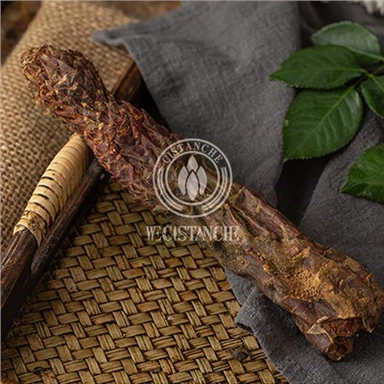
Chinese herb cistanche
Poverty leads to desertification, which leads to increasing poverty
As the saying goes, "When it comes to desertification nationwide, we look at Xinjiang, and when it comes to desertification in Xinjiang, we look at Hotan." The most severe desertification in Xinjiang is in the southern Hotan region, which is surrounded on three sides by the Taklamakan Desert and on the other side by the Kunlun Mountains. The natural environment is quite harsh, with an annual floating dust weather of 263 days.
"The people of Hotan work the hardest, eating half a pound of soil in a day; not enough during the day and not enough at night."

Cistanche deserticola florescence
This is the most realistic portrayal of the harsh sandstorm weather in Hotan.
At the edge of the Taklamakan Desert, many areas have completely bare surfaces with no grass or tree cover. Under excessive human cultivation, overgrazing, excessive logging, arid climate, and strong winds, these areas gradually degenerate into deserts. Combined with global climate change and environmental degradation, this desertification process has been accelerated, expanding the desert area.

Harvest of Cistanche deserticola
Poverty has exacerbated the destruction of vegetation by residents. Due to living needs, local people have increased the logging of natural plants such as Populus euphratica and Red Willow, causing the natural vegetation protection transition zone between oases and deserts to be almost lost, resulting in direct contact between oases and deserts. To obtain low-cost fuel, the shrubs and semi-shrubs here have been subjected to long-term uncontrolled logging. Consequences: Some desert grasslands on the edge of the desert have disappeared, replaced by scattered sparse vegetation and exposed barren land, and many areas have become wind-blown dunes or mobile dunes.
Nowadays, the rivers rich in jade have long dried up, and the residents here have been forced to relocate multiple times. The local people are forced by the desert and have no way out.
100 million red willows, preventing and controlling desertification

Cistanche deserticola - a bumper harvest for farmers
The One Hundred Million Red Willow Desertification Prevention and Control Project is a collaboration between Hetian Dichen Pharmaceutical Biotechnology Co., Ltd. and local farmers and herdsmen to carry out long-term vegetation restoration in key ecological areas of Hetian, Xinjiang. The project plans to plant one million acres of Cistanche deserticola and its host plant, Red Willow, within ten years to restore desert vegetation dominated by Red Willow and rebuild the ecological barrier of Red Willow forest.
"First cultivate the red willow, then plant the cistanche. Prevent wind and fix sand, benefiting future generations."
After planting red willows for five years, the sandy land in the Hotan area can become fertile land. Emperor Chen Company has effectively improved the local sandstorm environment through the "One Hundred Million Red Willows" plan. Truly achieving windbreak and sand fixation has also increased the income of local farmers. The harvest of Cistanche deserticola is the same as the harvest of local farmers in Hotan.
Emperor Chen Company sends scientists to teach local farmers the most scientific planting techniques. During the harvest period in September each year, Emperor Chen purchases Cistanche deserticola according to product grade from farmers. Emperor Chen purchases as much as the farmers have. Bringing extremely considerable income to farmers. The production and processing industry of Cistanche deserticola has become an important means for the people of southern Xinjiang to lift themselves out of poverty and become prosperous.

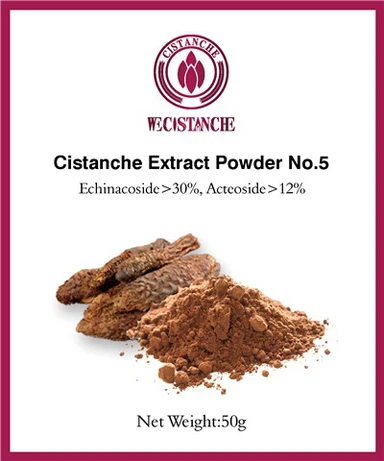
Click here to view Cistanche deserticola tea products
【Ask for more】 Email:cindy.xue@wecistanche.com / Whats App: 0086 18599088692 / Wechat: 1859908869
Di Chen Company has been engaged in the Guanhua Cistanche business for 20 years, achieving huge ecological, economic, and social benefits. It has played an important role in the prosperity of farmers and herdsmen, the development of characteristic industries, and the maintenance of border stability in Xinjiang, especially in the southern region. It has effectively promoted desert transformation, environmental restoration, and ethnic unity in Xinjiang, effectively protected the ecological resources of the motherland, and created a new model of sustainable development with Chinese characteristics in desert governance. Dichen Company is now known as the largest public welfare enterprise in Xinjiang.