Significance Of Different Content Limits For Marker Components Of Cistanche Deserticola And C. Tubulofloris in Chinese Pharmacopoeia Based On Differential Components Ⅱ
Nov 28, 2024
Abstract
Objective: To study the differential components and compare their content between Cistanche tubulosa and C. deserticola and analyze the significance of different content limits for marker components between the two plants in the Chinese Pharmacopoeia (2020 edition). Methods: The differential components were identified by liquid chromatographymass spectrometry combined with multivariate statistical analysis, and the content of differential components was determined by high performance liquid chromatography. Results: The differential compounds were cistanoside A, isoacteoside, echinacoside, and acteoside. Echinacoside had the highest content in both plants, followed by acteoside. The content of echinacoside, acteoside, and isoacteoside in C. tubulosa was higher than that in C. deserticola (P<0.01), and no cistanoside A was detected in C. tubulosa. Conclusion: There are differences in the chemical composition between C. deserticola and C. tubulosa. Cistanoside A can be taken as a maker component in C. deserticola. Echinacoside and acteoside are the common components in both plants, and they are specified in the Chinese Pharmacopoeia (2020 edition) as the marker components in both plants. The different content limits for the two components between C. deserticola and C. tubulosa reflect the objectivity in the standard.
Keywords:Cistanche deserticola; Cistanche tubulosa; cistanoside A; isoacteoside; echinacoside; acteoside

Cistanche deserticola Vs Cistanche Tubulosa
Active ingredient
According to the test of the effective ingredients of Cistanche in Volume 1 of the Second Edition of the Chinese Pharmacopoeia in 2020, the total glycoside content of Cistanche tubulosa is 5 times that of Cistanche deserticola.

morphological differences
Cistanche tends to be cylindrical, and when broken, its vascular bundles are arranged in a deeply wavy circular pattern; Cistanche tubulosa is spindle-shaped with a clear granular appearance on the cross-section, and its vascular bundles are scattered dot-like, not forming a pattern. When purchasing, it is preferable to choose pieces that are thick, densely covered with scale leaves, and have a soft and moist texture.

Cistanche deserticola is the dried fleshy stem with scaly leaves of Cistanche deserticola Y. C. Ma or Cistanche tubulosa (Schenk) Wight, a plant of the Orobanchaceae family[1]. It is a tonic and medicinal food, known as the "desert ginseng". It is mainly distributed in Inner Mongolia, Ningxia, Gansu, Xinjiang and other regions[2]. Cistanche deserticola is warm in nature, sweet and salty in taste, and enters the kidney and large intestine meridians. It has the effects of nourishing the liver and kidney, benefiting the essence and blood, and moistening the intestines and facilitating bowel movements. It can be used to treat kidney yang deficiency, impotence and infertility, soreness of the waist and knees, weakness of the tendons and bones, and constipation caused by dry intestines[1]. Modern research shows that the fleshy stems with scale leaves of Cistanche deserticola mainly contain a variety of chemical components such as phenylethanoid glycosides, iridoid ether terpenes and their glycosides, lignans, and sugars [3]. Among them, phenylethanoid glycosides are the most important active ingredients, which have pharmacological effects such as anti-aging [4], antioxidant, anti-fatigue, and laxative [5].
There are about 20 species of Cistanche in the world, and there are 5 species in my country: Cistanche deserticola, Cistanche tubulosa, C. salsa (C.A.Mey.) G.Beck, C. sinensis G. Beck, and C. salsa var. albiflora P. F. Tu et Z. C.Lou. The 2020 edition of the Pharmacopoeia of the People's Republic of China (hereinafter referred to as the "Chinese Pharmacopoeia") stipulates that the first two species are the original species of Cistanche deserticola [6].

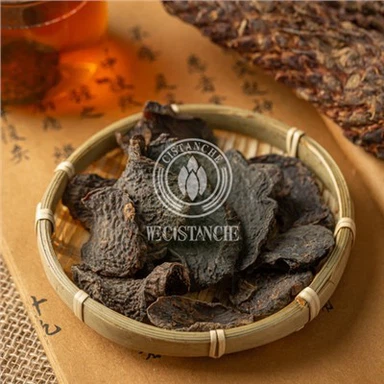
Cistanche deserticola
Before the 2005 edition of the Chinese Pharmacopoeia, the only Cistanche deserticola-derived origin was Cistanche deserticola. Due to the high demand in the domestic and international markets and the shortage of resources, Cistanche tubulosa was added as the legal origin. However, the prices of the two origins of Cistanche deserticola in the market are very different, with the price of Cistanche tubulosa being only 1/4 to 1/6 of that of Cistanche deserticola[7]. The differences in the composition and pharmacological effects of these two origins are worth long-term in-depth research and utilization. In terms of the differences in the types of ingredients, Huang Xiongmei et al.[8] found that cistancheside A was the main differentiating ingredient through the characteristic spectrum study of the two origins. In terms of the difference in component content, Gao Yan et al. [9] found that the content ratios of echinacoside to verbascoside, and verbascoside to isovalascoside in Cistanche deserticola and Cistanche tubulosa were quite different through ultra-high performance liquid chromatography; Zhu Nailiang et al. [10] found through fingerprint analysis that the content of phenylethanoid glycosides in Cistanche deserticola was significantly lower than that in Cistanche tubulosa, and the content of phenylethanoid glycosides in Cistanche tubulosa was significantly higher than that of iridoid glycosides.
Our research group used liquid chromatography-mass spectrometry combined with multivariate statistical analysis to compare the differences in the types of chemical components between Cistanche deserticola and Cistanche tubulosa, identify differential markers and determine their contents, so as to provide a reference for identifying the origin of Cistanche deserticola and the rational use of Cistanche tubulosa in clinical practice. In addition, by comparing the differences in the contents of the pharmacopoeia index components (echinacoside and verbascoside) of the two original Cistanches, the necessity of setting the combined limits of the two components of Cistanches and Cistanches tubulosa respectively was explained.
1 Materials
1.1 Instruments
Ultimate 3000 ultra-high performance liquid phase-electrostatic field tandem ion trap high-resolution mass spectrometer (UPLC-LTQ Orbitrap XL, Thermo Fisher Scientific, USA); 2695 high performance liquid chromatograph, 2489 ultraviolet detector (Waters, USA); BT125D 1/100,000 electronic balance (Sartorius Instrument Systems, Germany); KQ-500DE CNC ultrasonic cleaner (Kunshan Ultrasonic Instrument Co., Ltd.); PL2002 electronic balance [Mettler-Toledo Instrument (Shanghai) Co., Ltd.].

Cistanche tubulosa
1.2 Test drugs
The reference substances echinacoside, cistancheside A, verbascoside, and isoverbosaside (purity greater than 98%, batch numbers PS000867, PS010950, PS000683, and PS001059, respectively) were purchased from Chengdu Pusi Biotechnology Co., Ltd.; mass spectrometry grade methanol (Fisher); mass spectrometry grade formic acid (purity: 99%, Sigma Aldrich); water was Watsons distilled water.
1.3 Samples
10 batches of Cistanche deserticola slices and 10 batches of Cistanche tubulosa slices were identified by Professor Li Xiangri of Beijing University of Chinese Medicine as the dried fleshy stems with scale leaves of Cistanche deserticola Y.C.Ma and Cistanche tubulosa (Schenk) Wight, plants of the Orobanchaceae family. Detailed information is shown in Table 1.
2 Methods
2.1 Study on the different components of Cistanche deserticola from different origins
2.1.1 Preparation of test solution
Take about 0.2 g of dry sample powder (passed through No. 4 sieve), accurately weigh and place in a 50 mL brown volumetric flask, add 25 mL of 50% methanol, weigh the mass, cold soak for 30 min, ultrasonically treat for 40 min (power 250 W, frequency 35kHz), and make up the weight loss with 50% methanol after cooling, shake and filter, and take the filtrate to obtain.
2.1.2 Chromatographic conditions
Waters ACQUITY UPLCTM BEH C18 chromatographic column (100 mm×2.1 mm, 1.7 µm), column temperature of 35 °C, sample chamber temperature of 10 °C, sample injection volume of 3 μL, gradient elution with methanol (A)-0.1% formic acid aqueous solution (B) as mobile phase (0 min, 10%A; 0~4 min, 10%~26%A; 4~18 min, 26%~40%A; 18~24 min, 40%~100%A; 24~28min, 100%A), detection wavelength of 330 nm, flow rate of 0.3 mL·min–1.
2.1.3 Mass spectrometry conditions
Electrospray ion source (ESI) was used, negative ion mode scanning, capillary temperature was 350 °C, sheath gas volume flow rate was 30 arb, auxiliary gas volume flow rate was 10 arb, spray voltage was 3 kV, capillary voltage was –35 V, scanning range was m/z100~1000, and data acquisition system was Xcalibur 2.1.

Cistanche tubulosa
2.1.4 Principal component analysis (PCA)
After obtaining the two-dimensional matrix of accurate mass retention time data pairs, the instrument panel will display all automatically imported accurate retention time information, and the PCA method of the extended statistics module will be used for analysis.
2.1.5 Orthogonal partial least squares-discriminant analysis (OPLS-DA)
By performing two-dimensional data analysis with OPLS-DA, a large number of orthogonalized spectra were obtained, which can clearly show the differences between the two groups of samples. In the S-Plot format, the mass retention time data pairs at both ends of the S-shaped curve represent the most reliable characteristic ions from each sample group.
2.2 Determination of differential components
2.2.1 Preparation of mixed reference solution
Take appropriate amounts of echinacoside, cistancheside A, verbascoside, and isoverascoside into a 10 mL brown volumetric flask, dissolve and dilute to the mark with 50% methanol, and prepare mixed reference stock solutions with mass concentrations of 0.827, 0.307, 0.384, and 0.312 mg·mL–1, respectively.
2.2.2 Preparation of test solution
The method is the same as in 2.1.1.
2.2.3 Chromatographic conditions
Agilent Eclipse XDB-C18 column (250 mm×4.6 mm, 5 μm) was used, with methanol (A)-0.1% formic acid aqueous solution (B) as the mobile phase, and gradient elution (0 min, 15%A; 0~15 min, 15%~21%A; 15~20 min, 21%~25%A; 20~60 min, 25%~40%A) was performed, the flow rate was 1.0 mL∙min–1, the detection wavelength was 330 nm, the column temperature was 35 ℃, and the injection volume was 10 μL.
2.2.4 Methodological investigation
2.2.4.1 Linear relationship investigation
Precisely pipette 0.1, 0.5, 1.0, 2.0, and 5.0 mL of the mixed reference solution into different 10 mL volumetric flasks, add 50% methanol to dilute to the scale, and obtain mixed reference solutions of a series of concentrations. Inject the sample for determination, use the chromatographic peak area as the ordinate (Y) and the concentration as the abscissa (X), draw a scatter plot and perform regression analysis to obtain the linear regression equations of different reference substances.
2.2.4.2 Precision experiment
Take the mixed reference solution of echinacoside, cistancheside A, verbascoside and isoverbaccoside, inject it 6 times continuously, record the peak area of echinacoside, cistancheside A, verbascoside and isoverbaccoside reference, and calculate the RSD value of each component respectively.
2.2.4.3 Stability experiment
Take the same Cistanche deserticola (batch number: 160901) test solution, inject it at 0, 2, 4, 8, 12, 24 h, determine the content of echinacoside, cistancheside A, verbascoside and isoverbaccoside in the test solution, and calculate the RSD value of each component respectively.
2.2.4.4 Repeatability experiment
Take the same sample (batch number: 160901) powder, prepare 6 test solutions according to the method under 2.1.1, inject and measure, calculate the content of echinacoside, cistancheside A, verbascoside and isoverbascoside in each test solution, and calculate the RSD value of each component.
2.2.4.5 Sample recovery experiment
Accurately weigh 6 samples of Cistanche deserticola (batch number: 160901) with known content, add reference solution equivalent to the known content of echinacoside, cistancheside A, verbascoside and isoverbascoside, prepare test solutions according to the method under 2.1.1, inject and measure, and calculate the average sample recovery.