Skin Anti-aging Strategies Part 1
May 20, 2022
Please contact oscar.xiao@wecistanche.com for more information
Keywords: aging, anti-aging, antioxidants, laser, peeling, fillers, botulinum toxin, hormone replacement therapy, cell regulators, prevention
Introduction:
Skin aging is a part of a natural human "aging mosaic" that becomes evident and follows different trajectories in different organs, tissues, and cells with time. While the aging signs of internal organs are masked from the ambient"eyes," the skin provides the first obvious marks of the passing time.
Please click here to know more
Skin aging is a complex biological process influenced by a combination of endogenous or intrinsic(genetics, cellular metabolism, hormone, and metabolic processes) and exogenous or extrinsic (chronic light exposure, pollution, ionizing radiation, chemicals, toxins) factors.! These factors lead together to cumulative structural and physiological alterations and progressive changes in each skin layer as well as changes in skin appearance, especially, on the sun-exposed skin areas.2-12 In contrast to thin and atrophic, finely wrinkled, and dry intrinsically aged skin, pre-mature photoaged skin typically shows a thickened epidermis, mottled discoloration, deep wrinkles,laxity, dullness, and roughness.13-18 Gradual loss of skin elasticity leads to the phenomenon of sagging.1 Slowing of the epidermal turnover rate and cell cycle lengthening coincides with a slower wound healing and less effective desquamation in older adults. This fact is important when esthetic procedures are scheduled.20On the other side, many of these features are targets to product application or procedures to accelerate the cell cycle, in the belief that a faster turnover rate will yield improvement in skin appearance and will speed wound healing.21A marked loss ofibillin-positive structures as well as reduced content of collagen type VII(Col-7), may contribute to wrinkles by weakening the bond between dermis and epidermis of extrinsically aged skin.23 Sun-exposed aged skin is characterized by solar elastosis. The sparse distribution and decrease in collagen content in photoaged skin can be due to increased collagen degradation by various matrix metalloproteinases, serine, and other proteases irrespective of the same collagen production.24-28 In older skin, collagen looks irregular and disorganized, the ratio of Col-3, to Col-1 has been shown to increase, due, significantly, to a loss of Col-1.29The overall collagen content per unit area of the skin surface, is known to decline approximately 1%/year.30 Glycosaminoglycans(GAGs)are among the primary dermal skin matrix constituents assisting in binding water. buy cistanche In photo-aged skin, GAGs may be associated with abnormal elastotic material and thus be unable to function effectively.31 The total hyaluronic acid (HA)level in the dermis of the skin that age intrinsically remains stable; however, epidermal HA diminishes markedly.
Three primary structural components of the dermis, collagen, elastin, and GAGs have been the subjects of the majority of anti-aging research and efforts for aesthetic-anti-aging strategies pertaining to the skin, from "anti-wrinkle creams" to various filling agents.
Cistanche can anti-aging
Presentation of aging of the entire face is associated with the gravity impact, muscles action, loss of volume, diminishing and redistribution of superficial and deep fat, and loss of bony skeleton support which all together lead to the face sagging, changes in shape, and contour. Regardless of the fact that aging is a biological inevitable process and not a pathological condition, it is correlated with various skin and body pathologies, including degenerative disorders, and benign and malignant neoplasms. The 'successful aging' paradigm, which focuses on health and active participation in life, counters traditional conceptualizations of aging as a time of disease and is increasingly equated with minimizing age signs on the skin, face, and body.3-5 From this perspective, preventative aesthetic dermatology might supplement the request for healthy aging, treat or prevent certain cutaneous disorders, notably skin cancer, and delay skin aging by combining local and systemic methods of therapy, instrumental devices, and invasive procedures. buy cistanche The mainspring of any skin anti-aging therapy is to achieve a healthy, smooth, blemish-free, translucent
and resilient skin.8 In clinical practice," to look better" doesn't mean to"look younger."That is why it is so important to understand patients' wishes and to orientate them to the treatment modality that will give the most satisfying results whereas knowing all available treatment techniques. The age, previous procedures or surgery, general health status, type of the skin, style of life, and many other factors should be taken into consideration before choosing the strategy for the individual case. The desired therapeutic anti-aging effect of the skin is a continuous, step-by-step process, which combines various methods of the skin bio-revitalization and rejuvenation, augmentation, restoration of each skin layer individually and in the light of many other factors—from a style of the life to the immune, genetic, emotional and health status in general. This review will emphasize the most important topical and systemic therapeutic agents and trends in the use of invasive procedures.
Skin Aging Prevention and Therapy
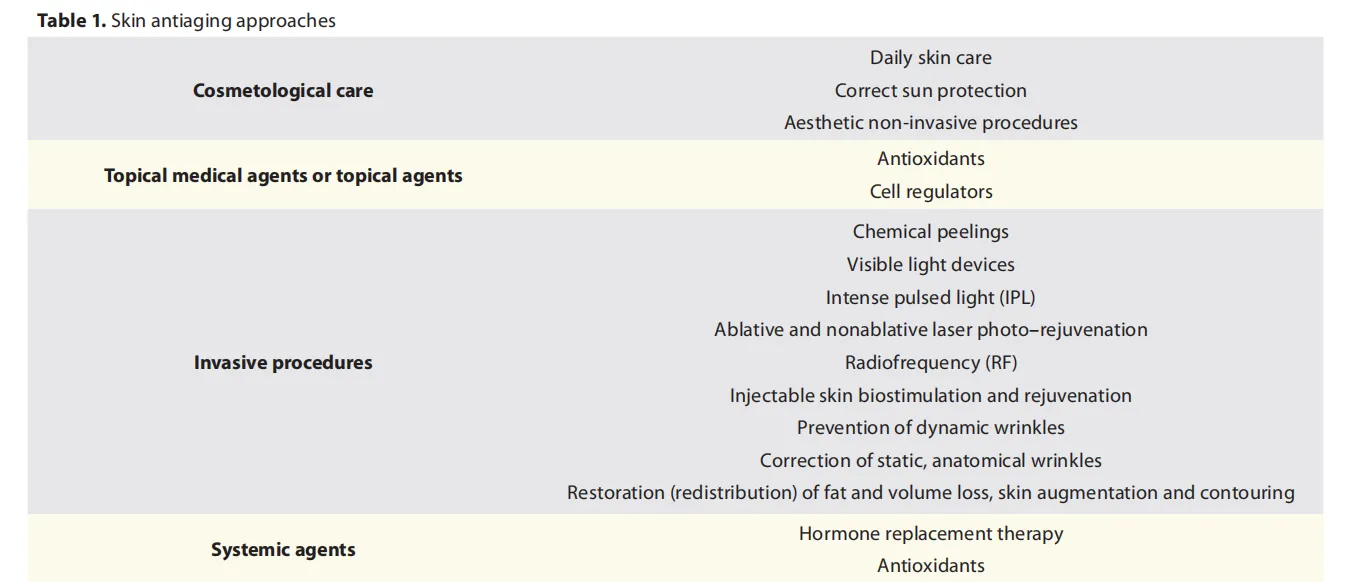
The skin anti-aging strategies attempted to reverse the dermal and epidermal signs of photo- and chronological aging can be grouped under the following approaches(Table 1).
Skin Care
A Healthy and functioning skin barrier is an important protector against dehydration, penetration of various microorganisms, allergens, irritants, reactive oxygen species, and radiation. The skin barrier may be specifically adjusted to allow penetration. For this reason, daily skincare may increase skin regeneration, elasticity, and smoothness, and thus temporarily change the skin condition.40,4 However, it is necessary to stop the degradation of the skin's primary structural constituents, such as collagen, and elastin, to prevent the formation of wrinkles. cistanch Although the technology required to suitably deliver these compounds into the skin has not yet been developed, some products do promote the natural synthesis of these substances except elastin enhancing.2-5 Another integral approach to preventing wrinkle formation is the reduction of inflammation by topical or systemic antioxidants which should be used in combination with sunscreens and retinoids to enhance their protective effects.21
Photoprotection and Systemic Antioxidants
Chronic photodamage of the skin manifests itself as extrinsic skin aging(photoaging).DNA photodamage and UV-generated reactive oxygen species(ROS) are the initial molecular events that lead to most of the typical histological and clinical manifestations of chronic photodamage of the skin. cistanche Australia Wrinkling and pigmentary changes are directly associated with premature photo-aging and are considered its most important cutaneous manifestations. The strategies aimed at preventing photo-aging include sun avoidance, sun protection using sunscreens to block or reduce skin exposure to UV radiation, retinoids in order to inhibit collagenase synthesis and promote collagen production, and anti-oxidants, particularly in combination, reduce and neutralize free radicals (FR).

Interventional studies indicate that it is in fact possible to delay skin aging and improve skin conditions through the administration of selected nutritional supplements. Nutritional anti-oxidants act through different mechanisms and in different compartments but are mainly FR scavengers: (1)they directly neutralize FRs,(2) they reduce the peroxide concentrations and repair oxidized membranes,(3)they quench iron to decrease ROS production,(4)via lipid metabolism, short-chain free fatty acids and cholesteryl esters neutralize ROS.4 Endogenous antioxidant defenses are both non-enzymatic (e.g., uric acid, glutathione, bilirubin, thiols, albumin, and nutritional factors, including vitamins and phenols) and enzymatic [e.g., superoxide dismutases, glutathione peroxidases(GSHPx), and catalase]. cistanche benefits The most important source of antioxidants are provided nutrition. The most known systemic antioxidants belong to vitamin C, vitamin E, carotenoids, and from the trace elements copper and selenium.8-50There are also studies demonstrating that vitamins C and E combined with ferulic acid impart both a sun-screen and an anti-oxidant effect.51
Topical Pharmacological Agents With Anti-Aging Properties
There are two main groups of agents that can be used as anti-aging cream components, the antioxidants, and the cell regulators. The antioxidants, such as vitamins, polyphenols, and flavonoids, reduce collagen degradation by reducing the concentration of FR in the tissues. The cell regulators, such as retinol, peptides, and growth factors(GF), have direct effects on collagen metabolism and influence collagen production.
Vitamins C, B, and E are the most important antioxidants because of their ability to penetrate the skin through their small molecular weight.2 The water-soluble, heat-labile local L-ascorbic acid (vitamin C) in concentrations between 5 and 15% was proven to have a skin anti-aging effect by inducing the production of Col-1, and Col-3, as well as enzymes important for the production of collagen, and inhibitors of matrix metal-proteinase(MMP)1(collagenase 1).43.5 Clinical studies have proven that the antioxidative protection is higher with the combination of vitamins C and E than with the vitamin C or E alone.45 Niacinamide (vitamin B) regulates cell metabolism and regeneration, and it is used in 5% concentration as an anti-aging agent.56 In some studies, improvement of skin elasticity, erythema, and pigmentations after 3 mo of topical treatment has been observed.5254 Vitamin E(α-tocopherol)used as a component of skin products has anti-inflammatory and antiproliferative effects in concentrations between 2 and 20%. It acts by smooth-ing the skin and increasing the ability of the stratum corneum to maintain its humidity, accelerate the epithelialization, and contribute to photoprotection of the skin. The effects are not as strong as with vitamins C and B,57 An in vivo study has proven that the topical application of green tea polyphenols before UV exposure leads to an increase of the minimal erythema dose decreases the number of Langerhans cells, and reduces DNA damage in the skin.58 Other botanicals that act as antioxidants are for example the isoflavones from soy.
Cell regulators, such as vitamin A derivatives, polypeptides, and botanicals, act directly on collagen metabolism and stimulate the production of collagen and elastin fibers.
Vitamin A(retinol) and its derivates (retinaldehyde and tretinoin) are a group of agents that also have antioxidant effects. They can induce the biosynthesis of collagen and reduce the expression of MMP 1(collagenase 1). Retinol is, at the moment, the substance that is most often used as an anti-aging compound and, compared with tretinoin, causes less skin irritation.590It has been shown that retinol has positive effects not only on extrinsic but also on intrinsic skin aging and has a strong positive effect on collagen metabolism.0. Tretinoin, a nonaromatic retinoid of the first generation, is approved for application as an anti-aging treatment in a concentration of 0.05% in the United States. It has been shown to be able to reduce the signs of UV-induced early skin aging, such as wrinkles, loss of skin elasticity, and pigmentation.
Polypeptides or oligopeptides are composed of amino acids and can imitate a peptide sequence of molecules such as collagen or elastin. Through the topical application, polypeptides have the ability to stimulate collagen synthesis and activate dermal metabolism.
Invasive Procedures
There are various in-office procedures, most of which are intended to 'resurface' the epidermis: to remove the damaged epidermis and replace the tissue with remodeled skin layers and sometimes spur the formation of new collagen.21,6 It is possible that the potential of GF, cytokines, and telomerase will eventually be harnessed via technological advancement and innovation in the burgeoning fields of tissue engineering and gene therapy in the nearest future.6
Chemical Peels
Chemical peels are methods to cause a chemical ablation of defined skin layers to induce an even and tight skin as a result of the regeneration and repair mechanisms after the inflammation of the epidermis and dermis. Chemical peels are classified into three categories.56 Superficial peels [α-β-, lipo-hydroxy acids (AHA), trichloroacetic acid (TCA)10-30%] exfoliate epidermal layers without going beyond the basal layer; medium-depth peels (TCA above 30 to 50%)reach the upper reticular dermis; deep peels(TCA>50%, phenol) penetrate the lower reticular dermis. The depth of peeling depends not on the substance used only, but on its concentration, pH of the solution, and time of application.6 A number of skin modifications have been reported after several weeks: epidermal architecture returns to normal, melanocytes are present and distributed uniformly, basal cells contain small melanin grains distributed homogeneously, the thickness of the basal membrane is homogeneous, and in the dermis, a new sub epidermal band of collagen appears, elastic fibers form a new network, often
parallel to those of collagen." If superficial peelings target the cornerstones, cause desquamation, increase the epidermal activity of enzymes, lead to epidermolysis and exfoliation,86 medium-depth peels cause coagulation of membrane proteins, destroy living cells of the epidermis, and, depending on the concentration, the dermis. Deep peels coagulate proteins and produce complete epidermolysis, restructure of the basal layer, and restoration of the dermal architecture. The depth of peel correlates with the potential side effects, like hyperpigmentation, solar lentigines, and risk of post-operative infections, especially herpetic ones.6,70 The mechanism by which the chemical peel takes effect is not clearly elucidated. An increase in collagen fiber content, water, and GAG in the dermis has been reported.7172 There is a suggestion that improvements in skin elasticity and wrinkles after chemical peeling can be attributed to the increase of Col-1 with or without Col-3, elastic fibers, as well as a dense rearrangement of collagen fibers.73-7
Visible Light Devices: IPL, Lasers, RF for the Skin Rejuvenation, Resurfacing, and Tightening
Nonablative skin rejuvenation or"subsurface" comes as low risk and short downtime technology that can improve aging structural changes without disruption of cutaneous integrity.?The mechanism of action is supposed to be a selective, heat-induced denaturalization of dermal collagen that leads to subsequent reactive synthesis. Nonablative skin rejuvenation is not a precise term since rejuvenation is a controlled form of skin wounding aimed at achieving a more youthful appearance after the wound heals Treatment of photoaged skin has been divided into treatment of ectatic vessels and erythema, irregular pigmentation, and pilosebaceous changes (Type I) and the improvement of the dermal and subcutaneous senescence(Type II). The epidermis and superficial dermis can be selectively damaged by two basic mechanisms:(a)by targeting discrete chromophores in the dermis or at the dermal-epidermal junction or(b)by utilizing mid-infrared (IR) lasers.78
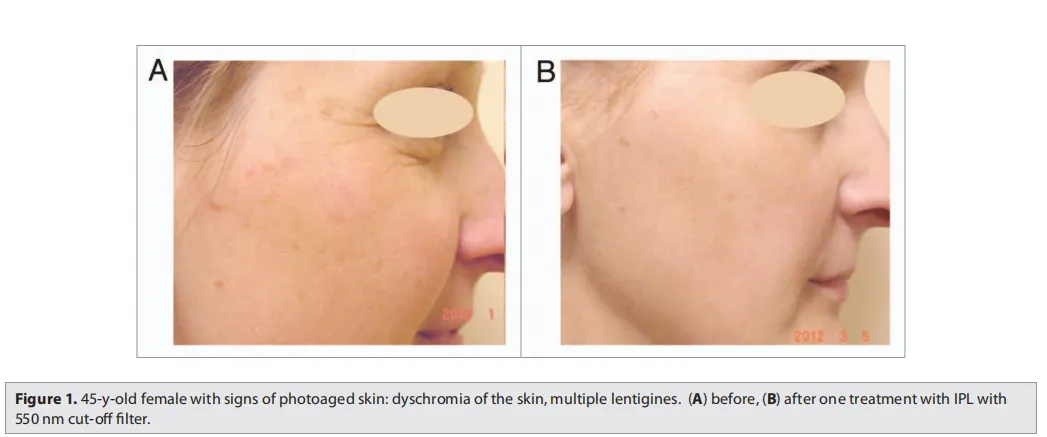
The devices for treatment of vascular and/or pigment irregularities include lasers emitting light at 532,585-,595-,755-,800-, and 1064-nm wavelengths as well as filtered light generated by IPL systems equipped with different cut-off filters39,(Fig. 1). Lasers emitting 1,320,801,450,8 and 1,540 nm8 using interstitial and intracellular water as target chromophores and pulsed dye lasers(PDL)8 using oxyhemoglobin as the primary chromophore are now employed for Type Il photo rejuvenation only. The clinical efficacy of these nonablative modalities is weaker than that of the ablative methods, however, new collagen formation and clinically observable improvement in wrinkles can be observed.84,85 Reduction of facial wrinkles by using IPL devices has shown less effect compared to laser technology,86 but for type I photorejuvenation, IPL systems have in general shown considerably better results than laser systems operating at sub-purpuricenergy levels.875Ultrastructural and histological analysis confirmed effectiveness of absorption of light(532,585,595, with or without 1064-nm Nd: YAG laser) in the blood vessels of the superficial dermis, resulting in the release of inflammatory mediators and GF into the interstitium followed by stimulated fibroblast activity and initiation of tissue repair and enhanced collagen and elastin neoformation replacing the originally dam-aged elastic tissue. cistanche cholesterol 84,91,9 An increase in Grenz zone thickness,1 monoclonal chondroitin sulfate, and II procollagen staining, as well as quantification of Col-1, was measured after a couple of treatments with PDL. The increase in dermal collagen has also been confirmed by noninvasive ultrasonographic analysis%4 and radioimmunoassay. Nonablative skin rejuvenation should not yet be considered an alternative to laser resurfacing. However, there are interesting data showing comparative histological changes between the ablative and nonablative modalities.

Histological sections of skin before and after treatment with the different IPL devices have shown the formation of new collagen in the papillary and reticular dermis, as well as an increase in the number of fibroblasts and a proportional decrease in the amount of solar elastosis, is also usually found.2,979If vascular and/or pigment disturbances improvement are immediate, the collagen remodeling response is delayed and maximum results are seen only between 3 and 12 mo after treatment. Laser resurfacing has been shown to be effective in counteracting photoaging through entire epidermal ablation, collagen shrinkage, stimulation of neo-collagenases, extensive der-mal remodeling, regeneration of cellular organelles and intercellular attachments but parallelly, results in long recovery time are associated with risks of severe long-lasting side effects, such as persistent erythema,hypo-or hyperpigmentation, infection or SCarring.101-10
Recently, fractionated CO, erbium glass, or erbium-YAG lasers have been introduced to reduce downtime and side effects.i0 These devices emit light in a pixilated fashion onto the skin, producing an array of microthermal zones in the dermis.05-108 The controlled thermal stress to the epidermis and the dermal compartment is followed by a wound healing response ultimately leading to re-epithelization and dermal remodeling.
Although the underlying molecular changes induced by different ablative and non-ablative as well as thermal and non-thermal skin rejuvenation treatments are not fully understood, there are investigations suggesting important roles of heat shock proteins (HSP), transforming growth factor β(TGF-β), different MMPs, synthetases, heals and hyaluronic acid(HA).109-13 Type I and type Ill procollagen mRNA was also elevated for at least 6 mo.i4
Monopolar RF is a non-invasive way to obtain skin tightening" and immediate collagen contraction with a single treatment. Unlike lasers, the RF technology produces an electric current, which generates heat through resistance in the dermis and as deep as the subcutaneous fat.78 Unfortunately there is a lack of long-term studies on efficacy and analysis of side effects for the skin using this method of skin rejuvenation.
It is obvious that different treatment modalities using visible light devices have resulted in varying clinical effects and allow for the selection of individual treatment parameters for different indications.5 For this reason, careful simultaneous evaluation of any pigment disturbances, vascular abnormalities, wrinkles, and cutaneous sagging as skin layers are all linked is highly recommended.
This article is extracted from Dermato-Endocrinology 4:3, 308–319; July–December 2012; © 2012 Landes Bioscience