Study On How Bushen Anzhi Decoction Improves Anxiety-Like Behavior And Insomnia In Rats With “Kidney Failing To Store Spirit” (TCM Pattern)
Jul 23, 2026
Abstract
Objective
To explore the intervention mechanism of Bushen Anzhi Decoction (BSAZD) in rats with insomnia induced by the Traditional Chinese Medicine (TCM) pattern known as "kidney failing to store spirit" (often discussed in TCM as a pattern associated with poor sleep quality, early waking, and restlessness-especially in older populations).
Methods
A total of 36 male Sprague–Dawley (SD) rats were randomly divided into six groups (6 rats per group):
Normal group (normal saline)
Model group (normal saline)
Eszopiclone group (positive control; 0.27 mg/kg)
Low-dose BSAZD (5.85 g/kg)
Medium-dose BSAZD (11.70 g/kg)
High-dose BSAZD (23.40 g/kg)
Except for the normal group, rats were given combined administration of D-galactose and DL-4-chlorophenylalanine (PCPA) to establish an insomnia model corresponding to the TCM pattern "kidney failing to store spirit." After successful modeling, the corresponding medicine (or saline) was administered intragastrically once daily for 14 consecutive days.
After the final administration, the researchers evaluated:
Behavioral indicators (anxiety-like behavior, sleep parameters)
Hippocampal histopathology
Untargeted serum metabolomics, to identify differential metabolites and enriched pathways.
Results
Compared with the model group, the high-dose BSAZD group showed:
Significant increases in open arm entries, open arm time, and sleep time (P<0.05P<0.05P<0.05)
Significant decreases in closed arm entries, closed arm time, and sleep latency (P<0.05P<0.05P<0.05)
Histopathology showed that hippocampal neurons in the high-dose BSAZD group were regularly arranged, with near-normal nuclear size, morphology, and positioning.
Untargeted metabolomics found differential metabolites including oxidized glutathione and glutamate. These changes were mainly enriched in:
GABAergic synapse pathway
Glutamatergic synapse pathway
cAMP signaling pathway
2-oxocarboxylic acid metabolism pathway
Conclusions
BSAZD can improve sleep quality and relieve anxiety-like behaviors in rats with insomnia related to "kidney failing to store spirit." Potential mechanisms include:
Regulating GABAergic and glutamatergic synaptic pathways to restore neurotransmitter balance
Reducing oxidative stress injury
Modulating cAMP signaling to support neural repair
Intervening in 2-oxocarboxylic acid metabolism to optimize energy supply
Keywords: Bushen Anzhi Decoction; kidney failing to store spirit; insomnia; untargeted metabolomics; differential metabolites
1. Background
In TCM, "Bu Mei" (insomnia-type sleep disorder) refers to a class of conditions characterized by frequent inability to obtain normal sleep, corresponding to "insomnia" in modern medicine. Epidemiological data indicate that roughly 30% of people worldwide experience insomnia symptoms annually, with incidence increasing with age; in China, adult prevalence has been reported as high as 38.2%.
Long-term insomnia seriously reduces quality of life and may increase the risk of hypertension and coronary heart disease. It can also elevate risks of mental and physical disorders and may contribute to medication dependence or misuse.
At present, insomnia is mainly treated with oral chemical medications. Although such drugs act quickly, patients may experience side effects such as dizziness and grogginess, as well as risks such as drug dependence and rebound insomnia. Compared with chemical drugs, TCM approaches may have fewer side effects and more stable long-term outcomes, and their active substances and mechanisms are worth deeper exploration.
2. About Bushen Anzhi Decoction (BSAZD) - What It Is in TCM Terms
Bushen Anzhi Decoction (BSAZD) is an experience-based prescription developed by Professor Zhang Xingping, based on the theory of "insomnia due to the kidney failing to store spirit." Its herbal composition includes:
Prepared Rehmannia root
Cornus (wine-processed)
Chinese yam
Goji berries
Dodder seed
Poria
Alpinia oxyphylla (Yi Zhi Ren)
Schisandra
Achyranthes bidentata
Honey-fried Polygala (Zhi Yuan Zhi)
In TCM language, this formula is designed to "tonify the kidney, replenish essence, support qi, and calm the spirit." Clinically it has been used for years with positive results, but the modern biological mechanisms have not been studied deeply enough-hence this metabolomics-based work.
Untargeted metabolomics is a non-biased technique that can systematically profile small-molecule metabolites, screen differential metabolites via multivariate statistics, and map them to pathways-helping researchers understand both disease-related metabolic disturbances and drug-regulated targets at a "whole-system" level.
Table 1. Comparison of locomotor trajectory–related indices in the Elevated Plus Maze test among groups (xˉ±s\bar{x}\pm sxˉ±s, n=6n=6n=6)
| Group | OE (times) | CE (times) | OT (s) | CT (s) |
|---|---|---|---|---|
| Normal group | 12.48 ± 0.63 | 5.15 ± 0.87 | 229.79 ± 3.38 | 64.74 ± 1.26 |
| Model group | 4.32 ± 0.49<sup>a</sup> | 8.51 ± 0.74<sup>a</sup> | 106.71 ± 2.98<sup>a</sup> | 247.19 ± 2.98<sup>a</sup> |
| Eszopiclone group | 6.63 ± 0.58<sup>ab</sup> | 7.63 ± 0.73<sup>b</sup> | 150.05 ± 4.43<sup>b</sup> | 210.62 ± 4.43<sup>b</sup> |
| BSAZD low-dose group | 5.37 ± 0.55<sup>ab</sup> | 6.52 ± 0.68<sup>a</sup> | 143.26 ± 8.25<sup>a</sup> | 198.21 ± 8.25<sup>b</sup> |
| BSAZD medium-dose group | 8.55 ± 0.73<sup>ab</sup> | 7.26 ± 0.78<sup>ab</sup> | 186.46 ± 10.38<sup>a</sup> | 151.14 ± 10.38<sup>a</sup> |
| BSAZD high-dose group | 9.58 ± 0.76<sup>ab</sup> | 7.95 ± 0.75<sup>ab</sup> | 193.05 ± 4.98<sup>ab</sup> | 153.96 ± 4.98<sup>ab</sup> |
Abbreviations: OE, open arm entries; CE, closed arm entries; OT, open arm time; CT, closed arm time.
Notes:
<sup>a</sup> vs. Normal group, P<0.05P<0.05P<0.05
<sup>b</sup> vs. Model group, P<0.05P<0.05P<0.05
<sup>c</sup> vs. Eszopiclone group, P<0.05P<0.05P<0.05
Table 2. Comparison of indices in the pentobarbital sodium righting reflex test among groups (xˉ±s\bar{x}\pm sxˉ±s, n=6n=6n=6, s)
| Group | Sleep latency (s) | Sleep duration (s) |
|---|---|---|
| Normal group | 236.00 ± 4.36 | 3,538.55 ± 74.45 |
| Model group | 402.03 ± 4.93<sup>a</sup> | 2,545.15 ± 70.38<sup>a</sup> |
| Eszopiclone group | 302.73 ± 12.25<sup>b</sup> | 2,879.68 ± 99.63<sup>b</sup> |
| BSAZD low-dose group | 336.40 ± 5.99<sup>bc</sup> | 2,718.85 ± 76.94<sup>bc</sup> |
| BSAZD medium-dose group | 299.17 ± 3.43<sup>b</sup> | 2,891.83 ± 82.74<sup>b</sup> |
| BSAZD high-dose group | 285.51 ± 14.93<sup>bc</sup> | 3,026.98 ± 106.13<sup>bc</sup> |
Notes:
<sup>a</sup> vs. Normal group, P<0.05P<0.05P<0.05
<sup>b</sup> vs. Model group, P<0.05P<0.05P<0.05
<sup>c</sup> vs. Eszopiclone group, P<0.05P<0.05P<0.05
3. Materials
3.1 Main Instruments
Included EEG/EMG sleep monitoring system, high-resolution mass spectrometer, UHPLC system, and optical microscope.

Figure 1. Locomotor trajectory maps of rats in the Elevated Plus Maze (EPM) test in each group.
3.2 Drugs and Reagents
Herbal pieces were sourced from multiple Chinese provinces; all decoction herbs were purchased from a TCM hospital in Xinjiang. Eszopiclone tablets, PCPA, pentobarbital sodium, and LC-MS solvents/reagents were used.
3.3 Animals
36 SPF-grade male SD rats (170–220 g; 10–12 weeks old) were housed under controlled conditions. The study was approved by an animal ethics committee (approval number: IACUC-20210301-45).

Figure 2. Representative hippocampal histopathological micrographs (H&E staining) of rats in each group.

Figure 3. PCA score plot of serum metabolites in rats: high-dose BSAZD group vs. model group.

Figure 4. OPLS-DA score plot of serum metabolites in rats: high-dose BSAZD group vs. model group.

Figure 5. OPLS-DA permutation test plot of serum metabolites in rats: high-dose BSAZD group vs. model group.

Figure 6. Volcano plot of differential serum metabolites in rats: high-dose BSAZD group vs. model group.
4. Methods
4.1 Preparation of BSAZD
The herbs were mixed, soaked, decocted twice, combined, and concentrated into a decoction equivalent to 2.6 g crude herb/mL, sterilized, and refrigerated at 4°C.
4.2 Grouping and Modeling
After 7 days of adaptation, rats were randomized into six groups. The insomnia model was induced by:
Subcutaneous injection of D-galactose 120 mg/(kg·day) for 42 days
Then intraperitoneal injection of PCPA 300 mg/(kg·day) for 3 days
EEG/EMG monitoring confirmed successful modeling (prolonged wakefulness, reduced NREM and REM sleep).
After modeling, rats were treated by gavage once daily for 14 days with saline or the respective interventions.
4.3 Behavioral Tests
Elevated Plus Maze (EPM)
Measured open/closed arm entries and time.
Pentobarbital Righting Reflex Test
Measured sleep latency and sleep duration after pentobarbital injection.
4.4 Sample Collection
Blood serum and brain tissue were collected and stored appropriately for analysis.
4.5 Hippocampal Histopathology
HE staining and microscopy were used to observe hippocampal changes.
4.6 Untargeted Serum Metabolomics
Serum from normal, model, and high-dose BSAZD groups was analyzed. Data were processed via PCA, OPLS-DA, permutation tests, and differential metabolite screening (VIP > 1, FC > 2 or < 0.5, P<0.05P<0.05P<0.05), followed by KEGG enrichment.
4.7 Statistics
SPSS 27.0; one-way ANOVA, appropriate post hoc tests; α=0.05\alpha=0.05α=0.05.
5. Results
5.1 Elevated Plus Maze
The model group showed more anxiety-like behavior (reduced open arm exploration). BSAZD improved these measures, and the high-dose group showed the most significant improvement, outperforming the eszopiclone group on key EPM metrics.
5.2 Pentobarbital Sleep Test
The model group had longer sleep latency and shorter sleep duration. BSAZD significantly shortened latency and increased sleep time; high-dose performed best.
5.3 Hippocampal Histology
Model rats showed clear neuronal injury. BSAZD reduced hippocampal damage in a dose-dependent manner, with high-dose showing near-normal morphology.
5.4 Metabolomics Findings
Differential metabolites involved glutamate, glutathione, and oxidized glutathione, among others. Enriched pathways included:
GABAergic synapse
Glutamatergic synapse
cAMP signaling
2-oxocarboxylic acid metabolism
6. Discussion
In classical texts, insomnia was described as "unable to lie down" or "unable to close the eyes." TCM physicians historically attributed insomnia to multiple mechanisms; across these views, a common theme is disrupted internal regulation-often described as "yang not entering yin" and the spirit not returning to its "residence."
Professor Zhang proposed a diagnostic approach linking insomnia subtypes to the "five spirits" theory. The subtype "kidney failing to store spirit" is characterized by early waking and is common in the elderly, reflecting deficiency patterns in kidney essence/qi/yin/yang.
In this study:
Behavioral data show BSAZD improved both sleep parameters and anxiety-like behavior.
Histology suggests BSAZD may protect hippocampal neurons.
Metabolomics suggests multiple mechanisms, especially:
Rebalancing excitatory glutamate and inhibitory GABA system
Reducing oxidative stress (via glutathione markers)
Supporting neural repair pathways (cAMP-related signaling)
Improving energy metabolism (2-oxocarboxylic acid / TCA-related metabolism)
The authors also note limitations: metabolomics suggests pathways, but molecular target validation in brain tissue and cell models is still needed.
7. Where Cistanche Fits: A Practical Western-Friendly Bridge
Even though this paper focuses on BSAZD (a multi-herb TCM formula), it provides a modern scientific lens on what many consumers are looking for today:
Better sleep quality
A calmer stress response
Healthy neurotransmitter balance
Oxidative stress protection
Better brain-energy metabolism
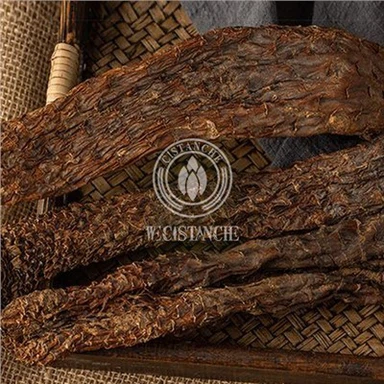
In TCM, kidney-tonifying herbs are frequently used in patterns associated with aging, fatigue, and low resilience. One of the best-known "Kidney-tonifying" botanicals is Cistanche (Rou Cong Rong)-especially Cistanche tubulosa, which is widely used as a functional ingredient in modern nutraceutical development.


TCM herb for Kidney support + modern product development
If your customers ask: "What is cistanche real benefits?" a compliant, evidence-aligned way to explain it to EU/US audiences is:
Cistanche tubulosa extract is commonly positioned as a botanical that supports vitality, endurance, and healthy aging, and is often associated in TCM with kidney support.
Because modern consumers increasingly associate sleep and mood with stress biology, oxidative stress, and neurotransmitter balance, Cistanche is frequently developed into functional foods and supplements aimed at daily resilience.
Suggested keyword variations for SEO placement (you can localize by market):
US: "TCM herb for kidney support benefits" / "TCM herb for vitality"
EU/UK: "TCM herb for daily resilience" / "TCM herb for healthy aging support"
Generic: "TCM herb for kidney support - what is cistanche real benefits"
8. Your Factory Advantage
When you develop Cistanche-based products for Western markets, buyers typically care about traceability + scale + compliance + actives. Based on your provided page content:
Established in 2003
Described as having a large-scale Cistanche industrial chain in Xinjiang (Hotan/Hetian region)
Integrated system including seed breeding base, cultivation, large fresh-material collection/storage capacity, and a GMP production workshop
Workshop specifications and lab capacity (as stated): 100,000-class GMP workshop and 10,000-class microorganism incubation laboratory
Listed certifications: SC, HACCP, organic-related certificates (e.g., NOP) and multiple patents related to extraction technology (including membrane separation technology)
Academic cooperation with universities and experts (as stated)
Highlight to add (your key differentiation)
You mentioned: "We are Cistanche tubulosa extract; active ingredient content is higher."
For EU/US buyers, the clearest way to communicate this is:
Standardized actives such as echinacoside and acteoside (verbascoside)
Clear specifications/COA, batch-to-batch consistency, and compliant testing
(If you share your exact spec ranges-e.g., echinacoside %, acteoside %, solvent method, pesticide/heavy metal/micro limits-I can turn this into a clean B2B one-page sell sheet.)
9. Suggested Marketing Paragraph
Modern sleep and stress science increasingly points to neurotransmitter balance (GABA vs. glutamate), oxidative stress, and brain-energy metabolism as key foundations of recovery. In a rat model of insomnia and anxiety-like behavior linked to the TCM pattern "kidney failing to store spirit," researchers found that Bushen Anzhi Decoction improved sleep time, shortened sleep latency, normalized hippocampal neuron morphology, and shifted serum metabolites toward pathways related to GABAergic and glutamatergic synapses, cAMP signaling, and energy metabolism.
For brands exploring TCM-inspired functional ingredients, Cistanche tubulosa (Rou Cong Rong) is one of the most recognized "kidney-supporting" herbs used in modern nutraceutical development. As a specialized Cistanche tubulosa extract manufacturer, we provide scale, traceable sourcing, and GMP-based processing-helping product developers translate traditional use into modern, standardized ingredient solutions.