Study On Neuroendocrine-Immune Function Of Cistanche Deserticola And Its Rice Wine Steaming Products in Glucocorticoid-Induced Rat Model-Ⅰ
Jul 19, 2024
1. Introduction
Cistanche deserticola, which is called "desert ginseng," is a traditional Chinese medicine that has been used for centuries as a yang-tonic herb for invigorating the kidney and strengthening the yang [1]. Eight species and one variation of Cistanche Herba have been recorded in China and only Cistanche deserticola Y. C. Ma and Cistanche tubulosa (Schenk) Wight are recorded in the Chinese Pharmacopoeia [2]. Pharmacological studies demonstrated that Cistanches Herba exhibited neuroprotective [3], immunomodulatory [4], cardioprotective [5], antifatigue [6], anti-inflammatory [7], hepatoprotective [8], antioxidative [9], antibacterial [10], laxative [11], and antitumor effects [12]. The broad spectrum of reported biological activities of this genus has been attributed to its complex and varied phytochemical composition. Cistanche deserticola contains phenylethanol glycosides, iridoids, polysaccharides [13], etc. The content of phenylethanoid glycosides is the highest in the original medicinal materials [14].

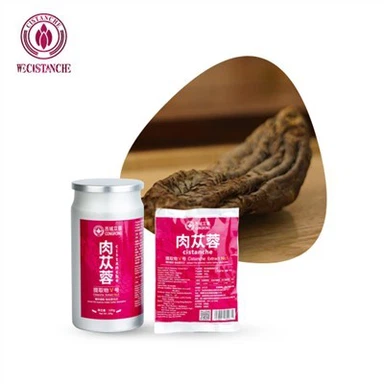
NATURAL CISTANCHE TUBULOSA FOR INVIGORATING THE KIDNEY PHGS75% ECH 30% ACT 12%
Processing of Chinese Materia Medica (CMM) is a traditional pharmaceutical technique to fulfill the different requirements for treating, dispensing, and making preparations according to traditional Chinese medicine theory. Those processed products are named decoction pieces, which are used in clinics. Processing aims to enhance the efficacy to reduce the toxicity of crude drugs. 2015 Chinese Pharmacopoeia recorded that Cistanche thick slices (CD) and rice wine-steamed Cistanche (WCD) could be used as decoction pieces in the clinic. Our research group showed that the laxative effect was relieved, and the antiaging and kidney-yang invigorating effects were enhanced after Cistanche was steamed with rice wine [15].
The function of the hypothalamus-pituitary-adrenal gland-thymus gland (HPAT) axis is disordered in the kidney-yang deficiency syndrome [16]. Patients with kidney-yang deficiency also have extensive immune dysfunction. HPA axis dysfunction is closely related to immunodeficiency. Neuroendocrine-immune network (NEI) theory shows that the immune and neuroendocrine systems share many ligands and receptors [17], and the hypothalamus is considered the pivot to link the neuroendocrine with the immune systems.
In this study, we replicated kidney-yang deficiency in model rats with exogenous corticosteroid injection and explored the mechanism of the kidney-yang deficiency in response to different processed products of Cistanche deserticola from the perspective of endocrine-immune function.
2. Materials and Methods
2.1. Materials and Reagents
Cistanche deserticola was collected from Alashan Neimenggu in 2019.5 and identified as the dried fleshy stems of Cistanche deserticola Y. C. Ma by Prof. Yanjun Zhai (School of Pharmacy, Liaoning University of Traditional Chinese Medicine, China). The voucher specimens were preserved in the Liaoning Processing Engineering Technology Center.
Standard compounds of ajugol were purchased from Chengdu Pure Chem-Standard Co., Ltd. (Chengdu, China); cistanoside F, echinacoside, cistanoside A, and isoacteoside were purchased from Must Company (Sichuan China); acteoside was purchased from Dalian Meilun Bio. Co., Ltd. (Dalian, China). MS-grade acetonitrile and methanol were purchased from Merck KGaA (Darmstadt, Germany). HPLC-grade formic acid was purchased from Merck KGaA (Darmstadt, Germany). Rice wine was purchased from Zhejiang Brand Tower Shaoxing Wine Co., Ltd. (Zhejiang, China).
Corticosterone (CAS: 50-22-6, purity > 98%, TCI Shanghai Development Ltd. Co.), chinkuei shin chewan pills (Beijing Tongrentang Technology Development Co., Ltd.), rat ACTH, CRH, T, IL-6, IFN-c, TNF-α, IL-2, and IL-10 ELISA detection kits were purchased from Nanjing Jiancheng Co., Ltd. The rat cortisol ELISA kit was provided by BOSK Co., rat CD4 antibody, CD8a antibody (nos. 561833 and 559976), RBC lysate (Solarbio, R1010), PBS buffer solution (Solarbio, P1020-500), TRIzol (MAN0001271), CaM, and β-actin upstream and downstream primers were provided by the Guangzhou Invitrogen Co. Reverse Transcription Kit (no. RR037A) and cDNA Synthesis Kit (no. 10000068167) were provided by Bole Life Medicine Products (Shanghai) Co., Ltd. Chloroform, isopropanol, 75% ethanol, and urethane solution were all analytically pure and produced by Sinopharm Chemical Reagent Co., Ltd. Ultrapure water was produced by the Milli-Q system (18.2 MΩ, Millipore, MA, USA).
2.2. Experimental Instruments
An enzyme marker (Thermo, model 3530911931), automatic plate washer (model HBS- 4009), digital display push-pull force meter (model VICTOR- 50N), high-speed freezing centrifuge (model Sigma 3k15), ultramicro spectrophotometer (model B-50Q), gene amplifier (model L96G), real-time fluorescence quantitative PCR (model StepOne), flow cytometer (model AC66051710132), paraffin microtome (model Laika), microscope (Olympus, model BS-53), and a pure water instrument (model F7JA36507) were used.
2.3. Preparation of Samples for UPLC-Q-TOF-MS and Pharmacological Experiments
WCD was processed from the same batch of Cistanche deserticola in our laboratory. For the preparation of WCD, dry CD pieces (5 mm thick) (100 g) were infused with rice wine (30 mL), steamed at high pressure (1.25 kPa) for 4 h, and then dried at 55°C.
The coarse powders of CD and WCD were soaked in 10 times 95% ethanol for 0.5 h, reflux-extracted 3 times each time for 1 h, and filtered, and the filtrates 3 times were combined. The ethanol was recovered under reduced pressure, and the extract was obtained for administration. The extract (1 mL) was added to 50% methanol, bringing the total volume to 20 mL, and stored at 4°C for content analysis.

NATURAL CISTANCHE TUBULOSA FOR IMPROVING SEXUAL FUNCTION PHGS75% ECH 30% ACT 12%
2.4. UPLC-QqQ-MS Conditions for Analysis of CD and WCD Extracts
2.4.1. LCThMS Analytical Conditions
The UPLC-MSThMS system with MassLynx 4.1 Analyst software was used to perform the data acquisition and processing. The analytical column was an Acquity UPLC BEH C18 (100 mm × 2.1 mm, 1.7 μm) at a temperature of 40° C. The mobile phase was 0.1% formic acid aqueous solution (A) and acetonitrile containing 0.1% formic acid (B). The elution gradient was 0.00–1.00 min with 3% B, 1.01–2.00 min with 3%–11.5% B, 2.01–3.00 min with 12% B, 3.01–4.00 min with 15% B, 4.01–5.00 min with 20% B, 5.01–6.00 min with 22% B, 6.01–8.00 min with 25% B, and 8.01–9.00 min with 10% B. The flow rate was 0.3 mLTh min, and the injection volume was 1.0 μL.
The Waters triple quadruple mass spectrometer (Xevo TQD, Waters Corp., Milford, MA, USA) equipped with an electrospray ionization (ESI) source was used in the negative ion mode. The desolvation gas was nitrogen with a flow rate of 500 LThh at a temperature of 250°C. All detected compounds were measured in the multiple reaction monitoring (MRM) mode; Table 1 shows the energy parameters, and Table 2 shows the calibration curves for the analyzed components.
2.4.2. Preparation of Reference Substances
Tubuloside A (3.02 mg), echinacoside (3.00 mg), 2′-acetylacteoside (2.34 mg), acteoside (2.45 mg), isoacteoside (0.61 mg), cistanoside F (2.14 mg), salidroside (3.39 mg), geniposidic acid (2.84 mg), ajugol (1.58 mg), and catalpol (2.39 mg) were dissolved in methanol to prepare a stock solution. The stock solution was diluted with methanol to get the appropriate concentrations for the working standard solutions. All prepared solutions were stored at 4°C before use.
2.5. Preparation and Grouping of Animal Models
SD male rats (180–220 g) were purchased from Liaoning Changsheng Biotechnological Co., Animal permit number: SCXK (Liao) 2015–0001. All rats were maintained with free access to food and water at 25°C and a relative humidity of 30–50%. The animals were housed for 7 days before the experiments.
One hundred rats were randomly divided into 10 groups: blank control (BC) group, model control (MC) group, positive control (PC) group, rice wine control (WC) group, CD high-dose (CD-HD) group, CD middle-dose (CD-MD) group, CD low-dose (CD-LD) group, WCD high-dose (WCD-HD) group, WCD middle-dose (WCD-MD) group, and WCD low-dose (WCD-LD) group. The doses of CD-HDThWCD-HD, CD-MDTh WCD-MD, and CD-LDThWCD-LD were 5.48 gTh(kg ∙ d), 2.74 gTh (kg ∙ d), and 1.37 gTh(kg ∙ d), respectively. The dose for the PC group was 1.646 gTh(kg ∙ d), and for the WC group, 1 mLTh100 g for 40 days. On the 6th day after administration, the rats were subcutaneously injected with the corticosterone water suspension (corticosterone + 0.1% dimethyl sulfoxide + 0.1% Tween-80 + 0.9% sodium chloride) except for the BC group [18]. The concentration of corticosterone was 5 gThL, and the dose was 0.1 mLTh100 g. The rats in the BC group were given normal saline + 0.1% dimethyl sulfoxide + 0.1% Tween- 80 + 0.9% sodium chloride by injection at the same dose.
2.6. Determination of HPA Axis Functions
2.6.1. Weight, Temperature, and Holding Power Test
A weight test was performed every 3 days, and the temperature was taken every 6 days. during the experiment. On the 39th day, the hind limb's maximum strength was measured by a grip meter. The rats were placed on smooth platforms, making their hind limb grab the pole. The rats will instinctively grab any object to prevent moving backward when the tail is pulled until the pull force exceeds the grip. When the rat lost its grip, the preamplifier could automatically record the maximum grip force.
2.6.2. Determination of the Level of T, CRH, ACTH, CORT, and Cortisol in Serum
One hour after the last administration, the rats were anesthetized by intraperitoneal injection of a urethane solution (20 gTh100 mL). Then, the blood samples were collected, centrifuged at 3500 r for 15 min to obtain the serum, and stored at −20°C. The concentrations of T, CRH, ACTH, CORT, and cortisol were measured with rat ELISA kits according to the manufacturer's instructions.
2.6.3. Microscope Observations
The morphological structure of adrenal gland tissue was observed by HE staining. Adrenal tissue was fixed in 10% paraformaldehyde, dehydrated in ethanol, made transparent by a xylene solution, embedded by conventional methods, cut to 4 μm thick slices, dewaxed with xylene solution, hydrated with the ethanol gradient, and then stained with hematoxylin and eosin staining solution. After being made transparent with xylene, the plate was sealed with neutral gum and observed under a microscope.
2.6.4. Immunohistochemical Staining of Bax, Bcl-2, Caspase-3, Fas, and FasL Protein Expression in the Adrenal Gland
Formalin-fixed, paraffin-embedded rat adrenal sections were deparaffinized and rehydrated after being cut at a thickness of 4 μm. For the blocking of endogenous peroxidase activity, the sections were preincubated in hydrogen peroxide block for 10 min. Sections were dipped into 0.01 M citrate (pH 6.0) and heated to boiling. The process was repeated after 5–10 min. After cooling, the sections were washed with PBS (pH 7.2–7.6) 1–2 times, left at room temperature for approximately 5 min, and washed with PBS (pH 7.2–7.6) 2–3 times. The 5% BSA blocking solution was added at room temperature, and the excess liquid on the section was shaken off 20 min later. Diluted primary antibodies specific for FasTh FasL, Bcl-2ThBax, and caspase-3 (1:100 diluted with PBS) were added and incubated at 37°C for 1 h or 4°C overnight. The sections were washed 2–3 times with PBS (pH 7.2–7.6). Then, biotinylated goat anti-mouse IgG was added, and the sections were dried at 20–37°C for 20 min and washed with PBS (pH 7.2–7.6) 4 times for 5 min. After thorough washing in PBS, the sections were incubated with a mixture of reagents A and B for 30 min, incubated with PBS for 45 min, and finally developed with DAB substrate (DAKO) for 30 min before being slightly counterstained with hematoxylin, dehydrated, and mounted.

NATURAL CISTANCHE TUBULOSA FOR ENHANCING SEXUAL SENSATION PHGS75% ECH 30% ACT 12%
2.7. Determination of Immune Functions
2.7.1. Calculation of Immune Organ Index
One hour after the last administration, the rats were anesthetized by intraperitoneal injection of urethane solution (20 gTh100 mL), and then the spleen and thymus gland were removed and weighed immediately in a sterile hood. The weight coefficients of the spleen or the thymus (%) � spleen or thymus weight (mg) Body weight (g).

2.7.2. Detection of T Lymphocyte Subsets in Peripheral Blood
Splenocytes and hemocytes were incubated with the monoclonal antibodies anti-CD4 (PE) and anti-CD8 (FITC) for 30 min in the dark. 2 mL of erythrocyte lysate was added, and the solution was mixed by vortexing. The solution was left in darkness for 10 min and centrifuged for 5 min. The supernatant was discarded, and then the solution was washed 3 times with ice-cold PBS and resuspended in PBS permeabilizing solution. At least 10,000 cells were analyzed by flow cytometry within 1 h of each Mab staining.
2.7.3. Determination of the Level of IL-10, IL-6, IL-2, TNF-α, and IFN-c in Serum
One hour after the last administration, the rats were anesthetized by intraperitoneal injection of urethane solution (20 gTh100 mL), and blood was taken from the abdominal aorta. The blood was centrifuged at 3500 r for 15 min to obtain the serum and stored at −20°C. The concentrations of IL-10, IL-6, IL-2, TNF-α, and IFN-c were detected with rat ELISA kits according to the manufacturer's instructions.
2.8. Expression of CaM in Hypothalamus and Hypophysis Tissues
Total RNA was extracted from the hypothalamus and hypophysis tissues by TRIzol. Reverse transcription was carried out on 10 μL of total RNA according to the manufacturer's instructions. Equal amounts of cDNA were analyzed via qPCR in the presence of dsDNA-binding dye (Promega, USA) and the CFX 96 Real-time PCR System (Bio-Rad, USA) to look at the different genes under the conditions of initial activation at 95°C for 10 min, 40 cycles of denaturation at 95°C for 15 s, and annealing extension at 60°C for 1 min.
Primers for CaM and β-actin are given in Table 1, and β-actin was used as an internal control. Each sample was normalized by using the difference in critical thresholds (Ct) between the target gene and β-actin. The following equation was used to describe the result: ΔΔCt � (Ct target gene − Ct β-actin gene) experimental group − (Ct target gene − Ct β-actin gene) control group. The mRNA levels of each sample were then compared, using the expression 2- ΔΔCt target gene. The results of each group were averaged (Table 3).
2.9. Statistical Analysis
All data were analyzed using SPSS software (version 19.0, SPSS Institute Inc., Chicago, IL). Differences between groups were analyzed with one-way repeated-measures analysis of variance (ANOVA). The results were expressed as mean ± standard deviation (SD) using GraphPad Prism software (version 6.0, San Diego, CA, USA). Differences with a P value less than 0.05 were considered statistically significant.
3. Experimental Results
3.1. UPLC-QqQ-MSAnalysis
To achieve the best separation, peak shape, and a short analysis time, the chromatographic conditions including column, mobile phase, and gradient program were studied in our preliminary experiment. The typical chromatograms with MRM mode are presented in Figure 1.

From Table 4, we can see that the contents of phenylethanoid glycosides in WCD increased compared to those of CD, especially for echinacoside and acteoside, while the content of iridoids was decreased in WCD.
3.2. Regulation for HPA Axis Function
3.2.1. Weight, Temperature, and Holding Power Test
The rats of the MC group and experimental groups showed kidney-yang deficiency symptoms gradually after being given corticosterone. The symptoms, such as weight loss, hypothermia, loss of hair luster, drooping spirit, lag in response, and a significant decrease in water consumption and activity, improved greatly in the CD and WCD groups. Figure 2(a) shows the weight changes. The weight of each of the drug groups increased, especially in the CDHD and WCD-HD groups. The weight gain in the MC group was the lowest. Figure 2(b) shows the temperature changes, which were the lowest in the MC group, and the temperature increased in the WCD-HD, WCD-MD, and WCD-LD groups.
Figure 2(c) shows that the holding power increased for the BC group and each of the experimental groups, and the WCD-MD group was the highest, which demonstrated that signs of weakness induced by kidney-yang deficiency improved after administration.
3.2.2. Levels of T, CRH, ACTH, CORT, and Cortisol
Figure 3 shows that compared to those of the BC group, the level of T, CRH, ACTH, and CORT in the rat serum decreased (P < 0.01) and cortisol level decreased (P < 0.05) in the MC group. Compared to those of the MC group, the level of T in the WCD-HD and WCD-MD groups increased (P < 0.01), the level of CRH in the WCD-LD, WCD-MD, and WC groups improved (P < 0.01), content of ACTH increased in the CD-HD, WCD-MD, and WCD-HD groups (P < 0.01), CORT level upgraded in the CD-MD, WCD-MD, and WCD-HD groups (P < 0.01) and enhanced in the CDHD and WCD-LD groups (P < 0.05), and cortisol level increased in each of the drug groups.
3.2.3. Results of Microscope Observation
Adrenal gland tissue can be divided into the cortical layer and the medulla layer. The cortical layers include globular, bundle, and reticular layers. The cells contain more lipids, and the medulla layer consists of mostly pheochromocytoma cells and a small amount of fibrous tissue. As shown in Figure 4, we found that all was normal in the BC group, while in the MC group, the adrenal cortex had obvious hyperplasia, cellular atrophy, and increasing density. The bulbous strip thickened, and the translucent fascicular zone, narrow zona reticularis, and smaller cells showed uneven coloring and capillary congestion. In the PC group, the cortical and medullar boundaries were visible. The cells of the globular and bundle bands were arranged evenly, and the morphological structure had been restored. The same better restoration was observed in the WCD groups, and the effects in the WCD-MD group were better than those of the WCD-HD and WCD-LD groups. The morphology of the adrenal gland in the CD groups was not as good as that in the WCD groups.

NATURAL CISTANCHE TUBULOSA FOR IMPROVING SEXUAL FUNCTION PHGS75% ECH 30% ACT 12%