Study Protocol For Two Pilot Randomised Controlled Trials Aimed At Increasing Physical Activity Using Electrically Assisted Bicycles To Enhance Prostate Or Breast Cancer Survival Part 1
Aug 30, 2023
Abstract
Background In 2020, 1.4 and 2.3 million new cases of prostate cancer and breast cancer respectively were diagnosed globally. In the UK, prostate cancer is the most common male cancer, while breast cancer is the most common female cancer. Engaging in physical activity (PA) is a key component of treatment. However, rates of PA are low in these clinical populations. This paper describes the protocol of CRANK-P and CRANK-B, two pilot randomised controlled trials, involving an e-cycling intervention aimed at increasing PA in individuals with prostate cancer or breast cancer respectively.
Cistanche can act as an anti-fatigue and stamina enhancer, and experimental studies have shown that the decoction of Cistanche tubulosa could effectively protect the liver hepatocytes and endothelial cells damaged in weight-bearing swimming mice, upregulate the expression of NOS3, and promote hepatic glycogen synthesis, thus exerting anti-fatigue efficacy. Phenylethanoid glycoside-rich Cistanche tubulosa extract could significantly reduce the serum creatine kinase, lactate dehydrogenase, and lactate levels, and increase the haemoglobin (HB) and glucose levels in ICR mice, and this could play an anti-fatigue role by decreasing the muscle damage and delaying the lactic acid enrichment for energy storage in mice. Compound Cistanche Tubulosa Tablets significantly prolonged the weight-bearing swimming time, increased the hepatic glycogen reserve, and decreased the serum urea level after exercise in mice, showing its anti-fatigue effect. The decoction of Cistanchis can improve endurance and accelerate the elimination of fatigue in exercising mice, and can also reduce the elevation of serum creatine kinase after load exercise and keep the ultrastructure of skeletal muscle of mice normal after exercise, which indicates that it has the effects of enhancing physical strength and anti-fatigue. Cistanchis also significantly prolonged the survival time of nitrite-poisoned mice and enhanced the tolerance against hypoxia and fatigue.

Click on Covid Fatigue
【For more info:george.deng@wecistanche.com / WhatsApp:8613632399501】
Methods These two trials are single-centre, stratified, parallel-group, two-arm randomised waitlist-controlled pilot trials in which forty individuals with prostate cancer (CRANK-P) and forty individuals with breast cancer (CRANK-B) will be randomly assigned, in a 1:1 allocation ratio, to an e-cycling intervention or waitlist control. The intervention consists of e-bike training with a certified cycle instructor, followed by the provision of an e-bike for 12 weeks. Following the intervention period, participants in the e-bike condition will be directed to community-based initiatives through which they can access an e-bike. Data will be collected at baseline (T0), immediately post-intervention (T1) and at 3-month follow-up (T2). In addition, in the intervention group, data will be collected during the intervention and follow-up periods. Quantitative and qualitative methods will be used. The primary objectives are to determine effective recruitment strategies, establish recruitment and consent rates, adherence and retention in the study, and determine the feasibility and acceptability of the study procedures and intervention. The potential impact of the intervention on clinical, physiological and behavioural outcomes will be assessed to examine intervention promise. Data analyses will be descriptive.
Discussion The findings from these trials will provide information on trial feasibility and highlight the potential of e-cycling as a strategy to positively impact the health and behaviour of individuals with prostate cancer and breast cancer. If appropriate, this information can be used to design and deliver a fully powered definitive trial.
Keywords Prostate cancer, Breast cancer, Electrically assisted cycling, Pilot randomised controlled trial, Physical activity
Background
Prostate cancer (PCa) and breast cancer (BC) are two of the most common cancers globally [1] with 1.4 and 2.3 million new cases diagnosed in 2020 respectively [2]. Improvements in clinical diagnosis and treatment are leading to rising survival rates, and more individuals are living longer with these cancers [3–5]. However, this growing population of cancer survivors experience a range of physical and psychological side effects associated with their cancer and/or treatment and are more likely to suffer from other chronic diseases [6–8]. As such, there is growing interest in developing lifestyle interventions that can help reduce side effects, improve quality of life and prevent further morbidity [9, 10].
Engaging in physical activity (PA) has been identified as having numerous health benefits in cancer survivors [11, 12]. Among PCa survivors, engagement in moderate to vigorous physical activity (MVPA) throughout the cancer journey has been found to lead to improvements in quality of life, physical functioning and reduced cancer-specific fatigue [13–15], while among BC survivors, PA engagement has been associated with improvements in self-esteem and quality of life [16]. Furthermore, higher levels of post-diagnosis PA are associated with reduced risk of all-cause mortality and PCa or BC-specific mortality compared to those who engage in low levels of PA [17–23]. It is therefore recommended that cancer survivors engage in PA during and after cancer treatment [24, 25]. In the UK, NICE now recommend supervised exercise as part of PCa treatment [26]. However, clinical teams are rarely able to deliver targeted PA information or supervised exercise programmes to PCa patients due to time constraints and feeling qualified to promote or deliver such a programme [27]. Within BC treatment, the promotion of PA is not currently an integrated part of routine care. A UK survey found that around half of oncologists and surgeons do not routinely discuss PA with their BC patients [28]. Furthermore, BC patients report not getting information and/or PA recommendations from healthcare professionals during and after treatment [29].

The lack of PA promotion during treatment is concerning as rates of PA are low among cancer survivors [30–32], and many individuals with PCa and BC fail to meet PA guidelines [33] with self-reported reductions in PA levels following diagnosis and during treatment [34]. Reported barriers to engaging in PA among cancer patients to relate to both treatments, including fatigue, pain, a lack of motivation and a decreased confidence to engage in PA and general PA barriers including age-related physical decline and lack of time [34–37]. As such, finding novel ways to increase PA in cancer patients, which increases PA confidence, is a priority
Electrically assisted bicycles (e-bikes), also known as pedelecs, have been highlighted as a means through which to increase PA in inactive and older adults [38]. E-bikes provide graduated electrical assistance only when the rider is pedalling, through sensors which detect pedalling speed and force. This assistance enables increased speed and reduced physical exertion which is believed to lead to the high level of enjoyment repeatedly reported when e-cycling [39–48] and are likely to be the main motivators that have led to the increased popularity of e-bikes, particularly among inactive and older-aged adults [49–51].
Despite the increased assistance, riding an e-bike provides PA of at least a moderate intensity [52–55] and can lead to improvements in cardiorespiratory fitness [55], glucose control [56] and health-related quality of life [57] in inactive or older adults. Among individuals with type 2 diabetes mellitus, e-cycling is performed at a moderate intensity with the potential for improving glucose control, health-related quality of life and cardiorespiratory fitness [58]. These positive findings suggest that exploring the use of e-bikes as a means of increasing PA in other clinical populations is warranted, including individuals with cancer, a research area yet to be explored. Given the lack of current research, there is insufficient evidence to support full-scale randomised controlled trials (RCT). Rather, pilot RCTs are needed to determine trial feasibility and to provide key information needed for the design of full-scale definitive trials, if warranted.
The study's aims and objectives
The primary aim of this study is to test the feasibility of conducting two pilot randomised controlled e-cycling interventions among individuals with PCa (CRANK-P) and BC (CRANK-B). Two pilot RCTs will be conducted because these different clinical populations have different recruitment and treatment pathways. However, the primary aim of the two trials is the same and will be addressed by answering the following questions:
1. Can individuals with PCa/BC be recruited for an e-cycling trial?
2. Are participants willing to be randomised, do they remain in the study and adhere to the intervention and data collection methods, and what are the rates of harmful events?
3. Can the intervention be implemented as intended?
4. Are the intervention and study procedures acceptable to participants, instructors and the clinical team?
5. What are the participants' experiences of e-cycling?
While the pilot RCTs will be insufficiently powered to statistically examine the effectiveness of the intervention on outcomes, they provide an opportunity to investigate the potential promise of the intervention. As such, the secondary aim is to examine the association between the intervention and outcome measures to determine the intervention promise. To address this aim, the following question will be answered:
6. What is the potential effect of the intervention on a range of individual health and behavioural outcomes?

Methods
Study design and setting
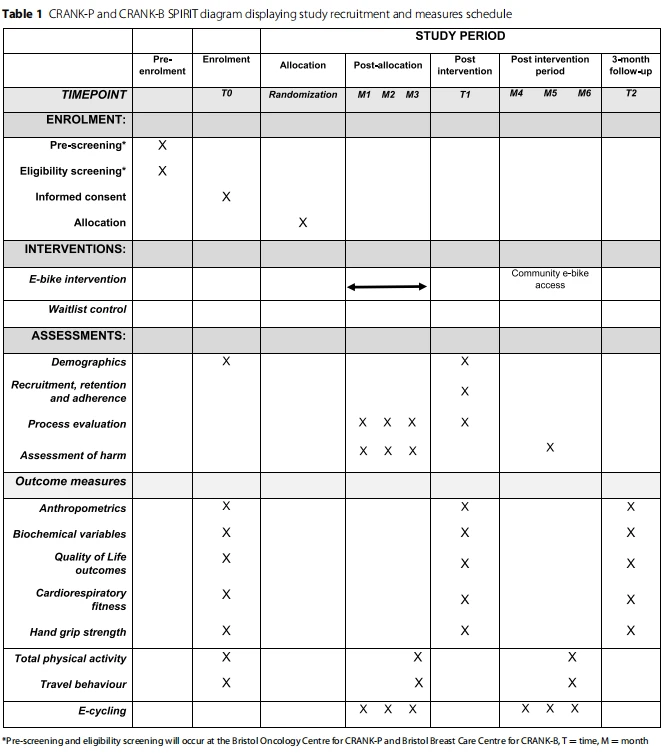
The proposed trials are single-centre, stratified, parallel, two-arm pilot randomised control trials, whereby individuals with PCa (CRANK-P) or BC (CRANK-B) will be randomly assigned to either an e-cycling intervention or standard-care waitlist control. Forty individuals will be recruited for each trial and randomised in a 1:1 allocation ratio to the two study arms. The trials will be conducted in the city of Bristol, England. Recruitment began in June 2022. Measures will be collected predominantly at baseline (time 0 (T0)), immediately following the intervention period (T1) and at 3-month follow-up (T2). In addition, data will be collected in the first week of the e-cycling intervention and follow-up period (PA and travel behaviour) and throughout the intervention and follow-up period (e-cycling time and distance). Figure 1 shows the study flow diagram for the two trials. Reporting of this protocol is according to the SPIRIT checklist (Additional file 1). CRANK-P has been approved by the NHS Health Research Authority Dulwich Research Ethics Committee (REC: 22/LO/0036), and CRANK-B has been approved by the Nottingham Research Ethics Committee (REC: 22/ EM/0010). Both trials are sponsored by the University of Bristol. Any amendments to the protocol will be authorised by the sponsor and submitted to the appropriate REC and HRA for approval.
Recruitment
The two trials will use different recruitment pathways. These are detailed below.
CRANK-P
Men who are diagnosed with PCa residing in the Bristol area and who attend the Bristol Urology Institute, North Bristol NHS trust, will be invited to participate. The study will aim to recruit 20 individuals at the start of their cancer journey (i.e. soon after receiving a PCa diagnosis) and 20 individuals who have completed their primary cancer treatment (i.e. after surgery, systemic therapy or radiation therapy) to determine the most appropriate time to recruit individuals during treatment. Patients will be highlighted as potentially eligible at the weekly multidisciplinary team meeting where all patients with a cancer diagnosis are discussed.
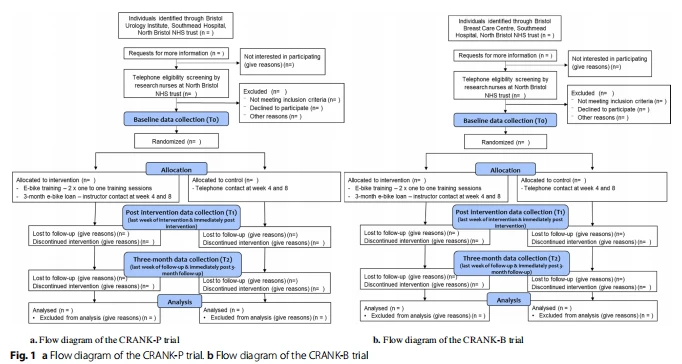
For individuals being recruited at diagnosis, initial contact will take place at their diagnosis appointment. At this appointment, patients are informed of their PCa diagnosis by their cancer nurse specialist (CNS). The research will be introduced to the patient at the end of the appointment by saying “We are conducting lifestyle research within the department, are you willing for a research nurse to call you to discuss this further?” This contact will take approximately 1 minute. If the patient says yes, they will be provided with an information sheet, and their contact details will be passed on to the urology research nurse team. Men will receive a second opportunity to be informed about the study when they see consultant members of the clinical team (urology/oncology) discuss their treatment options using the same approach method as above.
For individuals recruited at the end of their primary treatment, initial contact will take place at the patient’s post-intensive treatment appointment. At this appointment, patients meet with a CNS or their consultant to discuss their cancer and future treatment. The research will be introduced in the same manner as for those approached at diagnosis, and those who are willing to be contacted will be provided with an information sheet, and their contact details will be passed on to the urology research nurse team.
Individuals who later contact the department interested in participating in the study will have an opportunity to ask questions, an information sheet will be sent by email or in the post, and they will be asked whether they agree to be contacted by a member of the research nurse team after they have had time to read the information sheet.
The urology research nurses will contact individuals who have expressed an interest in participating to confirm eligibility. If eligibility is confirmed, the research nurses will pass on the individual’s contact details to the university research team. All individuals deemed eligible for the study at this point will be invited for baseline testing. Table 1 outlines the enrollment and assessment schedule for the two pilot RCTs.
CRANK‑B
Individuals who are diagnosed with BC residing in the Bristol area and who attend the Bristol Breast Care Centre, North Bristol NHS Trust, will be invited to participate. The study will aim to recruit individuals after their primary cancer treatment (i.e. following completion of surgery, systemic therapy and/or radiation therapy).
At the holistic needs assessment, which occurs after primary cancer treatment, the research will be introduced to the patient by the MacMillan key worker who will ask “We are conducting lifestyle research within the department, are you willing for a research nurse to call you to discuss this further?” If the patient says yes, they will be given a study information sheet, and their contact details will be passed on to the breast care research nurse team.
Individuals who later contact the department interested in participating in the study will have an opportunity to ask questions, an information sheet will be sent by email or in the post, and they will be asked whether they agree to be contacted by a member of the research nurse team after they have had time to read the information sheet.

The BC research nurses will contact individuals who have expressed an interest in participating to confirm eligibility. If eligibility is confirmed, the research nurses will pass on the individual's contact details to the university research team. All individuals deemed eligible for the study at this point will be invited for baseline testing.
The CNS (CRANK-P) and MacMillan key worker (CRANK-B) will keep a record of the number of patients attending the appointments, the number who are deemed potentially eligible and the number of potentially eligible patients who do not wish to be contacted to discuss the research. Individuals who are deemed eligible but who are not interested in participating will be invited to share their decision not to participate if they feel comfortable doing so with the clinical team. The number of individuals not wanting to be contacted and associated reasons, if provided, will be collated and passed on to the research team as a number, so that each refuser remains anonymous, and confidentiality is maintained.
Data protection
All data collected in these studies will be maintained and stored by the data protection regulations. All patient identifiable information (i.e. name, contact details, date of birth, home and work postcode) will be stored in a database separate from the database that holds anthropometric measures, results of blood tests, physiological measures and travel and PA data. Personal data stored on NHS, university or Life Cycle computers will be password protected, and only the study investigators or Life Cycle project administrator will have access to the passwords. Personal data on paper files will be stored in a locked filing cabinet within the School of Policy Studies at the University of Bristol or Life Cycle. All paper files from Life Cycle will be transferred to the University of Bristol. Data will be stored for 15 years.
Eligibility
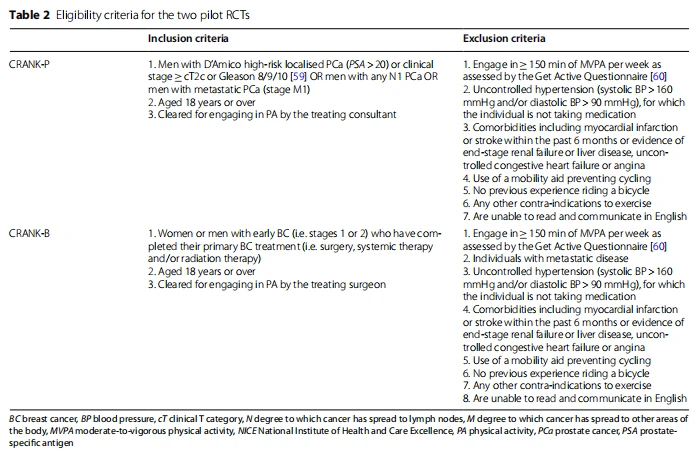
The eligibility criteria for the two pilot RCTs are outlined in Table 2.
Sample size
The study will aim to recruit and randomise 40 individuals for each pilot RCT. This sample size is based on recommendations for pilot studies which aim to provide an estimation of a standard deviation for use in the sample size calculation to inform a larger randomised controlled trial [61, 62], as well as the availability of e-bikes. There are no explicit targets regarding the number of individuals to be recruited or screened as we are investigating the feasibility of recruitment from the clinical setting. Based on recruitment rates in a similar population (individuals recovering from colorectal cancer) and recruitment occurring in a clinical setting, we anticipate a recruitment rate of approximately 20% [63]. Recruitment and screening will close when 20 participants have been randomised to each of the two study arms. Based on a previous pilot randomised controlled trial of e-cycling among individuals with type 2 diabetes mellitus, a retention rate of approximately 80% is anticipated [58].
Consent
Once participants have been identified as eligible to participate in the studies, they will be booked in for a baseline data collection visit (T0). At this visit, a member of the research team will outline the study procedures, as per the information sheet. Participants will be advised that the study is voluntary and that they have the right to withdraw at any time, without the need for explanation. After this, individuals who wish to participate will be asked to read, complete and sign a consent form, which will be countersigned by the member of the research team obtaining consent.
Allocation, randomisation and blinding
Randomisation will occur after consent is obtained and baseline data (T0) has been collected. For each pilot RCT, 40 individuals will be randomly assigned to either the e-cycling intervention or waitlist control in a 1:1 allocation ratio. For CRANK-P, individuals will be stratified based on cancer treatment received before randomisation. For CRANK-B, individuals will be stratified based on the stage of cancer treatment before randomisation. Permuted blocks of random size will be used. A random allocation sequence will be generated by an independent statistician using R v4.1.2, package block and (v1.5). The randomisation sequence will be accessible through a password-protected Excel file. The researcher will access the Excel file and allocate the participant to either condition in the order issued in the sequence. Researchers will be aware of the group allocation. Participants will be informed of the group allocation via telephone by a member of the research team. Blinding of intervention allocation will not be possible for any participant involved in the trial or the researchers.
Intervention and control groups
Intervention development and content
The development and content of the intervention are being prepared for publication (Bourne et al., The development of a theory and evidence-based intervention to increase physical activity in individuals with prostate cancer and breast cancer, the CRANK trials. Manuscript in preparation). Briefly, the intervention was developed by the MRC guidance for the development of complex interventions [64] and the Behaviour Change Wheel [65]. A programme theory, identifying the theoretical underpinnings of the intervention was developed using theory, evidence and patient and public involvement (PPI). After identifying the hypothesised mechanisms of change, intervention content was guided by the selection of specific behaviour change techniques (BCTs) using the 93-item behaviour change technique taxonomy (BCTTv1) [66]. A total of twenty-three BCTs were identified for inclusion.
The mode of intervention delivery was based on previous feasibility work examining the feasibility of an e-cycling intervention in adults with type 2 diabetes mellitus delivered by the same community organisation [67]. Once developed, the proposed intervention was presented to members of the PPI group consisting of cycling instructors, cancer patients and experts in PA behaviour change. Feedback was elicited through open discussion and in written form. Intervention content, including instructor manuals and participant workbooks, was adapted accordingly. The final intervention content and delivery modes are presented in Additional File 2 and described below.
【For more info:george.deng@wecistanche.com / WhatsApp:8613632399501】