How Polygala (Yuan Zhi) Supports The TCM Pattern Of “Kidney Failing To Store Zhi” In Early‑Morning Awakening Insomni
Jul 08, 2026
Exploring "Calming the Kidney Zhi (Willpower/Mental Root)":
(with formulation ideas featuring high‑active Cistanche tubulosa extract)
Abstract
In Traditional Chinese Medicine (TCM), insomnia (Bu Mei) can be classified through a "five spirits" framework that links key sleep symptoms to different organ systems. The pattern called "Kidney failing to store Zhi" insomnia is characterized most directly by early‑morning awakening-falling asleep but waking too early and struggling to return to sleep. In this pattern, the affected system is the Kidney, and the core mechanism is that the Zhi (志)-often described as one's inner steadiness, willpower, and "mental root"-is not settled in its proper residence. The treatment principle is therefore "calm and stabilize Kidney Zhi" (An Shen Zhi).
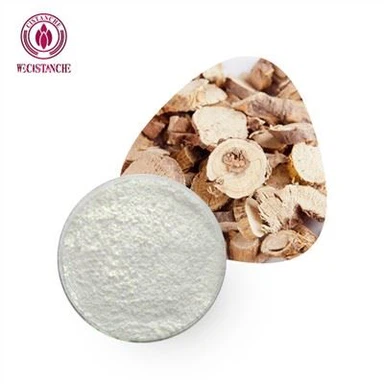
Polygala root (Yuan Zhi) was first recorded in Shen Nong Ben Cao Jing as an herb that can "strengthen Zhi and increase vitality." Across later classical texts, physicians repeatedly described Yuan Zhi as having the ability to "calm Kidney Zhi." Clinically, Yuan Zhi is frequently paired with Poria / Poria with root (Fu Ling / Fu Shen), prepared Rehmannia (Shu Di Huang), Alpinia oxyphylla (Yi Zhi Ren), and fried Ziziphus seed (Chao Suan Zao Ren). Classical formulas such as Huan Shao Dan, Kong Sheng Zhen Zhong Dan, and Qi Fu Yin are also used to "calm Kidney Zhi" in this insomnia pattern.
Modern research (mainly preclinical) suggests that the supportive mechanisms of Yuan Zhi in sleep‑related models may involve modulating neuroinflammation, reducing oxidative stress, and balancing neurotransmitters such as 5‑HT (serotonin), GABA, and glutamate.
Keywords: TCM five‑spirits insomnia typing; Yuan Zhi (Polygala); "Kidney failing to store Zhi" insomnia; calming Kidney Zhi; syndrome‑based treatment, TCM herb for early morning awakening, TCM herb for light sleep, TCM herb for restless sleep


1. What is "insomnia" in TCM-and why symptom‑based pattern typing matters
The term Bu Mei (insomnia) appears early in classical literature and broadly refers to a chronic inability to obtain normal sleep. In the TCM tradition, many mechanisms have been proposed, such as:
Disharmony of Ying and Wei (nutritive and defensive aspects), leading to poor day‑night regulation.
"Stomach disharmony causes restless sleep", emphasizing that digestive imbalance can block the body's ability to transition into deep rest.
The five spirits not settling into the five organs, a classical framework stating that healthy sleep requires the "spirits" to return to their residences:
Shen (mind) → Heart
Hun (ethereal soul) → Liver
Yi (thought/intellect) → Spleen
Po (corporeal soul) → Lung
Zhi (will/inner root) → Kidney
Based on this logic, a symptom‑focused method was proposed: five major "direct symptom clusters" correspond to five organ‑spirit patterns. Among them, early‑morning awakening is closely associated with the Kidney‑Zhi axis, forming the pattern: "Kidney failing to store Zhi" insomnia.
Plain‑English bridge for Western readers:
Instead of treating "insomnia" as one single disease, TCM often treats it as different functional patterns. The same symptom (poor sleep) may have different roots (digestion, stress response, aging‑related depletion, etc.), so the herbal strategy changes accordingly.
SEO: TCM herb for insomnia, TCM herb for waking up at 4am, TCM herb for early morning awakening

2. Etiology & pathogenesis of "Kidney failing to store Zhi" insomnia
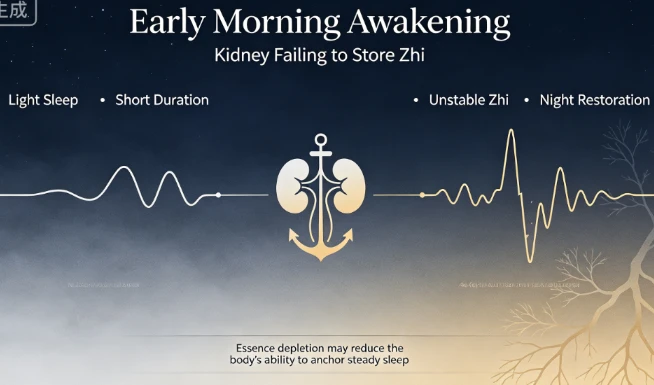
Classical theory states: "The Kidney stores essence (Jing), and essence houses Zhi." When Kidney essence is sufficient, the Zhi is nourished and settled; when essence is weakened (often seen with aging, chronic depletion, long‑term illness, or constitutional weakness), the Zhi loses stability-sleep becomes lighter, shorter, and easier to break.
From this viewpoint, the pattern often involves one or more of the following functional changes:
Essence depletion → reduced ability to "anchor" mental steadiness at night
Kidney Yin‑Yang imbalance → poor internal regulation of restorative processes
Failure to "store" → waking too early, sleep that cannot be sustained
A classical description highlights a common observation: younger adults with stronger Yin/essence tend to sleep deeper and longer, whereas older adults with declining reserves may sleep more lightly and wake earlier.
SEO: TCM herb for light sleep, TCM herb for short sleep duration, TCM herb for early waking


Visit The Listing Of Cistanche For Anti-aging
Supportive Service Of Wecistanche-For more details about cooperation
Email:wallence.suen@wecistanche.com
3. The tradition of Yuan Zhi (Polygala) as an herb that "calms Kidney Zhi"
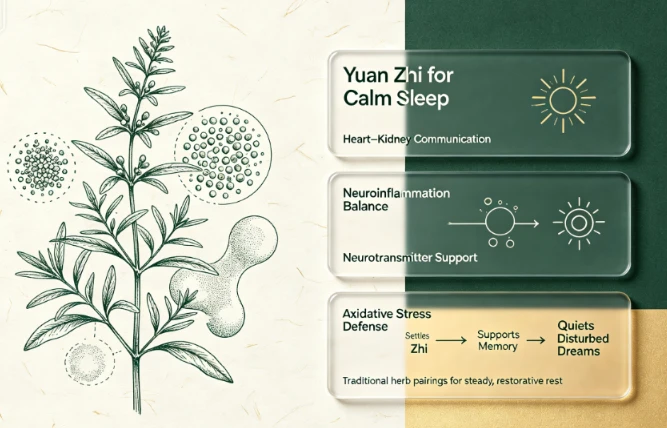
Yuan Zhi is traditionally said to enter the Heart and Kidney channels. In Shen Nong Ben Cao Jing, it is described as supporting memory, clarity, and "strengthening Zhi." Later materia medica texts repeatedly emphasize that Yuan Zhi:
Connects Heart and Kidney (a key TCM relationship for calm sleep)
Calms the spirit while also supporting the "root" (Kidney aspect)
Is often used for forgetfulness, dream‑disturbed sleep, and unsettled rest in appropriate patterns
Important processing note (traditional): Some classical texts advise using properly processed Yuan Zhi and removing the "core" to reduce unwanted heaviness or discomfort.
SEO: TCM herb for forgetfulness, TCM herb for dream disturbed sleep, TCM herb for early morning awakening
4. Modern research lens (mechanism‑style explanation for Western audiences)
Modern studies (again, many are animal or cellular models) suggest that Yuan Zhi and its constituents may support sleep‑related physiology by influencing:
Neuroinflammation (over‑activation of glia and inflammatory mediators can worsen sleep quality)
Oxidative stress and mitochondrial signaling (stress pathways can disrupt restorative sleep)
Neurotransmitter balance, including serotonin (5‑HT), GABA, and glutamate
This "multi‑pathway" framing is often easier for Western readers: insomnia is rarely a single‑switch problem; it often involves stress chemistry, inflammatory tone, and neurotransmission.
5. Clinical pairing ideas in TCM: classic herb pairs that support "calming Kidney Zhi"
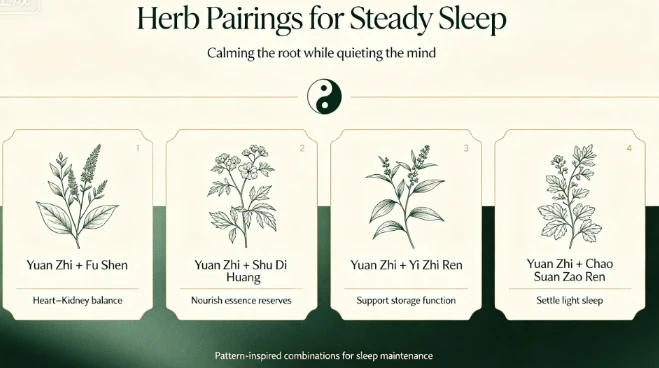
Below are traditional pairing logics described in classical and modern TCM usage for this pattern:
5.1 Yuan Zhi + Fu Ling / Fu Shen (Poria / Poria with root)
A classic pairing from traditional formulas to quiet the mind and stabilize the root-often described as helping the Heart‑Kidney axis "communicate," making it easier for the system to downshift at night.
5.2 Yuan Zhi + Shu Di Huang (Prepared Rehmannia)
Used to nourish essence and fluids so that the "residence" of Zhi is better supported-an approach frequently considered in aging‑related sleep shortening.
5.3 Yuan Zhi + Yi Zhi Ren (Alpinia oxyphylla)
A pairing aimed at supporting Kidney Qi's "storing" function-helping the system hold steady rather than "leaking" into early waking.
5.4 Yuan Zhi + Chao Suan Zao Ren (Fried Ziziphus seed)
Often used to nourish and calm, supporting a smoother transition into sleep and reducing overly light, easily interrupted sleep.

6. Classical formulas often referenced for this approach
6.1 Huan Shao Dan
A multi‑herb strategy emphasizing Spleen + Kidney support and "settling Zhi," frequently discussed in contexts where digestion/assimilation (post‑natal support) helps rebuild the deeper reserves (pre‑natal foundation).
6.2 Kong Sheng Zhen Zhong Dan
A compact formula traditionally used for forgetfulness and mental restlessness, combining "Heart‑Kidney communication" and stabilizing substances.
6.3 Qi Fu Yin
A restorative approach combining Qi, blood, and essence support with calming herbs-often discussed in deficiency‑type insomnia with aging‑like features.

7. Case example
Patient: Male, 68, retired.
First visit date: June 29, 2024.
Main complaint: Early‑morning awakening and waking easily with noise for more than 3 years. Typically wakes around 4:00 a.m., then struggles to fall back asleep. Also reports low back and knee soreness, dizziness/headache, abdominal fullness, occasional stomach pain, low appetite, fatigue, and loose stools. Tongue and pulse signs suggested a Spleen‑Kidney deficiency pattern.
Medication history: Regular use of zolpidem tartrate 10 mg at bedtime for over 3 months.
TCM principle: Support Spleen and Kidney; calm the spirit and stabilize Zhi.
Herbal approach: Centered on processed Yuan Zhi combined with essence‑ and digestion‑supporting herbs plus calming seeds.
Follow‑up (July 6, 2024): Sleep improved by ~3 hours; waking time shifted later to ~7:00 a.m. Continued the same approach.
Follow‑up (July 13, 2024): Further improvement; waking time ~9:00 a.m.; noise‑triggered waking reduced. Patient wished to discontinue zolpidem; advised to taper gradually.
Clinical interpretation: With age and long‑term digestive weakness, the body's ability to generate and store deeper reserves declined; this left the "Zhi" insufficiently anchored at night, presenting as early waking. The formula emphasized calming Zhi with Yuan Zhi, while rebuilding essence and supporting digestion so the system could "hold" sleep more steadily.
Why add Cistanche (Rou Cong Rong / Cistanche tubulosa) to a "calm‑the‑root" concept?
In TCM language, Cistanche is strongly associated with Kidney support and restorative tonification. For Western product development, it can be positioned as a desert botanical used traditionally for healthy aging and resilience. Your site also emphasizes broad applications (e.g., anti‑aging positioning) and manufacturing/quality strengths.(xjcistanche.com)
Suggested "Cistanche‑centered" concept formulas
A) Night Resilience / Early‑Morning Awakening Support
Core idea: supports deeper overnight recovery; helps you stay asleep longer
TCM story: "support Kidney 'storage' + calm the mind"
Ingredient logic (TCM‑inspired):
Cistanche tubulosa extract (high‑active) as the "Kidney root" base
Yuan Zhi as the Heart‑Kidney connector for calming the Zhi
Suan Zao Ren as gentle nighttime settling
SEO: TCM herb for waking up too early, TCM herb for early morning awakening, TCM herb for light sleeper
B) Healthy Aging + Cognitive Clarity (Daytime)
Core idea: aging‑related "short sleep" often comes with daytime fog; support both angles
Your site positions Cistanche for anti‑aging style narratives and highlights standardized supply & manufacturing.(xjcistanche.com)
C) Stress‑Inflammation Balance (systemic)
Core idea: modern readers relate to "inflammation + stress load" affecting sleep
Your factory content discusses "moderate anti‑inflammation" positioning and industrial chain strengths.(xjcistanche.com)
as a Cistanche tubulosa extract factory
Integrated supply chain and large‑scale planting base in Xinjiang (Hotan area) with standardized cultivation scale described on your site.(xjcistanche.com)
GMP‑style production environment and filtration technologies mentioned (ultra/nano‑filtration).(xjcistanche.com)
Multiple certifications and third‑party testing messaging; plus "custom formulation support" messaging appears on your site.(xjcistanche.com)
"High‑active / high‑potency standardized Cistanche tubulosa extract"
"Designed for brands that need consistent marker compounds batch‑to‑batch"
"Suitable for supplements, functional foods, and skincare-bulk supply + formulation support"(xjcistanche.com)