The Battle Of Cistanche Deserticola: Can Xinjiang Athletes Break Through The Encirclement?
Apr 25, 2025
Overview of the Cistanche deserticola family
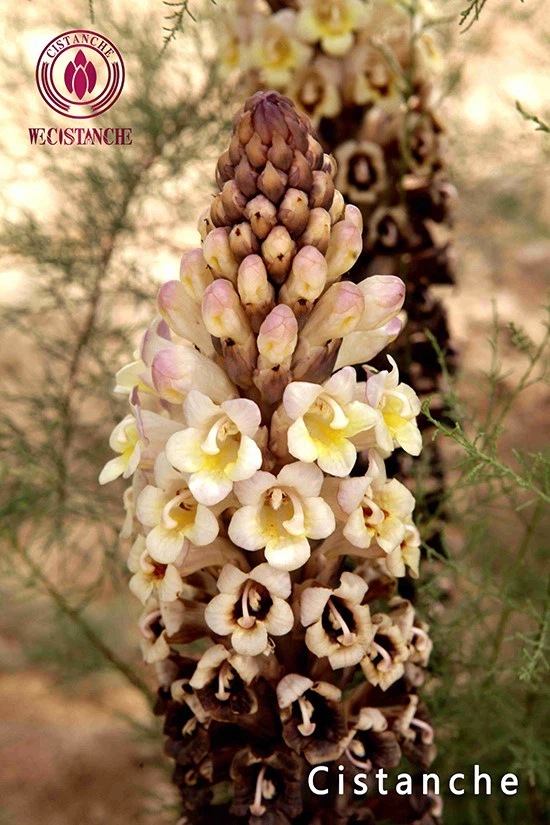
Cistanche deserticola, known as the "desert ginseng", occupies an important position in the field of traditional Chinese medicine and is one of the most frequently used tonics in kidney tonifying and yang strengthening prescriptions throughout history. Their family is large and diverse. In China, common ones include Xinjiang Guanhua Cistanche, Inner Mongolia Desert Cistanche, Salt grown Cistanche, and Sand Cistanche. Different types of Cistanche deserticola have differences in appearance, growth environment, composition, and efficacy. Next, we will enter the world of Cistanche deserticola and focus on comparing the differences between Xinjiang Cistanche deserticola and other regions of Cistanche deserticola.
benefits of cistanche tubulosa

Cistanche deserticola Y.C.Ma
The appearance is significantly different.
When we put Xinjiang Cistanche deserticola (mainly Cistanche tubulosa) together with other common desert Cistanche deserticola from other production areas, the most obvious difference is in appearance. In terms of texture, Xinjiang Guanhua Cistanche deserticola has a very hard texture after drying, almost unable to be pinched by hand, and medicinal merchants vividly call it "Hard Big Yun"; The desert Cistanche deserticola in Inner Mongolia and other places, due to its high sugar content, is still relatively soft even when dried, and is also called "Oil Cistanche deserticola" or "Soft Big Cloud". You can feel its flexibility by gently applying force in your hand.
In terms of cross-section, there are also significant differences between the two. The sectional color of Cistanche deserticola is gray-brown, covered with brown point-like vascular bundles, and the distribution of these points is irregular, some of which are accompanied by small cracks; The cut surface of desert Cistanche deserticola is brown, with many light brown dots distributed on it. They are arranged in a regular pattern, forming wavy rings, or arranged in a strip-like hash, like an orderly queue.
From an overall morphology perspective, the Xinjiang Guanhua Cistanche deserticola often presents irregular shapes such as flattened cylindrical, flattened spindle-shaped, flattened oval-shaped, etc. The surface is densely covered with fleshy scales arranged in a slightly tiled pattern, with dense scales in the upper part and relatively sparse scales in the lower part. The tips of the scales have mostly fallen off; Desert Cistanche generally has a flattened cylindrical shape that is slightly curved, and its surface is also densely covered with fleshy scales. However, in comparison, the arrangement and morphology of its scales are slightly different from those of Cistanche tubulosa. In terms of color, Cistanche deserticola is usually reddish brown, grayish yellow-brown, or brownish brown, with a relatively dark color and often twisted; The desert Cistanche deserticola is mainly gray-brown or brown-brown.

Main Chemical Constituents of Cistanche deserticola
Composition determines strength
The value of Cistanche deserticola largely depends on its internal components, and there are differences in the composition of Cistanche deserticola from different regions. Xinjiang Guanhua Cistanche deserticola, the active ingredients in its fresh wood are mainly echinacoside and verbascoside (ergosterol glycoside), which generally contain 1.5-4 grams per 100 grams. The higher the year, the higher the content of these two components, but it will decrease with the loss of water. These two components play important roles in regulating immunity, antioxidation, and other aspects. Pinecone glycoside can enhance the activity of macrophages, thereby improving the immune function of the body; Mariascoside has significant antioxidant properties and can effectively eliminate free radicals in the body, slowing down the aging process of cells.
The desert Cistanche deserticola in Inner Mongolia and other areas is also very nutritious, rich in 17 amino acids such as valine, lysine, methionine, arginine, etc. The total amino acid content in every 100 grams of dry sample is over 4.8%, and the crude sugar content is over 2%. These amino acids are the basic units that make up proteins and are crucial for physiological processes such as growth, development, and metabolism in the human body. They can provide necessary nutritional support for the body and maintain the normal functioning of various bodily functions.

Effects of Cistanche-Improve kidney function
From the comparison of ingredients, Xinjiang Cistanche has certain advantages in the content of echinacoside and verbascoside, while desert Cistanche has excellent amino acid and crude sugar content. They each play different roles in human health with their unique ingredients.
Subtle differences in efficacy
In traditional Chinese medicine, Cistanche deserticola has always been regarded as a good medicine for tonifying the kidneys, strengthening the yang, moistening the intestines, and promoting bowel movements. Cistanche deserticola from different regions has both similarities and subtle differences in efficacy.
Xinjiang Guanhua Cistanche deserticola has outstanding performance in kidney tonifying, nourishing essence, anti-aging, anti-Alzheimer's disease and Parkinson's disease, liver protection, etc., thanks to its high content of echinacoside and verbascoside. Research has shown that pineal chrysanthemum glycoside can promote the secretion of male hormones and significantly improve symptoms such as impotence, premature ejaculation, soreness, weakness of the waist and knees caused by kidney yang deficiency, and insufficient blood and essence. In an experiment targeting aging model mice, mice treated with extracts of Cistanche deserticola showed a significant increase in antioxidant enzyme activity and a decrease in malondialdehyde content, fully demonstrating the powerful anti-aging effect of Cistanche deserticola.
Due to its high content of oligosaccharides, mannitol, and betaine, Inner Mongolia desert Cistanche deserticola has significant effects in moisturizing the intestines and promoting bowel movements. Oligosaccharides can increase the number of beneficial bacteria in the intestine, regulate the balance of intestinal microbiota, and promote intestinal peristalsis; Mannitol has high permeability and can absorb water from the intestines, soften stool, and alleviate constipation symptoms. Many people who suffer from constipation can feel that their bowel movements become smoother after consuming desert Cistanche deserticola.
The bond between growth environment and quality
The quality of Cistanche deserticola is closely related to its growth environment. Xinjiang, this vast and magical land, has unique climate and soil conditions, providing a unique environment for the growth of Cistanche deserticola. Most of Xinjiang has a temperate continental arid climate, with scarce precipitation and a dry climate. The annual precipitation is mostly below 200 mm, and even less than 50 mm in Turpan Basin and other places. But the sunshine hours here are long, with an annual sunshine duration of 2550-3500 hours. Adequate light allows Cistanche deserticola to fully carry out photosynthesis and synthesize more effective ingredients. Moreover, the temperature difference between day and night is extremely large, reaching 10-15 ℃. The large temperature difference between day and night is conducive to the accumulation of nutrients in the body of Cistanche deserticola, just like how fruits in Xinjiang are particularly sweet due to the large temperature difference between day and night. Cistanche deserticola has also accumulated rich medicinal ingredients in such an environment.
In terms of soil, Xinjiang has a large area of aeolian sandy soil, accounting for more than 22% of the total soil area in Xinjiang, which is mainly distributed in the Taklimakan Desert in the Tarim Basin and the edge of the Gurbantunggut Desert in the Junggar Basin. The sandy soil has loose soil, high porosity, and good air permeability, which allows the root system of Cistanche deserticola to grow and breathe freely in it. At the same time, the pH value of the soil is between 7.5 and 8.5, which is weakly alkaline and very suitable for the growth of Cistanche deserticola. The desert edge of the Hetian area, nourished by snow water in the Kunlun Mountains, is one of the high-quality production areas of Xinjiang Cistanche. The soil, temperature, humidity, and other conditions here work together to create high-quality Xinjiang Cistanche.

Cistanche deserticola
The climate in Inner Mongolia and other places is different from that in Xinjiang. Taking Alxa League as an example, it is dry and cold in winter, and hot in summer, with scarce rainfall, frequent sandstorms, and annual precipitation of less than 100 millimeters in most areas. The evaporation is strong, and it belongs to a typical desert or semi-desert climate. Although it is also dry and lacks rainfall, there are differences in the specific values of light exposure time and diurnal temperature difference compared to Xinjiang. In terms of soil, it is mainly sandy soil, brown calcareous soil, or gray desert soil, with a pH value of 7.5-9.5, organic matter content of 3.2-28 grams/kilogram, thin soil layer, light soil quality, and low degree of maturity. This environment has enabled the Inner Mongolia desert Cistanche deserticola to develop its unique quality characteristics during its growth process, with thicker meat and greater oiliness.
Different growth environments, like different growth cradles, endow Xinjiang Cistanche and other regions of Cistanche with unique qualities, as well as their respective strengths in medicinal value and efficacy.
Market Trends: Price and Popularity
In the traditional Chinese medicine market, the price, popularity, and market share of Xinjiang Cistanche and Cistanche from other regions vary. Xinjiang Cistanche has a significant market share due to its production advantage. Data shows that China's supply accounts for 60% of the global total production, with Xinjiang accounting for 70% of the domestic production, making it the largest raw material base for Cistanche deserticola in China. Its price is relatively affordable, taking household hard goods as an example, the price per kilogram is around 20-25 yuan, which makes it quite popular in the general consumer market. The reason for the large-scale production of Cistanche deserticola in Xinjiang is partly due to the active promotion of artificial planting technology in the local area. Currently, the area of artificially inoculated Cistanche deserticola in Xinjiang is about 1 million mu, forming multiple concentrated contiguous production areas; On the other hand, the vast desert areas in Xinjiang provide ample land resources for the growth of Cistanche deserticola.
Due to its long growth cycle and mostly wild or simulated wild cultivation, the yield of the Inner Mongolia desert Cistanche is relatively low. 95% of the Cistanche on the market is produced in Xinjiang, and the overall yield of Alashan Cistanche is less than one-tenth of that in Xinjiang. This also makes its price relatively high, ranging from 80-150 yuan per kilogram, with wild Cistanche being particularly expensive. However, it is highly favored in the high-end market and among consumers who value quality due to its excellent quality and unique taste. Many consumers who pursue high-quality tonics prefer to choose the Inner Mongolia desert Cistanche deserticola, believing that its medicinal value is higher and its nourishing effect is better.
In terms of market share, Xinjiang Cistanche has a dominant position in the entire Cistanche market due to its large production and low price, and is widely used in various fields such as health products and pharmaceuticals; Inner Mongolia Desert Cistanche has a stable market share in the high-end market and specific consumer groups due to its quality advantage. For example, some high-end tonic brands choose Inner Mongolia Desert Cistanche as raw material to enhance the quality and grade of their products.

cistanche supplement near me
Click here to view Cistanche Enhance Immunity products
【Ask for more】 Email:cindy.xue@wecistanche.com / Whats App: 0086 18599088692 / Wechat: 18599088692
How to choose high-quality Cistanche deserticola
Facing the dazzling array of Cistanche products on the market, mastering the skills of selecting high-quality Cistanche is crucial. From the appearance, high-quality Cistanche deserticola should have a complete appearance, uniform color, natural brown or yellow-brown color, and no obvious spots, mold, or damage. If it is Cistanche deserticola in Xinjiang, it should be selected with a hard texture, a gray-brown or black-brown cross-section, evenly distributed points like vascular bundles, and no obvious cracks; If it is Inner Mongolia desert Cistanche deserticola, the quality is better with a soft and elastic texture, a brown cross-section, and clear light brown wavy ring patterns.
Smelling is also a crucial step, high-quality Cistanche deserticola will emit a faint fragrance, which is its natural scent. If you smell pungent, putrid, or other unpleasant odors, it is likely that the product has been stored for too long, improperly stored, or has quality issues. Do not purchase such Cistanche deserticola.
Touching and feeling the texture of Cistanche deserticola can also help us determine its quality. High-quality Cistanche deserticola has a tough texture and a certain degree of elasticity. When pressed with fingers, it will not easily deform or break; If the texture is too soft, it may have deteriorated due to moisture; If it is too hard and brittle, it may be due to excessive drying and loss of nutrients.
In addition, choosing legitimate channels to purchase Cistanche deserticola cannot be ignored. Try to choose reputable and legitimate traditional Chinese medicine stores, supermarkets, or brand websites. Products from these channels usually have stricter quality control, which can reduce the risk of buying counterfeit and inferior products. If you still have doubts about the quality of Cistanche deserticola, you may want to request relevant testing reports from the merchant when purchasing to ensure its quality and safety.
The correct way to open Cistanche deserticola
There are various ways to consume Cistanche deserticola, each with its unique flavor and efficacy. Brewing tea is the most convenient way. Take 3-5 grams of dried Cistanche deserticola slices, put them in a cup, and brew them with hot water at around 80 ℃. After soaking for 5-10 minutes, they can be consumed. It can be brewed repeatedly until the taste becomes lighter. A cup of Cistanche deserticola tea can not only enjoy its unique fragrance but also have a health-promoting effect in daily consumption. It is suitable for busy office workers to drink anytime during work breaks.
Soaking in wine is also a common way of eating. Wash 30g of Cistanche deserticola and slice it into 1000ml of high Baijiu. Soak it in a sealed container for 7-15 days. When the color of the liquor gradually turns brown and yellow, you can drink it. Cistanche deserticola wine has the effect of tonifying the kidneys and strengthening the yang, but it should be consumed in moderation, 15-30 milliliters per day is sufficient. Excessive consumption may cause a burden on the body.
Adding Cistanche deserticola to a soup can make the soup more nutritious and delicious. For example, when stewing chicken, duck, and pork ribs, add 10 grams of sliced Cistanche deserticola 30 minutes before the ceasefire. The nutrients of Cistanche deserticola will blend into the soup, making the taste more mellow and nourishing to the body.
Although Cistanche deserticola has many benefits, there are also some precautions when consuming it. People with yin deficiency and excessive fire should not consume it. Cistanche deserticola is warm and has the effect of nourishing the kidneys and promoting yang. After consuming it, people with yin deficiency and excessive fire may worsen their symptoms of dryness and heat in the body, leading to increased symptoms such as restlessness of the five hearts, dry mouth and tongue, insomnia, and frequent dreams; People with loose stools and diarrhea should also avoid consuming it, as Cistanche deserticola has the function of moistening the intestines and promoting bowel movements, which may worsen the symptoms of diarrhea; It is also not suitable for patients with constipation caused by heat stagnation. Cistanche deserticola mainly targets constipation caused by yang deficiency and insufficient essence and blood. It not only has no therapeutic effect on constipation caused by heat stagnation but may even worsen the condition. Pregnant and lactating women, due to their special physical condition, should also consume Cistanche deserticola with caution to avoid adverse effects on the fetus or infant.
Summary: Who is the King

cistanche benefits for men
After multiple comparisons, Xinjiang Cistanche deserticola and other regions of Cistanche deserticola have their shining points. Xinjiang Cistanche has a large production and affordable price. It is particularly prominent in the content of echinacoside and verbascoside, and has significant effects in kidney tonifying and anti-aging; Although the desert Cistanche deserticola in Inner Mongolia and other regions has a low yield and high price, it has thick meat, high oil content, and is rich in nutrients such as amino acids. It has excellent moisturizing and laxative effects.
So, it is difficult to simply judge who is better between Xinjiang Cistanche and other regions of Cistanche. When choosing Cistanche deserticola, we need to consider our own needs, budget, and pursuit of quality comprehensively. Should we pursue high cost-effectiveness or focus more on quality and traditional authenticity; Whether it is necessary to enhance immunity, resist aging, or solve constipation problems, these are the factors we need to consider when selecting Cistanche deserticola. I hope everyone can choose the most suitable Cistanche deserticola according to their actual situation, and let this "desert ginseng" help us with our health.