The Doctor Tells You: Eating This Way Can Cure Constipation!
Sep 11, 2023
1. What foods are most likely to cause constipation?
1. Are there many types of constipation?
Constipation is divided into three categories:
The first type is organic constipation, which is mainly caused by diseases of the intestines and anus. You can do some examinations, such as colonoscopy, defecation imaging, or lower gastrointestinal tract imaging, to determine whether the constipation is caused by colon cancer, rectal cancer, and other diseases. caused;
The second type is caused by diseases other than the digestive system, mainly chronic diseases. For example, when hypothyroidism occurs, many people will suffer from constipation, as well as diabetes. If the medical history is relatively long, it will also affect the function of the gastrointestinal tract and cause constipation.
There is another category called functional constipation, which is the most common. Constipation without organic disease or other systemic chronic diseases is functional constipation, and it accounts for the highest proportion.

2. Is constipation caused by improper diet?
The first aspect is dietary factors, which are the most important. It can be summed up into two major aspects, one is eating a lot of things you shouldn’t eat, and the other is eating fewer things you should eat. Comparing these two aspects, the most important thing is eating something you shouldn't eat.
The second aspect is spiritual factors. If a person is usually nervous and very tired from work, this state can also cause constipation. When work is stressful, the sympathetic nerves will be excited, inhibiting the peristalsis of the gastrointestinal tract, especially causing intestinal transmission dysfunction, which will cause constipation. Of course, sometimes if you have a very stressful work schedule and forget to defecate, it can also cause constipation.
The third aspect is related to exercise and daily activities. If you stay in the office all day and lack appropriate exercise, it will also cause the weakening of gastrointestinal peristalsis function and cause constipation.
The main causes of constipation are these three aspects. In addition, some bad living habits can also induce constipation, such as excessive drinking and long-term drinking.
3. Is the formation of balls in the stool related to excessive heat?
Eating hot food can indeed cause constipation. Eat spicy and dry-fried foods such as fried peanuts, fried melon seeds, and fried dried fruits; as well as fried and barbecued foods. These things that can cause internal heat are particularly likely to induce constipation. The main manifestation of this type of constipation is dry stool, which may be lumpy or in the form of small balls, like sheep dung eggs. For this group of people, things that irritate are things that should not be eaten.
4. Is the cause of constipation related to the amount of food eaten?
If you have a spicy taste and like to eat chili, pepper, mustard, etc., it may easily cause constipation. But it doesn’t mean that you will become constipated just by eating these things. It mainly depends on the amount you eat, as well as the frequency and time of eating. Eating spicy food occasionally will not cause constipation, but eating a large amount or eating very frequently will cause constipation. Very prone to constipation.

5. What are the main symptoms of constipation?
One of the main manifestations of constipation is a decrease in the frequency of bowel movements. For example, less than two bowel movements within a week, so this condition is also called constipation. There is often no urge to defecate, the stool is shapeless, it is very laborious to defecate, it takes a long time to defecate, there is a feeling of incomplete defecation, and it persists after defecation, and the stool sticks to the toilet and cannot be flushed cleanly by flushing the toilet. This is stickiness. The main manifestation of greasy constipation. It is a special type of constipation that was rarely seen in the past. Nowadays, there are more and more patients with such constipation. It causes patients as much pain as dry constipation. Sticky constipation is mainly caused by a diet that is too high in protein and fat, lacks fiber, and lacks proper exercise.
2. What can you eat to cure constipation?
1. Can I always rely on taking medicine to relieve constipation?
In my clinical work, I encountered many patients with stubborn constipation who took many types of laxatives and even laxatives, including Chinese medicine and Western medicine. Often, the effect is better when they first take a certain medicine, and it lasts for a few days, two or three days. It was effective for a week or even a month, but after a month or two, the medicine became ineffective. I changed to another laxative. The same situation happened. It was still effective when I first took it, but it was ineffective after taking it for a while. In this case, there is often no dietary adjustment and no fundamental solution to the problem, so constipation is difficult to cure. Many patients even end up taking no laxatives and have no choice but to seek help from a surgeon. The surgeon may find out the cause of the organic disease and perform some surgical corrections, such as slow transit constipation (Editor's note: Constipation caused by colonic transit dysfunction leading to slow transit of food in the intestine), which is a problem of the entire colon and may require A total colon resection was performed. I especially don’t want patients to have such an outcome, so I must pay great attention to dietary adjustments. Dietary regulation is the basis and foundation for treating constipation.
2. Can I just rely on diet adjustment without taking medicine?
When your constipation is severe, it would be better to take medication at the same time based on diet adjustment, because the effect of diet adjustment to treat constipation will be slower. Therefore, medication can be used in the early stage of treatment. After dietary adjustment takes effect, the medication can be gradually reduced. After some time, the medication can be stopped. Finally, long-term dietary adjustment can be used to maintain the curative effect.
3. Is diet effective for outlet obstruction-type constipation?
Outlet obstruction constipation is also called functional defecation disorder. When a normal person defecates, the rectum contracts, but the anus should be open. A recto-anal manometry examination revealed that some people with chronic constipation have contractions in the rectum and anus when defecating, or the anus cannot relax. Its occurrence is also closely related to diet. Chronic constipation usually occurs first, which gradually causes outlet obstruction. Primary outlet obstruction is rare.
The most basic treatment for patients with outlet obstruction constipation is dietary adjustment. On the other hand, there is a drug-free relief method for this kind of patient. For example, the most effective one is to perform "deep and slow breathing exercises" for five to ten minutes every day. During deep and slow breathing, the sympathetic nerve is suppressed and the vagus nerve is excited, which can promote Gastrointestinal motility. The key point is to breathe very deeply and slowly, that is, adjust your breathing to a frequency of 10 or 12 times per minute.
For constipation with outlet obstruction, the most important thing is to open your mouth and breathe deeply and slowly when you go to the bathroom to defecate. When you open your mouth and breathe deeply and slowly, the anus will naturally relax. After many repeated trainings, most patients with outlet obstruction will The situation will be alleviated.
4. Can eating more fiber promote defecation?
OK. Because cellulose is a macromolecular substance that cannot be absorbed by the gastrointestinal tract, it can keep the stool water and volume in the intestine, making the stool less likely to dry out. Secondly, it can also stimulate the intestinal mucosa to promote gastrointestinal motility. High-fiber foods are good for dry and hard constipation.
5. Which foods contain more fiber?
For dry and hard constipation, the best laxative food is sweet potato, which contains the most fiber. It can not only relieve constipation but also be beneficial in preventing many tumors, especially tumors in the gastrointestinal tract. In addition to sweet potatoes, other potatoes, potatoes, and yams are good for constipation. In addition, vegetables and fruits that contain more fiber are fruits and vegetables, such as celery. But there is one food that everyone needs to pay attention to - leeks. Although they contain a lot of fiber, leeks are hot. Some patients heard that eating leeks can cure constipation, but after eating a lot, the constipation not only did not relieve but became more and more serious. Therefore, it is not recommended that everyone eat leeks to relieve constipation.
6. Can probiotics improve constipation in all patients?
Probiotics can be beneficial for constipation, but they can only relieve constipation in some patients. Because everyone's intestinal flora is different, the intestinal flora is greatly affected by diet. If the patient's constipation happens to be related to the lack of certain probiotics, then it will be effective; if there is no lack of such probiotics, then it will be useless. Yogurt-containing probiotics will also be beneficial to some patients with constipation, but yogurt should be consumed in moderation. After all, it is also a high-protein food. If you drink it every day or even several cans of yogurt every day, it may be counterproductive.
7. Is drinking more water helpful?
Drinking too little water is likely to induce constipation or aggravate constipation. People who are dehydrated must drink enough water, but drinking too much water is not necessary, and it is unlikely to have more relief effect on constipation.

It is recommended that you do not wait until you are very thirsty before drinking water. When the symptom of thirst appears, it is obvious that you are already dehydrated. Regarding the amount of water consumed every day, different ages, heights and weights have different water needs. Generally speaking, you should not drink less than 1000 ml of water every day. Although the porridge or thin noodles in your diet already contain a certain amount of water, you still need to drink some more water.
3. How to eat to cure constipation?
1. Suggestions on treating constipation
The first category is recommended not to eat, which are foods that Chinese medicine says to avoid, such as spicy, dry-fried, fried, and barbecued foods, as well as hot foods, such as mutton and leeks.
The second category is to eat in a limited amount, such as high-protein and high-fat diets, mainly meat, chicken, duck, fish, pork, beef, etc., as well as eggs, milk, and dairy products, which should be eaten as little as possible.
The third is that the diet should be based on whole grains and eat more fruits and vegetables. Among cereals, you should eat more whole grains, such as brown rice, whole wheat, corn, sorghum, etc. However, it is not recommended to eat sticky corn or fruit corn, because the ingredients contained in traditional corn have changed a lot. Although it is delicious, it no longer has the positive impact of traditional whole grains on the body.
The fourth is to drink some health-preserving porridge. Millet porridge is the best and has a very good regulating effect on constipation. Mainly millet, and you can add some sweet potatoes and yams. For constipation with sticky stools, adding barley will be better, because barley strengthens the spleen and removes dampness. People who are prone to getting angry usually add red bean, which can clear away heat and diuresis, which is also very beneficial.
2. If I don’t eat meat, eggs, and milk, will I suffer from malnutrition?
This worry is completely unnecessary. Twenty or thirty years ago, meat, eggs, and milk were rarely included in the diet. At that time, as long as they could eat enough, no one suffered from malnutrition. There is a certain proportion of protein in grains, so there is no need to worry about malnutrition caused by eating grains but not meat, eggs, and milk. It is precisely because of eating too much meat, eggs, and milk that many diseases have appeared. In addition to constipation, many high blood pressure, hyperlipidemia, gout, cardiovascular and cerebrovascular diseases, and certain tumors are related to overnutrition and overweight.
3. Will a light diet be effective in the short term?
Relatively mild patients can relieve constipation with dietary therapy alone, while very severe cases may need to take medications fosome timeme. Diet therapy should be said to be the most basic and fundamental in the treatment of constipation, and it should be said that it is suitable for everyone.
4. How long should I eat a light diet?
This kind of dietary adjustment is long-term, even lifelong. After dietary adjustment or drug treatment, constipation is relieved. If you return to the original unhealthy eating habits, constipation will inevitably recur. Constipation patients who are very cooperative in their diet usually get long-term relief and may even avoid recurrence throughout their lives.
4. Can constipation be improved without taking medicine?
1. Can constipation be improved without taking medicine?
In addition to diet, there are also mental factors, including mental stress, busy work, etc. It is recommended to make appropriate adjustments to your busy life on the basis of dietary adjustment. To relieve mental stress, you can take 10 minutes every day to breathe deeply and slowly. It is best to think of one word when you inhale - quiet. At this time, your spirit should be completely calm; when you exhale, think of one word - relax. The muscles of the whole body are relaxed. If you can take time to do relaxation exercises every day, it will be of great help in relieving mental stress and anxiety, and is very beneficial to improving gastrointestinal function.
2. Can exercise improve constipation?
You can do aerobic exercise, relatively gentle exercise, such as walking and jogging, but do not do strenuous exercise, because strenuous exercise will inhibit the peristalsis of the gastrointestinal tract, which is very detrimental to constipation, and strenuous exercise is harmful to the joints of middle-aged and elderly people. It can also cause damage. It is best not to sweat or sweat slightly during exercise, but not to sweat heavily.
3. Do you have to develop the habit of going to the toilet every day?
You must develop very good bowel habits and defecate regularly every day. Most people defecate in the morning, and some people defecate before going to bed at night, which is fine. But it is best to time it, which can form a conditioned reflex. When the time comes, you will have the urge to defecate, and the gastrointestinal tract will also have propulsive peristalsis, which will also be helpful for defecation.
4. Any other good suggestions regarding constipation?
Many patients may have used traditional Chinese medicine, Chinese patent medicines, and health care products for laxatives. They are often effective at the beginning, but lose their effectiveness after a while. Many of these products contain laxatives, such as rhubarb, senna, aloe vera, etc., which are very common for long-term use to cause melanosis of the colon. Colon polyps are prone to occur on the basis of colonic melanosis. This is a benign tumor of the colon. If not removed, it may become cancerous over time. Therefore, whether it is Chinese medicine or Western medicine, do not rely on medicine to completely cure constipation. Dietary treatment is particularly important.
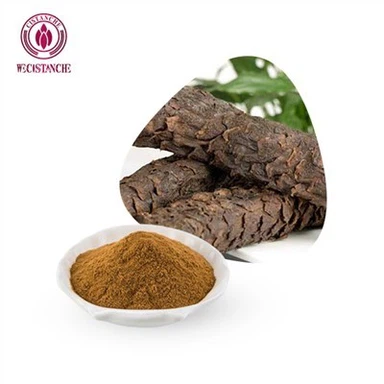
Natural Herbal Medicine For Relieving Constipation-Cistanche
Cistanche is a genus of parasitic plants that belongs to the family Orobanchaceae. These plants are known for their medicinal properties and have been used in Traditional Chinese Medicine (TCM) for centuries. Cistanche species are predominantly found in arid and desert regions of China, Mongolia, and other parts of Central Asia. Cistanche plants are characterized by their fleshy, yellowish stems and are highly valued for their potential health benefits. In TCM, Cistanche is believed to have tonic properties and is commonly used to nourish the kidney, enhance vitality, and support sexual function. It is also used to address issues related to aging, fatigue, and overall well-being. While Cistanche has a long history of use in traditional medicine, scientific research on its efficacy and safety is ongoing and limited. However, it is known to contain various bioactive compounds such as phenylethanoid glycosides, iridoids, lignans, and polysaccharides, which may contribute to its medicinal effects.

Wecistanche's cistanche powder, cistanche tablets, cistanche capsules, and other products are developed using desert cistanche as raw materials, all of which have a good effect on relieving constipation. The specific mechanism is as follows: Cistanche is believed to have potential benefits for relieving constipation based on its traditional use and certain compounds it contains. While scientific research specifically on Cistanche's effect on constipation is limited, it is thought to have multiple mechanisms that may contribute to its potential to relieve constipation. Laxative Effect: Cistanche has long been used in Traditional Chinese Medicine as a remedy for constipation. It is believed to have a mild laxative effect, which can help promote bowel movements and induce constipation. This effect may be attributed to various compounds found in Cistanche, such as phenylethanoid glycosides and polysaccharides. Moistening the Intestines: Based on traditional use, Cistanche is considered to have moisturizing properties, specifically targeting the Intestines. Promoting hydration and lubrication of the Intestines, it may help soften tools and facilitate easier passage, thereby relieving constipation. Anti-inflammatory Effect: Constipation can sometimes be associated with inflammation in the digestive tract. Cistanche contains certain compounds, including phenylethanoid glycosides and lignans, that are believed to have anti-inflammatory properties. By reducing inflammation in the intestines, it may help improve bowel movement regularity and relieve constipation.