The Way Of Life For Centenarians From Deep in The Desert - Cistanche Tubulosa
Aug 11, 2026
Laisu Village, located in Hotan, Xinjiang, is a world-renowned hometown of longevity. This small village is located on the southern edge of the Taklamakan Desert, with 610 households, including 7 centenarians and 16 over 90 years old. The elderly here like to drink a special medicinal tea - boiling water in a copper pot, adding Cistanche tubulosa parasitic on the roots of red willows in the desert, and adding some seasonings; it becomes a daily nourishing drink. They also love to eat hard glutinous rice balls, paired with sweet melons, raisins, walnuts, and drink Kunlun Mountain snow water. These seemingly simple lifestyle habits conceal profound wisdom about life.

Miracle of Life in the Deep Desert
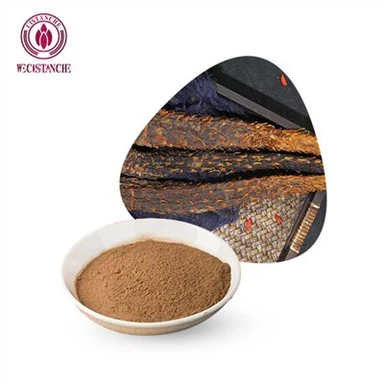
Cistanche tubulosa, also known as Dayun, Cunyun, goblin, and Black Commander, is a species of plant in the family Rhamnaceae that parasitizes the roots of the desert tree Salix. It does not compete for sunlight or rain and dew, but attaches its entire life to the roots of the red willow tree, silently accumulating nutrients underground and hiding them for years. Its leaves have long degenerated into scales, lacking chlorophyll and unable to carry out photosynthesis independently, relying entirely on the host to provide everything necessary for survival. This seemingly "parasitic" way of survival is actually an extreme philosophy of endurance - leaving all energy for underground accumulation rather than superficial display.
It grows in extreme deserts with an annual rainfall of less than 100 millimeters, distributed in desert areas such as Inner Mongolia, Ningxia, Gansu, Xinjiang, etc., at an altitude of 225 to 1150 meters. The sunshine here exceeds 3000 hours, and the temperature difference between day and night can reach over 20 ℃. The surface temperature can cook eggs in summer. However, it is precisely on this land known as the "Sea of Death" that the extreme living environment has become a natural laboratory for the accumulation of active ingredients in Cistanche tubulosa. Intense ultraviolet radiation, significant temperature differences, and pure and pollution-free sandy soil have collectively given birth to extremely rich medicinal ingredients such as echinacoside and verbascoside.
From March to June, experienced excavators carry a shovel into the Red Willow Forest. They don't look at the ground, but observe the slightly raised cracks on the sand surface based on experience - those are the traces left by the growth of the top sand of Cistanche tubulosa. Gently digging open a sand layer of 10 to 30 centimeters, one by one, milky white and densely covered with tile-like scales of Cistanche tubulosa is revealed, thick and plump, with a cool feeling from deep in the desert. Experienced excavators also have a unique set of "taste discrimination" skills: they use steel drills to probe the roots of red willows, pull them out, twist the tip of the drill, and smell them close to their nose to distinguish whether there are treasures underground. Excavation tests the tactile sensation: do not damage the roots of the host. After excavation, backfill with sand and soil in a timely manner to allow the red willows to continue growing and be harvested the following year again. The excavated Cistanche tubulosa can be as big as a bowl mouth, chest length, or half a length of an arm. The old pharmacist said it well: "If oranges grow in Huainan, they are oranges, and if Cistanche grows in Taklamakan, they are treasures.

Cistanche tubulosa
The wisdom of nourishing a thousand-year-old herb
The history of using Cistanche tubulosa as medicine can be traced back to the "Shennong Bencao Jing", which is listed as a "top-grade medicine". The book records that it "mainly treats the five labor and seven injuries, replenishes the middle, nourishes the five organs, strengthens yin, benefits essence and qi, and can be taken for a long time to lighten the body". The Tang Dynasty's "Thousand Golden Wings Formula" has clear records of its collection, processing, and ancient method of "picking on May 5th and drying in the shade". The Song Dynasty's "Treatise on Medicinal Properties" called it "beneficial to the marrow, pleasing to color, and prolonging life." In the Ming Dynasty's "Compendium of Materia Medica," Li Shizhen evaluated it: "This substance replenishes but is not steep, warm but not dry, and treats men with no yang stimulation and women with no yin stimulation." The "Rihuazi Bencao" added: "Treat men with no yang stimulation and women with no yin stimulation, moisten the five organs, grow muscles, and warm the waist and knees
The summary of "Compendium of Materia Medica" is the most insightful: "Cistanche tubulosa is a medicine that nourishes the gate of life, nourishes kidney qi, and replenishes essence and blood... This is a tonic that is gentle but not hot, not firm, warm but not dry, smooth but not leaking; hence it is called calm." These four "no" words reveal the core value of Cistanche tubulosa - it does not pursue immediate and intense medicinal effects, but slowly and persistently repairs the foundation of the body in a calm and unhurried manner. The "Ji Chuan Jian" (a combination of Cistanche tubulosa, Angelica sinensis, and Achyranthes bidentata) from the Ming Dynasty's "Jing Yue Quan Shu" is listed as the "first prescription for constipation in the elderly" and has been passed down to this day.
From the perspective of traditional Chinese medicine, Cistanche tubulosa has a sweet and salty taste, a warm nature, and returns to the kidney and colon meridians. Its core functions are threefold: tonifying kidney yang, nourishing essence and blood, and moistening the intestines and promoting bowel movements. It is different from other tonics such as Fuzi, but indirectly warms the kidney yang by filling the essence and blood. It is especially suitable for people with kidney yang deficiency accompanied by insufficient essence and blood - such as soreness and weakness in the waist and knees, dizziness and tinnitus, and cold limbs. These symptoms are quietly resolved by a bowl of Cistanche lamb soup in the daily diet of desert herdsmen. Unlike kidney tonifying medicines such as Epimedium and Morinda officinalis, Cistanche tubulosa can nourish the kidneys without harming yin. Long-term use generally does not cause side effects such as excessive internal heat and dry mouth and tongue, which is also the fundamental reason why it is called a "tonifying agent".

Chinese herb cistanche
Click here to view Cistanche Enhance Immunity products
【Ask for more】 Email:cindy.xue@wecistanche.com / WhatsApp: 0086 18599088692 / WeChat: 18599088692
Active Components from a Scientific Perspective
Modern pharmacological research has provided a more precise annotation of the value of this ancient medicinal herb. The core active ingredients of Cistanche tubulosa include phenylethanoid glycosides (such as echinacroside and verbascoside), polysaccharides, iridoids, lignans, as well as trace elements such as zinc, manganese, iron, and selenium. Among them, the content of phenylethanoid glycosides reaches 3% to 8%, which is the main pharmacological substance basis of Cistanche tubulosa. The iron content is particularly prominent, reaching 63.1 milligrams per 100 grams, far exceeding that of general Chinese medicinal materials.
In terms of reproductive health, phenylethanolic glycosides can promote gonadal function, increase testosterone levels and sperm motility (some studies have shown that they can increase sperm motility by up to 40%), and improve symptoms such as soreness and weakness of the waist and knees, and cold limbs caused by kidney yang deficiency. In terms of intestinal regulation, polysaccharides from Cistanche tubulosa and galactitol can increase intestinal water content, stimulate intestinal peristalsis, and are particularly effective for elderly constipation and postpartum constipation. Clinical studies have shown that they can shorten defecation time by about 30%, which is better than some chemical laxatives. In terms of anti-aging, echinacoside can clear free radicals, reduce lipid peroxide levels in the blood and liver, and activate brain-derived neurotrophic factor (BDNF) through the blood-brain barrier, inhibiting neuronal apoptosis and potentially improving neurodegenerative diseases such as Alzheimer's disease.

Main Chemical Constituents of Cistanche tubulosa
In addition, Cistanche tubulosa can enhance the phagocytic ability of macrophages, promote lymphocyte proliferation, and improve the body's immunity; It can reduce the accumulation of blood lactate after exercise, promote fatigue recovery, and improve exercise endurance. The phenylethanolic glycosides contained in Cistanche tubulosa have functions similar to adrenal cortex hormones, which can regulate the body's immune function, dilate blood vessels, improve microcirculation, regulate blood lipids, and protect ischemic myocardium. These effects collectively point to a conclusion: the value of Cistanche tubulosa lies not in the myth of "curing all diseases", but in its multi-target, gentle, and sustained regulation of human functions.
The way of life in the hometown of longevity
Returning to the long-lived villages of Chagan Xire and Laisu in Xinjiang, Cistanche tubulosa has never been a mysterious "miracle drug", but rather a common flavor integrated into three meals a day. At La Yisu, the elderly never miss breakfast and enjoy eating tough corn bread - made from cornmeal mixed with onions or carrots, paired with seasonal fruits or dried fruits. Their drinking water comes from the melting snow of Kunlun Mountains, which is rich in beneficial elements such as magnesium, manganese, iron, zinc, and calcium, among which manganese has been proven to have anti-aging effects.
The morning of herder Batel begins with a sip of medicinal wine soaked in Cistanche tubulosa. Throwing a few slices of Cistanche into stewed lamb is a standard practice for every household. On New Year's Day, cistanche angelica honey paste and cistanche walnut Congee are served in turn. Their way of eating is simple yet precise: they do not pursue large doses, nor do they expect to achieve it overnight, but rather constantly and meticulously. This lifestyle of "medicine and food sharing the same origin" precisely conforms to the highest wisdom of traditional Chinese medicine in "treating diseases before they occur" - using the power of food to maintain the balance of the body before the disease is formed.
The centenarians of La Yisu have one thing in common: an outgoing personality. This is the hometown of singing and dancing. During the Maixilaifu Gala, many elderly people dance happily and sing loudly. The elderly are usually gentle and open-minded, with harmonious relationships between neighbors and families, and face life's difficulties calmly. Cistanche tubulosa is a piece of the longevity puzzle, but it is by no means the only one. The clear snow and water of Kunlun Mountains, abundant sunshine, diligent and moderate physical activity, the habit of walking barefoot, and an open-minded and optimistic attitude together constitute the way of life deep in the desert.

Old Man and Cistanche tubulosa
Methods and taboos for daily consumption
Cistanche tubulosa has been included in the National Catalogue of Medicinal and Food Homologous Substances. It is safe for daily consumption, but requires proper handling. Throughout history, medical practitioners have left behind rich dietary formulas that are still widely circulated among the people today.
The simplest way to get started with brewing Cistanche tubulosa tea is to take 5 to 10 grams of sliced tea, soak it in boiling water for 10 minutes, and add red dates to neutralize the medicinal taste. It is suitable as a daily tea substitute. Cistanche and mutton Congee is a classic warm and nourishing Tonic Diet: 30 grams of Cistanche, 150 to 200 grams of mutton, and a moderate amount of rice. Mutton slices are cooked with Cistanche. After the Cistanche is removed, add rice to cook Congee, and add salt to taste. It is suitable for people with weak waist and knees, who are afraid of cold and cold. Cistanche Kidney Tonifying Wine requires 100g of Cistanche tubulosa, 50g of Lycium barbarum, and 500ml of Baijiu. After soaking for 30 days, drink 20ml daily.

Stewed Cistanche tubulosa soup
In addition, the Cistanche and Angelica honey paste is also a classic: 500g of Cistanche, 50g of Angelica, and 50g of Achyranthes. Boil the paste three times with water, and concentrate the combined decoction over low heat to make a thick paste. Add double the amount of honey to make the paste, which is specifically used to treat Yang deficiency constipation. Cistanche and Walnut Congee is a combination of Cistanche tubulosa, Walnut kernel, and black sesame, which can warm and smooth the bowels, nourish the liver and kidney, and improve blood essence, suitable for people with early white hair and memory loss.
However, Cistanche tubulosa is not suitable for everyone. People with yin deficiency and excessive fire (manifested as hot flashes, night sweats, red tongue, and little coating) should avoid using it; Individuals with constipation caused by excessive heat (such as abdominal distension, refusal to press, and bad breath) should not take it; Pregnant women, children, and individuals with diarrhea should use with caution. The regular dosage of 10 to 15 grams per day is relatively safe, but excessive doses may cause gastrointestinal reactions. As emphasized by traditional Chinese medicine, the consumption of Cistanche tubulosa also needs to be adjusted according to individual constitution. Tonic Diet can not replace drug treatment, and patients with diseases should use it under the guidance of professional doctors.
Take from sand, return to sand
Behind the Cistanche tubulosa industry lies a profound proposition about ecology. The host of Cistanche tubulosa, the red willow, is the most important sand-fixing plant in the desert, with only about 7 parasitic Cistanche tubulosa plants per thousand red willows. Red willow itself is also an excellent feed for camels and an important fuel for local people. Overgrazing and extensive harvesting of red willows once put Cistanche tubulosa on the brink of danger. In 2019, it was listed in the Convention on International Trade in Endangered Species of Wild Fauna and Flora, and in 2021, it was listed as a second-class protected wild plant in China.
Nowadays, the sustainable model of "planting red willows first and then inoculating Cistanche tubulosa" is being promoted in southern Xinjiang. During excavation, cut into the inoculation area from a distance of 40 to 50 centimeters from the periphery. Dig a trench that is 20 to 30 centimeters wide and 60 centimeters deep. After finding the parasitic point, remove the upper stem and keep the backfill below. One host can maintain stable production for 5 to 7 years. Fresh Cistanche tubulosa harvested in spring can be dried by air drying for 20 to 30 days, while those harvested in autumn need to be pickled in salt lakes for 1 to 3 years. The dry production of Cistanche tubulosa in southern Xinjiang accounts for over 80% of the national total and is a national geographical indication product. This wisdom of 'taking from the sand and returning to the sand' is in line with the leisurely life philosophy of centenarians - not being greedy or impatient, leaving room for nature, and nature will continue to give back.

The villagers of Hotan Village in Xinjiang are digging and harvesting Cistanche tubulosa
Calmness is a way of life
The name Cistanche contains all its philosophy - "Cistanche" means "calm and composed". It is neither impatient nor restless, lurking in the depths of the desert for several years, silently accumulating a warm and moist body; It nourishes the body's foundation day after day, with a gentle and gentle nature that is neither dry nor steep. The centenarians of Chagan Xire have taught us through their lifetime of practice that longevity does not rely on any panacea, but rather on integrating healthy wisdom into every day's diet and daily life, facing the wind and sand of time with a calm heart.
In the fast-paced modern society, we may all need a bit of the "Cistanche tubulosa spirit" - not rushing for success, not blindly chasing, like that plant hidden under the sand, quietly growing in its own soil, accumulating strength, and blooming calmly.