The Effects Of Shenqiwan On Renal Damage, GRP78, And Autophagy-related Factors in Zucker Diabetic Fatty Rats With Type 2 Diabetes Mellitus Ⅱ
Dec 29, 2022
3 Results
3.1 General condition of rats
During the experimental period, the rats in the model group exhibited general conditions such as mental depression, lack of luster of body hair, slow activity and polyphagia, polyphagia and polyuria. The above conditions of the rats in the Kidney Qi Pill group were improved compared with those in the model group. The above conditions in the model group were improved compared with the model group. The body mass of the rats in the model group and the kidney qi pill group increased compared with the control group (P < 0.05), and the growth rate of body mass in the model group was lower than that in the control group (P < 0.05). The body mass growth rate of the model group was lower than that of the control group (P < 0.05); the difference between the body mass growth rate of the kidney qi pill group and the control group was not statistically significant (P > 0.05), but higher than that of the model group. (P > 0.05), but higher than the model group (P < 0.05). The results are shown in Table 2.


Click Here to Get More Info about Cistanche Treat Chronic Kidney Disease
ASK MORE:
wallence.suen@wecistanche.com 0015292862950
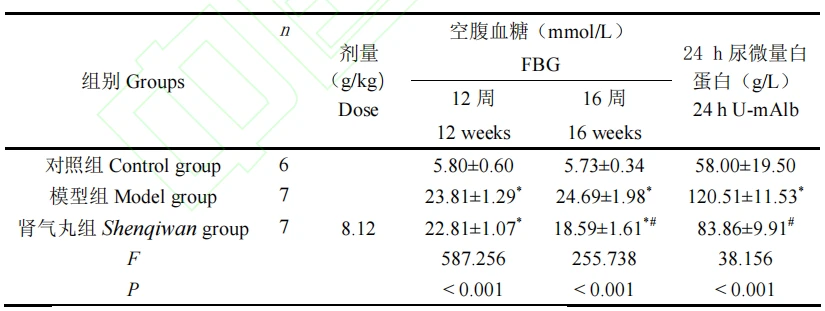
The FBG levels of rats in the model group were higher than those in the control group at 12 weeks of age and 16 weeks of age (P < 0.05). At 16 weeks of age, the FBG levels of rats in the renal pills group were lower than those in the model group, but still higher than those in the control group (P < 0.05). The 24-h U-mAlb level in the model group was higher than that in the control group (P < 0.05), and that in the Renqi Pill group was lower than that in the model group (P < 0.05). 0.05). The results are shown in Table 3.
3.3 Morphological observation of the kidney
PAS staining: compared with the control group, granular glycogen deposition was observed in the glomerular basement membrane and thylakoid membrane of the model rats. There were vacuoles in the cytoplasm of renal tubular epithelial cells. Masson staining: compared with the control group, some glomeruli in the model group showed widening of the thylakoid area, atrophy of the tubules and increased interstitial fibrous tissue. The corresponding pathological changes were all reduced in the renal pills group compared with the model group. Hexamine silver-hematoxylin-eosin staining: compared with the control group, the model group Compared with the control group, the glomerular thylakoid region of the rats showed hyperplasia and sclerosis, irregular thickening of capillary walls, sclerosis of some capillary collaterals, and more obvious atrophy of renal tubules. The corresponding pathological changes in the renal pills group were all reduced compared with the model group.


The mRNA expression of GRP78 in the kidney tissues of rats in the model group was higher than that in the control group (P < 0.05), and that in the renal pills group was lower than that in the model group (P < 0.05), and the difference between the control group and the model group was not statistically significant (P > 0.05). The mRNA expression of Beclin-1 in the kidney tissues of rats in the model group and the Kidney Qi Pill group was lower than that in the control group (P < 0.05), and the difference between them was not statistically significant (P > 0.05). The mRNA expression of LC3 in the kidney tissues of rats in both the model and renal pill groups was higher than that in the control group (P < 0.05). The mRNA expression of LC3 in the kidney tissues of both the model group and the renal pills group was higher than that of the control group (P < 0.05), but the difference between them was not statistically significant (P > 0.05). The results are shown in Table 4.

The expression of GRP78 protein in the kidney tissues of rats in the model group was higher than that in the control group and the kidney qi pill group (P < 0.05). The expression of GRP78 was lower than that of the model group, but higher than that of the control group (P < 0.05). The protein expression of Beclin-1 in the Renqi Pill group was lower than that in the model group (P < 0.05). The expression of Beclin-1 in the Kidney Qi Pill group was lower than that in the model group (P < 0.05), while both were lower than that in the control group (P < 0.05). The expression of LC3 in the kidney tissues of rats in the model group and the kidney qi pill group decreased compared with that in the control group (P < 0.05). The protein expression of LC3 in the kidney tissues of rats in the model group and the kidney qi pill group was higher than that in the control group (P < 0.05). (P < 0.05). The results are shown in Table 5 and Figure 3.


DKD is a chronic kidney disease caused by diabetes mellitus, which develops due to hyperglycemia, lipid metabolism disorders Due to the presence of various pathological factors such as hyperglycemia, lipid metabolism disorders, etc., it is often accompanied by corresponding renal injury, and the accumulation of injury causes renal function damage. Chinese medicine DKD is categorized as a "lower elimination" and is considered to have a complex pathogenesis, with both deficiency of positive qi and obstruction of evil [11]. The application of Chinese medicine treatment can reduce the symptoms and improve the quality of life of DKD patients [12-13]. receptor mutations in ZDF rats, a spontaneous rat model of type 2 diabetes, with hyperglycemia, hyperinsulinemia, obesity, and obesity induced by high-fat diets [12]. The ZDF rat has a leptin receptor mutation and is a spontaneous model of type 2 diabetes mellitus with hyperglycemia, hyperinsulinemia, obesity, and impaired glucose tolerance induced by high-fat chow and is widely used in preclinical studies related to diabetes [14-15]. ZL rats are genetically homologous to ZDF but do not have the corresponding leptin receptor mutation, and the former is commonly used as a normal control animal for the latter in experiments. The former is often used as a normal control animal for the latter in experiments. From 6 weeks of age, male ZDF rats showed higher proteinuria levels than ZL rats with increasing age. The renal microangiopathy, such as glomerular vascular basement membrane thickening and thylakoid hyperplasia, is obvious [16-17]. [Therefore, ZDF rats have been widely used as animal models in DKD studies. It was observed that ZDF rats induced by high It was observed that ZDF rats induced by high-fat chow appeared obese and the growth rate of body mass in the model group decreased, and the FBG The FBG level started to increase at 12 weeks of age, and the 24h U-mAlb level also increased at 16 weeks of age. In the model group, the growth rate of body mass decreased, and the FBG level started to increase at 12 weeks of age. This is consistent with the pathological changes of DKD.
The Kidney Qi Pill is a representative formula for warming the kidney and promoting yang. Modern studies have shown that Kidney Qi Pill can enhance the autophagic activity of kidney tissues in DKD rats to play a protective role [18]. This formula can also protect the glomerular foot cells of db/db mice by regulating autophagy [18]. This formula can also improve renal function by regulating autophagy of glomerular foot cells in db/db mice and protecting foot cells [19]. Our experimental results showed that renal qi pill could improve the general condition of ZDF rats, resulting in a reduced body mass [19]. condition, restored the reduced body mass growth rate to normal, reduced their FBG and 24h U-mAlb, and was able to reduce pathological changes such as thylakoid tissue hyperplasia and sclerosis, irregular thickening of basement membrane and glycogen deposition. This suggests that renal qi pill pills may alleviate renal tissue damage during the progression of diabetes mellitus by lowering blood glucose levels in type 2 diabetic rats. The endoplasmic reticulum is a key component of the protein synthesis, protein synthesis, and protein deposition.

The endoplasmic reticulum is a cellular organelle that performs functions such as protein synthesis and folding. Under stress, protein synthesis and folding can occur during the process of protein synthesis. The endoplasmic reticulum reduces damage and restores cellular homeostasis through the unfolded protein response (UPR). The endoplasmic reticulum mitigates damage, restores cellular homeostasis, and plays a protective role through the unfolded protein response (UPR). However, the persistence of ERS activates downstream apoptotic pathways and causes tissue damage [20]. GRP78 is a marker protein of ERS, and it has been shown that the expression of GRP78 is elevated in kidney tissues of DKD rats. GRP78 is a marker protein of ERS, and it has been shown that GRP78 expression is elevated in the kidney tissues of DKD rats, suggesting that ERS is closely related to DKD development [21]. In our experiments, rats in the model group In our experiments, GRP78 gene and protein expression levels were elevated in the renal tissues of model rats, while renal qi pills significantly reduced GRP78 expression This suggests that renal pills may protect renal tissues by inhibiting ERS and relieving its persistent state. It is suggested that renal qi pills may play a role in protecting renal tissue by inhibiting ERS and relieving its persistence.
Autophagy can degrade misfolded proteins and maintain cellular homeostasis, and this process can be regulated by ERS [22]. It has been shown that upregulation of autophagy in cells It has been shown that upregulating the level of cellular autophagy can help to reduce the kidney injury caused by diabetes [23]. In the experiment, it was observed that the autophagy in the foot cells of rats in the renal pills In this experiment, the number of autophagic vesicles in the foot cells of rats was increased compared with that of the model group. Therefore, the levels of Beclin-1 and LC3 in the kidney tissues of rats were measured in this experiment.
Beclin-1 is one of the important proteins in the autophagy initiation chain and plays a regulatory role in autophagic activity [24].LC3 is an autophagy marker protein that is mainly involved in the formation of autophagic vesicles [25]. Studies have shown that inhibition of ERS can reduce renal injury, and this effect may be mediated through the repair of defective autophagy [26]. Our experimental results showed that the 16 Our experimental results showed that the levels of Beclin-1 gene and protein in the kidney tissues of rats in the 16-week-old model group and the Kidney Qi Pill group decreased compared with the control group, and the The level of Beclin-1 protein in the renal tissue of the rats in the renal pills group decreased compared with that in the control group. This indicates that in the process of kidney tissue injury in ZDF rats with type 2 diabetes mellitus This suggests that the abnormal autophagy in ZDF rats may be related to the dysregulation of Beclin-1 expression in the process of kidney tissue injury, but Renqi Pill did not increase its expression. However, the expression of Beclin-1 was not elevated by renal qi pills, but probably through the regulation of other autophagy factors. The experimental results showed that the kidney tissues of the model rats The difference in gene expression level of LC3 in kidney tissues of model rats was not statistically significant compared with that of the renal qi pill group, but was higher than that of the control group. The LC3 protein in the kidney tissue of ZDF rats was higher than that in the control group. This suggests that the level of autophagy in kidney tissues of ZDF rats was abnormally This suggests that the autophagy level of kidney cells in ZDF rats is abnormally high and the organism may be in a state of autophagy imbalance.

This suggests that the autophagy level of kidney cells in ZDF rats may be in a state of autophagy imbalance, and Kidney Qi Wan may increase the formation of autophagic vesicles, reduce kidney injury and delay the progression of DKD by enhancing the post-transcriptional regulation of LC3. In our experiment, we did not detect more pathway factors related to ERS and its mediated autophagy. We hope to conduct more in-depth research on the molecular mechanism of renal tissue injury in DKD rats, and provide more information for the modern interpretation of Jing Fang Ren Qi Wan. We expect to conduct more in-depth studies on the molecular mechanism of renal tissue injury in DKD rats, and provide more experimental basis for the modern interpretation of Jing Fang Ren Qi Wan.