The Evolving Science Of Anemia Management in Chronic Kidney Disease
Dec 21, 2022
The articles in this edition of Kidney International Supplements timely focus on the rapidly evolving field of anemia management in patients with chronic kidney disease (CKD). The revolutionary introduction of recombinant human erythropoietin into the therapeutic arena in the 1980s profoundly changed the quality of life of most patients with end-stage kidney disease. However, it subsequently became clear that the normalization of the- myoglobin by erythropoiesis-stimulating agents (ESAs) was generally more harmful than bene- ficial, as demonstrated by several randomized controlled trials performed at the turn of the century. Therefore, partial anemia correction has become the preferred treatment option in patients with CKD.

Click here to improve your Kidney Function
Another important issue is the frequently observed state of absolute or functional iron deficiency requiring oral or i.v. iron supplementation. Because of poor absorption of iron from the gut due to high circulating hepcidin levels and poor gastrointestinal tolerance of most oral iron agents, the administration of i.v. iron has become routine practice in most patients with end-stage kidney disease. The recently published Proactive IV Iron Therapy in Haemodialysis Patients (PIVOTAL) trial, the first of its kind in a large-size hemodialysis patient population, provided an answer to the question of whether relatively high i.v. iron sucrose doses are beneficial or harmful. The trial showed that monthly proactive administration of 400 mg i.v. iron with upper limits of serum ferritin of 700 mg/L and transferrin saturation of 40% not only decreased ESA use, but also lowered the risk of all-cause death, cardiovascular events, and in infections compared with reactive low-dose i.v. iron. More randomized controlled trials are needed in patients with non–dialysis–dependent and dialysis-dependent CKD using different i.v. iron doses and brands in different patient populations, examining patient-centered outcomes.

The development of a novel class of agents, the hypoxia-inducible factor–prolyl hydroxylase inhibitors (HIF-PHIs), represents an interesting alternative to correcting the anemia of patients with CKD, with several possible advantages. HIF-PHIs are administered orally, in contrast to the parenteral administration of ESAs. HIF-PHIs are associated with much lower in- creases in circulating erythropoietin levels than treatment with traditional ESAs. Moreover, based on experimental evidence, PHIs are pre-dictated to improve iron status by decreasing the- hepatic hepcidin production and increasing the transcription of genes that promote iron availability. However, clinical data on a possibly reduced need for i.v. iron supplementation as well as global efficacy and cardiovascular safety are still too limited to allow definitive conclusions. Because HIFs regulate many genes in addition to erythropoietin, other actions could exert beneficial or harmful effects. Thus, HIF-PHIs have been reported to reduce serum triglyceride, total cholesterol, and low-density lipoprotein levels, and to reduce blood pressure in animal models of CKD, an effect not observed in human patients. They could also exert anti- inflammatory effects, protect from ischemic injuries, and reduce CKD progression. Whether HIF-PHIs may offer an advantage over ESAs in treating the anemia of inflamed CKD patients remains to be seen. Potential concerns regarding HIF-PHIs include risk for enhanced tumor growth,pulmonaryarterialhypertension, accelerated cyst growth in patients with polycystic kidney disease, proangiogenic effects in patients with vascular retinopathies, enhancement of vascular calcification, and risk for abnormal embryonic and fetal development. Therefore, despite reassuring, progressively accumulating evidence from phase 3 trials in patients with CKD, caution must be exercised regarding the benefit-to-risk ratio of HIF-PHIs in the long run compared with that of ESAs.

The articles of the present supplement, which have been written by outstanding ex-parts in the domain of CKD anemia, deal with these different aspects. They provide excellent updates in the field of interest, focusing on the novel treatment modality represented by HIF-PHIs. They allow the readers of Kidney International Supplements to gain a more complete picture of the current situation while pointing out still open issues that need to be addressed.
Finally, we would like to mention that yet other new anemia treatment strategies are in the pipeline. They include hepcidin production or action inhibitors and therapies either already in use or under investigation in other disease states, such as interleukin-6– specific antibodies, other anti- inflammatory agents, and activin receptor ligand traps.
Time will tell which of these exciting novel approaches to anemia treatment in CKD will turn out to occupy a lasting place in clinical practice.

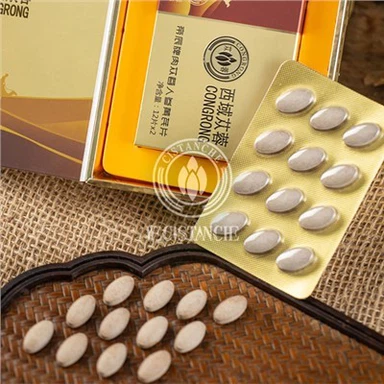
Cistanche tea can invigorate kidney yang, replenish essence and blood, inhibit the appearance of "Yang deficiency" symptoms, and prevent weight loss. Cistanche tea can effectively prevent and treat diseases such as kidney deficiency and impotence in men, nocturnal emission, premature ejaculation, irregular menstruation, amenorrhea, and infertility in women. Citrus cinnamon has the reputation of "desert ginseng", and it is the highest-grade medicine among more than 60 kinds of Chinese tonic medicines found in China. It contains a lot of amino acids, cysteine, vitamins, and minerals. , cavernous body and other sexual organs have a great tonic effect, the impotence, premature ejaculation is even more immediate, fulfilled like a god. Cistanche tea can be used for kidney deficiency, impotence, nocturnal emission, premature ejaculation, cold pain in the waist and knees, and weak muscles and bones. For the treatment of impotence due to kidney deficiency, nocturnal emission, premature ejaculation, etc., it is combined with Rehmannia glutinosa, dodder seeds, and dogwood meat. It is suitable for men with declining sexual function; women with irregular menstruation, infertility, numbness in limbs, waist and knee pain; elderly people with a weak constitution, hypertension patients, and constipation.
DISCLOSURE
ZAM reports having received grants for Chronic Kidney Disease– Renal Epidemiology and Information Network and other research projects from Amgen, Baxter, Fresenius Medical Care, Glaxo Smith Kline, Merck Sharp, and Dohme-Chibret, Sanoi-Genzyme, Lilly, Otsuka, AstraZeneca, Vifor, and the French government, as well as fees and grants to charities from Amgen, Astellas, and Sanoi-Genzyme, outside the submitted work. TBD reports having received advisor, consultant, speaker, and/or travel fees from Akebia, Amgen, Astellas, Chugai, F. Hoffman-La Roche, FMC, Glaxo-Smith-Kline, Kyowa Hakko Kirin, and Vifor.
ACKNOWLEDGMENT
This article is published as part of a supplement supported by AstraZeneca.
FOR MORE INMORMATION: 1595715123@QQ.COM