The Green Scarf in The Taklamakan Desert
Oct 17, 2024
In mid-September, the sun in Awati County, Aksu Prefecture, Xinjiang still showed its spiciness. Driving on the highway leading to the Taklamakan Desert, various slogans for sand control and prevention can be seen everywhere. After a bumpy 40-kilometer journey, the reporter finally arrived at the biological sand control point on the edge of the Taklamakan Desert. The undulating dunes of the past, pushed by the edge of the Taklamakan Desert, are now covered in lush greenery. Sand plants such as jujube and shuttle are thriving, and from a distance, they are like "green scarves" blocking the wind and sand.

Desert ginseng
This spring, there is still a long yellow sand here. We planted 112500 acres of plants in 4 years, including jujube, shuttle, poplar, red willow, etc. The ones that are growing well are already two or three meters high! "Said Jiang Lili, Deputy Director of the Forestry and Grassland Bureau of Awati County, proudly.
In recent years, implementing the "Tarim River Mainstream Ecological Restoration and Management Project" and "Forest Ecological Compensation" has increased the county's efforts to build three lines of defense for deserts, oases, and agricultural areas. One after another, sand control and greening projects have been launched, and sand control teams have been pushing into the desert hinterland, carrying and burying grass and sand with their hands and shoulders. Green protective walls have also been laid out in the desert.
Five years ago, the wind was strong and the sand and dust were also heavy. When a sandstorm blew, nothing could be seen. "Recalling the sandstorm weather he had experienced before, forest ranger Aishanjiang Mutailifu still remembered vividly. He took out his phone and showed the reporter the sandstorm here, where cotton seedlings and plastic film were lifted, forcing people to replant repeatedly.

Harvest of Cistanche deserticola
Walking on this forest protection path, we take over 30000 steps on WeChat every day to ensure that irrigation is not a problem. Walking amid neatly arranged forests, Aisanjiang Mutailifu occasionally stops to observe the growth of trees. In his opinion, taking care of every tree here is like taking care of one's child.
Sandpipers often say, "Planting a tree in the desert is harder than feeding a child." Green planting in the desert is not only time-consuming and laborious but also a major issue in terms of survival rate.
Pruning, irrigation, and pest control are all part of the work of forest rangers, and their footsteps never stop throughout the year.
Standing on the sandbag at the high point of the sand control point, Jiang Lili pointed to the sand jujube and sand shuttle that were over one meter tall next to her and said, "After the sand shuttle and sand jujube planted here become forests, they can be contracted to farmers and herdsmen for management and protection. They can then intercropping crops such as big clouds to promote the income increase of farmers and herdsmen.

Tu Pengfei, father of Cistanche deserticola
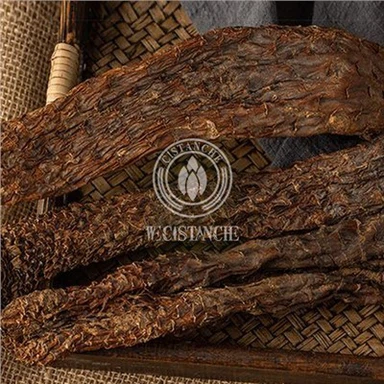
Da Yun, commonly known as Cistanche deserticola, is a perennial parasitic herbaceous plant that parasitizes on red willows and Haloxylon ammodendron. It has high medicinal value and is known as the "Desert Ginseng".
Cistanche deserticola Y.C.Ma, a traditional Chinese medicine for tonifying the kidney, is recorded in the 2015 edition of the Chinese Pharmacopoeia. It is a succulent stem of the genus Cistanche in the family Lewandaceae, mainly distributed in Inner Mongolia, Ningxia, Gansu, Qinghai, and Xinjiang. Cistanche deserticola and Tubular Cistanche deserticola have extremely high medicinal value. They enter the kidney and large intestine meridians. The Compendium of Materia Medica records that Cistanche deserticola "is a nourishing but not severe substance, so it is called Cistanche deserticola" and "it is warm but can moisten, replenish but not dry, smooth but not diarrhea".

Desert living cistanche
It has the effects of tonifying kidney yang, benefiting essence and blood, moistening the intestines, and defecating. Traditionally, it is used for kidney yang deficiency, deficiency of essence and blood, impotence, infertility, soreness of the waist and knees, weakness of muscles and bones, and constipation due to intestinal dryness, It is the most frequently used tonifying kidney yang medicine in history. Modern pharmacological research shows that Cistanche deserticola has many effects such as improving sexual function, anti-aging, improving learning and memory ability, anti-Alzheimer's disease, defecation, etc. It is widely used in clinical prescriptions of Chinese medicine, traditional Chinese patent medicines, and simple preparations and health care products.
The main chemical components of Cistanche deserticola are phenylethanoid glycosides, iridoids, and their glycosides, lignans, and polysaccharides. Modern pharmacological studies have shown that phenylethanoid glycosides are the most important active substances in Cistanche deserticola, and have obvious anti-Alzheimer's disease, Parkinson's disease, myocardial ischemia, and other effects.

superman herbs cistanche
Click here to view Cistanche for Kidney disease products
【Ask for more】 Email:cindy.xue@wecistanche.com / Whats App: 0086 18599088692 / Wechat: 18599088692
Planting red willows and shuttlecocks in the desert to develop the Yunyun industry not only has good economic and social benefits but more importantly, it can bring good ecological benefits.
According to statistics, the degree of forest networking in farmland in Awati County has reached over 92%, with 58000 acres of protective forests and 112500 acres of afforestation in sand control areas, effectively preventing the harm of sandstorms. The number of dust-free days has increased from 55 days in the past to 83 days now, and the average annual precipitation has risen from 50.5 millimeters in the past to 73.8 millimeters now.
The data shows that it benefited from years of sand prevention and control work and the implementation of the "Three North" shelter forest project. At present, the institutional mechanism for the coordinated promotion of the "Five Greens" (protecting green, increasing green, managing green, using green, and activating green) is more sound, achieving an increase in forest area and forest stock throughout the region; The grassland ecological environment continues to improve, and forest and grass resources are effectively protected and reasonably utilized. Ecological products that benefit the people are more abundant, making forest and grass contributions to the construction of a beautiful Aksu with bluer skies, greener mountains, and cleaner water.