The Spread And Influence Of Traditional Chinese Medicine in Southeast Asia
Oct 21, 2022
Traditional Chinese medicine is an integral part of Chinese traditional culture. It not only played an important role in the medical care of the Chinese people but also had an impact on medicine in many countries. This article intends to discuss the spread and influence of traditional Chinese medicine in Southeast Asian countries from a historical perspective.
The history of communication
Traditional Chinese medicine was introduced to Southeast Asian countries very early. Since Vietnam was once under the direct rule of the Chinese feudal dynasty, the first Southeast Asian country to accept Chinese medicine was Vietnam. Qin and Han Dynasties. Traditional Chinese medicine has spread to northern Vietnam. During the Three Kingdoms period, Dong Feng traveled to Jiaozhi (now northern Vietnam), a Chinese medicine doctor, and once treated Xie, the prefect of Jiaozhi. [1] (Wai Ji, Volume 3, "Shi Wang Ji") During the Southern Qi Dynasty, Chinese "Cangwu Taoist priest" Lin Sheng also went to Jiaozhou (northern Vietnam) to collect herbs and treat diseases. [2] Shen Guangxun, a traditional Chinese medicine practitioner in the Tang Dynasty, cured the brain pain of Sun Zhongao from Jiaozhi with traditional Chinese medicine. [3] (P168) According to historical records, Chinese medicinal materials were among the goods trafficked to Vietnam by merchants in the Tang Dynasty. [4] (Volume 19 on "Yizong Benji")

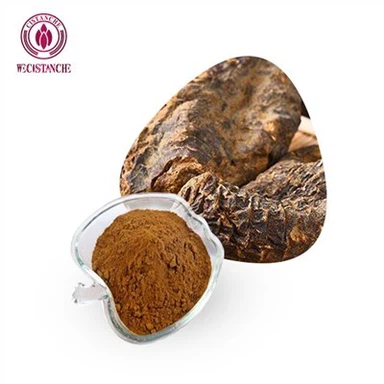
TCM Cistanche
With the development of overseas traffic, the spread of traditional Chinese medicine in Southeast Asia is expanding. In 968 AD, Vietnam became an independent country. However, the momentum of the spread of traditional Chinese medicine in Vietnam has not only not weakened, but has been further developed. During the Li Dynasty in Vietnam, Ming Kong, a Chinese eminent monk, once cured the serious illness of Li Shenzong in Vietnam, and was named the "National Teacher" of the Li Dynasty in Vietnam. [1] (Ben Ji, Volume 3, "Li Ji") From the 13th to the 14th century, Chinese acupuncture therapy was widely spread in Vietnam. Vietnamese people often come to China to buy medicinal materials, and traditional Chinese medicines are imported into Vietnam in large quantities. Traditional Chinese medicines have been widely valued and applied in Vietnam.
After the Song Dynasty, Chinese medicine began to be introduced into Singapore, Myanmar and Thailand. Rhubarb, musk, ginseng, tuckahoe, angelica, polygala, etc. in traditional Chinese medicine were brought to Singapore with the immigration of overseas Chinese. [3] (P173) In 1103 (the second year of Song Chongning), Myanmar once sent envoys to China, and in addition to requesting scriptures, they also obtained 62 medicine books. [3] (P172) As early as the Sukhothai Dynasty, Thailand had traditional Chinese medicine. At that time, in addition to overseas Chinese living in Thailand who generally used traditional Chinese medicine to treat diseases, local residents also attached great importance to traditional Chinese medicine. In the ancient capital of Thailand, Ayutthaya, the most respected doctors are from China, and the king's doctor is also served by Chinese doctors. [5] (P169) When Zheng He went to the Western Ocean, every time he went with the fleet of Chinese medicine practitioners, and brought ginseng, musk, rhubarb, tuckahoe, ginger, cinnamon and other traditional Chinese medicines. [6] (P36) During the Ming and Qing Dynasties, Chinese medicinal materials entered Vietnam in large quantities through official embassies and private trade. Due to the continuous increase of overseas Chinese, the number of Chinese medicine practitioners in Singapore has also increased. They have opened hospitals and pharmacies to treat and save people. At the same time, Chinese medicine was also brought to Malaysia, Indonesia, the Philippines and other countries by overseas Chinese, and was loved and trusted by the local people.

TCM Cistanche
Since modern times, Western colonialist forces have invaded Asian countries. During this period, although western medicine and western medicine were promoted in Southeast Asian countries, traditional Chinese medicine was still further spread and developed, and surpassed any previous period. After Vietnam became a colony of France, despite the restrictions of the colonial authorities, traditional Chinese medicine was still the mainstay of folk treatment. According to statistics, at the end of the 19th century, about 100,000 dans of Chinese medicinal materials such as Angelica, Chuanxiong, and Atractylodes were imported from northern Vietnam alone. [7] (P697) In 1935, a Vietnamese physician, Huang Boliang, published a paper in the "Indo-Chinese Medicine Newspaper", advocating that Western medicine should learn from traditional Chinese medicine. In 1950, Vietnam established the Chinese Medicine Association and the Overseas Chinese Medicine Physician Association, opened the Eastern Medical College, and published the Eastern Medical Journal. [3] (P170) As early as 1867, Singaporean overseas Chinese He Daosheng, Liang Jiongtang and others founded Tongji Hospital, which promoted the spread and development of Chinese medicine in Singapore. Subsequently, Chinese medicine hospitals such as Sian Chay Hospital, Guangzhao Convenience Hospital, and Universal Rescue Shantang were successively established. After the Second World War, the cause of traditional Chinese medicine has achieved greater development. In 1946, the Singapore Chinese Medicine Physicians Association was established. It has successively established Zhonghua Hospital, College of Traditional Chinese Medicine, Zhonghua Medical Research Institute, Zhonghua Acupuncture Research Institute, etc., published the Journal of Traditional Chinese Medicine, carried out TCM outpatient clinics, trained TCM physicians, established contacts with the Chinese TCM community, and participated in international TCM academic exchange activities. [8] (P826) In the mid-1980s, there were more than 1,000 Chinese medicine stores in Singapore, and various medical groups were established to publish Chinese medicine journals. Singapore has become the development center of the Chinese medicine industry in Southeast Asia and the scientific research center of Chinese medicine.
In 1796, Gu Shiquan, an overseas Chinese from Malaysia, established Yan Ai Tang Pharmacy Store in Penang. He purchased traditional Chinese medicines from China and shipped them to the Malay Peninsula for sale. This medicinal herb store has been maintained to this day and is still run by the descendants of the ancient family. [9] (P170) In 1881, overseas Chinese Ye Guansheng founded a Chinese medicine hospital in Kuala Lumpur, named "Pei Shan Tang". In 1894, Peishantang changed its name to Tongshan Hospital, and its scale continued to expand. In 1924, overseas Chinese established the Institute of Chinese Medicine in Muar, Johor. [9] (P170-171) The Second World Congress
After the war, Chinese medicine practitioners in Malaysia established many Chinese medicine organizations successively, including the MCA, Penang College of Traditional Chinese Medicine, Perak College of Traditional Chinese Medicine, Sarawak College of Traditional Chinese Medicine, Johor College of Traditional Chinese Medicine, Sibu College of Traditional Chinese Medicine and Perak College of Acupuncture and Moxibustion. Among them, the MCA College of Medicine is the most famous, which was founded by the national Chinese medicine group "Mahua Medicine Association".
Thai overseas Chinese Liu Jibin and others founded Tianhua Hospital in Bangkok in 1905, and donated traditional Chinese medicine to treat and save people. [8] (P65) In 1922, Huang Qizhang, Zheng Hongkui and others established the Chinese Medical Donation Institute, which not only studied medical skills, but also donated doctors and medicines. [10] (P128) In the 1950s, there were about 2,000 Chinese medicine practitioners in Thailand. In the 1990s, there were more than 100 Chinese medicine stores in Bangkok alone. [3] (P171) Among the many traditional Chinese medicine hospitals, the most prestigious is Tianhua Hospital. Thailand attaches great importance to the research of traditional Chinese medicine. It has established a traditional Chinese medicine group, founded medical publications such as Siam Traditional Chinese Medicine Weekly, and published traditional Chinese medicine such as "History of Traditional Chinese Medicine", "Basic Science of Traditional Chinese Medicine", "Practical Herbs", "Handbook of Acupuncture and Moxibustion", etc. books. published a big
Quantitative Chinese medicine academic papers. In November 1983, the "China Today Traditional Chinese Medicine Exhibition" was held in Bangkok, and Chinese experts and professors were invited to attend the meeting. They made a special report on the academic issues of traditional Chinese medicine at the meeting, which caused a great sensation in the Thai medical community. [3] (P171) The spread of traditional Chinese medicine in Myanmar is closely related to overseas Chinese. When the famous Chinese medicine doctor Hu Qin lived in Myanmar, he used the Chinese patent medicine "Yushu Shensan" to treat the people. He also opened Yongan Hall in Yangon, where he practiced medicine and sold medicines. With the development of traditional Chinese medicine, the number of traditional Chinese medicine practitioners is increasing. In 1968, Myanmar established the Traditional Chinese Medicine Association with more than 400 members. [3] (P172) Indonesian overseas Chinese and local residents are very fond of traditional Chinese medicine. Local residents respect traditional Chinese medicine practitioners, usually called Mr. Acupuncture therapy is widely used in Indonesia. All major hospitals have TCM and acupuncture clinics.
After Chinese herbal medicine was introduced to Indonesia, it became an important part of Indonesian herbal medicine. Overseas Chinese have set up many herbal medicine shops, using Chinese herbal medicine to prepare various pills and powders to treat people's diseases. As early as 1640, a Chinese hospital was established in Batavia (now Jakarta). [5] (P169) At the end of the 19th century, a guild dealing in traditional Chinese medicine in Jakarta built the Palace of the King of Medicine, and regarded the King of Medicine as a protector and worshipped it all year round.

Cistanche phelypaea coffee for Sell
Overseas Chinese in the Philippines are accustomed to using traditional Chinese medicine to treat diseases. Traditional Chinese medicine stores are located in major cities across the country. Overseas Chinese living in the Philippines established the Chinese Medical Association and the Chinese Pharmaceutical Chamber of Commerce very early to promote traditional Chinese medicine. In March 1961, the Chinese Medicine Research Institute was established in Manila to train Chinese medicine talents for free. In December 1982, the United Nations World Health Organization held a meeting on the standardization of acupuncture points in Manila, which greatly promoted the spread of Chinese acupuncture in the Philippines and Southeast Asian countries.
In Cambodia, overseas Chinese in Phnom Penh founded Zhonghua Hospital in 1906 to treat people for free. In order to financially support Zhonghua Hospital, the overseas Chinese established the Zhonghua Hospital Medical Assistance Association in 1961. This group regularly donates money to support Chung Hwa Hospital and forms a board of directors to manage the hospital's affairs. [8]
Fourth, the far-reaching impact of many aspects
The far-reaching impact of the long-term spread of traditional Chinese medicine in Southeast Asian countries is manifested in many aspects.
First, it promoted the development of local medical and health services. In ancient times, the social and economic development of Southeast Asia was slow, and the medical and health services had been in a backward state for a long time. After Chinese medicine was brought to Southeast Asian countries through overseas Chinese, it has greatly improved the medical level here, and played a role in promoting the development of local medical and health services.
In the process of diagnosing and treating diseases for the local people, Chinese physicians also impart medical knowledge and techniques, thereby cultivating local medical talents. For example, under the influence of Chinese medicine, Vietnam has produced some famous doctors. The famous Vietnamese doctor Li Youzhuo, known as the "Medicine Saint" mentioned above, is one of the representatives. A series of works written by Vietnamese medical scientists, such as "Compilation of Materia Medica" by Pan Xueguang, "Xianzhuan Acne Diagnosis and Medical Book" by Fan Baifu, "Medical Books and Moxibustion" (acupuncture book) by Wu Shou Fu, and "Medical Medicine at Sea" by Li Youzhuo. "Heart Lingquan", etc., were all written under the influence of Chinese medicine. [2] These medical works played an important role in Vietnam. Another example is that after Chinese medicine was introduced to Thailand, Thai doctors also learned and adopted the diagnosis and treatment methods of looking, smelling, asking, and cutting in Chinese medicine, which improved the accuracy of diagnosis and medical effect.
Ancient Vietnam also imitated China to establish medical institutions. During the Tran Dynasty of Vietnam, imperial physicians were established in imitation of China to treat diseases for high-level figures such as princes. At the same time, an agency to manage the medical affairs of the common people was established, called the "Guangji Administration". During the post-Li Dynasty, Taiyuan Hospital and its affiliated Jishengtang were established. This official medical system in Vietnam has been followed until the Nguyen Dynasty.

TCM hospitals, TCM scientific research institutions, TCM colleges and TCM academic groups have been established one after another
stand up. The “Toa Payoh Hospital of Traditional Chinese Medicine” built in 1979 is the most famous. In 1981, five Chinese medicine groups in Singapore (Singapore Chinese Medicine Physicians Association, Singapore Chinese Medicine Association, Singapore Acupuncture Association, Singapore Chinese Medicine Promotion Association, Singapore Chinese Medicine Federation) jointly initiated the establishment of the Singapore National Chinese Medicine Supreme Council and decided to publish Chinese medicine publications , recorded Chinese medicine TV programs, held Chinese medicine exhibitions, etc., and designated March 17 as the Traditional Chinese Medicine Festival. In the past, most of the TCM physicians in Malaysia came from China, and later they came to provide TCM education and cultivate medical talents. In 1955, the Malayan Chinese Medical Association was established in Kuala Lumpur, and in 1964 it was renamed the Malaysian Chinese Medical Association. Its purpose is to contact the national Chinese medicine and Chinese medicine groups, jointly promote the development of Chinese medicine, and devote itself to social charity. [8] (P51) According to statistics, in the 1990s, there were more than 1,500 Chinese medicine practitioners and nearly 1,000 Chinese medicine stores in Malaysia.
Second, economic ties and cultural exchanges have been promoted. With the spread of traditional Chinese medicine in Southeast Asian countries, the trade of medicinal materials between China and Southeast Asian countries has increased significantly. Historically, Chinese medicinal materials have been a major commodity in trade between China and Vietnam, whether official or private. After the Song Dynasty, the Chinese feudal government often gave back a lot of gifts, including medicines, while accepting tribute from Vietnam. During the Ming and Qing dynasties, the medicines needed by Vietnam were supplied by China. China shipped medicinal materials, cloth, silk and other items in exchange for rice, pearls and precious stones from Vietnam. Since Zheng He's voyages to the West, the economic ties and cultural exchanges between China and Southeast Asian countries have increased day by day. In trade exchanges, although not all Chinese herbal medicines are shipped from China to these countries, Chinese herbal medicines have become important goods. This reflects the urgent need for Chinese medicinal materials in Southeast Asian countries. It can also be said that the demand for traditional Chinese medicine has promoted the development of multilateral trade. In the process of trade, China exported a lot of goods to Southeast Asian countries, and also imported many goods from Southeast Asian countries, including medicinal materials. For example: in the goods shipped from Vietnam to China. In addition to pearls, tortoiseshells, rhino horns, ivory, etc., there are also many spices and herbs, such as agarwood, sandalwood, and styrax oil. In the goods shipped from Thailand to China, in addition to tortoiseshell, betel nut and other items, there are also many spice medicines, such as Jiangzhenxiang,
Frankincense, pepper, etc. Li Shizhen's "Compendium of Materia Medica" lists many medicines from Southeast Asian countries, such as wufa mud and hematoxylin used as medicines, which are produced in Thailand and Indonesia.
Economic and trade exchanges are mutually beneficial, and cultural exchanges are also two-way. The spread of traditional Chinese medicine in Southeast Asian countries has promoted local medical and health care, and the medicinal materials shipped from Southeast Asian countries have also enriched the content of traditional Chinese medicine. For example, the medicines such as clove oil, water and sea, and fat sea that were transported from Vietnam in the Qing Dynasty were quickly adopted by Chinese physicians. After the Vietnamese medical scientist Tran Yuantao wrote "The Legacy of Ju Tang" and Ruan Zhi's new book "New Medicinal Herbs" and other medical works were passed on to China, they also had a great impact on Chinese medicine.
certain impact.
Especially in modern times, there are enduring "TCM fever", "TCM fever" and "acupuncture fever" in Southeast Asia. It is worth mentioning that, in order to promote traditional Chinese medicine, Southeast Asian countries have held a series of academic activities. Regionally, ASEAN countries have held many academic conferences on Chinese medicine: the first was held in Singapore in 1983, the second in Kuala Lumpur in 1986, and the third in Bangkok in 1989. From a national perspective, Thailand held a meeting in Bangkok in November 1983.
The "China Today Traditional Chinese Medicine Exhibition" was held, and in 1992, Singapore held an academic seminar with the theme of "Chinese Medicine and Acupuncture to the World". All these activities have undoubtedly played an important role in promoting the medical and cultural exchanges between China and Southeast Asian countries.

Thirdly, it has strengthened the friendly relations between China and Southeast Asian countries. The spread of traditional Chinese medicine in Southeast Asian countries, as well as the economic and trade exchanges and cultural exchanges thus promoted, will inevitably make positive contributions to enhancing the friendship between peoples of various countries. Tongji Hospital, Singapore's first traditional Chinese medicine hospital founded by overseas Chinese, has made significant contributions to Singapore's medical and health undertakings and people's health. Therefore, the Singapore government after independence has listed the site of this traditional Chinese medicine hospital with a history of more than 100 years as a key history. Cultural relics units, to be protected. When overseas Chinese founded Tianhua Hospital in Bangkok, Thailand in 1905, they received the support of King Rama V of Thailand and gave 100 catties of Thai silver coins as a fund for the establishment of the hospital, and personally presided over the inauguration ceremony of the hospital. [8] (P65) In November 1983, Thailand invited from among the 10 Chinese delegations composed of medical experts and professors went to Bangkok to attend the "China Today Traditional Chinese Medicine Exhibition". [3] (P171) During this period, they reported nine academic papers, which not only caused a sensation in the Thai medical field, but also deepened the Thai people's love and trust in traditional Chinese medicine.
Tung Shin Hospital, founded by overseas Chinese in Kuala Lumpur, Malaysia, has a long history and is well received by the local people. The government also attaches great importance to it. In August 1983, the Malaysian Minister of Health specifically granted the Chinese Medicine Department of the hospital an exemption from the Private Hospital Act. [8] (P255) In 1991, the Malaysian Chinese Medicine Physicians Association cooperated with the Guangzhou College of Traditional Chinese Medicine in China to establish the Malaysian Institute of Traditional Chinese Medicine in Kuala Lumpur to train local Chinese medicine talents and improve the medical level. [9] (P172) These cases show that traditional Chinese medicine has become a bond of friendship, which is of great significance and role in enhancing the friendly relations between China and Southeast Asian countries.
If you want have cooperation with a TCM Company in China, please send Email at:wallence.suen@wecistanche.com