Therapeutic Properties And Pharmacological Activities Of Asiaticoside And Madecassoside: A Review Part 1
Jun 08, 2023
Abstract
Centella Asiatica is an ethnomedicinal herbaceous species that grows abundantly in tropical and subtropical regions of China, India, South-Eastern Asia, and Africa. It is a popular nutraceutical that is employed in various forms of clinical and cosmetic treatments. C. asiatica extracts are reported widely in Ayurvedic and Chinese traditional medicine to boost memory, prevent cognitive deficits and improve brain functions. The major bioactive constituents of C. asiatica are the pentacyclic triterpenoid glycosides, asiaticoside, and madecassoside, and their corresponding aglycones, Asiatic acid, and madecassic acid. Asiaticoside and madecassoside have been identified as the marker compounds of C. asiatica in the Chinese Pharmacopoeia and these triterpene compounds offer a wide range of pharmacological properties, including neuroprotective, cardioprotective, hepatoprotective, wound healing, anti-inflammatory, anti-oxidant, anti-allergic, anti-depressant, anxiolytic, antifibrotic, antibacterial, antiarthritic, anti-tumor and immunomodulatory activities. Asiaticoside and madecassoside are also used extensively in treating skin abnormalities, burn injuries, ischemia, ulcers, asthma, lupus, psoriasis, and scleroderma. Besides medicinal applications, these phytocompounds are considered cosmetically beneficial for their role in anti-aging, skin hydration, collagen synthesis, UV protection, and curing scars. Existing reports and experimental studies on these compounds between 2005 and 2022 have been selectively reviewed in this article to provide a comprehensive overview of the numerous therapeutic advantages of asiaticoside and madecassoside and their potential roles in the medical future.
Glycoside of cistanche can also increase the activity of SOD in heart and liver tissues, and significantly reduce the content of lipofuscin and MDA in each tissue, effectively scavenging various reactive oxygen radicals (OH-, H₂O₂, etc.) and protecting against DNA damage caused by OH-radicals. Cistanche phenylethanoid glycosides have a strong scavenging ability of free radicals, a higher reducing ability than vitamin C, improve the activity of SOD in sperm suspension, reduce the content of MDA, and have a certain protective effect on sperm membrane function. Cistanche polysaccharides can enhance the activity of SOD and GSH-Px in erythrocytes and lung tissues of experimentally senescent mice caused by D-galactose, as well as reduce the content of MDA and collagen in lung and plasma, and increase the content of elastin, have a good scavenging effect on DPPH, prolong the time of hypoxia in senescent mice, improve the activity of SOD in serum, and delay the physiological degeneration of lung in experimentally senescent mice With cellular morphological degeneration, experiments have shown that Cistanche has the good antioxidant ability and has the potential to be a drug to prevent and treat skin aging diseases. At the same time, echinacoside in Cistanche has a significant ability to scavenge DPPH free radicals and can scavenge reactive oxygen species, prevent free radical-induced collagen degradation, and also has a good repair effect on thymine free radical anion damage.

Click on Cistanche Tubulosa Supplement
【For more info: david.deng@wecistanche.com / WhatApp:86 13632399501】
KEYWORDS
asiaticoside, cardioprotective, Centella asiatica, madecassoside, neuroprotective, skin
1. INTRODUCTION
Centella asiatica (L.) Urban (also known by its common names; Indian pennywort, and Gotu Kola) is a medicinal plant belonging to the Apiaceae family. This perennial, herbaceous creeper grows in swampy areas and is native to the Asian tropical regions of the Indian subcontinent, Pakistan, South East Asia, Malaysia, Indonesia, some temperate regions in China, Japan, Korea, and Taiwan as well as the equatorial belt of South Africa, Madagascar, and South-Central America.1,2 C. asiatica is rich in pentacyclic triterpene glycosides (also called saponins or centroids) and the medicinal efficacy of the plant is mainly attributed to these primary active constituents, asiaticoside, and madecassoside (Figure 1, retrieved from www.ChemSpider.com), as well as their respective aglycones (sapogenins), Asiatic acid and madecassic acid. These triterpene saponins are common secondary plant metabolites that are synthesized via the isoprenoid pathway to produce a hydrophobic triterpenoid structure (aglycone) containing a hydrophilic sugar chain (glycone) which is responsible for the biological activity of the saponins.3 Other compounds derived from the herb include phenolic acids, triterpene steroids, volatile oils, flavonoids, tannins, phytosterols, vitamins, essential oils, amino acids, and sugars. The saponins and their aglycones are the most abundant pentacyclic triterpenoids in C. asiatica with asiaticoside and madecassoside accounting for roughly 8% of the herb dry mass.4,5 Madecassoside occupies the highest concentration among the triterpene saponins in most C. asiatica extracts.5 However, the quantity of triterpene constituents of C. asiatica varies depending on the diverse geographical origin, genetic, environmental, and growth conditions.1 Table 1 describes different preparations of C. asiatica extracts whose compositions include asiaticoside and madecassoside.
Centella Asiatica has been used in Ayurvedic medicine in India for almost 2000 years with significant use of its neuropharmacological properties.6 In Ayurveda, it has been recognized as one of the main herbs for revitalizing the nerves and brain cells and has been administered extensively in treating disorders like depression. C. asiatica parts were considered useful in the diseases of the skin, nervous system, and blood. Although the leaf was initially given importance in the traditional pharmacopeia of India, many modern investigators have advocated the use of entire plants, roots, twigs, leaves, and seeds in medicine.7 The use of this herb can also be traced back to China and other Southeast Asian countries where it was used for fever, skin conditions, and treating inflammation-related diseases.8,9 In Assam, this herb has been traditionally used as an antimicrobial against gut infections and other gut ailments.10 During the middle of the twentieth century, C. asiatica and its alcohol extracts were reported to have shown positive results in the treatment of leprosy in Western medicine.11
In the last few years, a variety of medicinal herbs and bioactive compounds extracted from plant sources have exhibited therapeutic properties that are being currently investigated extensively for clinical use. A majority of these are native to South Asia, South-East Asia, and Africa. Extracts from plant species including members of the Acanthaceae family (Andrographis paniculata12 and Lepidagathis hyalina13), the Gynura (Compositae) genus,14 Syzygium fruticosum, 15 Psychotria calocarp, 16 Boerhavia diffusa17 and Molineria capitulate18 among others have shown a range of ethnopharmacological benefits in treating different ailments. The ‘superfood’ photosynthetic bacteria Spirulina platensis19 and leaves from the medicinal herb Ophiorrhiza rugosa20 are examples of natural anti-inflammatory agents that have been recently seen to demonstrate pain-suppressing (antinociceptive) activities. The phytochemical class of furanocoumarins has proved particularly beneficial in the promotion of anti-cancer pathways in leukemia, glioma, breast, lung, renal, liver, colon, cervical, ovarian, and prostate tumors by regulating several cancer-associated cell signaling cascades.21 Similarly, coumarin derivatives have shown strong anti-cancer activity, particularly in prostate cancer, renal cell carcinoma, and leukemia,22 whereas bioactive compounds such as flavonoids23 and metabolites of cruciferous vegetables24 of the Brassicaceae family have shown promising results in inducing anti-tumour effects in colorectal cancer cell lines. Other plant compounds including Aglaonema hookerianum25 and the monoterpenoid alcohol terpineol26 are also seen to display neuroprotective properties and are being studied for their biological action in ameliorating depression and anxiety. To improve the bioavailability of several therapeutic agents extracted from plant sources, nanocarrier systems are currently being investigated for medical use,27 and advancements in such drug delivery approaches can also dramatically benefit the clinical applications of natural compounds like these.

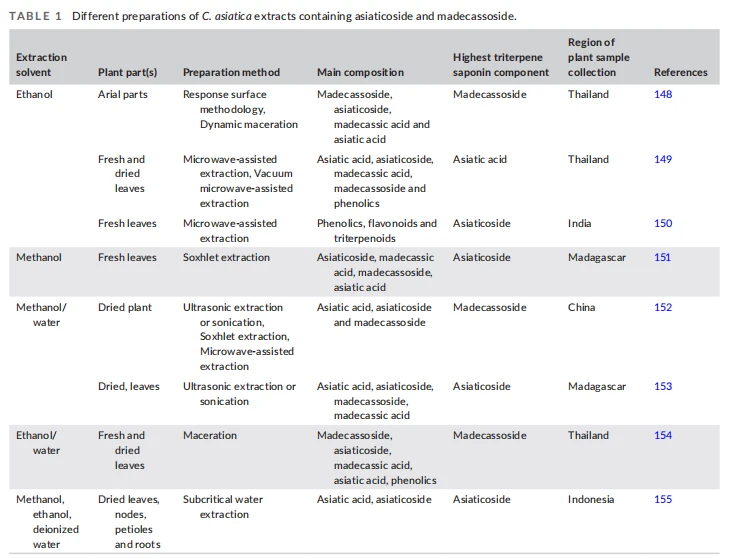
Presently, various aqueous and alcohol extracts of C. asiatica are utilized to ameliorate a broad range of diseases and disorders, with abundant in vitro and animal studies supporting the therapeutic actions of asiaticoside and madecassoside in particular.
Among the many activities of these two phytochemicals of interest, the most widely used ones are neuroprotective, wound-healing, and skin-protective properties. Asiaticoside can alleviate neuronal damage,28 shows anti-anxiety effects29 and can behave as an antidepressant-like agent.30 Madecassoside and asiaticoside are implicated in the treatment of hypoxic–ischaemic injuries in the brain31,32 and are incorporated into the treatment of various neurodegenerative disorders like Alzheimer's and Parkinson's diseases.33,34 Furthermore, these compounds have collagen-stimulating, hydrating, scar, and burn-healing properties,35,36 resulting in their popularity in both clinical and cosmetic contexts. These triterpene saponins are also confirmed to play a significant role in improving organ injuries or damage, repressing inflammation and oxidative stress, protecting against bacterial, fungal, and parasitic infections,10,37,38 exhibiting chemotherapeutic effects,39 as well as regulating various immune responses. Hence, they are strong candidates for natural-based pharmacology. This review describes the broad range of pharmacological benefits of these phytocompounds, illustrating their potential in clinical applications for several diseases and disorders (Figure 2).
2. NEUROPROTECTIVE AND PSYCHOACTIVE PROPERTIES
Neurological disorders accounted for approximately 9·0 million total worldwide deaths in 2016 (including people with disabilities). The steep global burden of these diseases with aging populations poses an increasing challenge in treatment and rehabilitation, urging the need for effective developments in medication and therapeutic strategies.40 The most extensively studied medicinal benefits of asiaticoside and madecassoside are their neurotherapeutic properties. These two active compounds extracted from C. asiatica are seen to shield the brain against neurodegenerative disorders and cognitive deficits, enhance memory and learning, alleviate symptoms of depression and anxiety, and exhibit overall protection over the central nervous system.

To be clinically effective, administered neurotherapeutic drugs must be able to cross the blood–brain barrier (BBB). The blood–brain barrier (BBB) is a continuous endothelial membrane within the brain micro-vessels where the brain endothelial cells are sealed by tight junctions, characterizing low paracellular and transcellular permeability.41 It behaves as a complex, regulatory interface that is interlinked with the rest of the Central Nervous System (CNS) and peripheral tissues; it dynamically adapts to the needs of the CNS, responds to physiological changes41, and controls the exchange between blood and the cerebral tissue to maintain brain homeostasis as well as to block the entry of toxic substances.42–44
The disruption of the BBB is involved in the pathophysiology of various neurological diseases such as Alzheimer's disease (AD),45, and traumatic brain and spinal cord injuries.46 Treating CNS diseases requires therapeutics that can cross and sufficiently interact with the BBB. Many pharmaceuticals are rendered ineffective against neurological disorders because they fail to penetrate the BBB, not because they lack insufficient potency.47 This limits the medical benefits of several types of CNS drug delivery.48,49 A study by Hanapi, Nur Aziah et al. investigated the extent of BBB permeation by C. asiatica compounds using primary porcine brain endothelial cells (PBECs) as a model. The experiment demonstrated the remarkably high capability of the tested phytocompounds in crossing the BBB, with asiaticoside showing the highest permeability, followed by madecassoside. Notably, the compounds also showed higher permeability coefficient values than donepezil, a drug commonly used for AD.43
The complexity of the BBB membrane provides possible routes for disease manifestation as well as for a wide range of drug-delivery approaches. The disruption of the BBB has been repeatedly attempted as a strategy for drug administration. However, techniques that disrupt an intact BBB for delivering a targeted drug require meticulous monitoring, as this process can simultaneously allow the entry of toxic circulating substances and microbial pathogens into the cerebral tissue, which is normally shielded by the BBB.42 Other consequences of BBB damage and loss of integrity include reduced cerebral blood flow, impaired hemodynamic response, dysregulated molecular and ionic flux, impaired transporter function, and leakage of plasma proteins, which can all result in multiple paths of complications involving neuronal dysfunction, neuroinflammation, and neurodegeneration.50 In the same study using primary porcine brain endothelial cells, asiaticoside, and madecassoside were proven to be efficient in crossing the BBB at a high rate without exerting any toxic effects, and while preserving the BBB tight junction integrity, making them desirable neurotherapeutics.
2.1 Neurodegenerative diseases
Progressive, debilitating conditions which bring about the eventual degradation of neuronal cells are classified as neurodegenerative diseases. The most widely studied neuroprotective applications of asiaticoside and madecassoside are their immunomodulatory effects on AD and Parkinson's Disease (PD). Both diseases are progressive and involve neuronal loss and damage to neuronal circuits. AD pathogenesis is mainly identified by extracellular aggregates of amyloid β (Aβ) peptides and the formation of intracellular neurofibrillary tangles.51 Most patients with AD are diagnosed at a stage where neuropathologic lesions have already developed, resulting in cognitive deterioration and memory difficulties.52 Individuals affected by PD suffer major degeneration to the dopamine-transmitting neuronal network in their midbrain, causing serious harm to the motor cortical regions of the brain before they are met with debilitating movement abnormalities such as gait impairment, rest tremor, and poor coordination.53

Age-related alterations in the brain microenvironment gradually led to increased BBB permeability and leakiness, neuronal degeneration, production of reactive oxygen species (ROS), and inflammation.54–56 Oxidative stress is triggered by a state of imbalance between ROS (chemically reactive species such as hydrogen peroxide (H2O2) and hydroxyl radicals (OH· )) and antioxidants. Excess ROS accumulation or reduced antioxidant levels can directly hamper neuronal synaptic activity and neurotransmission.8,57 Oxidative stress is associated with several inflammatory and degenerative pathologies and is a significant biomarker common to the pathophysiology of both AD and PD.55,58
The triterpene compounds obtained from aqueous or ethanolic extracts of C. asiatica, which majorly include Asiatic acid, asiaticoside, and madecassoside, are proven to exhibit high levels of free radical scavenging capacity and strong reducing potential. Aggregated Aβ-induced ROS generation and subsequent neurotoxicity are critical to the pathogenesis of AD; administration of C. asiatica extracts into PC12 pheochromocytoma cells and human IMR32 neuroblastoma cells bearing Aβ-induced oxidative stress has resulted in overall antioxidant activity. The mechanism of this action is via modulation of the antioxidant defense system and direct elimination of uncontrolled ROS production by C. asiatica extracts.59 Studies indicate that the antioxidant activity of C. asiatica extracts is largely attributed to its active triterpene constituents, especially the Asiatic side and Asiatic acid. An experiment checking for their activity against Parkinson's used rodent models treated with MPTP (a neurotoxin that destroys dopaminergic neurons and induces ROS formation) to demonstrate the action of C. asiatica extracts in enhancing brain antioxidants, decreasing lipid peroxidation and providing neuroprotection against MPTP toxicity.60 In the aforementioned study by Hanapi et al.,43 madecassoside, in particular, was observed to protect PBECs against H2O2-induced oxidative stress. A similar protective action of madecassoside has been identified in endothelial cells, as detected in H2O2-treated human umbilical vein endothelial cells (HUVECs). Madecassoside treatment reduced the effects of oxidative stress on the endothelial cells, primarily by prevention of lipid peroxidation and inhibition of pro-apoptotic factors which were otherwise upregulated as a response to elevated ROS levels. In addition, the compound preserved brain mitochondrial function.

Chronic neuroinflammation is another distinct biomarker observed at the early stages of neurodegenerative disease. Increasing concentrations of pro-inflammatory cytokines aggravate both AD and PD pathogenesis by stimulating neurotoxic plaque formation and Aβ depositions in AD patients, as well as causing neurodegenerative lesions in PD. These conditions lead to synaptic dysfunction and gradual neuronal death.8 Hafiz et al. have characterized the therapeutic potential of raw extract of C. asiatica (RECA) by simultaneously demonstrating the anti-inflammatory as well as the antioxidant activities of RECA in LPS-stimulated microglial cells. Exposure of neurons and oligodendrocytes to LPS subjects them to elevated inflammation (due to potent pro-inflammatory cytokines including NO, PGE2, and TNF-α) and overwhelming oxidative stress as a result of perpetual overactivation of the microglia. RECA displayed strong anti-inflammatory activity by suppressing the inflammatory mediators in a concentration-dependent manner; however, despite the highest triterpene constituent of RECA being characterized to be madecassoside, followed by asiaticoside, the anti-inflammatory action seen in this study was instead attributed to the comparatively lower madecassic acid content. At the same time, the high proportions of madecassoside in RECA were proven to be responsible for restoring antioxidant activity in the microglia as well as suppressing intracellular ROS generation, hence reversing the LPS-induced oxidative damage. Similar properties were observed in vivo using LPS-treated Sprague Dawley rats, where administration of RECA significantly prohibited or restored oxidative stress and neuroinflammation. In addition, RECA exhibited curative and protective properties against AD by attenuating acetylcholinesterase activity both in vitro as well as in the LPS-injected rodent models of AD.61
Aβ1–42 depositions are retained in the brains of AD patients and are involved in the initiation of fibrillar deposition of amyloid-beta peptides in the brain. A study by Hossain, Shahadat et al. demonstrated the amyloidogenesis-inhibitory action of asiaticoside using fluorescence correlation spectroscopy, where asiaticoside was seen to block Aβ1–42 fibrillation in the early stages. In addition, a previous study by the same team has also accounted for the role of madecassoside in inhibiting Aβ1–42 fibrillation as well as improving memory loss of AD model rats.33
Another prominent manifestation in AD patients has reduced levels of the neurotransmitter acetylcholine (ACh) in the brain cortex and hippocampus. Thus, a favorable therapeutic target for AD would be the inhibition of acetylcholinesterase enzyme (AChE) which is responsible for the hydrolytic breakdown of ACh. Orhan et al. demonstrated that ethanolic extract of C. asiatica (with 10.78% content of asiaticoside and madecassoside) exhibited roughly 50% inhibition against AChE, indicating that this strong neuroprotective activity can be attributed to the high concentrations of triterpene saponins in the extract.62
Asiaticoside-treated MPTP rat models of Parkinsonism have shown preservation of dopaminergic neurons by inhibiting MPTPinduced neurotoxicity and also maintaining the metabolic balance of dopamine, protecting against locomotor dysfunction, preventing oxidative damage and upregulation of Bcl-2 expression while simultaneously reducing levels of pro-apoptotic protein Bax. Most significantly, asiaticoside tackled oxidative stress by reducing the production of malondialdehyde (MDA) levels which induce oxidative damage to proteins and lipids involved in PD and also increased the expression of the potent antioxidant glutathione (GSH). Furthermore, the high Bcl-2/Bax ratio accounts for reduced ROS generation and higher GSH-stabilized antioxidant activity via the action of Bcl-2, thus contributing to enhanced resistance against MPTP-induced Parkinsonism.63 Similar mechanism of action had been observed in an earlier study using MPTP-treated mice where asiaticoside administration prevented oxidative damage to the neurons and protected against Parkinson's toxicity specifically by blocking Bax-mediated neuronal death and promoting Bcl-2 expression.64
Madecassoside also exhibits similar properties, as seen in another study where the compound prevented early signs of Parkinsonism in MPTP-treated rats by reversing the depletion of dopamine, upregulating antioxidant activity, and increasing the Bcl-2/Bax ratio.34
2.2 Brain and spinal cord injury
The majority of strokes are due to cerebral ischemia, which is one of the leading causes of disability and death. Acute ischaemic strokes are considered thrombo-inflammatory diseases and are primarily treated by rapid re-establishment of blood flow (recanalization) of occluded cranial vessels. However, infarcts can grow despite successful recanalization, leading to serious damage known as cerebral ischemia/reperfusion injury or CIRI.65 Zhang et al. evaluated the effects of asiaticoside in vitro as well as in vivo using rat models for cerebral ischemia/reperfusion injury. Asiaticoside successfully reversed nervous function injury, brain edema, cell apoptosis, infarct size, apoptosis-related protein expressions, inflammation, and oxidative stress, and also increased cell survival by blocking the NOD2/MAPK/NF-κB signaling pathway.66 Madecassoside exerts robust protection against cerebral ischemia–reperfusion (I/R) injury as seen in a study by Luo et al. Madecassoside shows similar mechanistic actions of anti-oxidative, anti-inflammatory, and anti-apoptotic activity against I/R injury by attenuating microglia-mediated neuroinflammation via the inhibition of the TLR4/MyD88/NF-κB signaling pathway.67 Other studies verify the role of asiaticoside and madecassoside in checking cerebral ischaemic injury, particularly hypoxic-ischemia. Asiaticoside has previously shown a protective effect on ischemia-hypoxia neural cells in-vitro and promotes ischemia-hypoxia nerve cell survival rate by upregulating anti-apoptotic protein Bcl-2, reducing cell apoptosis by suppressing pro-apoptotic factors Bax and caspase-3. Asiaticoside can further inhibit lactate dehydrogenase release by ischemia-hypoxic cells and inhibit membrane lipid peroxidation, thereby preventing damage to neuronal membranes and blocking ischemia-associated neuron necrosis.32 Hypoxia stimulates alterations in calcium ion concentration which in turn stimulates the mitochondrial apoptotic pathway, hence activating the production of reactive oxygen species, resulting in hypoxic–ischaemic-induced brain damage (HIBD). Asiaticoside has been proven useful in preventing HIBD-induced apoptosis, lowering the production of pro-inflammatory cytokines, and repairing brain neuron injury and oxidative damage in a dose-dependent manner via the TLR4/NF-κB/STAT3 pathway. This is a significant development in the clinical treatment of neonatal hypoxic–ischemic encephalopathy (HIE) which is a serious risk for neonatal death.68

Spinal cord injuries (SCI) are traumatic and frequently cause neurological dysfunction. SCIs can lead to changes in brain structure and brain function by inducing nerve damage as well as causing long-term complications like paralysis and neuropathic pain.69 A key event in the mediating cellular response to spinal cord injury is inflammation. Asiaticoside treatment has proven to significantly reduce the expression of the pro-inflammatory marker TNF-α in spinal cord tissue, as revealed by low TNF-α levels in the serum of SCI-induced rats in a reported study. Moreover, the triterpene functioned by blocking the apoptosis of spinal cord neurons and enhancing neuronal survival, thereby promoting recovery.70 Luo et al. investigated the beneficial actions of asiaticoside in SCI rat models. The results attested to the neuroprotective properties of asiaticoside in attenuating SCI which prevented oxidative damage, nitric oxide activity, and the production of pro-inflammatory cytokines. Furthermore, asiaticoside also inactivated the p38-MAPK signaling pathway, which when expressed leads to the destruction of the blood–spinal cord barrier.71 Hence asiaticoside in particular can be considered a major therapeutic compound in treating SCI, although the effects of asiaticoside on neurological pain remain to be fully elucidated.
2.3 Anxiety and Depression
Generalized anxiety disorder (GAD) is a highly disabling mental health condition and is frequently aggravated further due to other psychiatric disorders, such as major depressive disorder (MDD), panic disorder, somatic symptom disorders, and personality disorders. The development of anxiety disorders includes an interaction of psychosocial factors such as childhood adversity, stress, or trauma, along with genetic vulnerability, which manifests into neurobiological and neuropsychological dysfunctions. GAD often precedes depression, another prevalent mental condition that depletes the quality of life and is associated with sustained stress, marked distress, and medical comorbidity. Several neurobiological markers of these conditions have been established and continue to be reviewed, and the commonly used forms of treatment at present are psychological therapy (eg: cognitive behavioral therapy), pharmacotherapy, or a combination of both. However, GAD and depression, along with associated mental disorders, remain largely marginalized and are frequently overlooked and undertreated in primary care, leading to poor treatment outcomes. Moreover, the adverse side effects of antidepressants and anti-anxiety (anxiolytic) medications remain to be fully illustrated.72–74 The lack of fully effective therapeutic approaches towards GAD and depression facilitates the need for alternative avenues of treatment, including those of natural origin, that can be achieved by incorporating medicinal plant extracts into primary care routines.
A 70% hydroethanolic extract of C. asiatica has previously shown promising anxiolytic properties in a clinical study where it attenuated anxiety-related disorders, stress phenomena, and correlated depression in GAD patients.75 Further examination of C. asiatica as an anxiolytic agent proves its efficiency in ameliorating the pathological stress manifested due to anxiety. Wanasuntronwong, Aree, et al. used a standardized extract of C. asiatica (ECa 233) to evaluate its anti-anxiety effects on acutely stressed as well as chronically stressed mice. The therapeutic action of Eca 233 was found comparable to a well-known anxiolytic drug, diazepam. With specific respect to the two major triterpenoids, asiaticoside, and madecassoside, there was significant relief from anxiety-induced stress, however, there was no such distinct effect on other well-defined physiological markers of chronic stress like body weight or serum corticosterone.76
A recent study also implicates the significance of asiaticoside, among other candidate drugs, as an emerging anti-depressant. 77
A potential neurobiological target in depression is inflammation.78 Depression-associated neuroinflammation activates pro-inflammatory cytokines and thereby increases neuronal susceptibility to damage, affects serotonin synthesis and metabolism, alters neuronal apoptosis, and impairs neurogenesis and neuroplasticity. Inflammatory cytokines also regulate monoamine neurotransmitter metabolism by inhibiting neurotransmitter synthesis (serotonin, norepinephrine, and dopamine) with studies suggesting that cytokines are involved in serotonin depletion in the CNS.79 A recent study highlights the anti-inflammatory properties of asiaticoside in treating depression in chronic unpredictable mild-stress mouse models; asiaticoside administration can reverse depressive-like behavioral patterns, increase the levels of monoamine neurotransmitters, and inhibit hippocampal inflammation. The observed antidepressant-like effect is believed to occur by regulation of the cAMP/PKA signaling pathway to inhibit NF-κB- and NLRP3-mediated inflammation.30
3. DERMATOLOGICAL AND WOUND-HEALING PROPERTIES
Several natural compounds are utilized in treating skin defects and wounds, as a topical medicine for acne or scars, or cosmetic purposes. Different extracts (TECA, TTFCA, ethanolic and methanolic) of C. asiatica as well as its triterpene constituents asiaticoside, madecassoside, asiatic and madecassic acid, have shown significant applications in the treatment of dermatoses and skin lesions such as excoriations, burn injuries, cutaneous scars (hypertrophic scars and keloid scars), eczema, as well as in the healing process of skin wounds.80 Asiaticoside is also a popular phytocompound currently used in anti-aging agents.
3.1 Skin diseases
Atopic dermatitis (or atopic eczema) is one of the most common allergic inflammatory skin diseases and is caused by abnormal immune responses associated with skin barrier dysfunction.81
The pharmacological effects of C. asiatica on 2,4-dinitrochlorobenzene (DNCB)-induced skin inflammation has been tested using in vitro and in vivo models of atopic dermatitis, and the results illustrated strong protective activity of C. asiatica extract whereby it inhibited pro-inflammatory cytokines to effectively suppress dermatitis symptoms, most significantly the reduced infiltration of immune cells into dermal tissue. This immunosuppressive action may be attributed to the anti-allergic and anti-inflammatory properties of its constituent compounds.82
Madecassoside has been implicated as a promising treatment for the skin condition vitiligo, an acquired pigmentary disorder of the skin and mucous membranes that is characterized by chronic and progressive loss of melanocytes from the epidermis and the follicular reservoir. Evidence shows that oxidative stress caused by H2O2 is a major contributor to the onset and progression of vitiligo.83 An experimental study to test the effects of C. asiatica on oxidative stress in human melanocytes demonstrated that madecassoside can protect the mitochondrial structure against ROS overproduction and attenuate the overall oxidative damage in melanocytes via the activation of autophagy.84
Another prevalent skin disorder of concern is acne. Hydration and anti-inflammation are considered crucial steps in maintaining skin homeostasis and barrier function; however, these can be compromised by the development of acne, a chronic dermatologic disorder characterized by major pathophysiological factors of increased seborrhea, hyperkeratinization of the pilosebaceous unit and inflammation caused by the skin commensal Propionibacterium acnes. 85 Madecassoside is confirmed to significantly protect the skin against acne inflammation by inhibiting the production of pro-inflammatory cytokines, IL-1β and TLR2, released by P. acnes in P. acnes-stimulated THP-1 human monocytic cells. Moreover, madecassoside can notably enhance skin hydration and moisturization both in vitro and in vivo, proving to be both medically and cosmetically beneficial.36
3.2 Skin aging and UV protection
Cutaneous aging is influenced by both intrinsic factors (chronologic aging) and environmental damage, majorly UV radiations from the sun (photoaging).86 The effects of skin aging (sagging, wrinkle formation) are most prominent in the superficial dermis and epidermis. Topical treatments using madecassoside87 and asiaticoside.88,89 show improvements in hyperpigmentation,88,90 photoaging skin, cellulite and striae91, and periocular wrinkles.87,89,92
3.3 Wounds, burn injuries, and scars
Wound healing is a dynamic process and the healing process starts immediately after a skin injury, taking months to complete.93 Asiaticoside and madecassoside show unique pharmacological properties of wound healing and have been extensively tested in vitro and in vivo, although there are few verified studies on humans. The wound-healing mechanism of standardized C. asiatica extracts ECa 233 has been assessed by investigating its effects on the migration of a human keratinocyte cell line (HaCaT) using a scratch wound-healing assay. Keratinocyte migration was significantly enhanced by ECa 233 in a concentration- and time-dependent manner. The observed wound-healing activity of ECa 233 occurs via the activation of FAK, Akt, and MAPK-dependant signaling pathways.94 Other controlled studies have further confirmed the role of asiaticoside and madecassoside in enhancing wound healing and diminishing hypertrophic and keloid scars.95 Keloid is an excessive dermal scar occurring in response to skin injuries. While hypertrophic scars do not spread beyond the site of injury, keloid scars extend beyond the original wound edges and invade the adjacent normal dermis due to the extensive production of extracellular matrix, especially collagen, caused by the overproduction of cytokines and growth factors. Keloids are invasive and characterized by the migratory behavior of overactive fibroblasts.93 They are associated with signaling pathways like transforming growth factor-beta 1 (TGF-β1), mitogen-activated protein kinase (MAPK), and insulin-like growth factor-I (IGF-I), which can be regulated by phytochemicals like asiaticoside and madecassoside.95 Madecassoside has been seen to suppress the migration of keloid-derived fibroblasts (KFs) as observed in madecassosidetreated fibroblasts taken from human earlobe keloids. To migrate, a cell must develop morphological polarity, continuously protrude a single lamellipodium, and then polarize in the direction of migration through organized actin polymerization. Madecassoside can directly reduce the cytoskeletal protein actin expression of KFs and its mechanism of action is by inhibiting the activity of some (not all) of the several intracellular molecules that are responsible for abnormal keloid migration, including the significant, concentration-dependent reduction of phosphorylated Akt, PI3K and p38 of KFs and the repression of actin-depolymerization-associated p-cofilin/cofilin.96
The overexpression of growth differentiation factor-9 (GDF-9) in keloids enhances the proliferation, migration, and invasion of keloid fibroblasts due to the phosphorylation of Smad 2/3 proteins through activation of the MAPK pathway. Asiaticoside is capable of inhibiting this invasive growth of KFs by inhibiting the GDF-9/MAPK/Smad pathway.97
Despite available treatment options for keloid scars such as a combination of medical and surgical therapies, the reoccurrence rate is still high.93 This prompts clinical treatments to explore natural therapeutic options as well, taking into consideration the efficacy of asiaticoside and madecassoside in successfully treating scars. Interestingly, the effects of the mentioned phytochemicals on reducing fibroblast migration do not extend to repressing collagen production, which is also over-expressed in keloid scar formation. Instead, asiaticoside and madecassoside prove cosmetically useful by inducing the production of collagen and thus preventing skin aging, which is caused as a result of low Type 1 collagen secretion in the dermis. Asiaticoside can induce type I collagen synthesis via the activation of the TGF-β receptor I kinase-independent Smad signaling.98 Both asiaticoside and madecassoside have been observed to stimulate collagen production in the context of burn wound healing.35
Burn wound healing is a complex process involving inflammation, re-epithelialization, granulation, neovascularization, and wound contraction, and it requires the activity of several biochemicals including antioxidants and cytokines. Extensive in-vitro and in-vivo studies indicate that C. Asiatica is one of the best medicinal plants for burn wound-healing activity, with asiaticoside and madecassoside proving especially effective.99 Madecassoside has significant wound-healing activity based on several mechanisms including anti-inflammatory and antioxidative activity, collagen synthesis, and angiogenesis, contributing greatly to the use of C. asiatica herbs as a favorable source for treating burn injuries.100 Asiaticoside also enhances burn wound healing through the promotion of angiogenesis during skin wound repair.101 Asiaticoside and madecassoside are recognized as the main active constituents involved in healing burns, whereby orally administrated madecassoside shows significantly higher efficiency in the synthesis of procollagen, wound-healing speed, and wound-healing pattern, as observed in vitro in primary skin fibroblasts and in vivo in mice that have sustained burn injuries.35 Furthermore, the wound healing activities of sequential hexane, ethyl acetate, methanol, and water extracts of C. asiatica have been identified in the incision and partial-thickness burn wound models in rats. All extracts, including those containing asiaticoside, madecassoside, and Asiatic acid, showed remarkable enhancement of burn wound healing with fully developed epithelialization and keratinization observed in all the extract-treated groups. However, Asiatic acid was seen to perform more efficiently compared to our phytocompounds of interest.102
【For more info: david.deng@wecistanche.com / WhatApp:86 13632399501】