This Operation Will Solve Your Old Problem Of Constipation!
Nov 07, 2023
When it comes to constipation, most people are secretive and unable to talk about it. However, they are deeply troubled by this problem. According to the "Chinese Expert Consensus on Chronic Constipation (2019)" released by the Gastrointestinal Dynamics Group of the Gastroenterology Branch of the Chinese Medical Association, the prevalence of chronic constipation in Chinese adults is 4.0% to 10.0%.

Click to home remedies for constipation
This means that approximately 50 million adults are suffering from constipation. And it increases with age. The prevalence of chronic constipation in people over 70 years old reaches 23.0%, and it can reach 38.0% in people over 80 years old.
Of particular note is that the prevalence is higher in women than in men.
01 What factors influence the occurrence of constipation?
Research shows that in addition to advanced age and female gender, risk factors for chronic constipation also include the following factors:
Lifestyle habits: low-fiber food, reduced fluid intake, less physical activity, etc.
Defecation habits: Doing other things while defecating, such as playing with mobile phones, reading, etc., unconsciously inhibits defecation, resulting in reduced defecation reflex feeling.
Psychological factors: anxiety, depression, adverse life events, etc.
Drug factors: anticholinergics, opioids, antidepressants, antiepileptic drugs, antihistamines, antipsychotics, antitumor paralysis drugs, antispasmodics, calcium antagonists, calcium supplements, iron supplements, Antidiarrheal drugs, NSAIDs, etc.
02 What kind of diseases will be aggravated by constipation?
Cirrhosis
If patients with liver cirrhosis have long-term constipation, bacteria will multiply in the intestines and decompose to produce a large number of ammonia compounds, which can cause damage to the brain through the blood-brain barrier.
Eventually, hepatic encephalopathy is caused, causing the patient to have symptoms such as abnormal behavior, slow reaction, confusion, and even hepatic coma.
Cardiovascular disease
Many sudden heart and brain diseases occur during patients' defecation. The main reason is that straining to defecate causes an increase in intra-abdominal pressure, which in turn leads to a sudden and sharp increase in blood pressure.
It can induce cerebral blood vessel rupture and bleeding, angina pectoris, arrhythmia, myocardial infarction, and other problems.
Anal fissure, hemorrhoids
For patients with anal fissures and severe hemorrhoids, defecation is always accompanied by severe pain, and dry and hard stools make the process even more painful.

Some patients even hold back their bowels and dare not defecate, causing the feces to stay in the intestines longer, thus aggravating the constipation problem.
Dry and hard stools lead to longer toilet visits, aggravate blood circulation disorders around the anus and rectum, and cause anal fissures to prolong their healing, forming a vicious cycle.
abdominal hernia
Hernia refers to an organ or part of an organ in the body leaving its normal anatomical position and entering another part through a congenital or acquired weak point, defect, or hole. Abdominal hernia is the most common, and the contents of the hernia are mostly intestinal tubes.
If the patient is constipated for a long time and exerts force during defecation, it will increase the intra-abdominal pressure and worsen the hernia.
03 What are the misunderstandings about improving constipation?
1. Eat more bananas
In many people's minds, bananas are the first choice to help with defecation, but it turns out that the effect is not as good as imagined, and may even have the opposite effect.
This is because unripe bananas contain a large amount of "tannic acid", which can coagulate protein and make stool dry and hard, which in turn aggravates constipation.
2. Drink honey water
For honey laxatives, you need to eat dozens of grams of honey before you want to have a bowel movement. Your blood sugar may rise before you can have a bowel movement and you may gain weight. For most people, the laxative effect of drinking a cup of honey water is probably not significantly different from drinking plain water.
3. Drink lots of tea
Tea can reduce internal heat and relieve constipation, so some people choose to drink more tea to relieve constipation. But in fact, people with constipation are not suitable for drinking too much tea, because tea has an astringent effect, and drinking too much will aggravate constipation.
4. Drink yogurt
The probiotic content in yogurt is far from achieving the effect of regulating the balance of intestinal flora, so it is unreliable to expect that drinking yogurt will relieve constipation.
Moreover, most yogurt only contains Lactobacillus bulgaricus and Streptococcus thermophilus, which are destroyed by gastric acid when they pass through our stomach and have difficulty reaching the intestines.
04 These foods are the nemesis of constipation
pitaya
Dragon fruit is rich in dietary fiber, pectin, and oligosaccharides, which not only promote the formation of stool but are also good for regulating intestinal flora. The crude fiber of the black dragon fruit seeds is as high as 13% and cannot be digested by the intestines. Absorption can stimulate intestinal peristalsis and help defecation.
A clinical trial conducted on 128 college students found that eating half a red dragon fruit (about 225g) can reduce the time for food to pass through the entire intestine from an average of 26 hours to an average of 21.9 hours.
kiwi
Many studies at home and abroad have proven that kiwi fruit has a laxative function. Among them, a small-scale randomized trial published in 2021 showed that eating two kiwi fruits a day can reduce constipation and bloating.

Judging from the ingredients, kiwi fruit is relatively rich in dietary fiber, which can naturally help relieve constipation.
prunes
Prunes are indeed a good helper for laxatives. Natural prune juice contains water-soluble natural pectin fiber and insoluble plant fiber. The combination of these two fibers can increase intestinal peristalsis, soften intestinal excretion, increase the frequency of defecation, and accelerate intestinal emptying and relaxation. Soothes the stomach.
Even if you can’t buy fresh prunes, dried prunes are high in dietary fiber and sorbitol, and eating dried prunes may have a better laxative effect than fresh prunes!
Natural Herbal Medicine For Relieving Constipation-Cistanche
Cistanche is a genus of parasitic plants that belongs to the family Orobanchaceae. These plants are known for their medicinal properties and have been used in Traditional Chinese Medicine (TCM) for centuries. Cistanche species are predominantly found in arid and desert regions of China, Mongolia, and other parts of Central Asia. Cistanche plants are characterized by their fleshy, yellowish stems and are highly valued for their potential health benefits. In TCM, Cistanche is believed to have tonic properties and is commonly used to nourish the kidney, enhance vitality, and support sexual function. It is also used to address issues related to aging, fatigue, and overall well-being. While Cistanche has a long history of use in traditional medicine, scientific research on its efficacy and safety is ongoing and limited. However, it is known to contain various bioactive compounds such as phenylethanoid glycosides, iridoids, lignans, and polysaccharides, which may contribute to its medicinal effects.

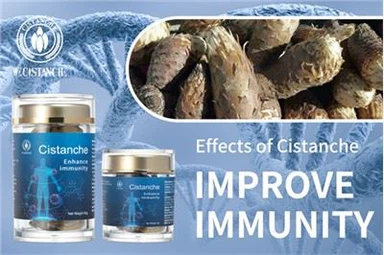
Wecistanche's cistanche powder, cistanche tablets, cistanche capsules, and other products are developed using desert cistanche as raw materials, all of which have a good effect on relieving constipation. The specific mechanism is as follows: Cistanche is believed to have potential benefits for relieving constipation based on its traditional use and certain compounds it contains. While scientific research specifically on Cistanche's effect on constipation is limited, it is thought to have multiple mechanisms that may contribute to its potential to relieve constipation. Laxative Effect: Cistanche has long been used in Traditional Chinese Medicine as a remedy for constipation. It is believed to have a mild laxative effect, which can help promote bowel movements and induce constipation. This effect may be attributed to various compounds found in Cistanche, such as phenylethanoid glycosides and polysaccharides. Moistening the Intestines: Based on traditional use, Cistanche is considered to have moisturizing properties, specifically targeting the Intestines. Promoting hydration and lubrication of the Intestines may help soften tools and facilitate easier passage, thereby relieving constipation. Anti-inflammatory Effect: Constipation can sometimes be associated with inflammation in the digestive tract. Cistanche contains certain compounds, including phenylethanoid glycosides and lignans, that are believed to have anti-inflammatory properties. By reducing inflammation in the intestines, it may help improve bowel movement regularity and relieve constipation.