Tired Every Autumn? You Might Want To Know About Cistanche Tubulosa
Oct 21, 2026
A gentle, moistening, and balanced tonic herb for the fall and winter seasons
Have you ever had this experience: as soon as summer ends and the weather turns cool, instead of feeling refreshed, your whole body seems to quietly switch into low-power mode? The alarm goes off three times in the morning, and you still cannot get up. Within two hours of starting work, you are already yawning nonstop. By three or four in the afternoon, your head feels as heavy as lead. At night, your body is tired, but your sleep is light and full of dreams, so you wake up the next morning feeling even more exhausted than before you went to bed. At the same time, your hair becomes dry, your skin feels dry, your throat feels dry, your bowel movements become dry and difficult, your lower back aches a little, your legs feel weak, and you simply cannot find the energy to do anything. Your mood also tends to slip downward without a clear reason.

Faced with this state, many people immediately blame themselves. Am I just lazy? Am I in some kind of subhealth condition? Could this be depression? In the framework of Traditional Chinese Medicine, however, it is often neither laziness nor a simple lack of sleep. It signals that autumn fatigue has arrived, usually bundled with unresolved summer dampness, depleted essence and blood, and a failure of yang energy to retract inward.
If you were to choose one herb to help your body slowly recharge during the fall and winter, Cistanche tubulosa deserves serious attention. It is not as fiercely hot as aconite or cinnamon, not as aggressively warming as deer antler or sea horse, and certainly not as purgative as rhubarb or senna. Its most distinctive qualities can be summed up in four words: warm, moist, tonic, and moving. For modern people who feel tired in autumn, weak in winter, dry in the intestines, and sore in the lower back, the nature and functions of Cistanche tubulosa often turn out to be a remarkably good match.

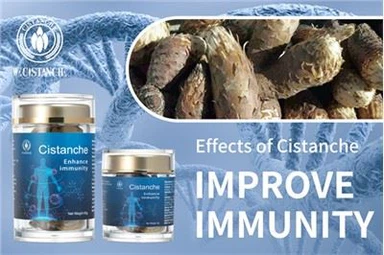
Effects of cistanche-improve kidney function
1. Why Autumn Makes You Tired
Traditional Chinese Medicine describes the year as a cycle of four movements: sprouting in spring, growing in summer, gathering in autumn, and storing in winter. Autumn is the season of gathering. Yang energy no longer surges outward as it does in summer, but begins to turn inward. Sweating decreases, metabolism slows, and the growing difference between day and night temperatures forces the body to spend a certain amount of energy on adaptation. All of this is a normal physiological rhythm.

Yet the reason modern people feel exhausted in autumn is usually a combination of several factors. First, there is a kind of debt accumulated over the summer that comes due in autumn. Iced drinks, air conditioning, late nights, overeating, sun exposure, and chronic stress quietly drain spleen yang, heart yin, and kidney essence. When the cool of autumn arrives, and the body wants to gather and store, it discovers that the foundation has already been hollowed out. Second, summer dampness has not been fully cleared. This is especially true in southern and coastal regions, and among those who spend long hours in air-conditioned offices. When dampness lingers, it weighs down the spleen and makes you drowsy; it obstructs the lungs and makes your chest feel stuffy; it sinks downward and makes the lower back feel heavy. For many people, what looks like autumn fatigue is actually dampness-related fatigue.
Third, intestinal dryness and prolonged sitting join forces, making the elimination of metabolic waste sluggish. Autumn is governed by dryness, and the first systems affected are the lungs and the large intestine, which reduces intestinal fluid. Add to this a sedentary work life, insufficient water intake, low dietary fiber, and too much coffee, and bowel movements become increasingly lazy. Dry stools, difficult defecation, abdominal bloating, bad breath, brain fog, and a dull complexion follow one after another. Fourth, the kidney begins its function of sealing and storing, but there is not much left to store. In TCM theory, the kidney is the root of congenital constitution, storing essence and qi, and serving as the body's most important energy reserve. After the age of thirty, late nights, stress, overwork, and chronic illness gradually consume this reserve. When autumn calls for essence to be stored and winter calls for yang to be sealed, the familiar signs of low battery naturally appear.

Effects of Cistanche-anti-fatigue
So the essence of autumn fatigue is usually a combination of external dryness, internal dampness, qi deficiency, essence depletion, and intestinal dryness, rather than a single cause. Relying on coffee for stimulation, swallowing large doses of vitamins, or suddenly intensifying exercise at this point usually only masks the problem temporarily, and may even weaken the body further. A more sensible approach is to first moisten dryness and resolve dampness, then gently and steadily replenish essence and blood, instead of launching into heavy supplementation right away.
2. What Is Cistanche tubulosa tubulosa: The Composed Herb from the Desert
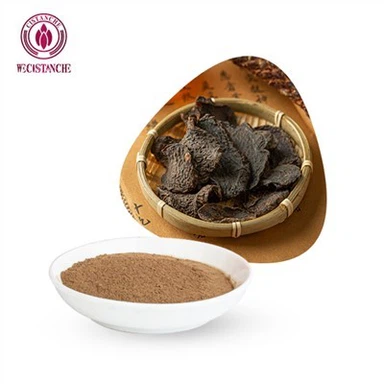
Cistanche tubulosa tubulosa is a plant of the Orobanchaceae family. The medicinal part is its dried, fleshy stem with scale-like leaves. The scientific name usually refers to Cistanche tubulosa. It is a parasitic plant that grows on the roots of desert shrubs such as saxaul and tamarisk, mainly found in arid desert regions including Xinjiang, the Alashan area of Inner Mongolia, Gansu, and Qinghai. Its harsh growing environment is precisely what forges its warm, moist, and substantial medicinal nature.
Cistanche tubulosa has several vivid folk names. One is Dayun, meaning a herb of great usefulness. Another is Di Jing, suggesting that it absorbs the essence of the earth. A third is Desert Ginseng, indicating that although it does not grow in deep mountains like Panax ginseng, it nevertheless has the ability to support weakness and nourish the human body, without the tendency of ginseng to be overly lifting or stagnating.

Cistanche benefits for men
There is also a beautiful layer of meaning in the Chinese name Congrong itself. The classic Bencao Huiyan describes it this way: it nourishes the Gate of Life, enriches kidney qi, and supplements essence and blood. It is warm but not hot, tonifying but not harsh, warming but not drying, and moistening but not leaking. That is why it is called Congrong, meaning composed and unhurried. This single word captures the entire character of the herb. It does not rush, does not flare, and lifts the body's foundation quietly and almost imperceptibly.
Shennong Bencao Jing lists Cistanche tubulosa among the superior herbs, stating that it governs the five fatigues and seven injuries, tonifies the center, nourishes the five viscera, strengthens yin, boosts essence-qi, and, when taken for a long time, lightens the body. In the language of today, for those who are chronically overworked, constitutionally weak, sore and weak in the lower back and knees, low in energy, dry in the intestines, and hoping to age a little more slowly, Cistanche tubulosa tubulosa is an herb that can be used to nurture the foundation. What the ancients sought from it was precisely this composure, rather than a momentary surge of excitement.
3. Why Autumn Fatigue Specifically Calls for Cistanche tubulosa tubulosa
As mentioned above, the most common constitution among people suffering from autumn fatigue is usually not the textbook pattern of pure yang deficiency, but rather a mixed one. There is some deficiency, some dryness, some dampness, some constipation, some soreness in the lower back, some sensitivity to cold, and yet some thirst. This deficient-and-dry constitution requires a delicate touch.
Using intensely warming herbs such as deer antler or aconite can easily stir up fire and damage yin, causing mouth ulcers, sore throat, insomnia, and worsening constipation. Relying long-term on purgatives such as rhubarb or senna may produce an immediate effect, but will gradually drain the person and often rebound once stopped. Using ginseng to lift and tonify can make some people feel tight in the chest, dizzy, or unable to sleep. Using donkey-hide gelatin to nourish yin and blood can feel too greasy and burdensome for those with weak digestion. In short, every single-direction method risks solving one problem while creating another.
The brilliance of Cistanche tubulosa lies in its balanced, moderate approach. It is sweet and salty in taste, warm in nature, and enters the kidney and large intestine meridians. It warms and tonifies kidney yang while nourishing essence and blood, moistens the intestines to relieve dryness, and gently moves the bowels, all while its moistening quality moderates the drying tendency commonly found in other yang-tonifying herbs. In the dimension of warming, it nourishes kidney yang not by burning the body red like chili peppers, but by adding slow-burning fuel to the stove so that warmth radiates gradually from the Gate of Life. In the dimension of moistening, it relieves dryness in the intestines, throat, and skin. In the dimension of tonifying, it replenishes essence and blood, gradually nourishing the lower back, knees, brain, hair, and ears. In the dimension of moving, it allows stagnant bowels to be eased without damaging the body's upright qi.

Effects of Cistanche-Improve kidney function
Click here to view Cistanche for Kidney disease products
【Ask for more】 Email:cindy.xue@wecistanche.com / WhatsApp: 0086 18599088692 / WeChat: 18599088692
There is a famous classical formula called Jichuan Jian, which uses Cistanche tubulosa together with angelica, achyranthes, aurantium, cimicifuga, and alisma, specifically for the treatment of kidney-deficiency constipation. The thinking behind this formula is thought-provoking: what it treats is not the mere result that the stool will not pass, but the root cause that the person is too depleted to pass it. Many people who feel tired in autumn while also struggling with constipation follow exactly this same logic. It is not that you do not want to move or that you do not want to eliminate. It is that kidney essence is insufficient, the intestines are dry, and yang can no longer retract inward.
4. What Cistanche tubulosa tubulosa Actually Tonifies
In many introductions available overseas, Cistanche tubulosa tubulosa is simply labeled as a natural Viagra or a testosterone booster. This is half right and half wrong, and it also narrows the value of Cistanche tubulosa tubulosa far too much. In the theoretical system of TCM, tonifying the kidney covers a much broader range. It touches on what modern medicine would describe as energy metabolism, endocrine and reproductive function, bone marrow and brain, hair and hearing, lower-back and knee function, regulation of urination and defecation, aging, and fatigue resistance. The value of Cistanche tubulosa tubulosa lies precisely in its mild and lasting effects across all of these dimensions.
The first area is anti-fatigue. Modern pharmacological research has found that Cistanche tubulosa tubulosa is rich in phenylethanoid glycosides such as echinacoside and acteoside, along with polysaccharides, betaine, amino acids, and various trace minerals. These components are associated with anti-fatigue, antioxidant activity, improved mitochondrial function, immune regulation, neuroprotection, and support for memory and learning. To put it plainly, after using Cistanche tubulosa, you do not feel wired by stimulation. Rather, your muscles recover faster, your brain fog thins out, climbing stairs no longer leaves you breathless, and you are much less likely to crash at three in the afternoon.

Effects of cistanche: anti-fatigue
The second area is moistening the intestines, which is probably the most underrated ability of Cistanche tubulosa. TCM holds that the kidney governs the two excretions and governs the five fluids. Once kidney essence becomes deficient, fluids in the intestines also decline, leading to dry stools and difficult defecation. This is especially common among the elderly, women after childbirth, people recovering from prolonged illness, and office workers who sit for long periods. This type of constipation has a distinct character. The stool is not hard as stone, yet it is exhausting to pass, accompanied by soreness in the lower back, sensitivity to cold, shortness of breath, and copious clear urine. Stimulant laxatives such as rhubarb and senna tend to weaken the person further. The approach of Cistanche tubulosa is to add fluid so that the boat can float. As kidney water becomes sufficient and intestinal fluid returns, the boat naturally moves with the current.
The third area is nourishing essence and blood. When essence and blood are abundant, the hair remains dark and lustrous, the nails strong, the ears clear, the eyes bright, the lower back and knees powerful, menstruation regular, and the foundation for conception more solid. So Cistanche tubulosa is by no means a medicine only for men. For women after childbirth, women approaching or moving through perimenopause, people who stay up late regularly, and professionals over the age of thirty-five, it can serve as a gentle, slow tonic that is especially suitable.

Effects of cistanche-improve kidney function
The fourth area is warming yang without drying. Some people have cold feet in winter yet are prone to mouth ulcers in summer. Ginger makes their throat burn, while pears give them diarrhea. For this kind of upper heat and lower cold constitution, cinnamon bark and aconite are clearly too aggressive. Cistanche tubulosa tubulosa warms the kidney and intestine primarily, and is far less likely to set the whole body on fire, making it considerably safer.
5. How to Use It in Autumn: Bringing the Herb into Daily Meals
A major advantage of Cistanche tubulosa is that it can serve both as medicine and as food. It is one of the few warming tonics suitable for medicinal and culinary use at the same time. For autumn and winter nourishment, it is not advisable to start immediately with strong medicinal decoctions or large amounts of supplements. A steadier approach is to invite Cistanche tubulosa into everyday dishes such as congee, soup, and tea.
The first recommendation is Cistanche tubulosa tubulosa red-date millet congee, the first choice for those with autumn dryness and a weak stomach. Take ten grams of Cistanche tubulosa and decoct it first to obtain the herbal liquid. Then cook eighty grams of millet in that liquid, adding three to five red dates and a small amount of goji berries toward the end. Millet protects the stomach, red dates build blood, goji berries soften the liver, and Cistanche tubulosa warms the kidney and moistens the intestines. Together, they are warm, moist, and well balanced, making this congee suitable for people who struggle to wake up in the morning, have a cool stomach, dry stools, and a sallow complexion.
The second recommendation is Cistanche tubulosa tubulosa yam pork-bone soup, a winter soup suitable for the whole family. Use fifteen grams of Cistanche tubulosa tubulosa, thirty grams of Chinese yam, three hundred grams of pork bones, ten grams of goji berries, and three slices of ginger, and simmer them together slowly. Yam strengthens the spleen and secures the kidney, pork bones replenish fluids, and Cistanche tubulosa tubulosa fills essence while warming yang. The overall nature is to seek yang within yin, making it less likely to cause either fire or greasiness. It offers good nourishing value for growing children, elders with sore waists and knees, office workers in the midst of autumn fatigue, and women recovering after menstruation.
The third recommendation is Cistanche tubulosa tubulosa black-sesame paste, which carries the dual significance of moistening the intestines and nourishing the hair. Decoct ten grams of Cistanche tubulosa; use the resulting liquid to blend toasted black sesame powder with an appropriate amount of rice slurry, and avoid adding sugar whenever possible, using only a little rock sugar if necessary. It is suitable for people with dry, brittle hair, dry skin, sluggish bowels, and increased hair loss in autumn and winter. It should be noted, however, that diabetics should avoid sugar, while those with spleen deficiency and diarrhea should not add sesame.
The fourth method is Cistanche tubulosa tubulosa honey tea, a gentle way of supplementing suitable for the office. Steep five to eight grams of sliced Cistanche tubulosa in warm water for ten to fifteen minutes, then add honey once the water has cooled slightly. Drinking a small cup in the afternoon is often far gentler than ordering a third Americano, and is much less likely to cause a racing heartbeat or sleepless nights.
The fifth method is Cistanche tubulosa goji wine, a kind of winter-storing liquor that is fairly widespread in northern China and Central Asia. Combine one hundred grams of Cistanche tubulosa tubulosa and fifty grams of goji berries with about four liters of liquor at around forty percent alcohol, seal, and steep for two weeks before drinking a small amount, no more than twenty milliliters per day. It suits middle-aged and older people with slightly deficient kidney yang, cold joints, weakness in the lower back and knees, and sensitivity to cold. It must be emphasized, however, that people with high blood pressure, gout, liver disease, or yin deficiency with fire, as well as women during menstruation, pregnancy, or lactation, should stay away from such medicinal liquor.
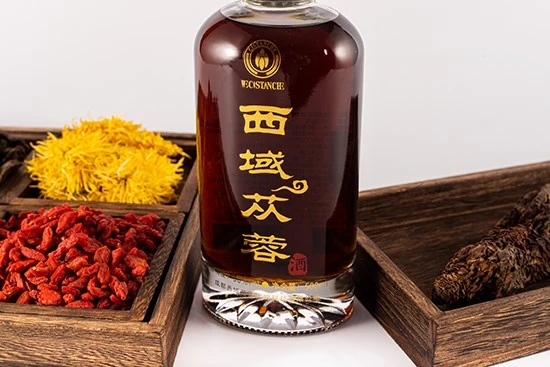
Cistanche wine