Traditional Chinese Herbal Compound Preparation Based On Regulation Of The Mitochondrial Unfolded Protein Response And Applications Thereof
Nov 13, 2026
(57) Abstract
The present invention discloses a traditional Chinese herbal compound preparation based on regulation of the mitochondrial unfolded protein response and applications thereof.
The active component of the traditional Chinese herbal compound preparation is composed of the following raw medicinal materials in parts by weight: Polygonatum rhizome, 15–25 parts; Chinese angelica root, 10–20 parts; Codonopsis root, 10–20 parts; prepared Rehmannia root, 10–20 parts; Cistanche, 8–16 parts; goji fruit, 8–16 parts; Poria, 8–16 parts; hawthorn fruit, 6–14 parts; Ophiopogon root, 6–14 parts; and Salvia miltiorrhiza root, 6–14 parts.
The invention employs Polygonatum rhizome as the chief herb, Chinese angelica root and prepared Rehmannia root as deputy herbs, Codonopsis root and other herbs as assistant herbs, and Poria and other herbs as envoy herbs. It follows the traditional Chinese medicine treatment principles of "tonifying qi and nourishing yin, strengthening the spleen and tonifying the kidneys, and promoting blood circulation and resolving blood stasis."
Through the synergistic action of multiple constituents, the preparation regulates the SIRT1/ATF5 signaling axis, activates the expression of key UPRmt markers, clears abnormal proteins within mitochondria, repairs mitochondrial function, and restores UPRmt homeostasis.
It has significant therapeutic effects on multiple diseases associated with abnormal UPRmt, including sarcopenia and mitochondrial m.3243A>G mutation-related diseases. It also has stable pharmacological effects, few side effects, and multiple dosage forms. It addresses deficiencies of existing technologies, such as single-target action and limited efficacy, and has important clinical value and prospects for industrial commercialization.
Claims
1.
A traditional Chinese herbal compound preparation based on regulation of the mitochondrial unfolded protein response, characterized in that its active component is composed of the following raw medicinal materials in parts by weight:
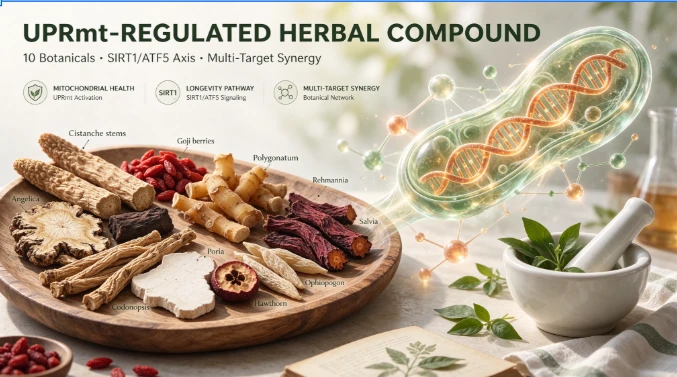
Polygonatum rhizome: 15–25 parts;
Chinese angelica root: 10–20 parts;
Codonopsis root: 10–20 parts;
Prepared Rehmannia root: 10–20 parts;
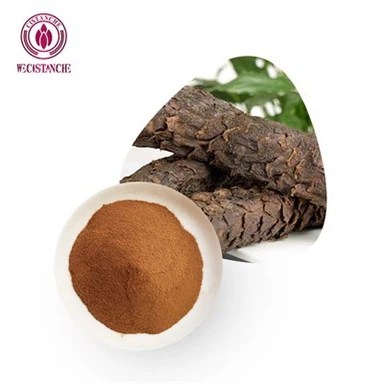
Cistanche: 8–16 parts;
Goji fruit: 8–16 parts;
Poria: 8–16 parts;
Hawthorn fruit: 6–14 parts;
Ophiopogon root: 6–14 parts; and
Salvia miltiorrhiza root: 6–14 parts.
2.
The traditional Chinese herbal compound preparation based on regulation of the mitochondrial unfolded protein response according to claim 1, characterized in that its active component is composed of the following raw medicinal materials in parts by weight:
Polygonatum rhizome, 20 parts; Chinese angelica root, 15 parts; Codonopsis root, 15 parts; prepared Rehmannia root, 15 parts; Cistanche, 12 parts; goji fruit, 12 parts; Poria, 12 parts; hawthorn fruit, 10 parts; Ophiopogon root, 10 parts; and Salvia miltiorrhiza root, 10 parts.
3.
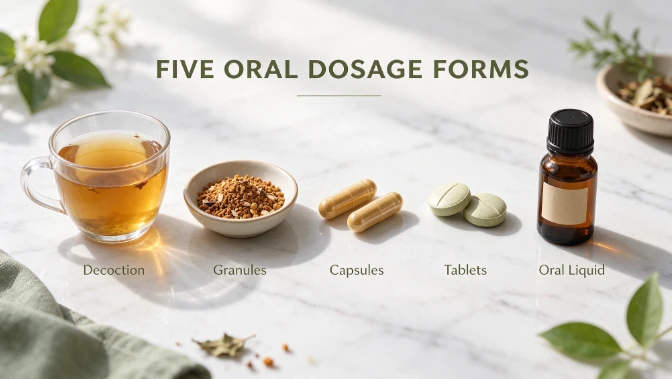
The traditional Chinese herbal compound preparation based on regulation of the mitochondrial unfolded protein response according to claim 1 or 2, characterized in that the dosage form of the preparation is an oral preparation comprising any one of a decoction, granules, tablets, capsules, or an oral liquid.
4.
The traditional Chinese herbal compound preparation based on regulation of the mitochondrial unfolded protein response according to claim 3, characterized in that the oral preparation is granules or capsules.
5.
A method for preparing the traditional Chinese herbal compound preparation based on regulation of the mitochondrial unfolded protein response according to any one of claims 1–4, characterized by comprising the following steps:
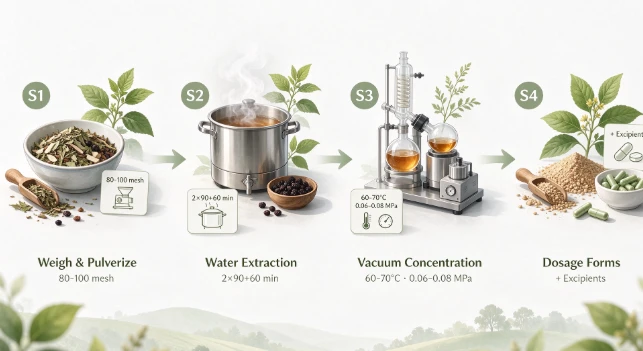
Step S1: Weigh each raw medicinal material according to the specified parts by weight; remove impurities; wash and dry; and pulverize to 80–100 mesh to obtain a mixed medicinal powder.
Step S2: Add deionized water in an amount 8–12 times the weight of the mixed medicinal powder and soak for 30–60 minutes. Heat to boiling and maintain a gentle boil for 2–3 decoctions, each lasting 60–90 minutes. Combine the decoction liquids and filter to obtain a filtrate.
Step S3: Concentrate the filtrate under reduced pressure to obtain a concentrated extract with a relative density of 1.10–1.20 at 60°C. Add starch in an amount 1–2 times the weight of the concentrated extract, mix uniformly, dry, and pulverize to obtain a dry extract powder.
Step S4: According to the required dosage form, add pharmaceutically acceptable excipients and prepare the corresponding oral preparation.
6.
The preparation method according to claim 5, characterized in that, in Step S2, decoction is performed twice. For the first decoction, deionized water is added in an amount 10 times the weight of the medicinal material, followed by gentle boiling for 90 minutes. For the second decoction, deionized water is added in an amount 8 times the weight of the medicinal material, followed by gentle boiling for 60 minutes.
7.
The preparation method according to claim 5 or 6, characterized in that, in Step S3, the reduced-pressure concentration temperature is controlled at 60–70°C, the pressure is controlled at 0.06–0.08 MPa, and the drying temperature is controlled at 55–65°C, with drying continued until the moisture content is no greater than 8%.
8.
Use of the traditional Chinese herbal compound preparation according to any one of claims 1–4 in the manufacture of a medicament for treating diseases associated with an abnormal mitochondrial unfolded protein response, UPRmt.
9.
The use according to claim 8, characterized in that the diseases associated with abnormal UPRmt comprise one or more of sarcopenia, mitochondrial m.3243A>G mutation-related diseases, ischemic myocardial injury, diabetic nephropathy, and neurodegenerative diseases.
10.
The use according to claim 8 or 9, characterized in that the traditional Chinese herbal compound preparation regulates the SIRT1/ATF5 signaling axis, activates UPRmt, clears abnormal proteins within mitochondria, repairs mitochondrial structure and function, and restores UPRmt homeostasis, thereby treating diseases associated with abnormal UPRmt.
The traditional Chinese herbal compound preparation can significantly upregulate the expression of the key UPRmt markers ClpP, LONP1, HSP60, and HSP10, reduce mitochondrial ROS levels, and restore mitochondrial membrane potential.
Traditional Chinese Herbal Compound Preparation Based on Regulation of the Mitochondrial Unfolded Protein Response and Applications Thereof
Technical Field
[0001] The present invention relates to the field of traditional Chinese herbal compound preparations, specifically to a traditional Chinese herbal compound preparation based on regulation of the mitochondrial unfolded protein response and applications thereof.
Background Art
[0002] Mitochondria are the centers of energy metabolism in eukaryotic cells and also participate in various physiological processes, including apoptosis, oxidative stress, and signal transduction. Maintaining mitochondrial functional homeostasis is essential for cell survival and organismal health.
The mitochondrial unfolded protein response, UPRmt, is a highly conserved adaptive stress response through which cells respond to the accumulation of misfolded or unfolded proteins within mitochondria. By activating the expression of molecular chaperones, such as HSP60 and HSP10, and proteases, such as ClpP and LONP1, it clears abnormal proteins and repairs mitochondrial function, thereby restoring protein homeostasis and maintaining mitochondrial functional integrity.
[0003] When UPRmt regulation becomes abnormal, large quantities of abnormal proteins accumulate within mitochondria, resulting in mitochondrial structural damage and functional disturbances. These changes can subsequently give rise to various diseases, including sarcopenia, mitochondrial DNA m.3243A>G mutation-related diseases, ischemic myocardial injury, diabetic nephropathy, and neurodegenerative diseases.
At present, treatment options for diseases associated with abnormal UPRmt are relatively limited. Chemical drugs generally act through single-target interventions and have problems such as substantial side effects, limited efficacy, and susceptibility to drug resistance, making coordinated regulation across multiple targets and pathways difficult.
[0004] Traditional Chinese medicine is based on a holistic view and treatment according to syndrome differentiation. It emphasizes synergistic effects involving multiple constituents, targets, and pathways and has distinctive advantages in the treatment of complex chronic diseases.
Its approach of intervening in disease by regulating overall physiological homeostasis is highly compatible with the coordinated, multi-stage regulation required for UPRmt.
In recent years, studies have reported potential mechanisms through which Chinese medicinal herbs and compound formulations exert therapeutic effects by regulating UPRmt.
For example, Huangjing Yangji Decoction, HJYJD, alleviates skeletal muscle aging through SIRT1/ATF5-mediated UPRmt; this study was publicly published in October 2025. Zishen Huoxue Formula regulates UPRmt through the SIRT5–β-tubulin axis to alleviate ischemic myocardial injury. Nevertheless, existing technologies still have numerous shortcomings.
[0005] Among existing related technologies, Chinese patent CN112680511B, Comparative Document 1, application number 202110103589.8, discloses the use of ATF5 as a drug target in screening drugs for treating mitochondrial m.3243A>G mutation-related diseases.
Its core approach is to regulate UPRmt by inhibiting ATF5 expression. However, this technology concerns only single-target screening and does not involve the application of a traditional Chinese herbal compound preparation. It also cannot achieve coordinated regulation across multiple targets.
Its therapeutic scope is limited to mitochondrial m.3243A>G mutation-related diseases. It does not demonstrate clear therapeutic effects on other diseases associated with abnormal UPRmt, such as sarcopenia and neurodegenerative diseases, and does not provide a specific pharmaceutical preparation scheme.
Therefore, those skilled in the art have provided a traditional Chinese herbal compound preparation based on regulation of the mitochondrial unfolded protein response and applications thereof to address the problems described in the foregoing background.
Summary of the Invention
[0006] The purpose of the present invention is to provide a traditional Chinese herbal compound preparation based on regulation of the mitochondrial unfolded protein response and applications thereof, thereby addressing the problems identified in the foregoing background.
[0007] To achieve the foregoing purpose, the present invention provides the following technical solution:
A traditional Chinese herbal compound preparation based on regulation of the mitochondrial unfolded protein response, wherein its active component is composed of the following raw medicinal materials in parts by weight:
Polygonatum rhizome, 15–25 parts; Chinese angelica root, 10–20 parts; Codonopsis root, 10–20 parts; prepared Rehmannia root, 10–20 parts; Cistanche, 8–16 parts; goji fruit, 8–16 parts; Poria, 8–16 parts; hawthorn fruit, 6–14 parts; Ophiopogon root, 6–14 parts; and Salvia miltiorrhiza root, 6–14 parts.
[0008] Preferably, the active component of the traditional Chinese herbal compound preparation is composed of the following raw medicinal materials in parts by weight:
Polygonatum rhizome, 20 parts; Chinese angelica root, 15 parts; Codonopsis root, 15 parts; prepared Rehmannia root, 15 parts; Cistanche, 12 parts; goji fruit, 12 parts; Poria, 12 parts; hawthorn fruit, 10 parts; Ophiopogon root, 10 parts; and Salvia miltiorrhiza root, 10 parts.
This ratio is obtained through optimization using orthogonal experiments. It maximizes the synergistic action of the constituents and provides the optimal regulatory effect on UPRmt, significantly increasing the expression of key UPRmt markers and repairing mitochondrial function.
[0009] The present invention also provides a method for preparing the foregoing traditional Chinese herbal compound preparation, specifically comprising the following steps:
Step S1: Weigh each raw medicinal material according to the specified parts by weight; remove impurities; wash and dry; and pulverize to 80–100 mesh to obtain a mixed medicinal powder.
Step S2: Add deionized water in an amount 8–12 times the weight of the mixed medicinal powder and soak for 30–60 minutes. Heat to boiling and maintain a gentle boil for 2–3 decoctions, each lasting 60–90 minutes. Combine the decoction liquids and filter to obtain a filtrate.
Step S3: Concentrate the filtrate under reduced pressure to obtain a concentrated extract with a relative density of 1.10–1.20 at 60°C. Add starch in an amount 1–2 times the weight of the concentrated extract, mix uniformly, dry, and pulverize to obtain a dry extract powder.
Step S4: According to the required dosage form, add pharmaceutically acceptable excipients and prepare the corresponding oral preparation:
For granules, add appropriate amounts of dextrin and steviol glycosides, mix uniformly, granulate, dry, and size the granules.
For capsules, fill the dry extract powder into capsule shells.
For tablets, add an appropriate amount of magnesium stearate, compress into tablets, and coat.
For an oral liquid, dilute the concentrated extract with water, add appropriate amounts of preservatives and sweeteners, fill into containers, and sterilize.
[0010] As a further embodiment of the present invention, in Step S2, decoction is preferably performed twice.
For the first decoction, deionized water is added in an amount 10 times the weight of the medicinal material, followed by gentle boiling for 90 minutes. For the second decoction, deionized water is added in an amount 8 times the weight of the medicinal material, followed by gentle boiling for 60 minutes.
This maximizes the extraction of active constituents from the raw medicinal materials and reduces the loss of effective constituents.
In Step S3, the reduced-pressure concentration temperature is controlled at 60–70°C and the pressure at 0.06–0.08 MPa to avoid damage to active constituents caused by high temperatures.
[0011] The present invention also provides applications of the foregoing traditional Chinese herbal compound preparation.
The preparation is used in the manufacture of a medicament for treating diseases associated with an abnormal mitochondrial unfolded protein response, UPRmt.
The diseases associated with abnormal UPRmt comprise one or more of sarcopenia, mitochondrial m.3243A>G mutation-related diseases, ischemic myocardial injury, diabetic nephropathy, and neurodegenerative diseases.
[0012] The mechanism of action of the traditional Chinese herbal compound preparation of the present invention is as follows:
Polygonatum rhizome serves as the chief herb, tonifying qi, nourishing yin, strengthening the spleen, and tonifying the kidneys. Its active constituents can activate SIRT1 expression, establishing a foundation for UPRmt regulation.
Chinese angelica root and prepared Rehmannia root serve as deputy herbs, nourishing blood and enriching yin. They assist the chief herb in enhancing qi-tonifying and yin-nourishing effects. In addition, active constituents of Chinese angelica root can promote ATF5 expression and act synergistically with SIRT1 to regulate UPRmt.
Codonopsis root, Cistanche, goji fruit, and Ophiopogon root serve as assistant herbs. Codonopsis root tonifies the middle burner and replenishes qi; Cistanche tonifies the kidneys and replenishes essence; goji fruit nourishes the liver and kidneys; and Ophiopogon root nourishes yin and promotes fluid production.
Together, these four herbs cooperate with the chief and deputy herbs to enhance immunity while regulating mitochondrial oxidative stress and reducing the accumulation of abnormal proteins.
Poria, hawthorn fruit, and Salvia miltiorrhiza root serve as envoy herbs. Poria strengthens the spleen, promotes the elimination of dampness, and reduces the internal formation of phlegm-dampness. Hawthorn fruit promotes digestion, resolves food accumulation, promotes blood circulation, and resolves blood stasis. Salvia miltiorrhiza root promotes blood circulation, resolves blood stasis, and unblocks the channels and collaterals.
These three herbs can promote drug absorption. In addition, active constituents of Salvia miltiorrhiza root can contribute to the coordinated regulation of key UPRmt markers, including ClpP, LONP1, HSP60, and HSP10.
The formulation thereby establishes a synergistic system for "tonifying qi and nourishing yin, strengthening the spleen and tonifying the kidneys, and promoting blood circulation and resolving blood stasis."
By regulating the SIRT1/ATF5 signaling axis, activating UPRmt, clearing abnormal proteins within mitochondria, repairing mitochondrial structure and function, and restoring UPRmt homeostasis, it achieves the treatment of diseases associated with abnormal UPRmt.
[0013] Through the synergistic action of multiple constituents, the foregoing formulation establishes a synergistic system for "tonifying qi and nourishing yin, strengthening the spleen and tonifying the kidneys, and promoting blood circulation and resolving blood stasis."
By regulating the SIRT1/ATF5 signaling axis, activating UPRmt, clearing abnormal proteins within mitochondria, repairing mitochondrial structure and function, and restoring UPRmt homeostasis, it achieves the treatment of multiple diseases associated with abnormal UPRmt.
[0014] As a further embodiment of the present invention, the dosage form of the traditional Chinese herbal compound preparation is an oral preparation comprising any one of a decoction, granules, tablets, capsules, or an oral liquid.
Granules or capsules are preferred because they are convenient to carry and administer, have stable pharmacological effects, and are suitable for long-term administration.
[0015] Compared with existing technologies, the beneficial effects of the present invention are as follows:
The traditional Chinese herbal compound preparation of the present invention centers on precise regulation of the mitochondrial unfolded protein response, UPRmt.
Through scientifically determined proportions of ten raw medicinal materials, including Polygonatum rhizome and Chinese angelica root, it achieves synergistic action among multiple constituents.
It can effectively regulate the SIRT1/ATF5 signaling axis, significantly upregulate the expression of key UPRmt markers ClpP, LONP1, HSP60, and HSP10, clear abnormal proteins within mitochondria, repair mitochondrial structure and function, and restore UPRmt homeostasis.
It also reduces mitochondrial ROS levels and restores mitochondrial membrane potential. It has significant therapeutic effects on multiple diseases associated with abnormal UPRmt, including sarcopenia and mitochondrial m.3243A>G mutation-related diseases.
[0016] The preparation is available in multiple dosage forms and has a simple preparation process. It can be formulated into oral dosage forms such as granules and capsules, making administration convenient and providing stable pharmacological effects.
The raw medicinal materials used have mild medicinal properties and few side effects, making the preparation suitable for long-term administration.
Compared with existing single-target drugs and traditional Chinese herbal compound formulations, the present invention addresses deficiencies such as single-target action, limited efficacy, and unreasonable formulation ratios.
It achieves coordinated regulation across multiple targets and pathways, combines safety with efficacy, and has important clinical application value and prospects for industrial commercialization.
Detailed Description of Embodiments
[0017] The technical solutions in the embodiments of the present invention are described clearly and completely below with reference to those embodiments.
It is apparent that the described embodiments constitute only some, rather than all, of the embodiments of the present invention.
All other embodiments obtained by those of ordinary skill in the art on the basis of the embodiments of the present invention without creative effort fall within the scope of protection of the present invention.
[0018] In the following embodiments, the raw medicinal materials are commercially available conventional Chinese medicinal decoction pieces that comply with the standards of the Pharmacopoeia of the People's Republic of China, 2020 edition.
The reagents used, such as D-galactose, ABESP, siRNA, and Western blot reagents, are commercially available analytical-grade or biological reagents.
The experimental animals, SAMP8 mice and C57BL/6 mice, were purchased from Beijing Vital River Laboratory Animal Technology Co., Ltd. The housing environment complied with specific-pathogen-free, SPF, standards.
Urine-derived stem cells with a high level of mitochondrial m.3243A>G mutation were provided by Shanghai Fourth People's Hospital and prepared with reference to the method in Comparative Document 1.
Example 1: Preparation of the Traditional Chinese Herbal Compound Preparation as Granules
[0019] Raw medicinal materials in parts by weight:
Polygonatum rhizome, 20 parts; Chinese angelica root, 15 parts; Codonopsis root, 15 parts; prepared Rehmannia root, 15 parts; Cistanche, 12 parts; goji fruit, 12 parts; Poria, 12 parts; hawthorn fruit, 10 parts; Ophiopogon root, 10 parts; and Salvia miltiorrhiza root, 10 parts.
[0020] Preparation method:
Weigh each raw medicinal material according to the foregoing parts by weight. Remove impurities, wash, dry at 60°C for 2 hours, and pulverize to 100 mesh to obtain a mixed medicinal powder.
Add deionized water in an amount 10 times the weight of the mixed medicinal powder. Soak for 45 minutes, heat to boiling, and maintain a gentle boil for 90 minutes. Filter to obtain the first decoction liquid.
Add deionized water to the medicinal residue in an amount 8 times the weight of the medicinal material. Maintain a gentle boil for 60 minutes and filter to obtain the second decoction liquid.
Combine the two decoction liquids and filter through a 0.45 μm membrane to remove impurities and obtain a filtrate.
Place the filtrate in a reduced-pressure concentration vessel. Concentrate at 65°C and 0.07 MPa to obtain a concentrated extract with a relative density of 1.15 at 60°C.
Add starch in an amount 1.5 times the weight of the concentrated extract, mix uniformly, dry at 60°C until the moisture content is no greater than 8%, and pulverize to 80 mesh to obtain a dry extract powder.
Add dextrin and steviol glycosides in amounts equal to 10% and 0.5% of the dry extract powder weight, respectively. Mix uniformly, granulate using an 80-mesh sieve, dry at 60°C for 30 minutes, size the granules, and package to obtain the granule preparation.
Each sachet contains 0.5 g of dry extract powder.
Example 2: Preparation of the Traditional Chinese Herbal Compound Preparation as Capsules
[0021] Raw medicinal materials in parts by weight:
Polygonatum rhizome, 15 parts; Chinese angelica root, 10 parts; Codonopsis root, 10 parts; prepared Rehmannia root, 10 parts; Cistanche, 8 parts; goji fruit, 8 parts; Poria, 8 parts; hawthorn fruit, 6 parts; Ophiopogon root, 6 parts; and Salvia miltiorrhiza root, 6 parts.
[0022] Preparation method:
Weigh each raw medicinal material according to the foregoing parts by weight. Remove impurities, wash, dry at 55°C for 2.5 hours, and pulverize to 80 mesh to obtain a mixed medicinal powder.
Add deionized water in an amount 8 times the weight of the mixed medicinal powder. Soak for 30 minutes, heat to boiling, and maintain a gentle boil for 80 minutes. Filter to obtain the first decoction liquid.
Add deionized water to the medicinal residue in an amount 8 times the weight of the medicinal material. Maintain a gentle boil for 60 minutes and filter to obtain the second decoction liquid.
Combine the two decoction liquids and filter through a 0.45 μm membrane to obtain a filtrate.
Place the filtrate in a reduced-pressure concentration vessel. Concentrate at 60°C and 0.06 MPa to obtain a concentrated extract with a relative density of 1.10 at 60°C.
Add starch in an amount equal to the weight of the concentrated extract, mix uniformly, dry at 55°C until the moisture content is no greater than 8%, and pulverize to 80 mesh to obtain a dry extract powder.
Fill the dry extract powder into size 0 capsule shells. Each capsule contains 0.3 g of dry extract powder.
Example 3: Preparation of the Traditional Chinese Herbal Compound Preparation as Tablets
[0023] Raw medicinal materials in parts by weight:
Polygonatum rhizome, 25 parts; Chinese angelica root, 20 parts; Codonopsis root, 20 parts; prepared Rehmannia root, 20 parts; Cistanche, 16 parts; goji fruit, 16 parts; Poria, 16 parts; hawthorn fruit, 14 parts; Ophiopogon root, 14 parts; and Salvia miltiorrhiza root, 14 parts.
[0024] Preparation method:
Weigh each raw medicinal material according to the foregoing parts by weight. Remove impurities, wash, dry at 65°C for 1.5 hours, and pulverize to 100 mesh to obtain a mixed medicinal powder.
Add deionized water in an amount 12 times the weight of the mixed medicinal powder. Soak for 60 minutes, heat to boiling, and maintain a gentle boil for 90 minutes. Filter to obtain the first decoction liquid.
Add deionized water to the medicinal residue in an amount 10 times the weight of the medicinal material. Maintain a gentle boil for 70 minutes and filter to obtain the second decoction liquid.
Combine the two decoction liquids and filter through a 0.45 μm membrane to obtain a filtrate.
Place the filtrate in a reduced-pressure concentration vessel. Concentrate at 70°C and 0.08 MPa to obtain a concentrated extract with a relative density of 1.20 at 60°C.
Add starch in an amount twice the weight of the concentrated extract, mix uniformly, dry at 65°C until the moisture content is no greater than 8%, and pulverize to 80 mesh to obtain a dry extract powder.
Add magnesium stearate in an amount equal to 0.3% of the dry extract powder weight. Mix uniformly, compress into tablets, and apply a film coating.
Each tablet contains 0.5 g of dry extract powder.
Comparative Example 1: Single-Herb Preparation-Polygonatum Extract Granules
[0025] Take 20 parts of Polygonatum rhizome and prepare Polygonatum extract granules separately according to the preparation method of Example 1.
Each sachet contains 0.5 g of Polygonatum extract, with the active-constituent content of Polygonatum stated to be consistent with that in the granule preparation of Example 1.
Comparative Example 2: Compound Preparation Without Ophiopogon and Salvia-Granules
[0026] Raw medicinal materials in parts by weight:
Polygonatum rhizome, 20 parts; Chinese angelica root, 15 parts; Codonopsis root, 15 parts; prepared Rehmannia root, 15 parts; Cistanche, 12 parts; goji fruit, 12 parts; Poria, 12 parts; and hawthorn fruit, 10 parts.
Ophiopogon root and Salvia miltiorrhiza root are omitted.
Prepare granules according to the preparation method of Example 1. Each sachet contains 0.5 g of dry extract powder.
Comparative Example 3: Existing Comparator Preparation-Huangjing Yangji Decoction Granules
[0027] Raw medicinal materials in parts by weight:
Polygonatum rhizome, 20 parts; Chinese angelica root, 15 parts; Codonopsis root, 15 parts; prepared Rehmannia root, 15 parts; Cistanche, 12 parts; goji fruit, 12 parts; Poria, 12 parts; and hawthorn fruit, 10 parts.
The formulation is based on the existing Huangjing Yangji Decoction formula.
Prepare granules according to the preparation method of Example 1. Each sachet contains 0.5 g of dry extract powder.
Comparative Example 4: Preparation Related to Comparative Document 1-ATF5-Inhibitor Capsules
[0028] With reference to the technical solution in Comparative Document 1, CN112680511B, prepare ATF5-inhibitor, siRNA-ATF5, capsules.
Each capsule contains 0.1 mg of siRNA-ATF5 and is used to regulate UPRmt.
Experimental Example 1: Therapeutic Effects of the Compound Preparation on a Mouse Model of Sarcopenia
1. Experimental Materials
[0029] Experimental animals:
Sixty SPF-grade SAMP8 mice, an accelerated-aging model, aged 6 months, male, weighing 25–30 g; and ten SPF-grade C57BL/6 mice, aged 6 months, male, weighing 25–30 g, as the normal control group.
[0030] Experimental drugs:
The traditional Chinese herbal compound preparations prepared in Examples 1–3 and the preparations prepared in Comparative Examples 1–4.
Positive control drug: none, because there is currently no specific drug approved for treating sarcopenia.
[0031] Experimental reagents:
MDA assay kits, SOD assay kits, GSH-Px assay kits, and ATP assay kits, all purchased from Nanjing Jiancheng Bioengineering Institute; and Western blot reagents purchased from Thermo Fisher Scientific.

2. Experimental Methods
[0032] Model grouping and administration:
Randomly divide the 60 SAMP8 mice into 6 groups of 10 mice each, namely the model control group, Example 1 group, Example 2 group, Example 3 group, and Comparative Example 1–4 groups.
An additional 10 C57BL/6 mice serve as the normal control group.
All treatment groups receive oral gavage at a dose of 1 g/kg, expressed as dry extract powder.
The normal control and model control groups receive an equal volume of physiological saline by gavage.
Administration is performed once daily for 8 consecutive weeks.
Translator's note: The source states six groups but lists eight model-related groups. This inconsistency has been retained.
[0033] Outcome measurements:
Muscle function: After 8 weeks of gavage, measure treadmill endurance, expressed as maximum running distance, and grip strength using a grip-strength meter, and record the data.
Muscle weight: Euthanize the mice, dissect the gastrocnemius and quadriceps muscles, and weigh them. Calculate relative muscle weight as:
Relative muscle weight=Muscle weightBody weight×100%\text{Relative muscle weight} = \frac{\text{Muscle weight}}{\text{Body weight}} \times 100\%Relative muscle weight=Body weightMuscle weight×100%
Biochemical indicators: Collect gastrocnemius tissue and prepare homogenates. According to the assay-kit instructions, measure MDA, an indicator of oxidative damage; SOD and GSH-Px, antioxidant enzymes; and ATP, an indicator of mitochondrial energy metabolism.
Key UPRmt markers: Use Western blotting to measure the expression levels of ClpP, LONP1, HSP60, HSP10, SIRT1, and ATF5 proteins in gastrocnemius tissue. Use β-actin as the internal control and calculate relative protein expression.
[0034] Statistical analysis:
Use SPSS 26.0 for statistical analysis. Express the data as xˉ±s\bar{x} \pm sxˉ±s. Compare groups using one-way analysis of variance. A difference is considered statistically significant when P<0.05P < 0.05P<0.05.
3. Experimental Results
[0035] The experimental results are shown in the following tables.
[0036] Muscle-related outcomes
| Group | Relative muscle weight, % | Treadmill endurance, m | Grip strength, g |
|---|---|---|---|
| Normal control | 4.82±0.354.82 \pm 0.354.82±0.35 | 896.5±78.3896.5 \pm 78.3896.5±78.3 | 18.6±2.118.6 \pm 2.118.6±2.1 |
| Model control | 2.95±0.282.95 \pm 0.282.95±0.28 | 423.8±56.7423.8 \pm 56.7423.8±56.7 | 10.3±1.510.3 \pm 1.510.3±1.5 |
| Example 1 | 4.51±0.324.51 \pm 0.324.51±0.32 | 825.7±72.5825.7 \pm 72.5825.7±72.5 | 17.2±1.917.2 \pm 1.917.2±1.9 |
| Example 2 | 4.13±0.304.13 \pm 0.304.13±0.30 | 756.9±68.4756.9 \pm 68.4756.9±68.4 | 15.8±1.715.8 \pm 1.715.8±1.7 |
| Example 3 | 4.28±0.314.28 \pm 0.314.28±0.31 | 789.4±70.6789.4 \pm 70.6789.4±70.6 | 16.5±1.816.5 \pm 1.816.5±1.8 |
| Comparative Example 1 | 3.52±0.293.52 \pm 0.293.52±0.29 | 568.2±62.1568.2 \pm 62.1568.2±62.1 | 12.5±1.612.5 \pm 1.612.5±1.6 |
| Comparative Example 2 | 3.87±0.303.87 \pm 0.303.87±0.30 | 635.8±65.3635.8 \pm 65.3635.8±65.3 | 13.8±1.713.8 \pm 1.713.8±1.7 |
| Comparative Example 3 | 3.95±0.313.95 \pm 0.313.95±0.31 | 652.7±66.8652.7 \pm 66.8652.7±66.8 | 14.2±1.814.2 \pm 1.814.2±1.8 |
| Comparative Example 4 | 3.68±0.293.68 \pm 0.293.68±0.29 | 592.4±63.5592.4 \pm 63.5592.4±63.5 | 12.9±1.612.9 \pm 1.612.9±1.6 |
Note: Compared with the model control group, P<0.01P < 0.01P<0.01 or P<0.05P < 0.05P<0.05; compared with the Example 1 group, P<0.05P < 0.05P<0.05.
The supplied table does not clearly map significance symbols to individual values.
[0037] Biochemical indicators
The source-image headers use "mgprot," translated here as "mg protein."
| Group | MDA, nmol/mg protein | SOD, U/mg protein | GSH-Px, U/mg protein | ATP, μmol/mg protein |
|---|---|---|---|---|
| Normal control | 1.25±0.181.25 \pm 0.181.25±0.18 | 128.6±10.5128.6 \pm 10.5128.6±10.5 | 95.8±8.795.8 \pm 8.795.8±8.7 | 2.86±0.252.86 \pm 0.252.86±0.25 |
| Model control | 3.86±0.323.86 \pm 0.323.86±0.32 | 65.3±7.865.3 \pm 7.865.3±7.8 | 42.5±6.342.5 \pm 6.342.5±6.3 | 1.02±0.151.02 \pm 0.151.02±0.15 |
| Example 1 | 1.52±0.201.52 \pm 0.201.52±0.20 | 119.8±10.2119.8 \pm 10.2119.8±10.2 | 88.6±8.288.6 \pm 8.288.6±8.2 | 2.58±0.232.58 \pm 0.232.58±0.23 |
| Example 2 | 1.89±0.221.89 \pm 0.221.89±0.22 | 108.5±9.8108.5 \pm 9.8108.5±9.8 | 79.3±7.979.3 \pm 7.979.3±7.9 | 2.25±0.212.25 \pm 0.212.25±0.21 |
| Example 3 | 1.73±0.211.73 \pm 0.211.73±0.21 | 112.6±10.0112.6 \pm 10.0112.6±10.0 | 83.5±8.083.5 \pm 8.083.5±8.0 | 2.38±0.222.38 \pm 0.222.38±0.22 |
| Comparative Example 1 | 2.95±0.282.95 \pm 0.282.95±0.28 | 82.6±8.582.6 \pm 8.582.6±8.5 | 58.7±7.158.7 \pm 7.158.7±7.1 | 1.56±0.181.56 \pm 0.181.56±0.18 |
| Comparative Example 2 | 2.58±0.262.58 \pm 0.262.58±0.26 | 91.3±9.091.3 \pm 9.091.3±9.0 | 67.4±7.567.4 \pm 7.567.4±7.5 | 1.89±0.201.89 \pm 0.201.89±0.20 |
| Comparative Example 3 | 2.45±0.252.45 \pm 0.252.45±0.25 | 94.7±9.294.7 \pm 9.294.7±9.2 | 70.2±7.670.2 \pm 7.670.2±7.6 | 1.98±0.201.98 \pm 0.201.98±0.20 |
| Comparative Example 4 | 2.82±0.272.82 \pm 0.272.82±0.27 | 85.9±8.785.9 \pm 8.785.9±8.7 | 61.3±7.261.3 \pm 7.261.3±7.2 | 1.68±0.191.68 \pm 0.191.68±0.19 |
[0038] Note: Compared with the model control group, P<0.01P < 0.01P<0.01 or P<0.05P < 0.05P<0.05; compared with the Example 1 group, P<0.05P < 0.05P<0.05.
[0039] Relative protein expression
| Group | ClpP | LONP1 | HSP60 | HSP10 | SIRT1 | ATF5 |
|---|---|---|---|---|---|---|
| Normal control | 1.00±0.081.00 \pm 0.081.00±0.08 | 1.00±0.091.00 \pm 0.091.00±0.09 | 1.00±0.071.00 \pm 0.071.00±0.07 | 1.00±0.061.00 \pm 0.061.00±0.06 | 1.00±0.091.00 \pm 0.091.00±0.09 | 1.00±0.081.00 \pm 0.081.00±0.08 |
| Model control | 0.32±0.050.32 \pm 0.050.32±0.05 | 0.35±0.060.35 \pm 0.060.35±0.06 | 0.28±0.040.28 \pm 0.040.28±0.04 | 0.30±0.050.30 \pm 0.050.30±0.05 | 0.29±0.050.29 \pm 0.050.29±0.05 | 0.31±0.050.31 \pm 0.050.31±0.05 |
| Example 1 | 0.89±0.070.89 \pm 0.070.89±0.07 | 0.92±0.080.92 \pm 0.080.92±0.08 | 0.85±0.070.85 \pm 0.070.85±0.07 | 0.87±0.070.87 \pm 0.070.87±0.07 | 0.88±0.080.88 \pm 0.080.88±0.08 | 0.90±0.070.90 \pm 0.070.90±0.07 |
| Example 2 | 0.78±0.070.78 \pm 0.070.78±0.07 | 0.81±0.080.81 \pm 0.080.81±0.08 | 0.75±0.060.75 \pm 0.060.75±0.06 | 0.77±0.060.77 \pm 0.060.77±0.06 | 0.76±0.070.76 \pm 0.070.76±0.07 | 0.79±0.070.79 \pm 0.070.79±0.07 |
| Example 3 | 0.83±0.070.83 \pm 0.070.83±0.07 | 0.85±0.080.85 \pm 0.080.85±0.08 | 0.80±0.070.80 \pm 0.070.80±0.07 | 0.82±0.070.82 \pm 0.070.82±0.07 | 0.81±0.070.81 \pm 0.070.81±0.07 | 0.84±0.070.84 \pm 0.070.84±0.07 |
| Comparative Example 1 | 0.52±0.060.52 \pm 0.060.52±0.06 | 0.55±0.070.55 \pm 0.070.55±0.07 | 0.48±0.050.48 \pm 0.050.48±0.05 | 0.50±0.060.50 \pm 0.060.50±0.06 | 0.49±0.060.49 \pm 0.060.49±0.06 | 0.51±0.060.51 \pm 0.060.51±0.06 |
| Comparative Example 2 | 0.65±0.070.65 \pm 0.070.65±0.07 | 0.68±0.070.68 \pm 0.070.68±0.07 | 0.62±0.060.62 \pm 0.060.62±0.06 | 0.64±0.060.64 \pm 0.060.64±0.06 | 0.63±0.070.63 \pm 0.070.63±0.07 | 0.66±0.070.66 \pm 0.070.66±0.07 |
| Comparative Example 3 | 0.68±0.070.68 \pm 0.070.68±0.07 | 0.71±0.080.71 \pm 0.080.71±0.08 | 0.65±0.060.65 \pm 0.060.65±0.06 | 0.67±0.060.67 \pm 0.060.67±0.06 | 0.66±0.070.66 \pm 0.070.66±0.07 | 0.69±0.070.69 \pm 0.070.69±0.07 |
| Comparative Example 4 | 0.55±0.060.55 \pm 0.060.55±0.06 | 0.58±0.070.58 \pm 0.070.58±0.07 | 0.51±0.050.51 \pm 0.050.51±0.05 | 0.53±0.060.53 \pm 0.060.53±0.06 | 0.52±0.060.52 \pm 0.060.52±0.06 | 0.54±0.060.54 \pm 0.060.54±0.06 |
[0040] Note: Compared with the model control group, P<0.01P < 0.01P<0.01 or P<0.05P < 0.05P<0.05; compared with the Example 1 group, P<0.05P < 0.05P<0.05.
4. Experimental Conclusions
[0041] The experimental results show that relative muscle weight, treadmill endurance, and grip strength in the model control mice were significantly lower than those in the normal control group, P<0.01P < 0.01P<0.01.

MDA levels were significantly increased, while SOD, GSH-Px, and ATP levels were significantly decreased, P<0.01P < 0.01P<0.01.
The expression of key UPRmt markers, ClpP, LONP1, HSP60, and HSP10, as well as SIRT1 and ATF5 proteins, was significantly downregulated, P<0.01P < 0.01P<0.01.
These findings indicate successful establishment of the sarcopenia model and demonstrate evident UPRmt abnormalities and mitochondrial dysfunction in the model mice.
[0042] Compared with the model control group, mice in the Example 1–3 groups showed significantly increased relative muscle weight, treadmill endurance, and grip strength, P<0.01P < 0.01P<0.01.
MDA levels were significantly decreased, while SOD, GSH-Px, and ATP levels were significantly increased, P<0.01P < 0.01P<0.01.
The expression of key UPRmt markers and SIRT1 and ATF5 proteins was significantly upregulated, P<0.01P < 0.01P<0.01, with Example 1 producing the best results.
Although the foregoing indicators improved in the Comparative Example 1–4 groups, the improvements were significantly smaller than those in the Example 1 group, P<0.05P < 0.05P<0.05.
[0043] These findings indicate that the traditional Chinese herbal compound preparation of the present invention can activate the SIRT1/ATF5 signaling axis, upregulate the expression of key UPRmt markers, repair mitochondrial function, and alleviate oxidative stress.
It thereby effectively improves muscle function and muscle mass in mice with sarcopenia.
Its effects are significantly superior to those of a single-herb preparation, a reduced-herb compound preparation, the existing Huangjing Yangji Decoction, and the preparation related to Comparative Document 1, demonstrating the synergistic action and inventive advantages of the compound preparation of the present invention.
Experimental Example 2: Therapeutic Effects of the Compound Preparation on Mitochondrial m.3243A>G Mutation-Related Diseases
1. Experimental Materials
[0044] Experimental cells:
Urine-derived stem cells with a high level of mitochondrial m.3243A>G mutation, prepared with reference to the method in Comparative Document 1.
[0045] Experimental drugs:
The traditional Chinese herbal compound preparation prepared in Example 1, used through the preparation of drug-containing serum according to an existing method; and the ATF5-inhibitor capsules, siRNA-ATF5, prepared in Comparative Example 4.
[0046] Experimental reagents:
A mitochondrial membrane-potential assay kit, JC-1; an ROS assay kit, MitoSOX; and Western blot reagents purchased from Thermo Fisher Scientific.

2. Experimental Methods
[0047] Cell grouping and intervention:
Divide the urine-derived stem cells with a high level of mitochondrial m.3243A>G mutation into three groups: the model group, Example 1 group, and Comparative Example 4 group.
Normal urine-derived stem cells are included as the normal control group.
Add drug-containing serum to the Example 1 group at a final concentration of 10%.
Add siRNA-ATF5 to the Comparative Example 4 group at a final concentration of 100 nM.
Add equal volumes of physiological saline to the normal control and model groups.
Culture for 48 hours.
[0048] Outcome measurements:
Mitochondrial membrane potential: Use the JC-1 assay kit according to the manufacturer's instructions and measure mitochondrial membrane potential by flow cytometry.
ROS levels: Use the MitoSOX assay kit according to the manufacturer's instructions and measure mitochondrial ROS levels by flow cytometry.
Protein expression: Use Western blotting to measure the expression levels of ATF5, ClpP, and LONP1 proteins in the cells. Use β-actin as the internal control and calculate relative protein expression.
[0049] Statistical analysis:
Use SPSS 26.0 for statistical analysis. Express the data as xˉ±s\bar{x} \pm sxˉ±s. Compare groups using one-way analysis of variance. A difference is considered statistically significant when P<0.05P < 0.05P<0.05.
3. Experimental Results
[0050] The experimental results are shown in the following table.
[0051] Translator's note: The result table referenced here was not included in the supplied text or the three uploaded images. No values have been reconstructed or added. Numerical summaries provided in the subsequent source paragraphs are translated below.

4. Experimental Conclusions
[0052] The experimental results show that, in the model group of urine-derived stem cells with a high level of mitochondrial m.3243A>G mutation, mitochondrial membrane potential was significantly decreased, ROS levels were significantly increased, ATF5 protein expression was significantly upregulated, and ClpP and LONP1 protein expression was significantly downregulated, P<0.01P < 0.01P<0.01.
These findings indicate that the mitochondrial m.3243A>G mutation can cause abnormal UPRmt activation and mitochondrial functional impairment.
The findings are consistent with existing research conclusions and also confirm successful establishment of the cell model.
[0053] Compared with the model group, both the Example 1 group and the Comparative Example 4 group improved the foregoing abnormal indicators to varying degrees, P<0.05P < 0.05P<0.05 or P<0.01P < 0.01P<0.01.
However, the improvements in the Example 1 group were significantly greater than those in the Comparative Example 4 group, P<0.05P < 0.05P<0.05.
In the Example 1 group:
Mitochondrial membrane potential recovered to 89% of the normal control level.
ROS levels decreased to 1.23 times the normal control level.
ATF5 protein expression essentially returned to the normal level.
ClpP and LONP1 protein expression increased to 87% and 90% of the normal control levels, respectively.
In the Comparative Example 4 group:
Mitochondrial membrane potential recovered to only 65% of the normal control level.
ROS levels remained at 1.89 times the normal control level.
ATF5 protein expression was excessively downregulated.
Recovery of ClpP and LONP1 protein expression was limited.
[0054] These results indicate that the traditional Chinese herbal compound preparation of the present invention can precisely regulate the SIRT1/ATF5 signaling axis, balance the expression of key UPRmt markers, and effectively repair mitochondrial structural and functional damage caused by the mitochondrial m.3243A>G mutation.
It can clear excessive mitochondrial ROS and restore mitochondrial membrane-potential homeostasis.
Its therapeutic effects are significantly superior to those of the single-target ATF5 inhibitor in Comparative Document 1, demonstrating the advantages of the present invention's coordinated regulation through multiple constituents and multiple targets.
The results also demonstrate that the compound preparation of the present invention can not only treat sarcopenia but also has significant therapeutic effects on mitochondrial m.3243A>G mutation-related diseases, further confirming its broad applicability.
[0055] In summary, the traditional Chinese herbal compound preparation of the present invention centers on precise UPRmt regulation.
Through the synergistic action of multiple constituents, it can effectively repair mitochondrial dysfunction caused by abnormal UPRmt and has significant therapeutic effects on multiple diseases associated with abnormal UPRmt.
It also has stable pharmacological effects, high safety, and multiple dosage forms. It addresses numerous deficiencies of existing technologies and has important clinical application value and prospects for industrial commercialization.
[0056] The foregoing description concerns only preferred specific embodiments of the present invention. However, the scope of protection of the present invention is not limited thereto.
Any equivalent substitution or modification made by a person skilled in the art within the technical scope disclosed by the present invention, on the basis of the technical solution and inventive concept of the present invention, shall fall within the scope of protection of the present invention.