Traditional Chinese Medicine Culture Medicinal Tea.
Nov 01, 2022
The earliest record of medicinal tea is "Guang Ya" written by Zhang Yi during the Three Kingdoms period: "Jingba asked to pick tea and make cakes into rice paste. , Dosage and efficacy, should belong to the herbal tea formula undoubtedly.

Click to cong rong cistanche and cistanche tea
Booked in the 2nd century AD, the earliest existing pharmacology monograph in my country, "Shen Nong's Materia Medica", contains: "Shen Nong tasted a hundred herbs, encountered seventy-two poisons every day, and got tea to solve it." There are records of tea preparations in the medical works of later dynasties. . For example, Zhang Zhongjing of the Eastern Han Dynasty recorded in "Treatise on Febrile Diseases and Miscellaneous Diseases" that tea was used to treat diarrhea, pus, and blood. In the Liang Dynasty, the famous doctor Tao Hongjing believed that "bitter tea can lighten the body and change the bones", and proposed that medicines such as asparagus can also be used instead of tea...
During the Tang and Song Dynasties, the theory of tea therapy was basically formed, and the records of the efficacy of tea in "Tang Materia Medica" have been perfected: "(Tea) controls fistula sores, facilitates urination, eliminates phlegm and heat, and eliminates the food."

There is a record of "replacement of tea drinking prescription" in the "Secrets of Waitai" in the Tang Dynasty, which should be an earlier tea treatment prescription. The application of tea therapy in the Song Dynasty gradually expanded, and various medical monographs contained more tea therapy prescriptions, especially "Taiping Shenghui Prescriptions" and "Taiping Huimin Heji Ju Prescriptions" compiled by relevant experts organized by the imperial court. There are special chapters in the official monographs with the nature of the code to introduce "medicinal tea". For example, the ninety-seven volumes of "Taiping Shenghui Prescription" contain "medicine tea prescriptions", and more than 10 kinds of tea therapeutic prescriptions are listed.
So far, the term "medicinal tea" was first recorded in medical books. After the Song Dynasty, the application of medicinal tea increased day by day. In "Yinshan Zhengyao", the imperial physician Hu Sihui of the Yuan Dynasty recorded the production, efficacy, and indications of various medicinal teas in various places. The "Pu Ji Fang" compiled by Zhu Di and others in the Ming Dynasty has the chapter "Food Treatment Gate · Medicinal Tea", which contains 8 tea treatment recipes such as green onion tea.
Li Shizhen's research on the medicinal use of tea is very in-depth. The "Compendium of Materia Medica", in addition to the incisive discussion on the functions and indications of tea, also contains the treatment of "qi deficiency headache", "heat toxin diarrhea", "resolving various poisoning" and other tea treatments Fang 16 songs. The research and application of tea therapy in the Qing Dynasty were more common. From the "Cixi Guangxu Medical Prescription Selection" compiled and published in modern times, it can be seen that medicinal tea was an integral part of the court medicine in the Qing Dynasty, such as soothing tea, clearing heat, Liyan, and Pingwei, etc. valid test.
With the in-depth research and wide application of tea therapy, tea preparations have gradually developed from the original simple tea formulation to three types of formulations: tea alone, tea combined with natural medicines, and medicines instead of tea without tea. The single-dosage form of tea has also developed from the most primitive green tea to several types of green tea, black tea, oolong tea, brick tea, Tuo tea, and modern iced tea.
The combination of tea and natural medicines began with scented tea, such as chrysanthemum tea, osmanthus tea, jasmine tea, etc., followed by ginseng tea, ginger tea, gardenia tea, snake gall tea, afternoon tea, sesame nourishing tea, Lianmeizhi. There are hundreds of kinds of dysentery tea, including Cixi pearl tea, lipid-lowering slimming tea, butter tea, fruit tea, and so on. Put the tea leaves in a cup and soak them in boiling water to form a tea preparation, which is simple to make and convenient to take.

Borrowing the advantages of tea preparations, the separation of tea leaves and natural medicines has resulted in the emergence of "medicinal teas" that do not contain tea leaves and use medicines instead of teas, such as Dushen tea, Jingju tea, Wuhua tea, dried golden tea, Kuding tea, Gynostemma tea, Xihuang grass tea, Wanying Ganhe tea, Wanglaoji herbal tea, etc., are widely used in the prevention and treatment of various diseases such as internal, external, women, children, bone injuries and facial features.
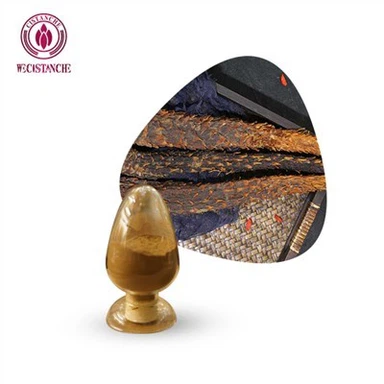
Cistanche tea
People with insufficient qi and blood have cold hands and feet, and often have the problem of insufficient spleen yang, especially in winter. Experts remind you that in winter, you should pay attention to keeping your legs and feet warm, and soak your feet before going to bed to help you sleep. In addition, you can also "invigorate yang qi" through diet. You can eat foods that warm yang and dispel cold like mutton soup, and you can drink cistanche tea, which is yang tonifying and not dry, to improve yang qi. There is a direct relationship between human aging and kidney decline. Drinking Cistanche deserticola tea can make us energetic, age slower, and live longer. Overtime fatigue, drinking and socializing, irregular nightlife, easy fatigue, weak limbs, lack of energy, chills, sore waist and knees, irritability, night sweats, sweating, loss of libido, nocturnal emission, premature ejaculation, memory loss, frequent urination, loss of hair, etc. Take 3-5g of Cistanche Chinese Herbal Pieces, or Cistanche Bushen granule tea, brew with boiling water and add water while drinking until the taste is light, after drinking, you can chew and swallow Cistanche Cistanche, which is beneficial to the conditioning of the human body! Cistanche can warm kidney yang, nourish essence and blood, and delay aging. A good tea for nourishing the kidney - is Cistanche tea! Often drink cistanche tea, and take it for a long time to lighten the body, detoxify the face, and warm the kidney yang.

for more information:Ali.ma@wecistanche.com