What Are Phenylethanoid Glycosides? Understanding The Core Value Of Cistanche Tubulosa
Nov 18, 2026
1,Starting with a "Desert Ginseng"
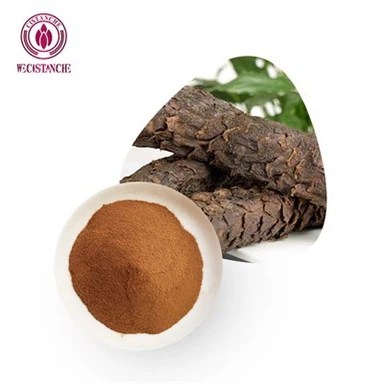
On the edges of the Gobi Desert and oases in southern Xinjiang, a plant grows parasitically on the roots of tamarisk - Cistanche tubulosa. Known as "Desert Ginseng," it was listed as a top-grade herb in the Shennong Ben Cao Jing (Shennong's Classic of Materia Medica). Traditional Chinese medicine uses it to "tonify kidney yang, benefit essence and blood, and moisten the intestines for bowel movements."

Dragon Herbs Cistanche
In the past, we understood Cistanche through "experience": warming without dryness, tonifying without harshness. Modern science understands Cistanche through one key term - phenylethanoid glycosides. If Cistanche is an "efficacy tree," then phenylethanoid glycosides are its thickest root.
2,What Exactly Are Phenylethanoid Glycosides?
Phenylethanoid Glycosides (PhGs) are a class of naturally occurring phenolic glycoside secondary metabolites found in plants. Simply put, their molecular structure can be broken down into three parts:

Phenylethanol glycoside is the main active component of Cistanche tubulosa
Phenylethyl alcohol core: A small unit of "benzene ring + ethanol side chain," the "surname" of this class of compounds.
Glycosyl groups (glucose, rhamnose, etc.): Acting like "connectors" that attach active groups, affecting solubility, absorption, and targeting.
Phenolic acid groups such as caffeoyl and feruloyl: These are the "engines" of antioxidant activity. Especially the ortho-diphenolic hydroxyl structure, which can scavenge free radicals and inhibit lipid peroxidation.
Typical representative components include: echinacoside (ECH), acteoside/verbascoside, isoacteoside, tubuloside A, and 2'-acetylacteoside. In Cistanche tubulosa, the two most prominent are the first two: echinacoside + acteoside.
3,Why Is Cistanche tubulosa Especially "Rich" in Phenylethanoid Glycosides?
The Chinese Pharmacopoeia recognizes two species of Cistanche: Cistanche deserticola and Cistanche tubulosa. Both contain phenylethanoid glycosides, but Cistanche tubulosa has significantly higher levels.

Cistanche tubulosa and Cistanche deserticola
|
Variety |
Pharmacopoeia PhG Content Threshold (Dried Product) |
Positioning |
|
Cistanche deserticola |
Echinacoside + Acteoside ≥ 0.30% |
Mainly traditional decoction pieces |
|
Cistanche tubulosa |
Echinacoside + Acteoside ≥ 1.5% |
Mainly extracts and functional products |
The difference is severalfold. Therefore, Cistanche tubulosa is naturally more suitable for standardized extracts, health food raw materials, neuroprotective functional products, and high-value TCM decoction pieces and compound formulas. This is why in modern industry, Cistanche tubulosa is often regarded as a "phenylethanoid glycoside factory."
4,What Do Phenylethanoid Glycosides Actually Do in the Body?
1. Antioxidant: Cellular Protection

Desert-living cistanche antioxidant
The caffeoyl structure of PhGs directly neutralizes free radicals (ROS), enhances endogenous antioxidant enzyme activities such as SOD, CAT, and GSH, and reduces MDA (lipid peroxidation product). Unlike ordinary vitamin C, which scavenges in a single mode, PhGs directly clear free radicals, activate the Nrf2/HO-1 antioxidant pathway, and protect mitochondrial membrane structures. This is especially important for the brain, liver, and vascular endothelium.
2. Neuroprotection: Translating "Tonify Kidney and Replenish Marrow" into Modern Language
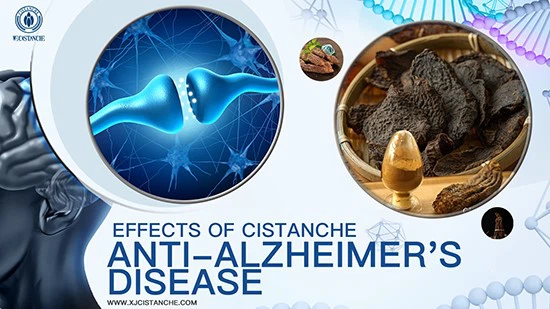
Cistanche prevents Alzheimer's disease
Traditionally, Cistanche is said to "tonify kidney, fill essence, and boost intelligence." Modern research corresponds to this through improving learning and memory, anti-Alzheimer's disease effects, anti-Parkinson's disease effects, anti-vascular dementia, and cerebral ischemia-reperfusion protection. Mechanisms include: echinacoside metabolites acting similarly to monoamine neurotransmitter precursors; protecting mitochondria and reducing neuronal apoptosis; inhibiting neuroinflammation; and promoting synaptic plasticity.
3. Anti-Aging: Not Slowing Aging, But "Stabilizing Aging"

Benefits of cistanche tubulosa: inhibits tyrosinase expression
PhGs reduce oxidative stress, regulate inflammatory pathways, maintain mitochondrial function, and improve glucose-lipid metabolism, allowing the body to avoid "precipitous decline" as age increases.
4. Liver Protection and Anti-Inflammation
Echinacoside and acteoside have shown in animal models: reducing drug/alcohol/ischemic liver injury; inhibiting TGF-β1/Smad liver fibrosis signaling; lowering inflammatory factors such as TNF-α and IL-6.
5. Immune Regulation and Gut Microecology

Desert ginseng-Improve immunity
Click here to view Cistanche Enhance Immunity products
【Ask for more】 Email:cindy.xue@wecistanche.com / WhatsApp: 0086 18599088692 / WeChat: 18599088692
PhGs do not "blindly enhance immunity," but rather activate macrophages for an appropriate response, regulate lymphocyte function, and influence metabolism and cognition through the gut-brain axis. Combined with Cistanche polysaccharides, betaine, and mannitol, they form a "tonifying without causing heat" composite system.
6. Reproductive and Endocrine Support
The traditional "tonifying kidney yang" can be partially mapped in modern terms to regulating sex hormone synthesis-related proteins, improving reproductive axis function, anti-fatigue effects, and enhancing physical recovery. Note: This is not an "aphrodisiac," but systemic energy metabolism support.
5,The Core Value of Cistanche tubulosa, Explained in One Sentence
The core value of Cistanche tubulosa does not lie in the word "tonify," but in its possession of a system with phenylethanoid glycosides as the hub: antioxidant – neuroprotection – anti-aging – immune regulation – metabolic support.
|
Dimension |
Value Point of Cistanche tubulosa |
|
Component Identifiability |
High PhG content, standardizable |
|
Traditional Attribute |
Tonify kidney yang, benefit essence and blood, moisten intestines |
|
Modern Attribute |
Brain protection, antioxidant, anti-fatigue |
|
Industrial Attribute |
Extractable, quality-controllable, exportable |
|
Consumer Attribute |
Suitable for middle-aged/elderly, night owls, heavy brain users |
6,How to Judge "Good" Cistanche tubulosa Raw Material?
Don't look at size; look at: whether total PhG content meets standards and is stable; whether chromatographic fingerprint consistency passes; whether pesticide residues and heavy metals comply with regulations; extraction process (water/ethanol extraction ratio, temperature, light protection, antioxidant protection); and traceability of origin, host plant, harvest time, and drying method. For brands, "PhG content" is the hard currency of Cistanche tubulosa.
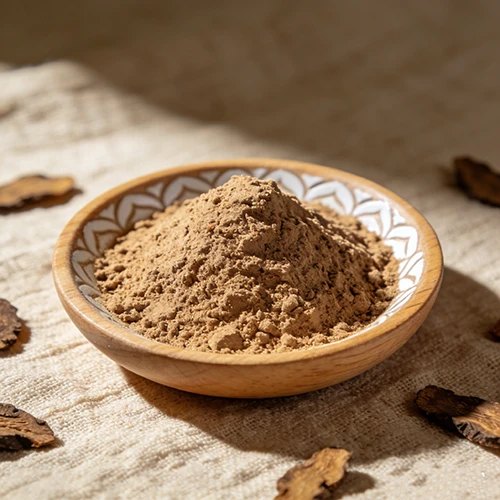
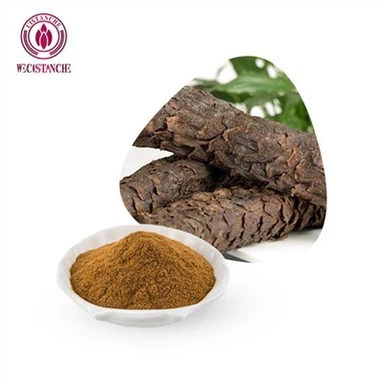
cistanche powder
7, Usage Boundaries and Scientific Attitude
PhGs are good, but boundaries must be observed: not a drug substitute, cannot replace formal treatment; not "the higher the better" - dose-effect relationship studies are needed; oral bioavailability is limited, relying on gut microbiota metabolism and delivery technology; those with yin deficiency and effulgent fire, or loose stools, should use raw material with caution; after wine-processing, it warms the kidney while reducing intestinal lubricity. The scientific statement is: Cistanche tubulosa is a "functional nutrition + traditional medicine" dual-resource - not a miracle herb, but a good raw material.
8,Conclusion
In the past, when we talked about Cistanche, we talked about "a tonic from the desert." Now, when we talk about Cistanche tubulosa, we talk about a quantifiable, extractable, and researchable active system; a natural solution connecting TCM "kidney tonification" with modern "brain health"; a plant asset from the Xinjiang desert that can go global. Phenylethanoid glycosides are the "molecular business card" of Cistanche tubulosa. Only by understanding them can one truly understand the value of this desert plant.