What Is The Difference Between Sodium Restriction And Salt Restriction in Kidney Disease?
Sep 06, 2024
Chronic kidney disease (CKD) is a chronic disease with hidden symptoms and continuous progression. There are many factors that promote the progression of CKD, such as hypertension, high-salt diet, proteinuria, etc. Among them, high salt intake is a potential risk factor that can be changed through dietary intervention. The "Huangdi Neijing" has long recorded "salt enters the kidney" and "kidney wind disease". The Tang Dynasty's "Wai Tai Mi Yao" has warnings for treating kidney wind edema, "do not eat salt, avoid salty sticky, greasy" and "be cautious with salt, sauce and five pungent vegetables". The main component of salt is sodium chloride. Therefore, sodium restriction and salt restriction for kidney patients are essentially the same.

Click to Cistanche for kidney disease
Chronic kidney disease patients are required to have a low-salt diet, and the daily salt intake is generally controlled at about 3 grams, and the maximum should not exceed 6 grams. In China, the main sources of sodium intake, in addition to table salt, include other sodium-containing seasonings, additives and certain foods (such as processed foods, pickled foods, etc.). Therefore, in real life, there is a certain difference between sodium restriction and salt restriction.
Sodium restriction and salt restriction
Sodium restriction: refers to limiting the intake of sodium.
Sodium is an essential mineral element for the human body. It has the functions of regulating osmotic pressure, maintaining acid-base balance, and maintaining normal blood pressure. The kidney is an important organ for regulating the sodium concentration in the body. CKD patients limit the intake of "sodium". Excessive sodium intake is the "culprit" for aggravating kidney damage, and sodium does not only come from "salt".
Salt restriction: refers to limiting the intake of salt.
What kidney patients need to control is the amount of salt, not a salt-free diet. The so-called low-salt diet in nephrology requires patients to control their daily salt intake to 3-6 grams. According to the Practice Guidelines for Nutritional Treatment of Chronic Kidney Disease in my country (2021 Edition), «CKD (chronic kidney disease) stage 1-5 patients, regardless of whether they have diabetes, recommend sodium intake <2.3g/d (equivalent to 6g/d of salt); hemodialysis patients salt <5g/d; renal transplant patients salt <3g/d;
Purpose of sodium and salt restriction
For patients with chronic kidney disease, a high-salt and high-sodium diet can not only cause high blood pressure but also cause water and sodium retention and heart failure. The main reason is that excessive intake of salt and sodium will cause thirst, which will increase the amount of water consumed, increase blood volume, increase the heat load, and eventually cause heart failure.

For patients who need to limit sodium (such as patients with hypertension, heart failure, kidney disease, etc.), the purpose of limiting sodium intake is to control blood pressure, reduce edema, and reduce the burden on the heart.
The low-salt diet is relatively loose, requiring that the daily sodium supply in food should not exceed 2g, and the daily salt intake in cooking should not exceed 2-4g. Salt restriction can reduce proteinuria, control blood pressure, and thus delay the progression of CKD.
How to distinguish between sodium restriction and salt restriction
A high-salt diet will aggravate the urine protein, blood pressure, and edema of patients with kidney disease, further accelerating the deterioration of renal function. The essence of high salt is high sodium, and the essence of salt restriction is sodium restriction.

How to better control sodium salt intake?
✦ Pay attention to the sodium content on the food label. Before buying and eating, develop the habit of reading the label, understand the content and proportion of various components of the food, and choose low-salt foods; for patients with kidney disease, foods with lower sodium content should be chosen.
✦When cooking food, use less salt and soy sauce, and fry less. You can use onion, ginger, garlic, vinegar, lemon, vanilla, or other spices instead of salt to increase the flavor of food, and use spices instead of salt as seasoning;
✦Reject all pickled foods, pickles, and salty snacks;
✦Sprinkle a small amount of salt on the surface of food instead of cooking food;
✦Control salt intake: In addition to paying attention to the sodium content in food, patients with kidney disease should also control their salt intake.
How to implement
According to the "Dietary Guidelines for Chinese Residents", it is recommended to control daily salt intake between 2-4g and avoid eating overly salty foods and condiments. This not only includes the salt eaten in three meals a day, but also the "invisible salt" in various foods:
Seasonings: soy sauce, monosodium glutamate, chicken essence, pepper salt, chili sauce, bean paste, shrimp paste, fish sauce, etc.;
Fermented soy products: black beans, stinky tofu, fermented bean curd, etc.
Biscuit desserts: salty biscuits, soda crackers, puffed foods, pancakes, candied fruits, dried fruits, etc.;
Processed meat: dried meat, meat floss, bacon, sausage, smoked meat, salted fish, ham, luncheon meat, squid strips, etc.;
Pickled vegetables: mustard tuber, pickled vegetables, kimchi, sauerkraut, olive vegetables, pickled mustard greens, etc.;
For patients with kidney disease, sodium restriction and salt restriction are essentially the same, both of which are to reduce excess sodium in the body, thereby reducing the burden on the kidneys. Some kidney patients will choose low-sodium salt to limit sodium salt. But in fact, low-sodium salt is not suitable for friends with impaired kidney function. The reason why low-sodium salt is low in sodium is that potassium chloride is used to replace part of the sodium chloride, of which about 30% is potassium chloride and 70% is sodium chloride; although low-sodium salt has low sodium, it has a higher potassium content.
Therefore, there is a difference between sodium restriction and "salt restriction". The source of sodium is more extensive. In addition to salt, there are various condiments pre-processed foods, and even take-out foods, which are important sources of sodium intake. Limiting sodium intake is not just about "limiting salt", but also about limiting the intake of "condiments" and "pre-processed foods".
How Does Cistanche Treat Kidney Disease?
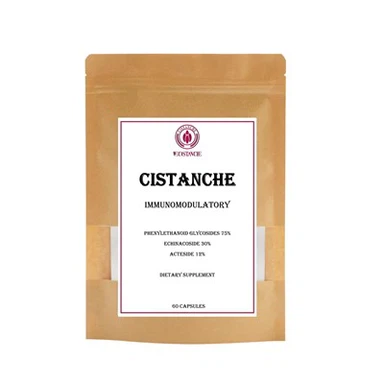
Cistanche is a traditional Chinese herbal medicine used for centuries to treat various health conditions, including kidney disease. It is derived from the dried stems of Cistanche deserticola, a plant native to the deserts of China and Mongolia. The main active components of cistanche are phenylethanoid glycosides, echinacoside, and acteoside, which have been found to have beneficial effects on kidney health.
Kidney disease, also known as renal disease, refers to a condition in which the kidneys are not functioning properly. This can result in a buildup of waste products and toxins in the body, leading to various symptoms and complications. Cistanche may help treat kidney disease ase through several mechanisms.
Firstly, cistanche has been found to have diuretic properties, meaning it can increase urine production and help eliminate waste products from the body. This can help relieve the burden on the kidneys and prevent the buildup of toxins. By promoting diuresis, cistanche may also help Reduce high blood pressure, a common complication of kidney disease.
Moreover, cistanche has been shown to have antioxidant effects. Oxidative stress, caused by an imbalance between the production of free radicals and the body's antioxidant defenses, plays a key role in the progression of kidney disease. ies help neutralize free radicals and reduce Oxidative stress, thereby protecting the kidneys from damage. The phenylethanoid glycosides found in cistanche have been particularly effective in scavenging free radicals and inhibiting lipid peroxidation.

Additionally, cistanche has been found to have anti-inflammatory effects. Inflammation is another key factor in the development and progression of kidney disease. Cistanche's anti-inflammatory properties help reduce the production of pro-inflammatory cytokines and inhibit the activation of inflammation mandatory pathways, thus alleviating inflammation in the kidneys.
Furthermore, cistanche has been shown to have immunomodulatory effects. In kidney disease, the immune system can be dysregulated, leading to excessive inflammation and tissue damage. Cistanche helps regulate the immune response by modulating the production and activity of immune cells, such as T cells and macrophages. This immune regulation helps reduce inflammation and prevent further damage to the kidneys.
Moreover, cistanche has been found to improve renal function by promoting the regeneration of renal tubes with cells. Renal tubular epithelial cells play a crucial role in the filtration and reabsorption of waste products and electrolytes. In kidney disease, these cells can be damaged, leading to damaged renal function. Cistanche's ability to promote the regeneration of these cells helps restore proper renal function and improve overall kidney health.
In addition to these direct effects on the kidneys, cistanche has been found to have beneficial effects on other organs and systems in the body. This holistic approach to health is particularly important in kidney disease, as the condition often affects multiple organs and systems. che has been shown to have protective effects on the liver, heart, and blood vessels, which are commonly affected by kidney disease. By promoting the health of these organs, cistanche helps improve overall kidney function and prevent further complications.
In conclusion, cistanche is a traditional Chinese herbal medicine used for centuries to treat kidney disease. Its active components have diuretic, antioxidant, anti-inflammatory, immunomodulatory, and regenerative effects, which help improve renal function and protect the kidneys from further damage. , cistanche has beneficial effects on other organs and systems, making it a holistic approach to treating kidney disease.