When Autumn Meets Cistanche Tubulosa: A Practical Guide To Fresh Autumn-Harvested Cistanche Tubulosa
Nov 13, 2026
After the White Dew solar term passes, the wind along the edge of the Taklamakan Desert turns cool. In the saxaul forests of Hotan, Minfeng and the Alxa League, veteran foragers should up their shovels and woven bags and head into the dunes. The annual autumn harvest of Cistanche tubulosa, the desert-scale herb widely known in Chinese medicine as roucongrong, has officially begun. Hidden underground, feeding on the roots of saxaul trees for a whole summer, Cistanche tubulosa reaches its richest and most nourishing state just as the first autumn frost touches the sand. This is the moment to bring it out of the desert and onto our tables.
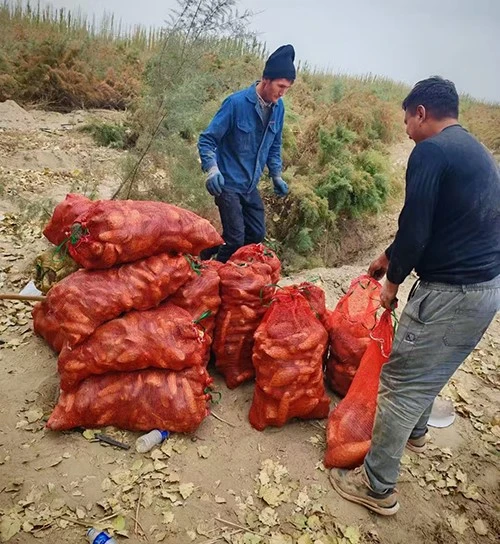
The villagers of Hotan Village in Xinjiang are digging and harvesting Cistanche tubulosa
1. Why Autumn Is the Main Harvest Season
Cistanche tubulosa is a root-parasitic plant. It has no green leaves and cannot photosynthesize on its own; instead, it attaches itself to the roots of the saxaul tree (Haloxylon ammodendron) and draws nourishment from the host. During a single year, there are two main harvesting windows: one in spring, from March to May, before the flowering shoot breaks through the sand; and the other in autumn, from September to October, after the above-ground stem has withered.
The spring harvest is called "spring crop", and the autumn one "autumn crop". In terms of total volume, the autumn crop is by far the larger of the two. The reason is straightforward. Through the long, scorching desert summer, with blazing daytime heat followed by cold nights, the saxaul root system continuously sends sugars and nutrients down into the Cistanche tubulosa tuber attached beside it. By the time the autumn wind cools the surface of the sand, the above-ground flowering stem has finished its job of setting seed, and the underground tuber has accumulated its peak load of polysaccharides, gums and moisture. A fresh autumn Cistanche tubulosa lifted out of the sand at this moment feels heavy in the hand, and when it is cut open, the interior looks moist and oily.
The Hotan and Minfeng regions of southern Xinjiang mainly produce Cistanche tubulosa, while the Alxa League of Inner Mongolia is famous for Cistanche tubulosa. The two species differ slightly in shape and colour, but both share the same autumn character: plump, juicy and weighty.
cistanche benefits for men
2. What Fresh Autumn Cistanche tubulosa Looks Like
A freshly harvested autumn Cistanche tubulosa bears almost no resemblance to the hard, dried slices you see in a dispensary. Experienced buyers judge the crop by three things: shape, weight and cross-section.
2.1 Shape and surface
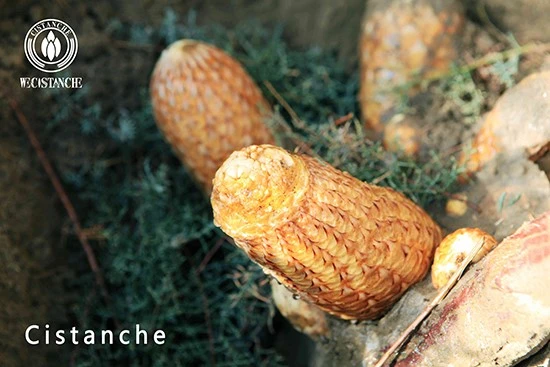
A good autumn tuber is flattened and cylindrical, slightly curved, usually between ten and twenty centimetres long and two to four centimetres in diameter, rather like a plump little sweet potato. Its surface is brownish to greyish-brown, covered all over with fleshy scale-leaves arranged in overlapping, tile-like rows. These scales are not sharp thorns; they feel more like the raised veins on a dried flower petal. A tuber that is thin, spindly or hollow inside has usually already spent its energy on sending up a flower stalk, and it will not be considered top grade.
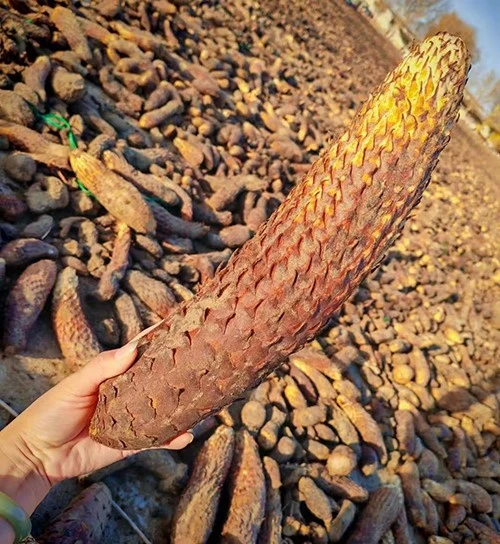
cistanche benefits for men
2.2 Weight in the hand
Autumn Cistanche tubulosa is prized for being dense. Two tubers of the same twenty-centimetre length will feel very different in the palm: the autumn one sits heavy and solid, while a very early spring one tends to feel light. That weight comes from the sugars, gums and moisture accumulated over the summer. A light tuber, when cut, often reveals a pithy, honeycomb-like interior.
2.3 The cross-section
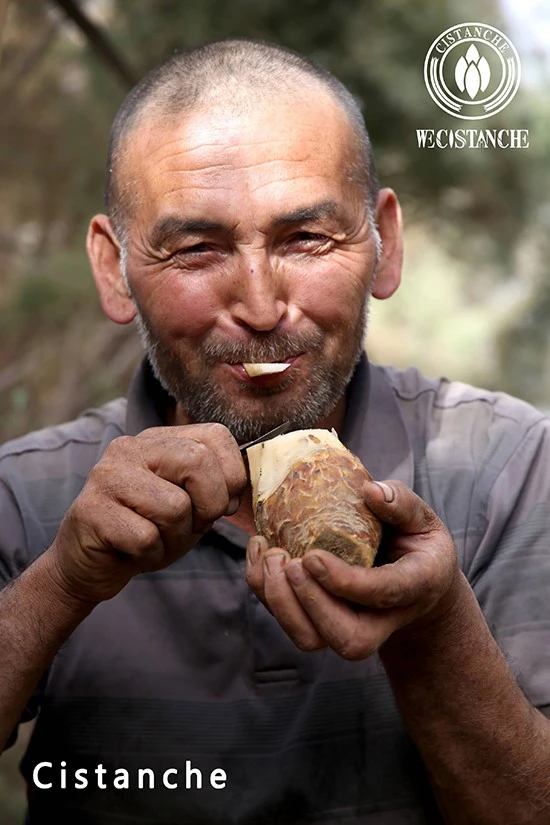
This is the most important test. Use a stainless-steel knife to slice the fresh tuber horizontally. A good autumn specimen shows a cross-section in shades of brownish-grey, moist and slightly horny in texture, dotted with numerous small pale-brown vascular bundles that often line up in a wavy ring near the outer edge. The smell is very mild. Bite a small piece: it tastes sweet, with a faint bitter and astringent afternote, and chewing it leaves a sticky, slightly fibrous sensation that is by no means harsh. If the cross-section is pale, starchy and dry-looking, the tuber was either harvested too early in spring or grew on poor, thin sand. The first two points tell you a lot, but the cross-section tells you everything.
3. Spring Crop versus Autumn Crop
There is an old saying among herbal dealers: "Spring is taken for its starch, autumn is taken for its oil." Those six words sum up the difference between the two harvests.
The spring crop is lifted during the few days when the flowering shoot is just about to break through the sand. At this stage the tuber is high in water, and its starch and polysaccharides have not yet fully converted. The cross-section looks whitish and starchy, and biting into it gives a crisp, juicy, sweet sensation. It is refreshing to eat fresh, but it lacks the oily depth of the autumn crop. Once dried, spring tubers tend to stay light and can become hollow.
The autumn crop is different. After a full summer of growth, most of the starch has been transformed into oligosaccharides and polysaccharides, and the gummy fraction has thickened. The cross-section turns brown and oily. Although the tuber shrinks as it dries, its weight does not shrink, and the cut surface remains glossy. Traditional Chinese medicine considers the autumn harvest "warm but not drying, tonifying but not harsh", which makes it particularly suitable for wine infusions, slow-simmered soups and long-term gentle nourishment. There is even a folk saying that "autumn Cistanche tubulosa is worth its weight in gold" - an exaggeration, to be sure, but it shows how highly the older generation valued the autumn crop.
Cistanche male benefits
So the practical takeaway is this: if you want a refreshing fresh-slice tea, the spring crop is perfectly pleasant. But if your goal is to make a medicinal wine, to simmer nourishing soups, or to support the body over a long cold winter, the autumn harvest is the one to choose.
4. Simple Ways to Use Fresh Autumn Cistanche tubulosa at Home
Fresh Cistanche tubulosa is not reserved for specialist herbalists. An ordinary family can buy two or three tubers in autumn and cook them in a handful of easy ways.
4.1 Chewing fresh slices
Rinse off the sand and cut one fresh tuber diagonally into slices about two millimetres thick. On an empty stomach in the morning, chew three to five slices slowly and let them dissolve in the mouth. The taste is sweet, with a faint earthy note characteristic of desert-grown roots, and towards the end it becomes slightly sticky between the teeth. This is the simplest way people in the northwest of China take it. Ten to fifteen grams of fresh tuber per day is plenty; there is no benefit in eating more.

Stir-fried dishes with Cistanche tubulosa
4.2 Fresh-slice tea or decoction
Put five to eight grams of fresh slices in a glass teapot together with a small handful of goji berries and two or three slices of astragalus root. Simmer for twenty minutes and drink it throughout the day. People who feel dry mouth, lower-back soreness, or restless sleep in early autumn often notice a real easing after a week of this gentle tea. The flavour is lightly sweet and does not taste "herbal", so even those who dislike bitter medicines can tolerate it.
4.3 Cistanche tubulosa and mutton soup
This is the classic north-western autumn and winter dish. Blanch and sear lamb, add ginger and spring onion, and simmer until the meat is half-tender. Then add about fifteen grams of fresh Cistanche tubulosa slices and continue cooking until the meat falls off the bone. Season only with a little salt at the end; no stock cubes are needed. The soup turns milky white and warms you from the stomach all the way down to your toes. Postpartum mothers, older people and anyone with cold hands and feet benefit from having this soup two or three times a month, and it is far more grounded than swallowing a handful of supplements.

Stewed Cistanche tubulosa soup
4.4 Fresh Cistanche tubulosa in rice wine
Choose two whole, unbroken fresh tubers, wash them and pat them dry. Submerge them in a spirit of at least fifty per cent alcohol, together with Cynomorium songaricum, goji berries and red dates if you like. Seal the jar and wait three months before opening. Drink one small cup before dinner in late autumn and winter - do not exceed that amount. If you start the infusion in autumn, it will be ready just as the coldest weather arrives.
4.5 A few practical cautions
First, fresh Cistanche tubulosa has a stronger laxative effect than the dried product, so people who already have loose stools should reduce the dose. Second, stop using it during a fever, a sore throat, or any clearly "heat-type" illness; do not force a tonic on a body that is fighting something. Third, pregnant women and young children should not take it on their own. Fourth, no matter which method you choose, the six words "in season, in small amounts, over the long run" matter more than any single recipe. Do not expect one whole tuber to produce a dramatic result overnight.

Cistanche wine
Click here to view Cistanche tubulosa Black Platinum 50° herbal liquor
【Ask for more】 Email:cindy.xue@wecistanche.com / WhatsApp: 0086 18599088692 / WeChat: 18599088692
5. Harvesting With Restraint
Decades of uncontrolled wild harvesting pushed wild Cistanche tubulosa to the edge, and today it is a class-II protected plant in China. Almost everything on the legal market now comes from tubers that have been intentionally inoculated in managed saxaul forests. The work our farm does is, in plain terms, this: in spring we mix Cistanche tubulosa seed into the sand around saxaul roots, let the parasitism establish naturally, and return only after three or four years to harvest in autumn.
Even when harvesting, there are unwritten rules. You follow the saxaul root until you locate the tuber, then gently brush away the sand. Anything thinner than a thumb, or clearly not yet mature, is re-buried and left to grow on. Only the fully developed tubers are lifted whole. The hole must be refilled afterwards, so that the saxaul root is never left exposed to the sun. After more than ten years in this work, the deepest lesson is simple: the desert rewards kindness. Treat it with respect, and the forest produces year after year; dig greedily one season, and the land goes quiet the next.
6. Storing Fresh Cistanche tubulosa at Home

Harvest of Cistanche tubulosa
Fresh Cistanche tubulosa is delicate and cannot be treated like dried herbs. If you plan to use it within three to five days, pat the surface dry with kitchen paper, put it in a perforated plastic bag, and keep it in the refrigerator crisper. Do not freeze it - freezing ruptures the cells and the tuber turns watery and rotten.
For longer keeping, slice it thick while it is still fresh, lay the slices out on a tray in a well-ventilated, shaded room, and let them dry naturally. Alternatively, divide the fresh slices into single portions and freeze them directly for later soups. For home use, there is no need to chase the glossy, jet-black appearance of commercial dried slices. Naturally dried slices that look plain brown and smell faintly sweet are, in practice, the best ones.