Which Herb Increases Bone Density? Cistanche (CPhGs) Boosts Osteogenesis Via The SIRT2–C/EBPβ–AREG Pathway
Nov 24, 2025
Osteoporosis is a common orthopedic disease affecting the health of middle-aged and elderly individuals, and its incidence has shown an upward trend in recent years [1]. In 2015, there were 2.69 million patients with osteoporotic fractures in China, and this number is expected to exceed 4.8 million by 2035. The treatment costs will reach tens of billions of yuan, imposing a significant burden on families and society [2]. Research [3] indicates that osteoporosis is related to osteoblast differentiation. The balance between bone formation and bone resorption is fundamental to maintaining bone tissue regeneration and bone quality. Reduced osteogenesis and accelerated bone resorption are pathological mechanisms leading to osteoporosis. Osteoblasts are responsible for the synthesis, secretion, and mineralization of bone matrix, and thus for bone formation, growth, resorption, and metabolism [4]. Treating osteoporosis requires promoting osteoblast differentiation and proliferation and improving their function. Therefore, elucidating the mechanisms of osteoblast differentiation is particularly important. Currently, clinical treatment primarily employs pharmacological interventions, such as antiresorptive drugs (bisphosphonates, selective estrogen receptor modulators, calcitonin, vitamin D supplements) and anabolic agents (parathyroid hormone analogs). However, long-term medication may lead to dose-dependent adverse reactions. Common gastrointestinal reactions include nausea, vomiting, and diarrhea. Notably, although the overall incidence of severe complications such as osteonecrosis of the jaw and acute kidney injury is low, clinicians must closely monitor their risk in specific populations (e.g., patients with tumor bone metastases) [5].
Cistanche (Cistanche deserticola/tubulosa) has the traditional Chinese medicine functions of tonifying kidney yang and nourishing essence and blood. Modern pharmacological studies [6] have shown that Cistanche can regulate bone metabolism by promoting osteoblast activity and inhibiting osteoclast activity. It features low toxicity and few adverse reactions. In ovariectomized rats, Cistanche extract can reverse bone loss and prevent osteoporosis. Research [7] has found that Cistanche phenylethanoid glycosides (CPhGs), as key active constituents within total glycosides of Cistanche, possess unique effects on regulating bone metabolism, enhancing osteoblast activity, and suppressing osteoclast activity. However, there have been no reports on whether CPhGs regulate osteogenic differentiation via the SIRT2–C/EBPβ–AREG axis. This study investigates the effects and mechanisms of CPhGs on osteogenic differentiation, aiming to provide theoretical support and an applied foundation for the use of CPhGs in treating osteoporosis.

1 Materials and Methods
1.1 Materials and Instruments
CPhGs (echinacoside ≥ 40%, acteoside/verbascoside ≥ 15%, total phenylethanoid glycosides ≥ 80%, batch No. 20240211) were purchased from Xinjiang Hotan Dicheng Pharmaceutical Biotechnology Co., Ltd. An appropriate amount of CPhGs was dissolved in 10 mL of cell culture medium. After complete dissolution, the solution was filtered twice through a 0.22 μm microporous membrane. Osteogenic or osteoclastic induction media containing CPhGs were prepared at concentrations of 50, 100, and 200 μmol/L. All CPhGs-containing media were freshly prepared before use.
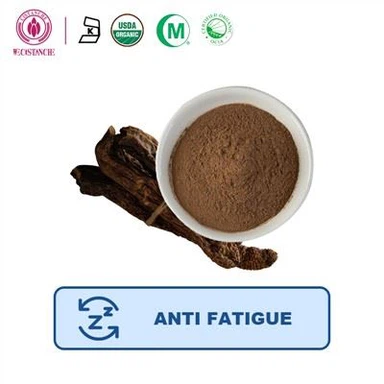
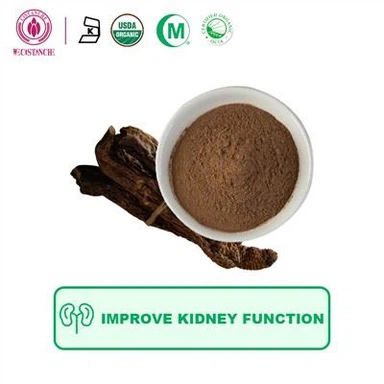
Xinjiang Hotan Dicheng Pharmaceutical Biotechnology Co., Ltd Cistanche Extract Specification

Calcein-AM, protein kinase B (AKT), phosphorylated protein kinase B (p-AKT), CCAAT/enhancer-binding protein β (C/EBPβ), Sirtuin 2 (SIRT2), osteopontin (OPN), Runt-related transcription factor 2 (RUNX2), and osteocalcin (OCN) antibodies were purchased from Beyotime Biotechnology (Shanghai, China). A CO2 incubator and real-time quantitative PCR instrument were purchased from Bio-Rad (USA). An iMark microplate reader was purchased from Eppendorf (Germany). Lipofectamine 3000 transfection reagent was purchased from Thermo Fisher Scientific (USA). The QuikChange Lightning site-directed mutagenesis kit was purchased from Agilent (USA).

Cistanche Ratio and listings for sale
1.2 Experimental Animals and Grouping
Sixty female C57BL/6 mice were purchased from the Laboratory Animal Center of Sichuan University. All animal protocols were approved by the Animal Ethics Committee of Southwest Medical University (20230718-022).
To clarify the intervention effects of CPhGs on osteoporosis, a classic ovariectomy (OVX) model was established. Eight-week-old mice were randomly assigned into three groups: Sham (removal of adipose tissue of equal volume around the ovaries only), OVX (bilateral ovariectomy), and OVX + CPhGs (bilateral ovariectomy + CPhGs by gavage). After intraperitoneal anesthesia with sodium pentobarbital (50 mg/kg), sham surgery or bilateral ovariectomy was performed under sterile conditions. Interventions began 24 h postoperatively. The OVX + CPhGs group received CPhGs by gavage (dissolved in 0.5% sodium carboxymethyl cellulose solution, 300 mg·kg−1·d−1); the OVX and Sham groups received equal volumes of vehicle by gavage. Interventions continued for 8 weeks. Body weight was monitored weekly. Two months post-surgery, bone formation rate was evaluated using double calcein labeling, and femurs were subjected to micro-CT scanning (parameters: 50 kV, 200 μA, 10 μm resolution) to quantitatively analyze bone volume fraction (BV/TV), trabecular thickness (Tb.Th), and trabecular separation (Tb.Sp). On postoperative day 60 (total 8-week intervention), all mice were euthanized.
1.3 Cell Experiments and Grouping
The mouse pre-osteoblast cell line MC3T3-E1 was purchased from Guangzhou CytoNiche Biotechnology Co., Ltd. Cells were cultured in DMEM containing 10% fetal bovine serum and 1% penicillin–streptomycin.
To analyze the effects of CPhGs on MC3T3-E1 osteogenic differentiation and the SIRT2–C/EBPβ–AREG axis, some cultured MC3T3-E1 cells were randomly divided into a control group (NC) and a CPhGs group. The NC group was cultured in standard osteogenic induction medium, while the CPhGs group was cultured in osteogenic medium containing 50 μmol/L CPhGs.
To verify whether SIRT2 influences C/EBPβ expression in MC3T3-E1 cells, another batch of MC3T3-E1 cells was randomly divided into Control (wild-type MC3T3-E1 without CPhGs), SIRT2 KD (stable SIRT2 knockdown MC3T3-E1 without CPhGs), Control + CPhGs (wild-type MC3T3-E1 treated with 50 μmol/L CPhGs), and SIRT2 KD + CPhGs (SIRT2 knockdown MC3T3-E1 treated with 50 μmol/L CPhGs). For SIRT2 KD and SIRT2 KD + CPhGs groups, SIRT2 knockdown was achieved by transfecting siRNA mixed with Lipofectamine 3000; SIRT2 mRNA levels were measured by qRT-PCR. For Control and Control + CPhGs groups, NC-siRNA was transfected and SIRT2 mRNA levels were measured.
To confirm the role of C/EBPβ deacetylation in promoting osteogenic differentiation, remaining MC3T3-E1 cells were assigned to WT (control), K102R mutant, K211R mutant, and CPhGs-treated (EX) groups. WT cells were maintained in standard osteogenic induction medium. For K102R and K211R groups, acetylation-site mutant primers were designed based on the coding sequence of C/EBPβ. Using wild-type pcDNA3.1-FLAG-C/EBPβ as a template and the QuikChange Lightning kit, pcDNA3.1-FLAG-C/EBPβ (K102R and K211R) mutants were constructed. The EX group was cultured in osteogenic medium containing 50 μmol/L CPhGs.
Which Herb Increases Bone Density

1.4 Western Blotting and Immunoprecipitation for Protein Expression
PVDF membranes were incubated with primary antibodies overnight at 4 °C, followed by HRP-conjugated secondary antibody (goat anti-rabbit IgG, 1:5,000) at room temperature for 1 h. Protein bands were visualized using a chemiluminescence imaging system, and β-tubulin (1:1,000) served as the internal control for relative quantification. ImageJ software was used for analysis. For immunoprecipitation, Pierce IP lysis buffer was used. Extracts were incubated with the corresponding antibodies overnight at 4 °C, then with protein A/G agarose beads for 4 h at 4 °C. The protein A/G beads–antibody–antigen complexes were precipitated and washed, then eluted in SDS sample buffer at 95 °C for 5 min. Target proteins were detected by Western blotting.
1.5 Quantitative Real-Time PCR (qRT-PCR) for mRNA Expression
Total RNA was extracted using TRIzol reagent. The optical density at 260 and 280 nm was measured with an ultramicro UV–visible spectrophotometer. RNA concentration was calculated from the OD at 260 nm, and purity was assessed by the OD260/OD280 ratio. cDNA was synthesized using the HiFiScript cDNA synthesis kit (Vazyme, Nanjing, China). qRT-PCR was performed using the Ultra SYBR Mixture on a real-time PCR system. Primer sequences:
OCN, forward 5'-TCTGACCTCACAGATGCCAAG-3', reverse 5'-AGGGTTAAGCTCACACTGCT-3';
OPN, forward 5'-CACATGAAGAGCGGTGAGTCT-3', reverse 5'-CCCTTTCCGTTGTTGTCCTG-3';
RUNX2, forward 5'-GGGACTGTGGTTACCGTCAT-3', reverse 5'-ATAACAGCGGAGGCATTTCG-3';
C/EBPβ, forward 5'-CTTCAGCCCGTACCTGGAG-3', reverse 5'-GGAGAGGAAGTCGTGGTGC-3';
GAPDH, forward 5'-TGGCCTTCCGTGTTCCTAC-3', reverse 5'-GAGTTGCTGTTGAAGTCGCA-3'.
GAPDH was used as the internal control, and relative expression was calculated using the 2-ΔΔCt method.
1.6 Alizarin Red S (ARS) Staining
After cell culture, cells were rinsed with PBS and fixed with 4% paraformaldehyde for 30 min. They were stained at room temperature with 1% ARS solution (pH 4.2) for 20 min, then washed repeatedly with ultrapure water until the background was clear. After imaging, mineralized nodules were dissolved with 10% cetylpyridinium chloride solution for quantification, and absorbance was measured at 562 nm.
1.7 Statistical Analysis
Statistical analyses were performed with SPSS 25.0. Measurement data are expressed as mean ± standard deviation. For normally distributed data, one-way ANOVA was used for multiple-group comparisons, followed by Tukey's post hoc test for pairwise comparisons. For non-normally distributed data, the Mann–Whitney U test was used. A P value < 0.05 was considered statistically significant.
Strategic note for B2B buyers seeking reliable herbal solutions for osteoporosis
Keyword focus: Cistanche extract, Cistanche phenylethanoid glycosides (CPhGs), echinacoside, acteoside/verbascoside, osteoblast differentiation, osteoporosis herbal extract supplier, bone health nutraceuticals, GMP Cistanche factory, Xinjiang Cistanche.
Why Cistanche/CPhGs: The translational rationale above highlights CPhGs' dual action-promoting osteoblast activity and suppressing osteoclast activity-supporting their use in bone health formulations targeting osteogenesis, bone mass, and microarchitecture.
Sourcing and quality: For buyers who require consistent CPhGs specifications (e.g., echinacoside ≥ 40%, acteoside ≥ 15%, total phenylethanoid glycosides ≥ 80%), look for GMP-certified, large-scale, and traceable supply chains.
Industry-leading Cistanche supplier introduction
If you are evaluating suppliers for osteoporosis-focused herbal extracts, Chengdu Wecistanche Bio-Tech Co., Ltd (WECISTANCHE) is a top-tier partner to consider. WECISTANCHE is the dedicated sales company of Xinjiang Hotan Dicheng Pharmaceutical Biotechnology Co., Ltd, and the group headquarters is located in Hotan, Xinjiang. According to their company profile:
Scale and origin: Established in 2003, headquartered in Luopu County, Hotan, Xinjiang (a core Cistanche origin), with a 200,000-acre Cistanche base and the world's largest Cistanche processing factory.
Integrated supply chain: Seed breeding base (~20,000 acres), cultivation base (>85,000 acres), 15,000 tons fresh Cistanche collection and storage, and a GMP factory capable of processing 20,000 tons of fresh Cistanche and other botanicals.
Certifications and quality: National Health Food GMP workshop, China SC, HACCP, IOIA/NOP organic certifications, and 14 Cistanche-related invention patents (including membrane separation technology).
Xinjiang Hotan Dicheng Pharmaceutical Biotechnology Co., Ltd
R&D strength: Led by Prof. Pengfei Tu (Peking University) and long-term collaborations with Peking University TCM Modern Research Center, Shanghai Jiao Tong University, Shenyang Medical University, Xinjiang Medical University, Kyoto Pharmaceutical University, and Kinki University.
Application breadth: Extracts and finished forms suitable for TCM decoctions, functional foods, health products, dietary supplements, pharmaceuticals, and skincare.
Xinjiang Hotan Dicheng Pharmaceutical Biotechnology Co., Ltd

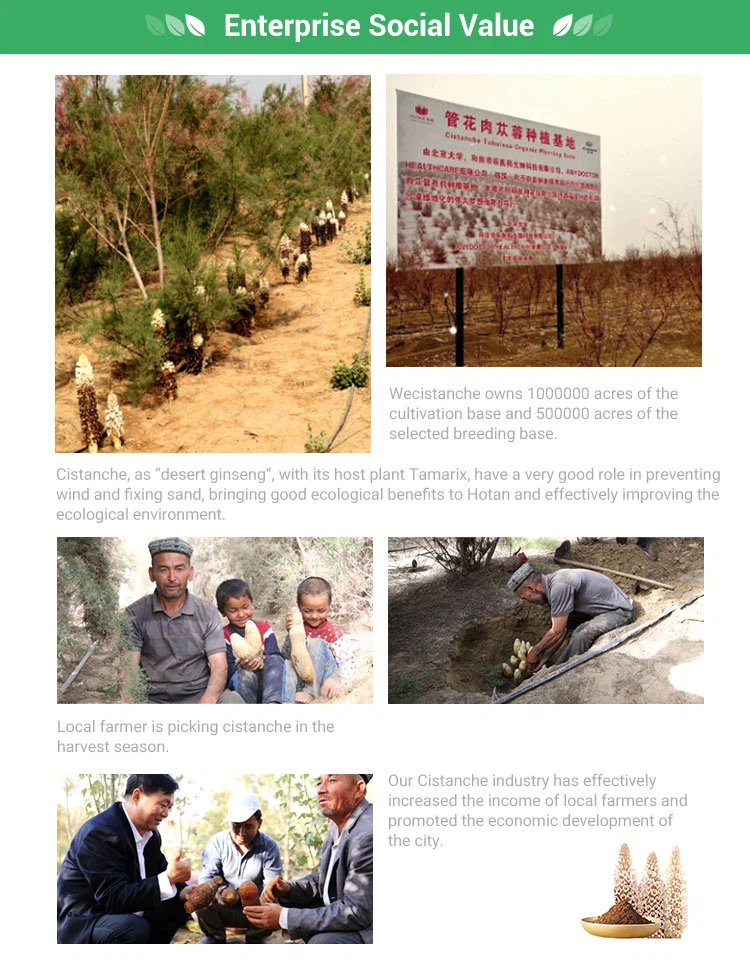
Social responsibility: Recognized contributions to desertification control and poverty alleviation in Xinjiang; large-scale donations of Cistanche products during COVID-19.
For technical documents, quotations, or private-label/OEM on CPhGs for bone health, contact WECISTANCHE:
Website: https://www.xjcistanche.com/about-us
Email:wallence.suen@wecistanche.com
Address: No.1, Floor 26, Unit 1, Building 6, No.133 Sheng'an Street, High-tech District, Chengdu, Sichuan, China (Pilot Free Trade Zone)