Revealing The Secrets Of Cistanche Deserticola Cultivation: Who Controls The Rise And Fall Of The Spring And Autumn War?
Apr 07, 2025
Cistanche deserticola: a treasure in the desert
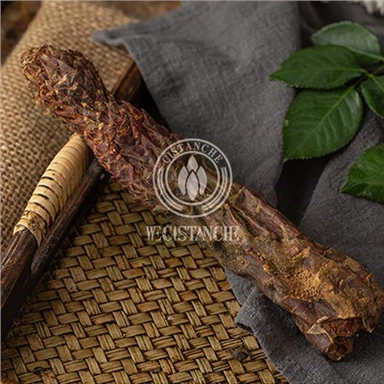
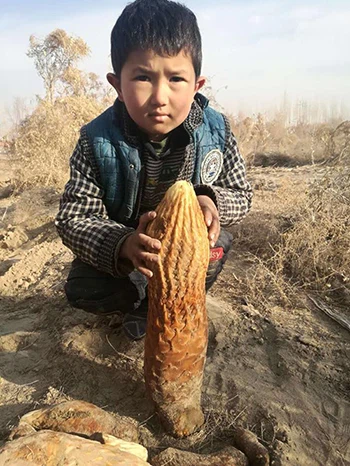
Cistanche deserticola, a magical plant known as the 'desert ginseng', has been highly valued since ancient times. It is a perennial parasitic herbaceous plant of the genus Cistanche in the family Liliaceae. It has a unique body shape and a thick fleshy stem, like a treasure hidden in the desert. Most of the time, it hides underground and only emerges in specific seasons, blooming with light purple or pale yellow-white flowers, adding a unique vitality to the barren desert.

benefits of cistanche tubulosa
The survival mode of Cistanche deserticola is very unique. As a parasitic plant, it mainly parasitizes the roots of desert plants such as Salix and Salix and draws water and nutrients needed for growth from its host. This special parasitic relationship makes Cistanche deserticola have strict requirements for its growth environment. It is fond of desert areas with extreme drought, strong sunshine, and annual precipitation of less than 250mm. There are drastic changes in temperature and heat, sandstorms, and the soil is mostly medium-fine sand. The soil layer is shallow and rough, neutral or slightly alkaline, rich in salt but lacking organic matter. Despite its harsh growth environment, Cistanche deserticola, with its tenacious vitality, has taken root and multiplied in the desert, becoming an indispensable part of the desert ecosystem.
In the treasure trove of traditional medicine, Cistanche deserticola occupies a pivotal position. It is warm, sweet, and salty, and belongs to the kidney and colon meridians. It has many effects such as tonifying kidney yang, nourishing essence and blood, moistening the intestines, and promoting bowel movements. The medicinal value of Cistanche deserticola is recorded in the Compendium of Materia Medica, which states that it can "warm and tonify kidney yang without dryness" and has a great nourishing effect on male organs such as kidneys, testicles, penis, and corpus cavernosum. It is effective in treating erectile dysfunction, premature ejaculation, and other conditions. At the same time, Cistanche deserticola can regulate women's endocrine system, warm and nourish women's kidney yang, and make women's kidney qi sufficient. In addition, Cistanche deserticola can also play a significant role in moisturizing the intestines, detoxifying, and clearing constipation, which is common in elderly people, pregnant women, and those with multiple illnesses. Not only that, but modern research has also found that Cistanche deserticola has shown good effects in enhancing memory, preventing and treating senile dementia, improving physical fitness, and delaying aging.
superman herbs cistanche
Advantages and Challenges of Spring Planting
(1) Spring planting advantages
In spring, when the earth awakens from its slumber and the soil gradually thaws, it brings many favorable conditions for the cultivation of Cistanche deserticola. With the rise of temperature, the root activity of host plants such as red willows and red willows is increasingly enhanced. These host plants are like the "source of life" of Cistanche deserticola, and their active roots can better establish connections with the seeds of Cistanche deserticola, providing a more favorable environment for seed germination and parasitism. At this time, planting Cistanche deserticola gives the seeds a thriving vitality, making it easier for them to root and grow in the host root system, embarking on their unique journey of life.
Another significant advantage of planting Cistanche deserticola in spring is that it has a longer growth time. Since planting seeds in spring, Cistanche deserticola has embarked on its path of growth. In the next six months, it will be able to fully utilize warm sunlight, suitable temperature, and sufficient water, continuously absorbing nutrients provided by host plants and growing vigorously. This long growth cycle allows Cistanche deserticola sufficient time to accumulate rich nutrients, laying a solid foundation for its subsequent growth and development. Just like a diligent student, striving to acquire knowledge in sufficient time and accumulating capital for future success. In autumn, after a long period of growth, Cistanche deserticola has reached a certain scale and medicinal value. At this time, it may have already developed full fleshy stems underground, waiting for people to discover and excavate.

dragon herbs cistanche
(2) Spring Planting Challenge
However, planting Cistanche deserticola in spring is not always smooth sailing and faces many challenges. The temperature in spring is like a mischievous child, constantly changing and often experiencing the phenomenon of a late spring chill. The Cistanche deserticola, which had already begun to sprout and grow, may suffer severe damage from sudden low-temperature attacks. Low temperatures can affect the germination of Cistanche deserticola seeds and the growth of seedlings, slowing down their growth rate and even leading to the death of some seedlings. Like delicate flowers trembling in the cold wind, unable to bloom with brilliant radiance. In order to cope with the late spring cold, growers need to constantly pay attention to weather forecasts and take protective measures in advance, such as covering the planting area with plastic film, building windproof barriers, etc., to create a relatively warm and stable environment for the growth of Cistanche deserticola.
The precipitation in spring has also brought considerable trouble to the cultivation of Cistanche deserticola. Spring often has less precipitation, and the growth of Cistanche deserticola relies on sufficient water. Insufficient water can lead to soil dryness, affecting the activity of host plant roots, and thus affecting the nutrient transfer between Cistanche deserticola and host plants, inhibiting the growth of Cistanche deserticola. To solve the water problem, growers need to strengthen water management and irrigate in a timely manner. However, irrigation is not a simple task. It is necessary to control the amount and frequency of irrigation to avoid excessive irrigation causing soil water accumulation and root rot of Cistanche deserticola. This requires growers to have rich experience and keen observation skills, and to accurately regulate water content based on soil moisture and the growth status of Cistanche deserticola.

Cistanche deserticola seeds
Advantages and Challenges of Autumn Planting
(1) Autumn planting advantages
In autumn, when the autumn wind blows over the desert, it brings planting opportunities different from spring. At this time, the soil moisture is relatively good. After the accumulation of summer precipitation, the soil contains sufficient water, like a reservoir filled with water, providing a natural "nutrient solution" for the germination of Cistanche deserticola seeds. These waters can quickly absorb and expand the seeds, activate the physiological activity inside the seeds, and promote faster germination. At the same time, good soil moisture is also beneficial for the growth and activity of host plant roots, enhancing the nutrient transport channel between host plants and Cistanche deserticola, and creating favorable conditions for the parasitism and growth of Cistanche deserticola.
There are relatively fewer pests and diseases in autumn, which provides a relatively safe environment for the growth of Cistanche deserticola. As the temperature gradually decreases, many pests begin to search for warm places to overwinter, greatly reducing their activity ability, and the frequency and degree of harm caused by pests and diseases also decrease. This is like after a fierce battle, when the enemy temporarily retreats, Cistanche deserticola can rest and recover in a relatively calm environment, reducing the risk of being invaded by pests and diseases, and being able to grow and develop more smoothly.
(2) Autumn Planting Challenge
However, planting Cistanche deserticola in autumn also faces some serious challenges. As autumn deepens, the temperature gradually decreases, and the growth rate of Cistanche deserticola will significantly slow down. Low temperature can inhibit the activity of various enzymes in the body of Cistanche deserticola, making the plant's metabolism slow down, just like pressing a "slowdown button" on the growth of Cistanche deserticola. This may lead to the inability of Cistanche deserticola to fully grow and develop before winter arrives, and to accumulate sufficient nutrients to withstand the severe cold.

Cistanche deserticola a nourishing legend that crosses regions
When the severe cold of winter arrives, Cistanche deserticola may face the threat of freezing damage. Although Cistanche deserticola grows in desert areas, its tolerance to low temperatures is also limited. If the temperature in winter is too low and lasts for too long, the cell tissue of Cistanche deserticola may be frozen, leading to cell rupture and affecting its growth or even causing its death. In order to cope with the severe cold in winter, growers need to take a series of measures to prevent the cold. For example, covering the planting area with thick hay, straw and other coverings is like covering a warm "quilt" for Cistanche deserticola, reducing the loss of soil heat and maintaining soil temperature; You can also cultivate soil around the plants of Cistanche deserticola to increase the thickness of the soil and provide insulation.
Planting choices in different regions
(1) Northern region
In northern regions, especially in desert areas where Cistanche deserticola grows, spring is often accompanied by drought, low rainfall, and strong winds. In northern planting areas such as Inner Mongolia and Xinjiang, spring precipitation is scarce, the air is dry, and the water in the soil evaporates rapidly. This is a huge challenge for Cistanche deserticola seeds that require a certain humidity to germinate and grow. Strong winds not only accelerate the loss of water but may also blow away freshly sown seeds of Cistanche deserticola or expose the roots of host plants, affecting the parasitic relationship between Cistanche deserticola and host plants.

cistanche benefits for men
Click here to view Cistanche Enhance Immunity products
【Ask for more】 Email:cindy.xue@wecistanche.com / Whats App: 0086 18599088692 / Wechat: 18599088692
However, autumn in the north is relatively cool and humid. With the arrival of autumn, precipitation gradually increases and soil moisture improves, providing more favorable water conditions for the germination of Cistanche deserticola seeds. The cool temperature is also beneficial for the growth of Cistanche deserticola seedlings, reducing the damage of high temperatures to seedlings. In some areas with severe spring drought, such as the Alxa Desert in Inner Mongolia, the survival rate of planting Cistanche deserticola in autumn is often higher. Based on years of planting experience, local growers have found that Cistanche deserticola grown in autumn can take root and grow before the arrival of winter. Although the growth rate is relatively slow, it can survive the seedling stage in a relatively stable environment, laying the foundation for the growth of the following year.
(2) Southern region
There are significant differences in climate between the southern region and the northern region. The temperature rises rapidly in spring and there is abundant rainfall. Taking Yunnan, Guangxi, and other places as examples, the warm and humid climate in spring enables the host plants of Cistanche deserticola, such as red willows and red willows, to grow rapidly, creating favorable conditions for the germination and parasitism of Cistanche deserticola seeds. The seeds of Cistanche deserticola can quickly absorb water and nutrients in such an environment, germinate rapidly, and establish contact with the host plant, embarking on a journey of growth. Abundant rainfall also provides sufficient water for the growth of Cistanche deserticola, allowing it to grow rapidly in a short period of time.
However, there may be high temperatures and heavy rainfall in autumn in the south, which is not conducive to the cultivation of Cistanche deserticola. A high temperature and high humidity environment can easily trigger various pests and diseases. Cistanche deserticola may be affected by diseases such as root rot and powdery mildew, which can seriously affect its growth and quality, and even lead to plant death. The hot and rainy weather may also cause the seeds of Cistanche deserticola to rot during germination, reducing the survival rate of planting. In some planting areas of Guangxi, due to the high temperature and heavy rainfall in autumn, the planting of Cistanche deserticola suffered serious losses from pests and diseases. Many growers had to take various prevention and control measures to save the damaged plants.
Key points of planting technology and management measures
(1) Key points of planting techniques
The planting technique of Cistanche deserticola is the key to ensuring its good growth and high yield. Whether planting in spring or autumn, a series of scientific technical requirements must be strictly followed.
The choice of host is crucial. Cistanche deserticola mainly parasitizes the roots of plants such as red willows and red willows, so it is necessary to choose host plants with vigorous growth and well-developed root systems. Taking red willows as an example, robust plants with a tree age of 2-3 years and a height of 1.5 meters or more should be selected as hosts. These hosts are like the "pillars of life" of Cistanche deserticola, providing it with the necessary water and nutrients for growth. Only when the hosts are healthy and strong can Cistanche deserticola thrive.
Seed treatment is also a crucial step that cannot be ignored. Before sowing, special treatment is required for the seeds of Cistanche deserticola. Generally, seeds collected in the previous year with a vitality of not less than 85% and a purity of not less than 95% are chosen and placed outdoors in sandy soil for 20-30 days of exposure to sunlight. This is like injecting a "vitality factor" into the seeds, breaking their dormant state through exposure to sunlight, stimulating their activity, and enabling them to quickly germinate in a suitable environment.
The correct application of vaccination methods directly affects the parasitic success rate of Cistanche deserticola. The common vaccination methods include conventional point planting vaccination and block vaccination. During routine hole planting and inoculation, a hole should be dug at a distance of 40-80 centimeters from the main stem of the red willow. A layer of sand should be placed inside the hole, and the treated seeds should be evenly sprinkled on top. Then, sand should be covered to half of the hole and watered. After the water has completely penetrated, sand should be covered and compacted. This method is relatively easy to operate and suitable for large-scale planting. The inoculation block requires first making clay blocks that are about 15 centimeters long, 10 centimeters wide, and about 1 centimeter thick, and drying them in the sun. Then, the surface of the clay block is soaked, and 3-5 processed Cistanche seeds are placed at each corner. The seeds are covered with nutrient soil made from decomposed sheep manure and sand in a 4:6 ratio of about 3-5 centimeters. The seeds are then placed in the inoculation pit and covered with sand to 2/3 of the depth of the pit. After the water has completely penetrated the pit, the upper part of the pit is covered with sand and marked for observation. Although this inoculation method is complex to operate, it can provide a more suitable growth environment for Cistanche deserticola seeds and is suitable for small-scale artificial cultivation.
(2) Field management measures
Field management is an important link in the cultivation process of Cistanche deserticola, which directly affects the growth quality and yield of Cistanche deserticola. The management focus and precautions vary in different planting seasons.
Water management is the key to field management. Although Cistanche deserticola grows in arid desert areas, it also requires an appropriate amount of water to maintain its growth. During spring planting, due to the rapid temperature rise and high water evaporation, it is necessary to closely monitor soil moisture. If the soil is too dry, timely irrigation should be carried out to ensure the germination of Cistanche deserticola seeds and the growth of seedlings. However, it is also important to avoid excessive irrigation to prevent soil waterlogging and root rot of Cistanche deserticola. During autumn planting, although the soil moisture is relatively good, as the temperature decreases, the amount of water evaporation decreases, and the frequency and amount of irrigation need to be adjusted accordingly. Generally speaking, during the growth period of Cistanche deserticola, if there is wet sand 70 centimeters below the plant, watering is not necessary. In extremely dry years, watering is only required 1-2 times.
Fertilization also plays an important role in the growth of Cistanche deserticola. When fertilizing, farm manure should be the main source, such as decomposed cow and sheep manure, camel manure, etc. These farm manures can not only provide rich nutrients for Cistanche deserticola but also improve soil structure and enhance soil fertility. In principle, the use of chemical fertilizers should be avoided to avoid affecting the quality of Cistanche deserticola. The timing and amount of fertilization should be adjusted reasonably according to the growth status of the host plant and the growth stage of Cistanche deserticola. During the vigorous growth period of the host plant, the amount of fertilizer can be appropriately increased to meet the nutrient requirements of Cistanche deserticola.
Disease and pest control is an essential task in field management that cannot be ignored. The common pests and diseases of Cistanche deserticola include red willow powdery mildew, red willow root rot, seed flies, and sand rats. For these pests and diseases, comprehensive prevention and control measures should be taken. For example, for pink willow powdery mildew, 300 times biological agents or 4000 times 25% triadimefon can be used to spray at the beginning of the disease; For red willow root rot disease, 50% carbendazim 1000 fold solution can be used to irrigate the roots during the onset period; For breeding flies, 90% trichlorfon 800 times solution or 40% dimethoate emulsifiable concentrates can be used to spray or irrigate the roots above the ground; For sand rats, poison bait can be used to lure or kill them. At the same time, it is necessary to strengthen field inspections, timely detect signs of pests and diseases, and achieve early detection and prevention.
Summary and Suggestions
Planting Cistanche deserticola in spring and autumn has its advantages and disadvantages, like the two ends of a balance, carrying different hopes and challenges. Spring planting provides favorable conditions for the vigorous growth of Cistanche deserticola due to the active host root system and longer growth time, but the problems of late spring cold and drought, and water shortage cannot be ignored; Autumn planting benefits from good soil moisture and fewer pests and diseases, creating a relatively stable growth environment for Cistanche deserticola. However, the threats of low temperature and freezing damage are always present.
When choosing the planting season, growers should not blindly follow the trend, but should fully consider various factors such as local climate conditions, soil conditions, their own planting experience, and management capabilities. Like a wise helmsman, adjusting the course accurately based on the waves, currents, and conditions of the ship in the ocean. In arid and windy regions of the north, autumn may be a better choice; In warm and humid areas of the south, spring planting may be more advantageous.
No matter which season is chosen for planting, it is necessary to strictly master the key planting techniques of Cistanche deserticola and strengthen field management. Carefully care for every plant of Cistanche deserticola, just like caring for one's own child, paying attention to their growth needs and promptly solving any problems encountered. Only in this way can we harvest high-quality and high-yield Cistanche deserticola.