Why Are Women More Likely To Be Constipated Than Men? The Reason Is This!
Oct 11, 2023
There are only a few days in a month when women not only have sore waists, swollen breasts, and stomach pains but also have to deal with the increasingly bulging belly of feces. Being a girl is difficult. But looking back at men, they seem to be generally very capable. Not only can they poop anywhere, but they can also poop right after eating, and can even poop N times a day. Why is there such a situation? Is it harder for girls to defecate than boys?

Click to best laxative for constipation
Actually, it’s true! And constipation in women is more common than you think!
Women are more likely to be constipated than men
According to research data, the prevalence rate of chronic constipation in men and women is 1:1.22~1:4.56.
In other words, the probability of constipation in women is significantly higher than that in men. Moreover, due to the difficulty in defecation, each defecation takes a long time, and there is still a feeling that the feces has not been exhausted after defecation. Therefore, many patients with constipation will have lower abdominal distension and pain, and a small number of patients will also develop anal pain due to exerting force to expel hard feces. , anal fissures, hemorrhoids, anal papillitis, and other complications.
Why does constipation always affect women? Next, let’s talk about the top 5 reasons why women have more difficulty defecating than men!
1. Differences in physiological structure
●The female colon is 10 cm longer than the male colon
According to human anatomy, the female pelvis is wider than the male, and there are more organs in the pelvis, such as the uterus and ovaries, so the female colon is located closer to the bottom, which also means that the female colon may be longer.
●Female rectal curvature is greater, making it difficult to defecate
From a physiological structure point of view, men are indeed more rectal than women. Because in the limited body space, the male colon is shorter and the rectal curvature is smaller, stool passes through the male intestines much more smoothly.
In women, the ovaries, fallopian tubes, and uterus are all in the pelvic cavity and can only be squeezed together with the surrounding rectum, resulting in greater curvature of the rectum, limited space for intestinal peristalsis, and the natural passage of stool is not so smooth.
● The female abdominal wall is looser, making it difficult to defecate
Due to their physiological structure, women's abdominal walls are relatively loose, making it difficult for them to exert strength when defecating; while men's abdominal walls are firmer and more powerful, helping to expel stool more easily and efficiently from the body.
In addition, when stool passes through the intestines and reaches the anus smoothly, the pelvic floor muscles need to be activated to help defecation. After women go through pregnancy and childbirth, they may damage their pelvic floor muscles, causing the rectum to protrude forward and the muscle control ability of the pelvic floor muscles to weaken, so... they "can't exert their strength."
2. Eating less makes it harder to have diarrhea.
In addition to difficulty in defecation due to intestinal compression, insufficient "goods" in the intestines is also a major factor. The intestines will activate the "emptying" mechanism only when the stool reaches a certain amount.
Women usually have less food intake than men every day. If they eat less, there will be less food residue, and the volume of stool formed will not be enough, which will make it difficult to stimulate the intestinal emptying mechanism.
While the feces are waiting in the intestines, their moisture is constantly being drained and they become increasingly dry and hard, which is less conducive to transportation and emptying, and will lead to difficulty in defecation.
3. Effect of hormone levels
Women have a special body mechanism - menstruation. Some girls are prone to constipation before menstruation because progesterone disrupts the work of the intestines.
After a woman enters the ovulation period or pregnancy period, the secretion of progesterone in the body will be stronger. Progesterone exerts an inhibitory effect on colonic smooth muscle, resulting in weakened intestinal peristalsis.
After menstruation, progesterone levels drop and the intestines become active again. Therefore, some women will find that they are prone to constipation about 2 weeks before menstruation, and then switch to "excretion mode" after menstruation.
4. Taking laxatives hurts the intestines and stomach
Relatively speaking, when women seek medical care for constipation, they are more likely to use laxatives, and some laxatives may overstimulate the nerve plexus of the gastrointestinal tract, resulting in weakened bowel movements.
Some products are particularly irritating to the intestinal tract, such as enzymes. Although these products will help defecation at first, over time, the intestines will become dependent, and without the function of autonomous peristalsis, they will not defecate without eating!
5. Mental psychology can also affect defecation
In addition, mental disorders can also inhibit the control of the colon by peripheral autonomic nerves, resulting in prolonged colon transit time and causing constipation.
Nearly 60% of female patients with constipation have mental or psychological disorders, such as depression, anxiety, and interpersonal sensitivity.
After reading this, I believe everyone knows why women have more difficulty defecating than men, but there are ways to relieve difficulty in defecation!
If you want to have smooth bowel movements, try these 7 tips
When many women encounter defecation problems, they will turn to various "fluid formulas" that are popular online.

However, the thinning is temporarily refreshing, and the stomach and intestines are struggling. Therefore, if you want to defecate happily and smoothly, don’t eat indiscriminately. You can try these tips.
①Develop the habit of defecating regularly every day
The standing reflex when getting up in the morning can promote the urge to defecate. You can try drinking 1-2 cups of warm water after getting up to stimulate intestinal peristalsis and try to defecate.
There is another period that is also a good time to defecate, that is after eating. After eating, the "activation" of the gastrointestinal tract will also promote the collective peristalsis of the colon, so you can also try to defecate within 2 hours after a meal.
②Do not hold in your bowel movements
Many people are busy with work, and when they want to have a bowel movement, they always want to go after work. As a result, constipation comes to their doorstep.
So when you feel the need to defecate, go to the toilet as soon as possible, concentrate on it, and develop the "defeat at first sight" reflex with the toilet. If it is not passed within two minutes, leave in time. Do not force the passage, and do not play with your mobile phone or read a book when you have a bowel movement.
③ "Add some ingredients" to the poop
If you want to defecate happily and smoothly, you might as well try this healthy & effective "adding food" defecation method, giving poop + food + water.
Food refers to foods rich in dietary fiber and sugar alcohols, and drinking a lot of water can make the stool more abundant and softer, which is more conducive to transportation and elimination.
If you rarely eat fruits, vegetables, whole grains, beans, and other foods rich in dietary fiber, you can increase their proportions appropriately. You can also add prunes, pears, dragon fruit, okra, kiwi fruit, chia seeds, oats, and enoki mushrooms. intake.
However, some foods that are often used to help defecation are not actually that effective. If the food contains stimulating laxative ingredients, long-term use may cause a burden on the body. Choose foods such as bananas, honey water, and intestinal tea carefully.
④Exercise at least 3 times a week
Increased activity can help promote bowel movement. If you do 30-60 minutes of moderate or vigorous exercise at least three times a week, such as cycling or brisk walking, it can help improve constipation to a certain extent.
If you don’t have time, you can also walk for 10 minutes while taking a nap at work, walk for 10 minutes before taking the car after getting off work, and sweep and mop the floor when you get home. If you accumulate a little bit every day, it will add up to 150 minutes. In addition, you can also do Kegel exercises to strengthen the pelvic floor muscles under the guidance of a doctor.
When you find it difficult to sit on the toilet, you can try a small bench.
Compared with sitting to defecate, the rectal lumen is straighter and the anal angle is larger when squatting. There is no need to turn when defecating, and defecation is faster.
If you prefer to sit on the toilet, you can put a small bench under your feet~
⑥Abdominal massage
Rubbing the abdomen clockwise for 10-15 minutes every day can also relieve constipation to a certain extent and help defecation.
In addition, if constipation occurs, be sure not to drink detoxifying slimming tea, "small powder pills", etc. These are the hardest-hit areas of laxatives and may contain stimulating laxatives that act on the enteric nervous system.
Taking large amounts for a long time may damage the intestinal nerves and cause the colon to weaken, just like herding a sheep. If you keep herding it, it will keep running, and finally, it will be tired and stop moving.

Therefore, if severe constipation occurs, it is better to seek medical treatment as soon as possible and receive specialized treatment!
⑦Supplement enzymes
Enzymes are extracted from pure natural fruits and are rich in various organic acids, cellulose, and other substances. They can effectively stimulate the secretion of digestive juices, accelerate gastrointestinal peristalsis, soothe the liver regulate qi, and regulate the metabolic balance of the spleen and stomach.
Most people with constipation are caused by a large lack of enzymes in the human body. If the food consumed every day is not fully decomposed, it is easy to backlog and produce toxins, which accumulate in the intestines.
Taking enzymes can replenish the enzymes that are lacking in the body, which can help the body restore its functions, and eliminate stubborn toxins, and the intestines will naturally be smooth.
Natural Herbal Medicine For Relieving Constipation-Cistanche
Cistanche is a genus of parasitic plants that belongs to the family Orobanchaceae. These plants are known for their medicinal properties and have been used in Traditional Chinese Medicine (TCM) for centuries. Cistanche species are predominantly found in arid and desert regions of China, Mongolia, and other parts of Central Asia. Cistanche plants are characterized by their fleshy, yellowish stems and are highly valued for their potential health benefits. In TCM, Cistanche is believed to have tonic properties and is commonly used to nourish the kidney, enhance vitality, and support sexual function. It is also used to address issues related to aging, fatigue, and overall well-being. While Cistanche has a long history of use in traditional medicine, scientific research on its efficacy and safety is ongoing and limited. However, it is known to contain various bioactive compounds such as phenylethanoid glycosides, iridoids, lignans, and polysaccharides, which may contribute to its medicinal effects.

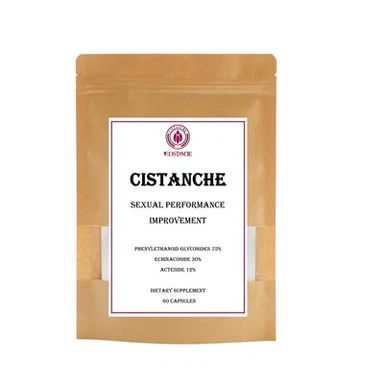
Wecistanche's cistanche powder, cistanche tablets, cistanche capsules, and other products are developed using desert cistanche as raw materials, all of which have a good effect on relieving constipation. The specific mechanism is as follows: Cistanche is believed to have potential benefits for relieving constipation based on its traditional use and certain compounds it contains. While scientific research specifically on Cistanche's effect on constipation is limited, it is thought to have multiple mechanisms that may contribute to its potential to relieve constipation. Laxative Effect: Cistanche has long been used in Traditional Chinese Medicine as a remedy for constipation. It is believed to have a mild laxative effect, which can help promote bowel movements and induce constipation. This effect may be attributed to various compounds found in Cistanche, such as phenylethanoid glycosides and polysaccharides. Moistening the Intestines: Based on traditional use, Cistanche is considered to have moisturizing properties, specifically targeting the Intestines. Promoting hydration and lubrication of the Intestines, it may help soften tools and facilitate easier passage, thereby relieving constipation. Anti-inflammatory Effect: Constipation can sometimes be associated with inflammation in the digestive tract. Cistanche contains certain compounds, including phenylethanoid glycosides and lignans, that are believed to have anti-inflammatory properties. By reducing inflammation in the intestines, it may help improve bowel movement regularity and relieve constipation.